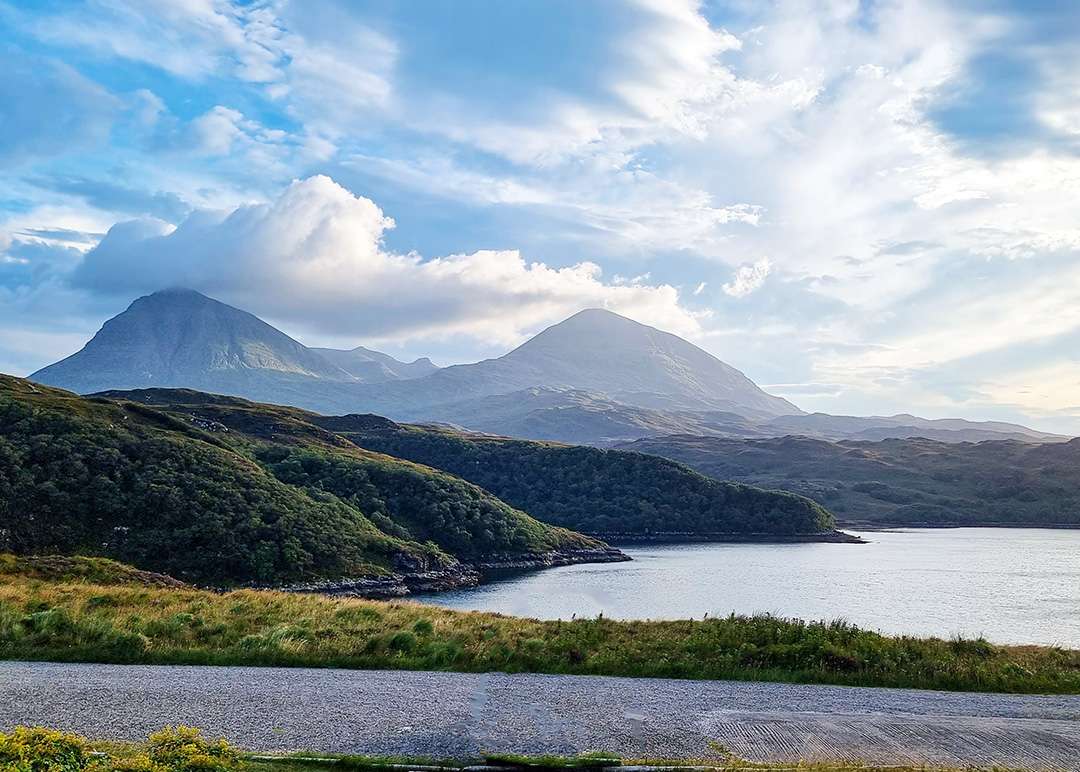


A local’s pick of the best places to visit on the west coast of Scotland, ordered south to north so you can plan a trip around the time you have.
There’s a saying in Scotland that “west is best”, and the west coast earns it – the sea stretches on forever, the beaches are some of the finest in the world, and the seafood is straight off the boat. This is my pick of the best places to visit on the west coast of Scotland, from the palm-tree south to the wild far north.
Where should you go? A quick answer: it depends what you’re after. For dramatic mountains, head to Torridon and Assynt. For beaches, the Silver Sands of Morar and Oldshoremore. For pretty villages, Plockton and Tobermory. For proper remote wilderness, Knoydart and Cape Wrath. And for a first visit, Glencoe plus Ardnamurchan, or Oban plus Mull, are hard to beat.
The west coast runs from the Rhinns of Galloway in the south to Cape Wrath in the far north – a coastline of sea lochs, white-sand beaches, mountains dropping straight into the sea, scattered islands and remote peninsulas. It’s huge, and you can’t see it all in one trip. So this guide is ordered south to north and grouped by region: pick the stretch that suits your trip, or string several together.
How long do you need?
- A long weekend: pick one region. Argyll (Oban, Crinan, the Slate Islands) is easiest from Glasgow; Wester Ross works well from Inverness.
- Three or four days: base yourself in one village — Plockton, Lochinver or Tobermory all work well as a hub.
- A week: combine two adjacent regions — Glencoe + Ardnamurchan, Applecross + Assynt, or Argyll + Mull.
- Two weeks: drive the full length from Glasgow to Cape Wrath, with time for the island ferries.
Planning a route rather than picking and choosing? See my dedicated West Coast of Scotland road trip itinerary for the full driving guide.
Dumfries & Galloway: the far south
1. Portpatrick & the Rhinns of Galloway
Best for: quiet beaches, a mild climate and empty roads.
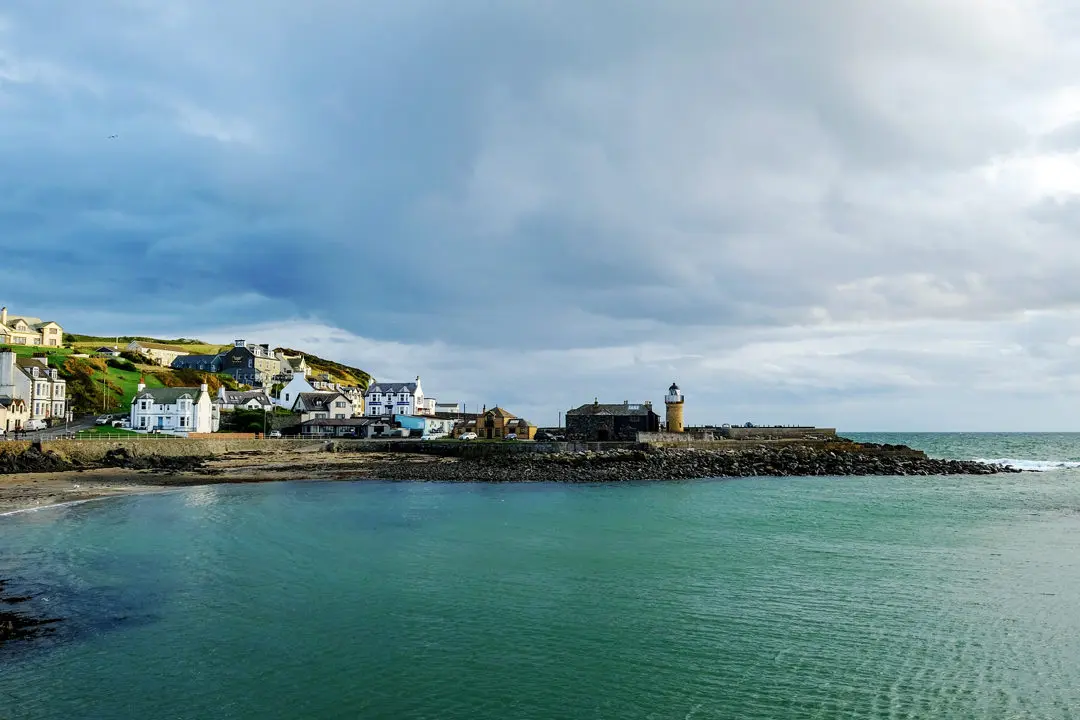
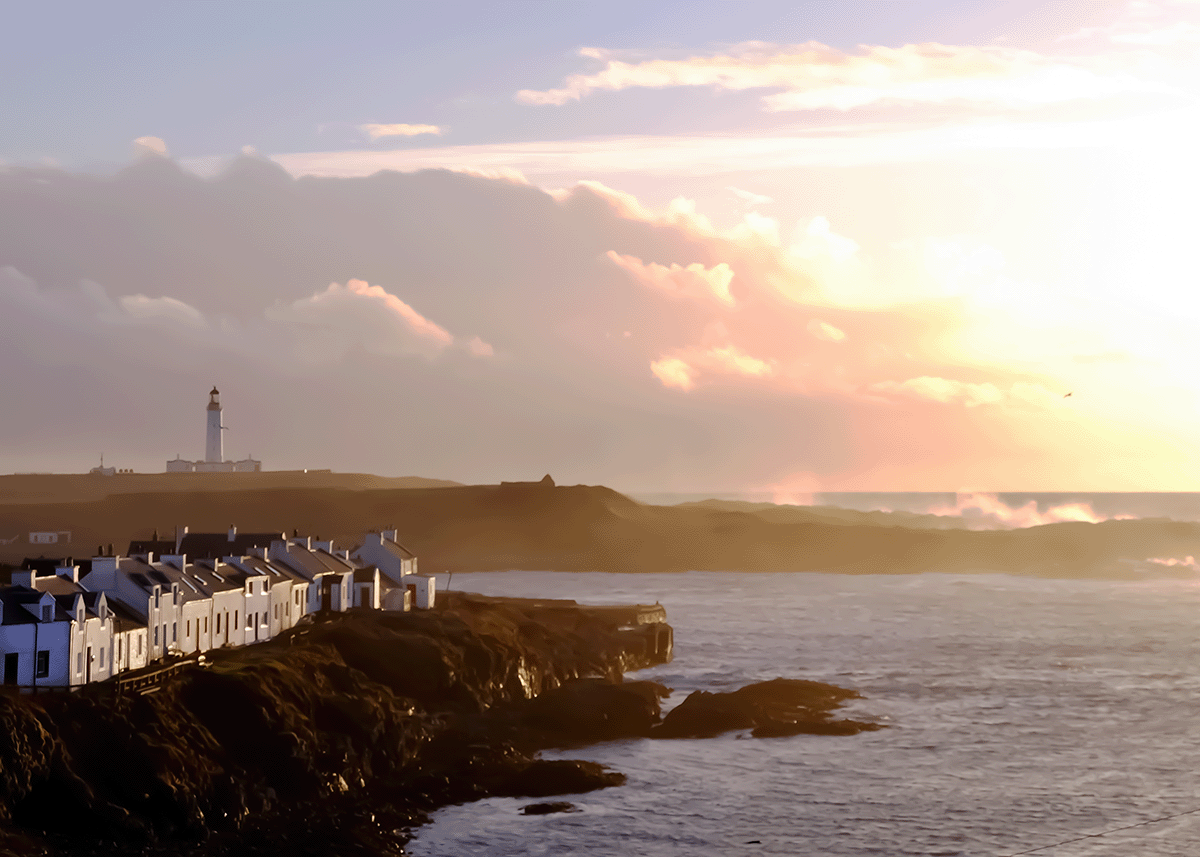
The Rhinns of Galloway is a 25-mile peninsula in Scotland’s south-west corner, so mild that palm trees grow in the gardens. It’s the quietest part of the whole west coast – most tourists never make it this far south, so the beaches are empty and accommodation is easy to book.
Portpatrick is the prettiest harbour town, with pastel houses wrapped around a sheltered bay, and the start of the Southern Upland Way. Don’t miss the Mull of Galloway, Scotland’s most southerly point, where on a clear day you can see Ireland, the Isle of Man and the Lake District; and Logan Botanic Garden, the most exotic garden in Scotland (and a Wicker Man filming location).
Where to stay: Corsewall Lighthouse, a working lighthouse you can sleep in.
Read more: my guide to Dumfries & Galloway.
Argyll
2. The Mull of Kintyre
Best for: whisky, Gaelic heritage and Atlantic sunsets.
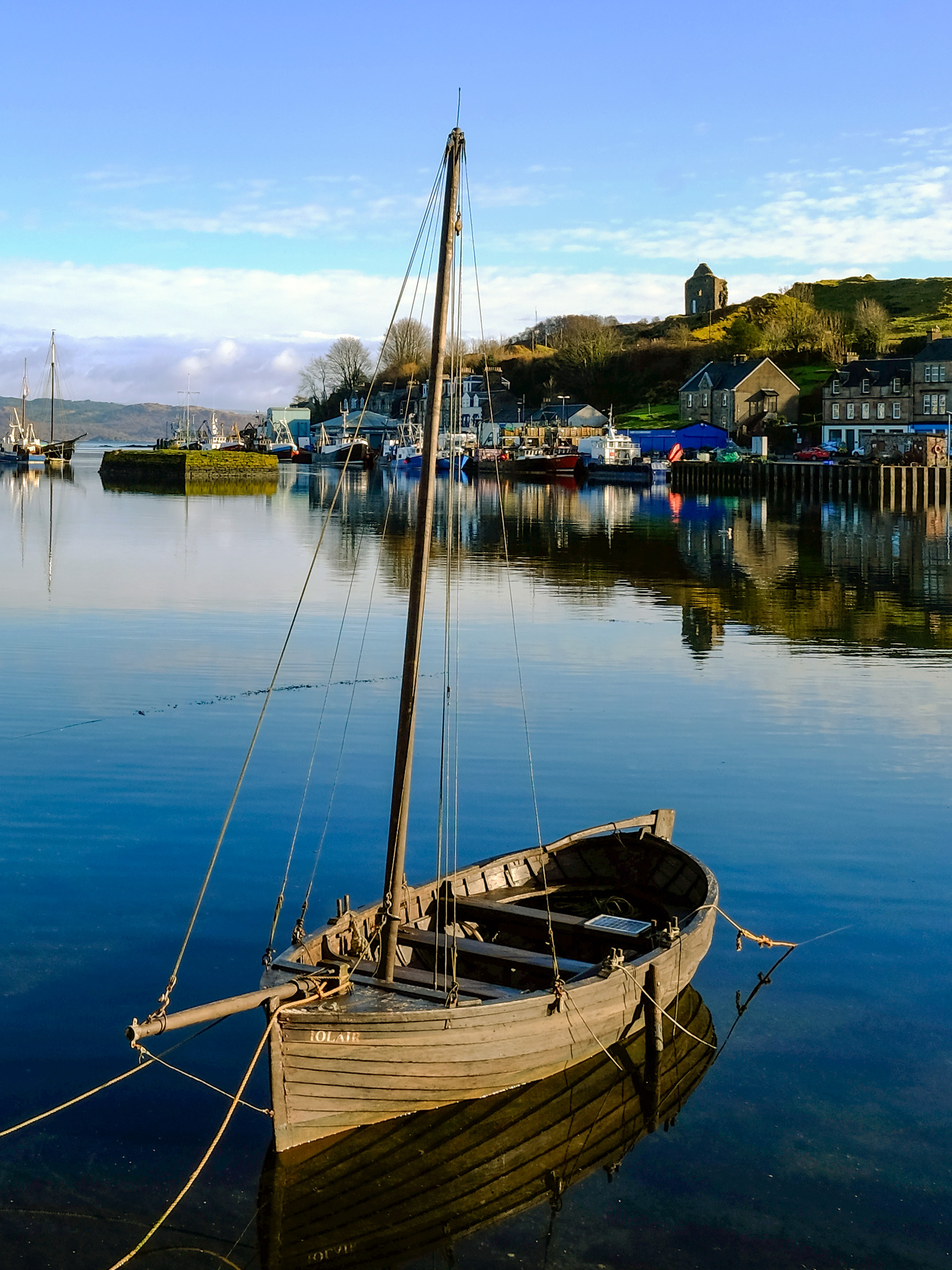
The 40-mile peninsula immortalised in Paul McCartney’s song, and once the Kingdom of Dál Riata — the cradle of Scotland’s Gaelic heritage. Tarbert sits at the top on a narrow isthmus, with a pretty harbour and a ruined castle worth the climb. Campbeltown was once “the whisky capital of the world”, with over 30 distilleries; today three remain – Springbank, Glen Scotia and Glengyle – and Springbank is the one enthusiasts travel for. For sunset, head to the three-mile beach at Machrihanish.
Where to stay: The Ugadale Hotel, Machrihanish.
3. Kilmartin Glen
Best for: prehistory.
One of Scotland’s richest archaeological landscapes – over 350 prehistoric monuments in a six-mile stretch, with cairns, stone circles, standing stones and cup-and-ring marked rocks. The small Kilmartin Museum is excellent.
4. Inveraray & Loch Fyne
Best for: a postcard Georgian town and fresh oysters.
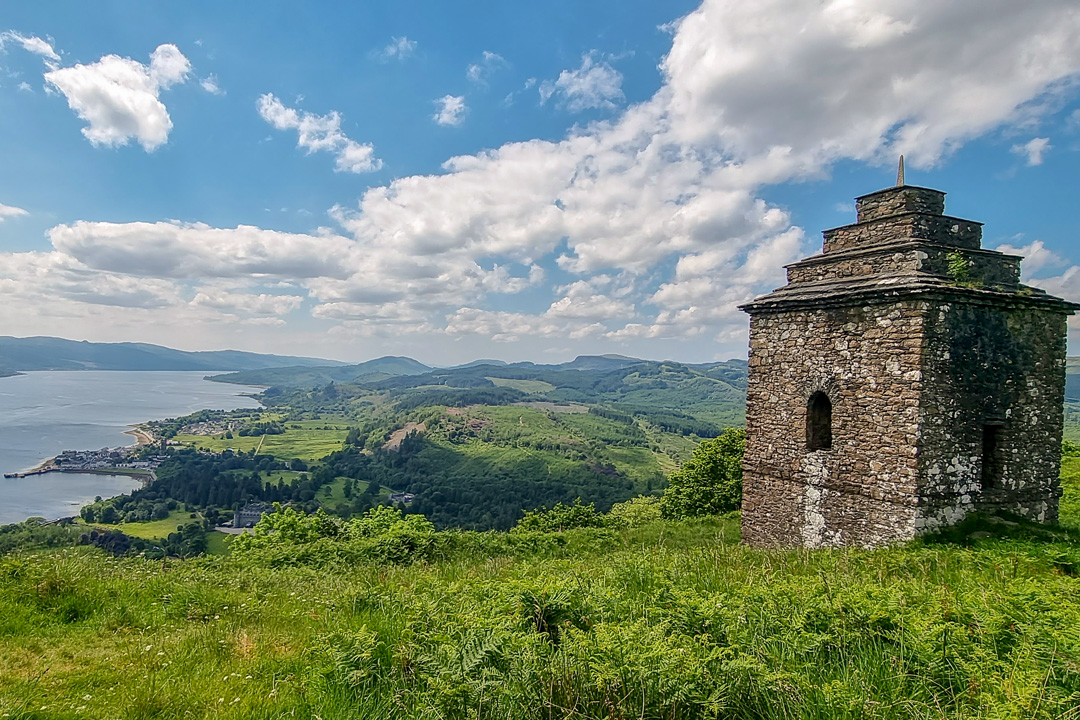
A planned Georgian town on the shore of Loch Fyne, with white-washed buildings and a grand church at the head of the main street — one of the prettiest towns in Argyll. Visit Inveraray Castle, still the seat of Clan Campbell, and Inveraray Jail, a properly atmospheric museum with costumed interpreters. Loch Fyne is famous for its oysters; grab fish and chips and eat them on the pier.
Where to stay: Loch Fyne Hotel, a dog-friendly lochside spa hotel.
Read more: my guide to Inveraray.
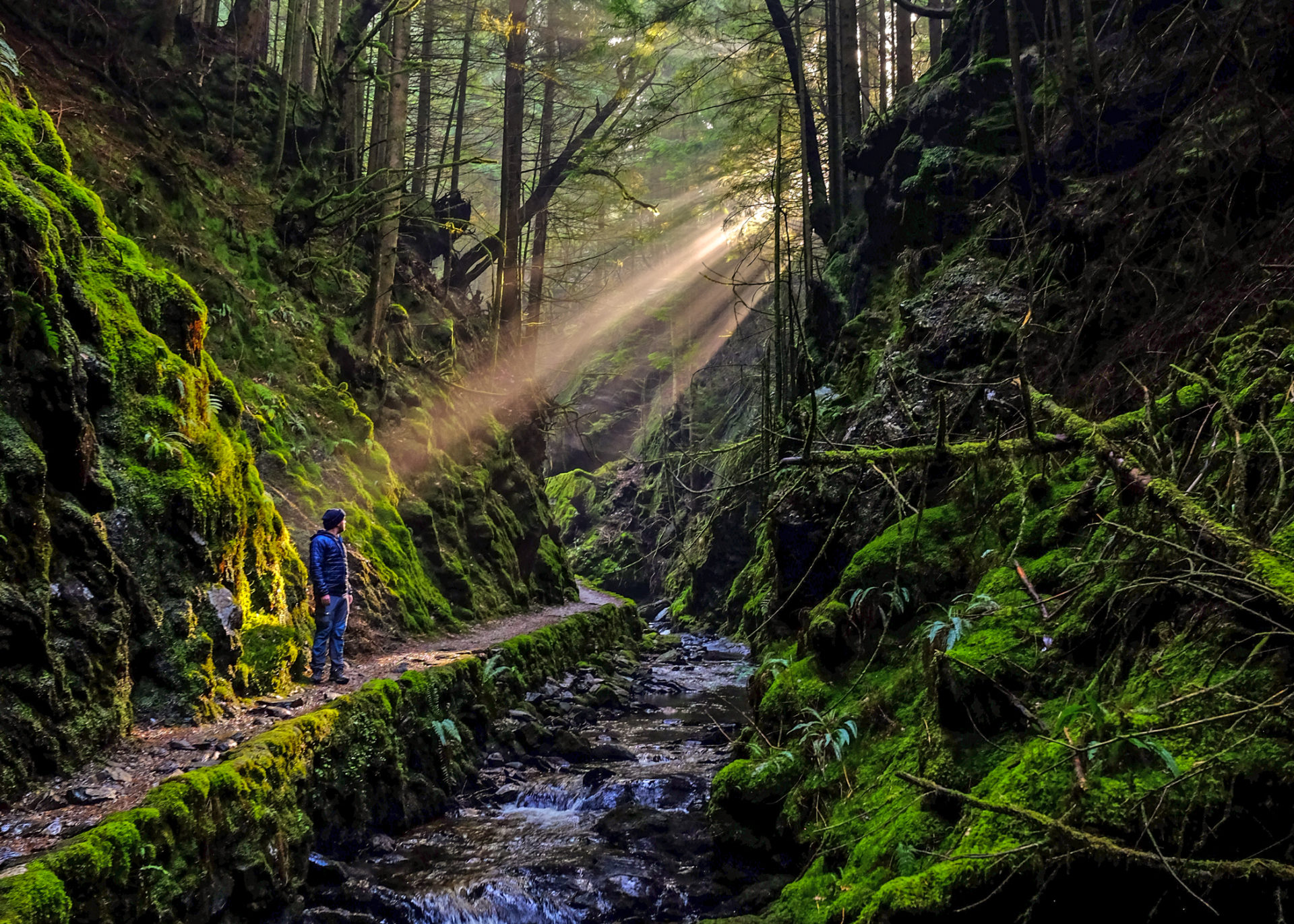
5. Puck’s Glen & the Cowal Peninsula
Best for: a fairy-tale woodland walk.
Sitting between Loch Fyne and the Firth of Clyde, Cowal’s highlight is Puck’s Glen near Dunoon – a fairy-tale ravine walk with a waterfall, mossy boulders and wooden bridges. Short, easy, and one of the best woodland walks in Argyll.
Read more: my guide to Puck’s Glen.
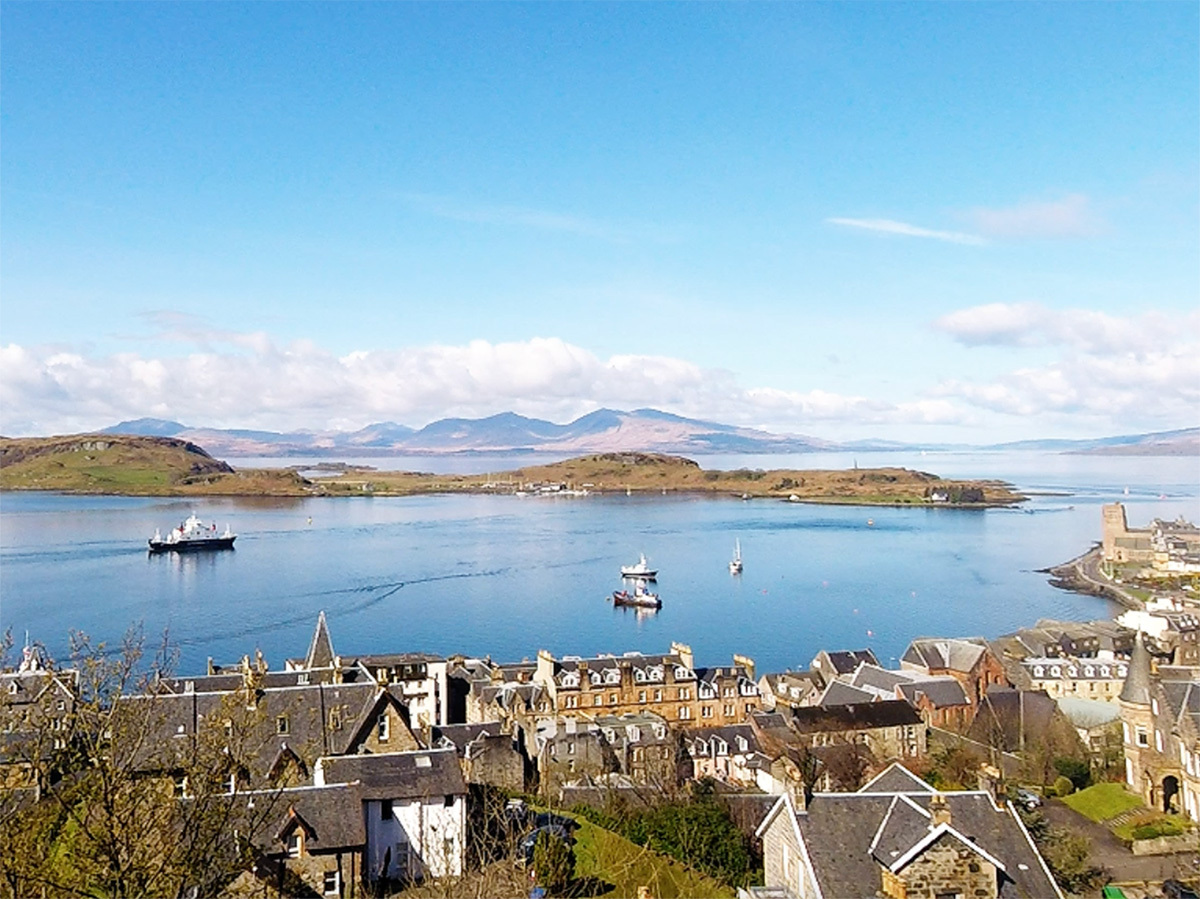
6. Oban
Best for: seafood and the ferry to the isles.
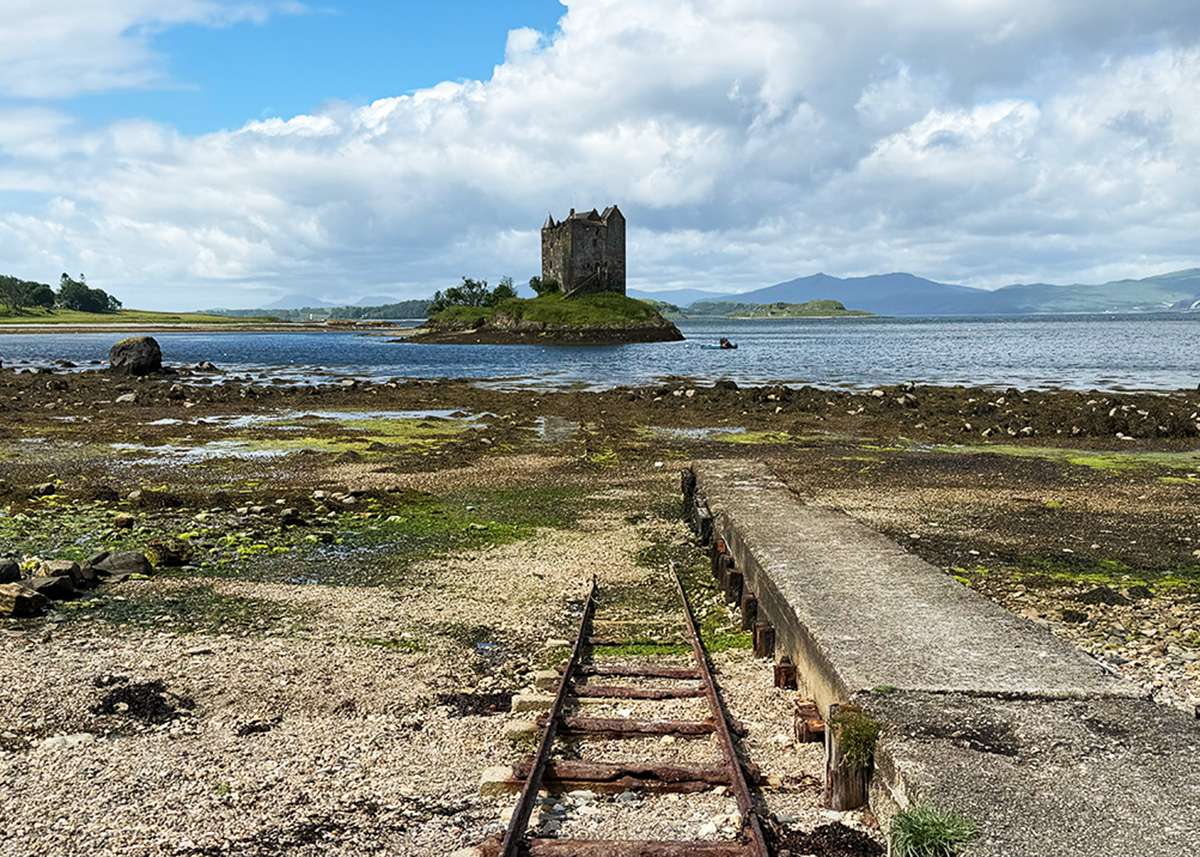
Oban calls itself the seafood capital of Scotland and the gateway to the isles, and earns both — it’s the main west coast ferry port, with CalMac sailings to Mull, Colonsay, Coll, Tiree, Barra and South Uist. Climb McCaig’s Tower, the colosseum-like folly on the hill, for the view across to Mull. For lunch, the Green Shack on the harbour is the institution for cheap, fresh seafood on a bench by the boats. Just north, Castle Stalker sits on a tiny tidal island (and starred in Monty Python and the Holy Grail).
7. Crinan
Best for: boats and “Britain’s most beautiful shortcut”.
A tiny village where the Crinan Canal meets the Sound of Jura, letting small boats cross to the Atlantic without rounding the Mull of Kintyre. Walk the Castle Dounie circular for the best views over the Sound of Jura.
Where to stay: The Crinan Hotel, right in the village.
Read more: my guide to sailing the Crinan Canal.
The Inner Hebrides
8. The Isle of Mull & Tobermory
Best for: that colourful harbour, wildlife and island scenery.
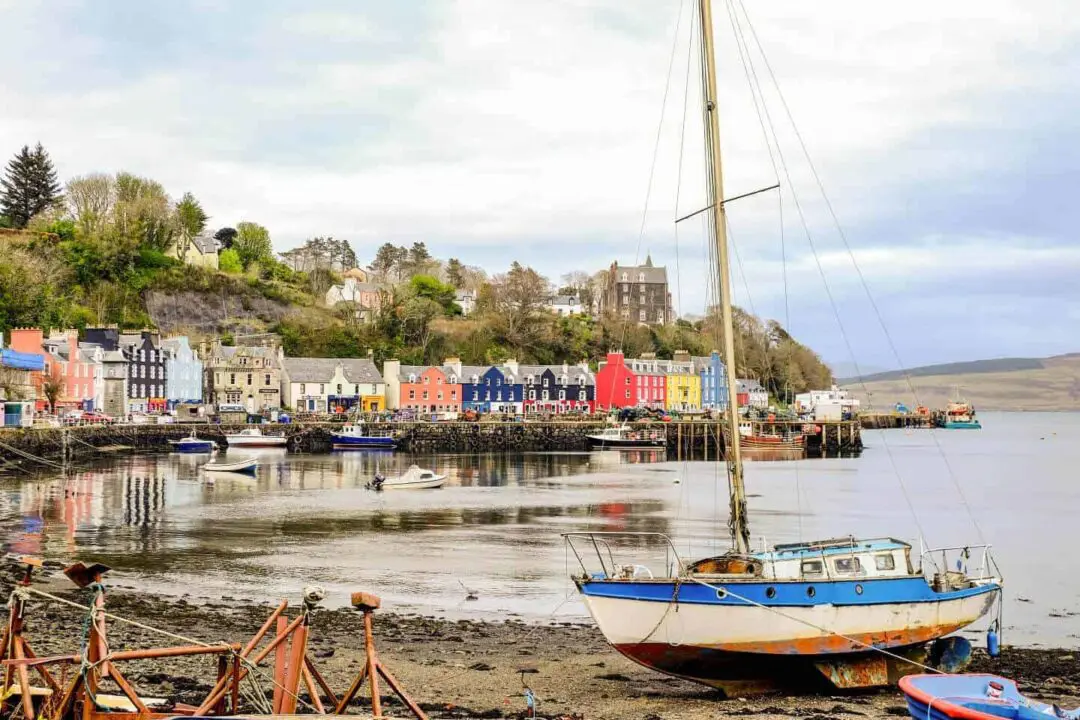
Mull is the big one: dramatic scenery, its own Munro (Ben More), and the famously colourful harbour town of Tobermory. From there you can take boats to Iona, Staffa and the Treshnish Isles for puffins, and the white sands of Calgary Bay are some of the most photographed in Scotland.
Read more: my 24 hours on the Isle of Mull.
9. Iona
Best for: history and a sense of pilgrimage.
The small island off Mull’s south-west corner where St Columba landed in 563 AD. Iona Abbey still stands, fully restored, and 48 Scottish kings – including Macbeth and Duncan – are buried in its graveyard. Two miles by one, walkable in an afternoon, with no cars for visitors.
10. Staffa & Fingal’s Cave
Best for: geology and a boat trip.
The basalt-columned island that inspired Mendelssohn’s Hebrides Overture. Fingal’s Cave is the sea cave with the extraordinary columnar walls. Boat trips run from Mull and Iona in summer.
11. Islay & Jura
Best for: peated whisky and proper wilderness.
Islay is the whisky island – Ardbeg, Laphroaig, Lagavulin, Bowmore and Bruichladdich among them. A short ferry away, Jura is far quieter: one distillery, the three Paps, red deer outnumbering people 30 to one, George Orwell’s old house where he wrote 1984, and the Corryvreckan whirlpool off the north coast.
Read more: my guide to Islay.
The West Highland Peninsulas
12. Ardnamurchan & Sanna Bay
Best for: the edge-of-the-world feeling and a perfect beach.
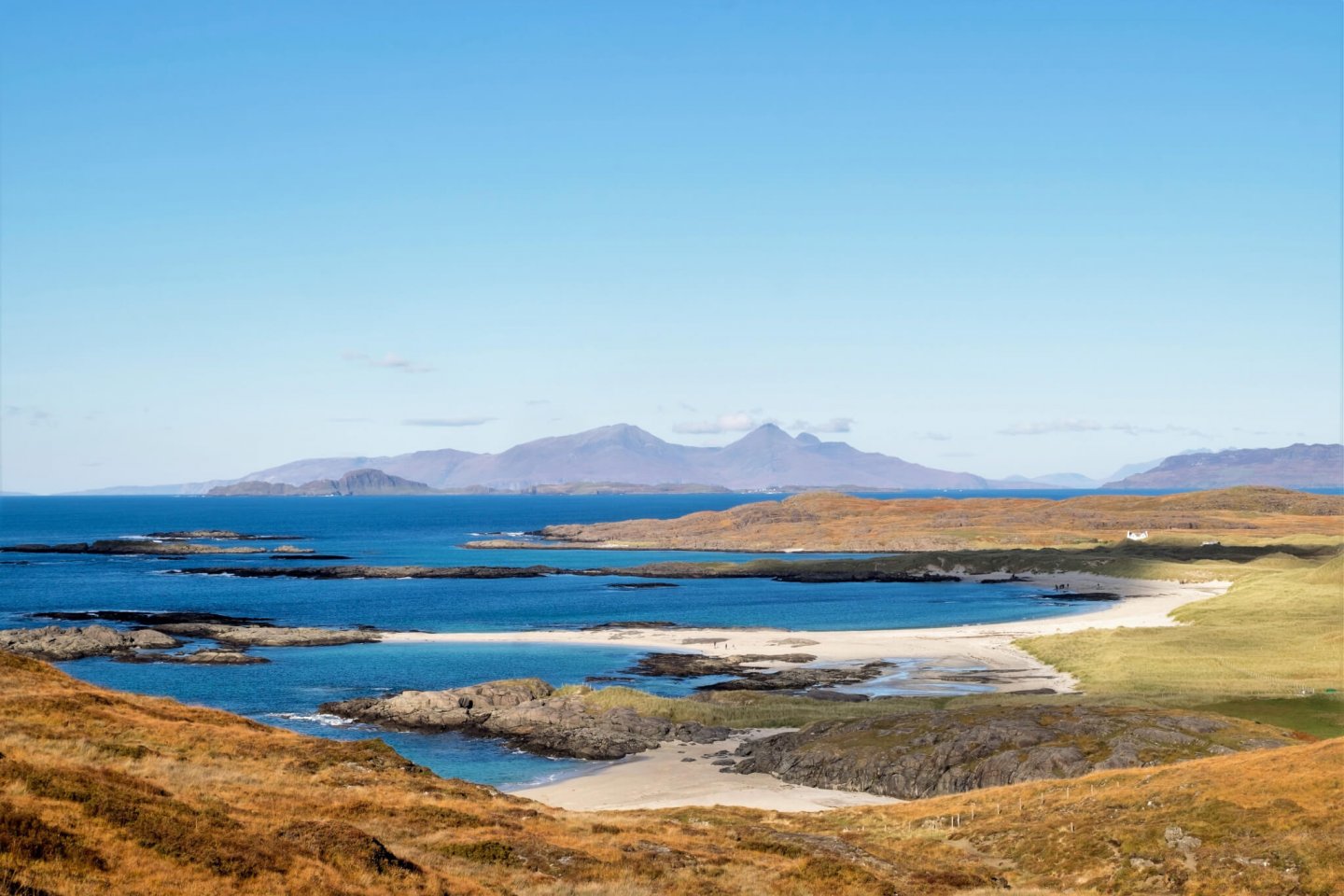
Ardnamurchan feels like the edge of the world – the most westerly point of mainland Britain, reached by single-track roads across volcanic moorland and ancient forest. At the tip, a lighthouse marks the western edge of Scotland, and just up the road is Sanna Bay, one of my favourite beaches anywhere, with white sand, turquoise water and views to Rum and Eigg. Two distilleries too: Ardnamurchan and the organic, female-run Nc’Nean.
Where to stay: Mingary Castle, a restaurant-with-rooms.
Read more: my guide to Ardnamurchan.
The Rough Bounds
13. The Silver Sands of Morar
Best for: world-class beaches with a fraction of Skye’s crowds.
The coastline between Arisaig and Mallaig is a run of white-sand beaches backed by dunes, with views to Rum, Eigg and Skye. Camusdarach was the beach in Local Hero. At the end of the road, Mallaig is a working fishing port – so lunch is seafood straight off the boat – and the ferry port for Skye, the Small Isles and Knoydart.
14. Glenelg
Best for: one of Scotland’s finest views and a hand-turned ferry.
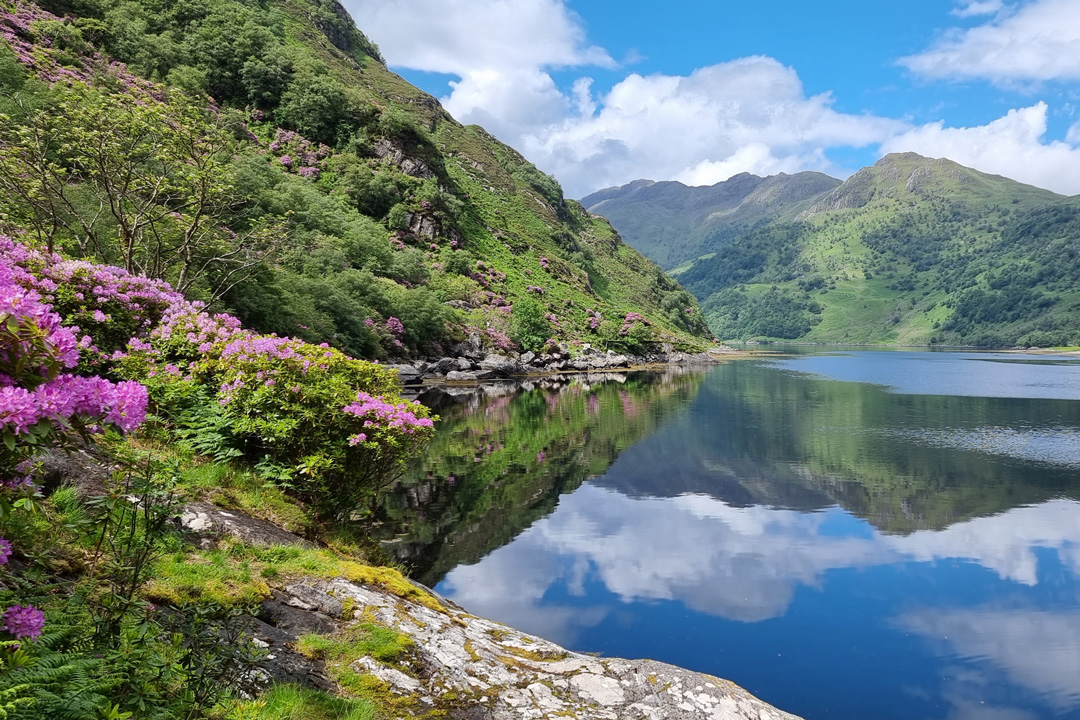
Over the Mam Ratagan pass from Shiel Bridge, with a view over Loch Duich to the Five Sisters of Kintail that’s one of the finest in Scotland. Glenelg has three well-preserved Iron Age brochs and the last hand-operated turntable Skye Ferry, which crosses the Sound of Sleat in summer. Nearby Sandaig Bay was Gavin Maxwell’s Ring of Bright Water home.
Read more: my guide to Glenelg.
15. Knoydart & Loch Hourn
Best for: the wildest corner of the mainland.
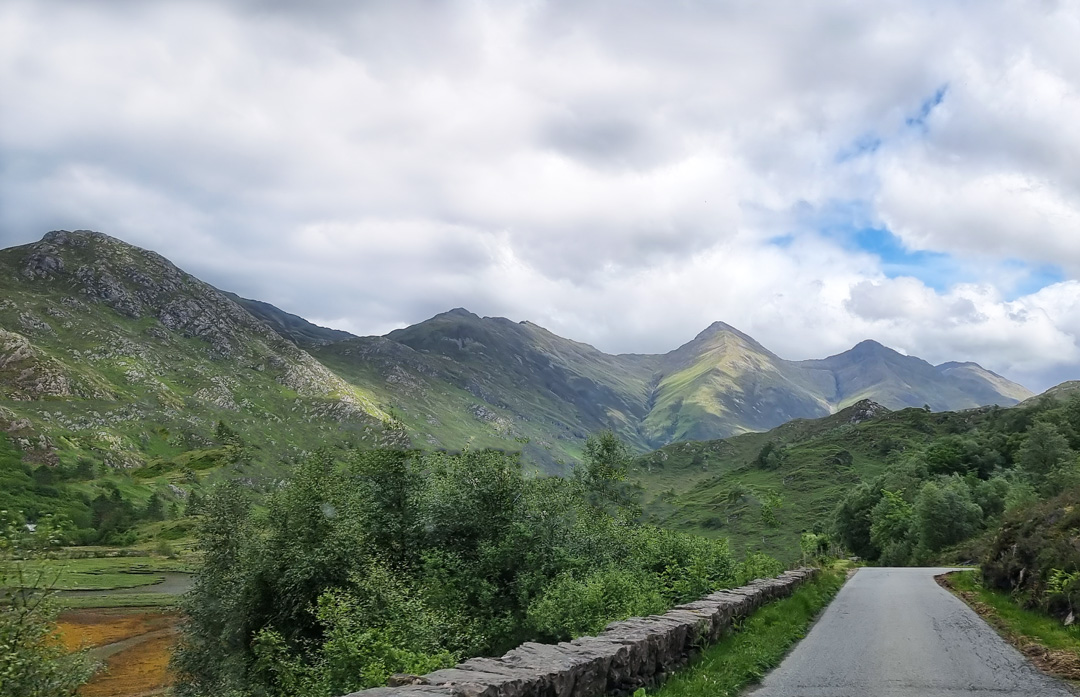
Loch Hourn cuts deep into the hills like a Scandinavian fjord, and the 22-mile drive to Kinloch Hourn is one of the most hair-raising in Scotland. From there you can walk out to Knoydart and Inverie – home to The Old Forge, the UK’s most remote pub — or catch the passenger ferry from Mallaig.
Read more: my walk at Kinloch Hourn.
Skye & the Small Isles
16. The Isle of Skye
Best for: the headline sights – if you give it time.
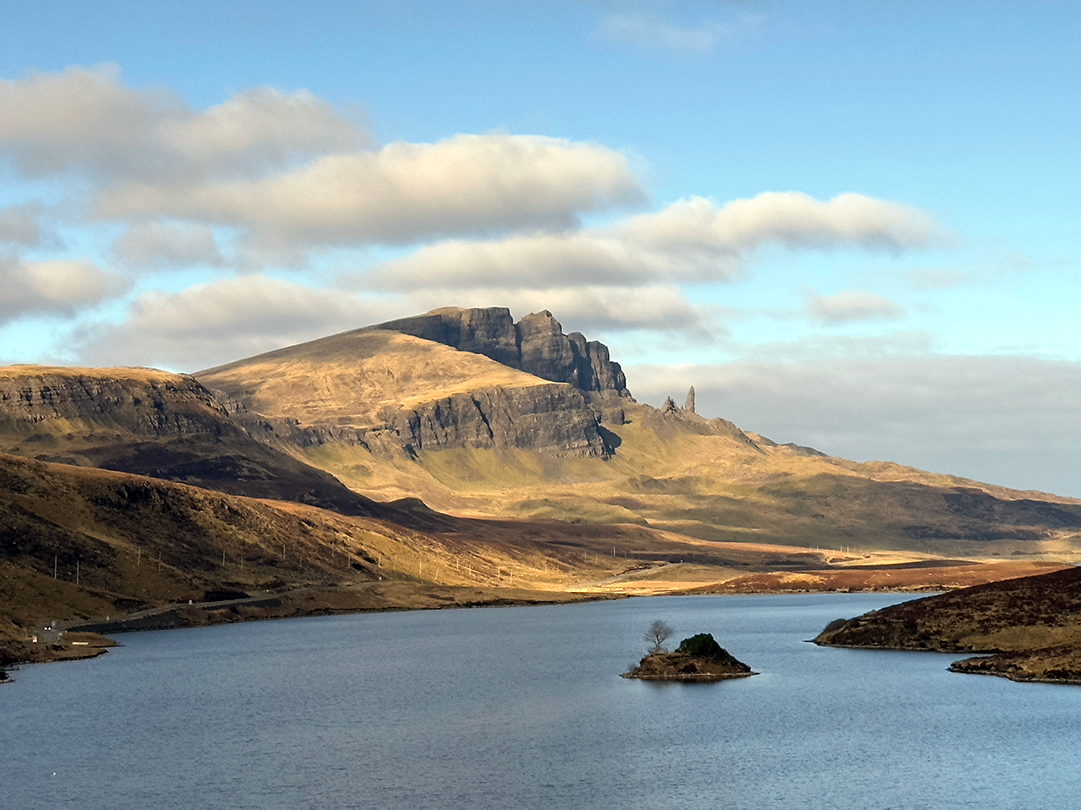
The biggest and most visited of the Hebrides, connected by bridge so you don’t need a ferry. The Cuillin, the Old Man of Storr, the Quiraing, the Fairy Pools, Neist Point, Dunvegan Castle and Talisker distillery are all here. Skye deserves its own trip rather than a day visit – three or four days lets you see the Trotternish peninsula and the Cuillin properly. Go sustainably: park sensibly, drive slowly, and book well ahead. The quieter Sleat peninsula in the south is often overlooked.
Read more: my guide to the Isle of Skye.
17. The Small Isles
Best for: true remoteness.
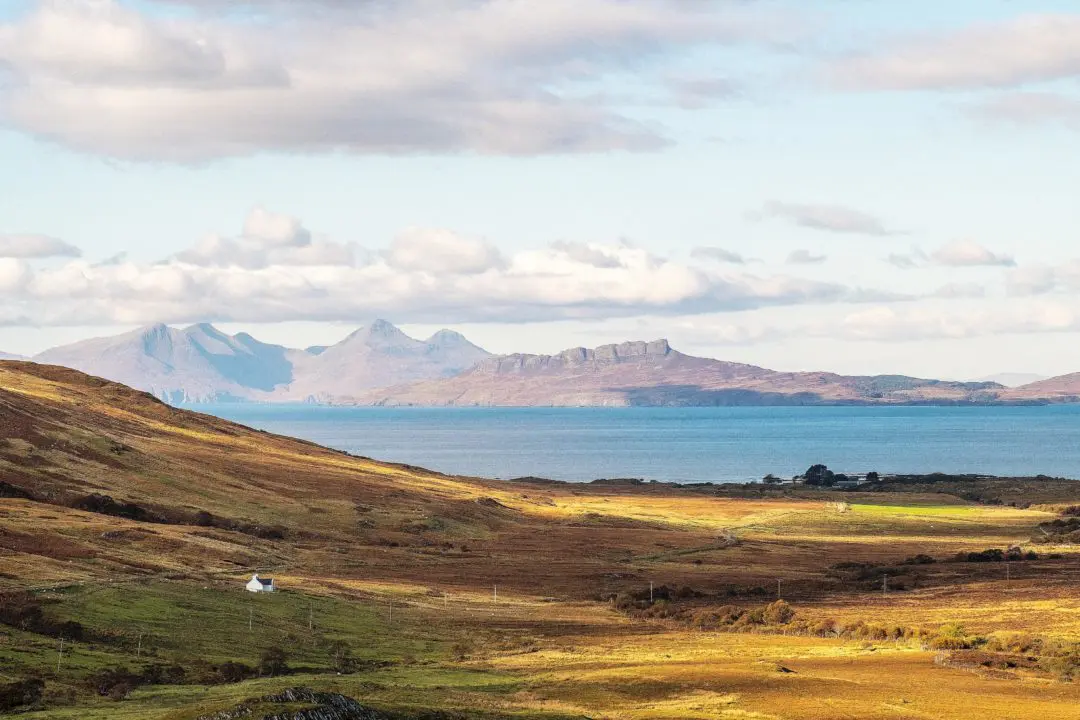
Rum, Eigg, Muck and Canna, reached by CalMac from Mallaig. Rum has mountains and red deer, Eigg its famous Sgurr and community-owned energy scheme, Muck is tiny and peaceful, and Canna is home to golden eagles.
Wester Ross
18. Plockton
Best for: a palm-fringed village weekend.
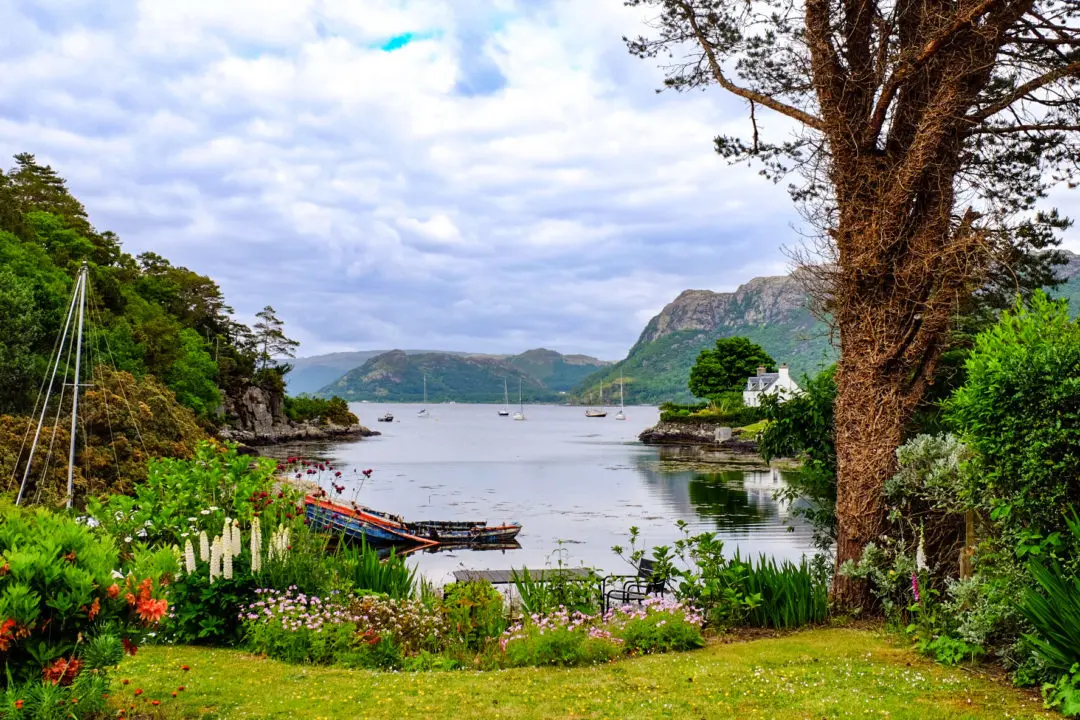
On the shores of Loch Carron, so sheltered that palm trees grow on the waterfront – and the setting for Hamish Macbeth. It’s become a foodie destination thanks to the Plockton Hotel and the seafood-renowned Plockton Inn, making it one of the best villages in Scotland for a weekend break.
Where to stay: The Plockton Inn.
19. Applecross & the Bealach na Bà
Best for: Britain’s most spectacular road.
A peninsula reached by the Bealach na Bà, which climbs from sea level to over 2,000 feet in a series of hairpins (not for caravans or nervous drivers). The reward is the Applecross Inn on the Sound of Raasay, known for seafood and sunsets. If the pass is closed, the coastal road north to Shieldaig is longer but gentler.
Read more: my stay at the Applecross Inn.
20. Torridon
Best for: some of the oldest, most dramatic mountains on earth.
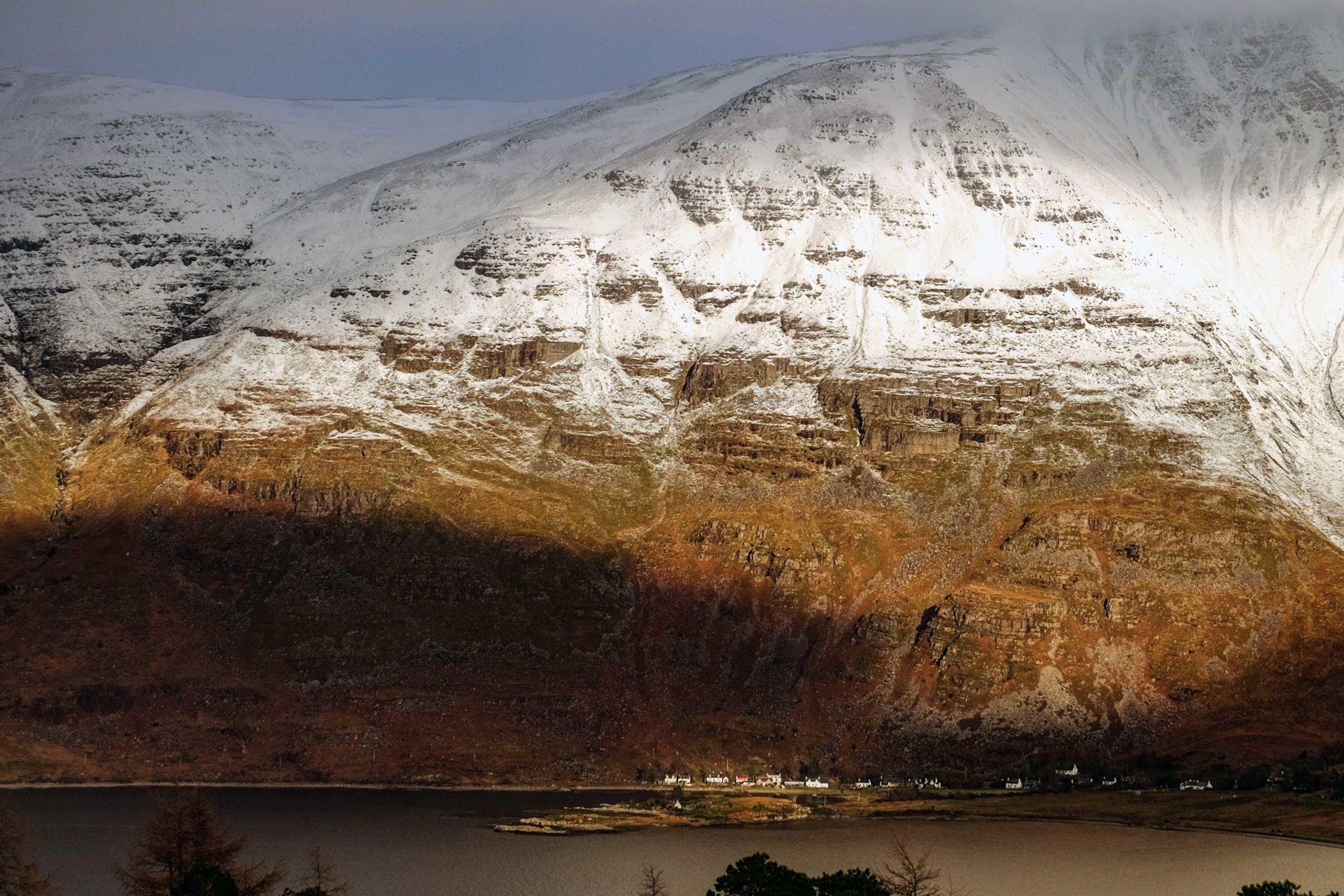
The mountain country between Applecross and Gairloch. Beinn Alligin, Liathach and Beinn Eighe – among the oldest mountains in the world – rise straight out of Loch Torridon in tiered cliffs. The village of Shieldaig, a single row of whitewashed cottages along a sea loch, is the prettiest base.
21. Gairloch & Poolewe
Best for: beaches, wildlife and a subtropical garden.
A scattered village on a wide bay, with wildlife tours from the harbour (dolphins, whales and basking sharks in summer) and the red sands of Red Point beach. At Poolewe, Inverewe Garden is a subtropical garden on the same latitude as Siberia, made possible by the Gulf Stream. Nearby, Corrieshalloch Gorge drops 150 feet over the Falls of Measach.
Where to stay: Gairloch Hotel.
Read more: my guide to Wester Ross.
The North-West Highlands
22. Ullapool
Best for: the perfect north-west base.
A handsome planned village of 1788 on Loch Broom, with whitewashed buildings, good seafood and the Stornoway ferry. The Seafood Shack is a festival favourite and the Ceilidh Place hosts traditional music. It’s also the springboard for climbing Stac Pollaidh (30 minutes up from the roadside) and iconic Suilven.
Read more: my guide to Ullapool.
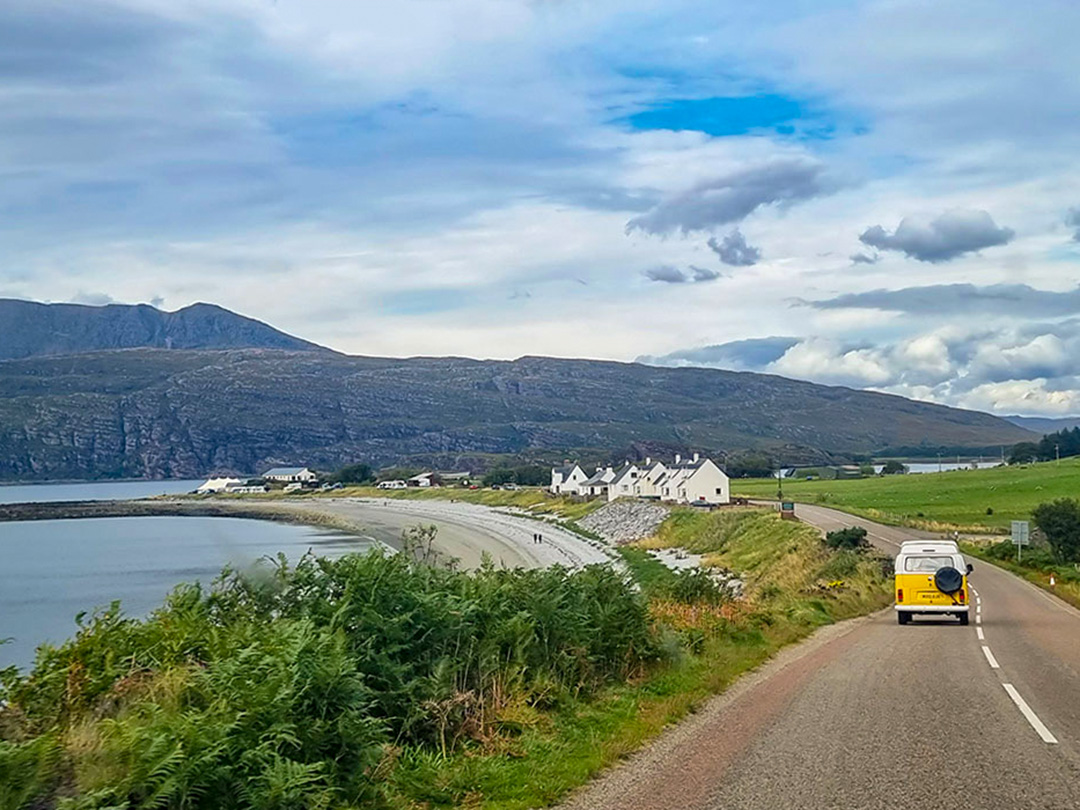
23. Assynt & Lochinver
Best for: otherworldly mountains and world-class beaches — and my favourite corner of Scotland.
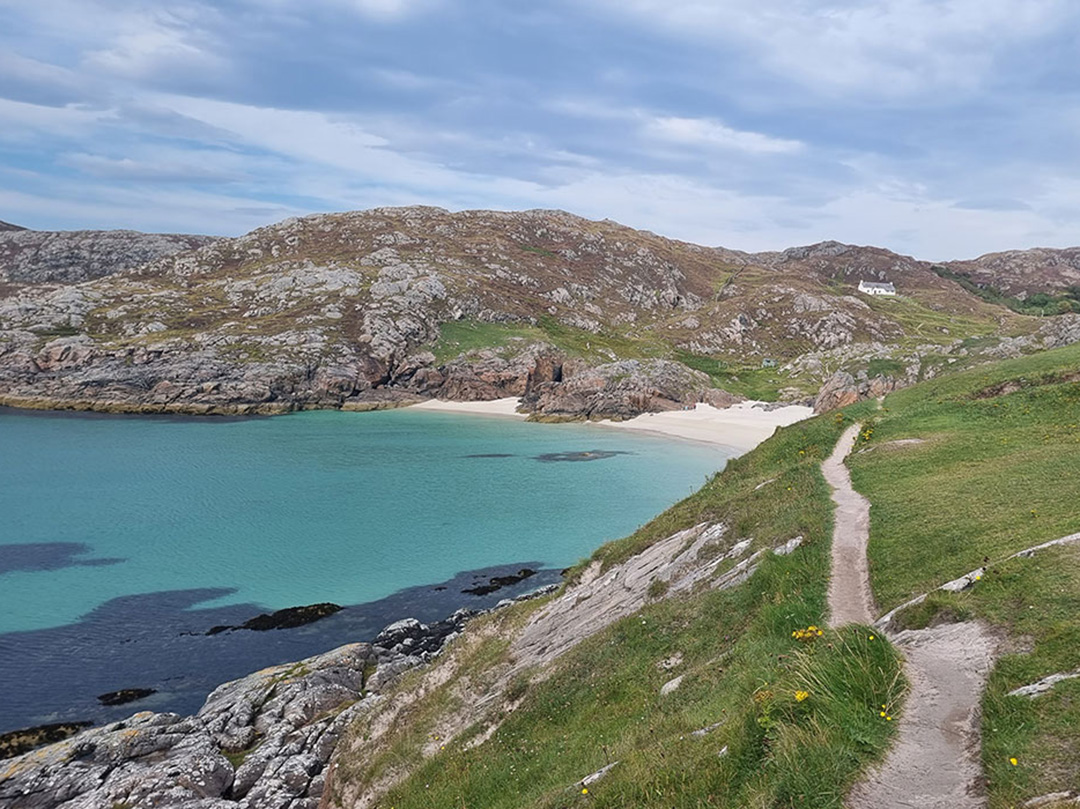
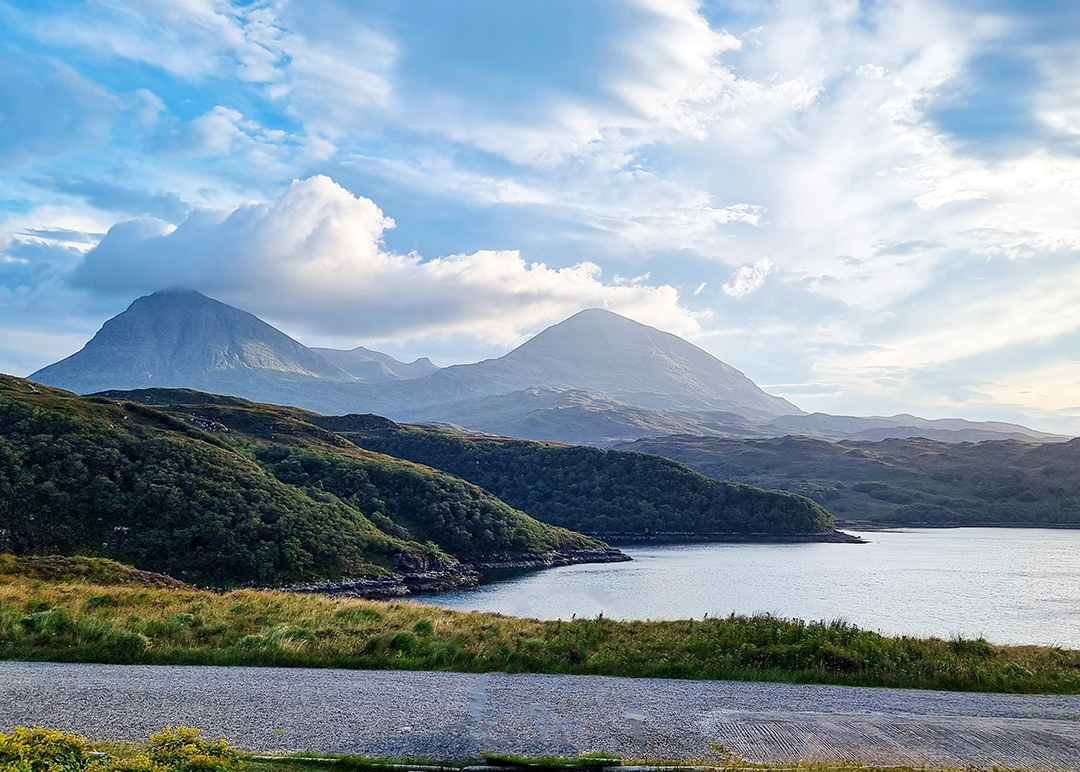
Assynt’s landscape is like nowhere else: Suilven, Quinag, Canisp, Cul Mor and Stac Pollaidh rise as individual peaks straight from flat moor and loch. Lochinver is the lively main village, with a famous pie shop (the Lochinver Larder) and views of Suilven from the harbour. The beaches at Achmelvich and Clachtoll are world-class.
Where to stay: Inver Lodge, the five-star hotel with views of Suilven.
Read more: my guide to Lochinver & Assynt.
24. Kylesku
Best for: that curved bridge and the UK’s tallest waterfall.
A hamlet where three sea lochs meet, crossed by the gorgeously curved 1984 Kylesku Bridge. The Kylesku Hotel has a well-earned name for local seafood, and you can take a boat trip to Eas a’ Chual Aluinn, the UK’s tallest waterfall.
Read more: my guide to Kylesku.
25. Handa Island
Best for: seabirds.
A seabird reserve off the coast north of Scourie, reached by a small passenger ferry from Tarbet in summer. It has one of Britain’s largest colonies of guillemots, razorbills, kittiwakes and skuas, plus a few puffins.
Read more: my guide to Handa Island.
26. Oldshoremore, Sandwood Bay & Cape Wrath
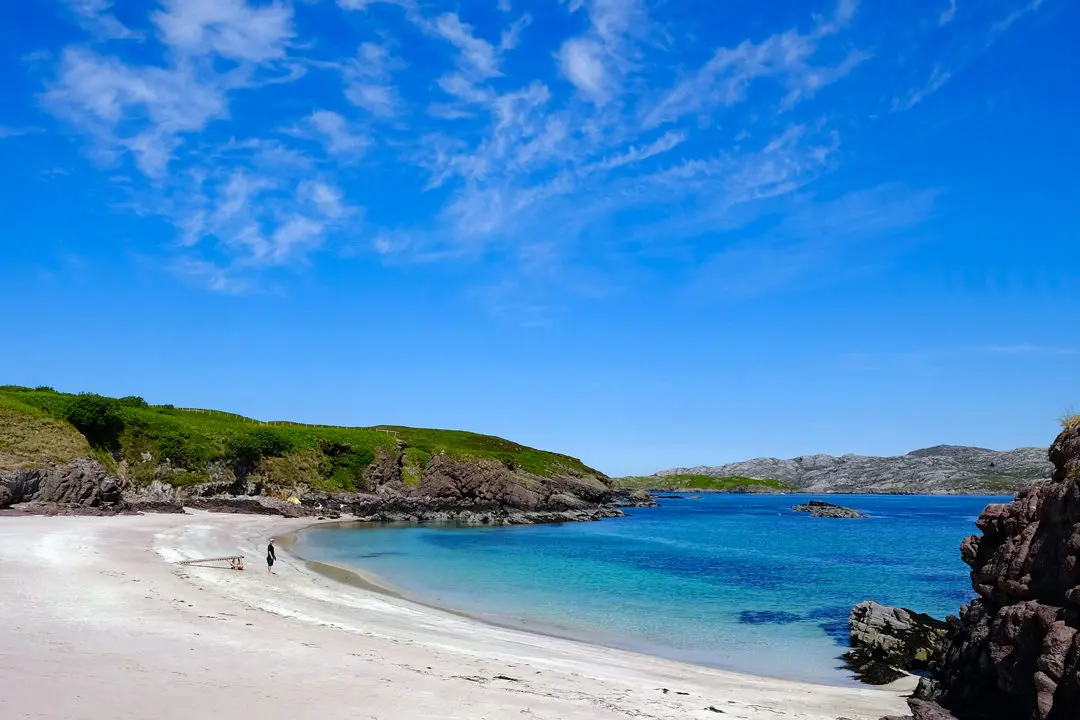
Best for: the end of the road and the best beach in Scotland.
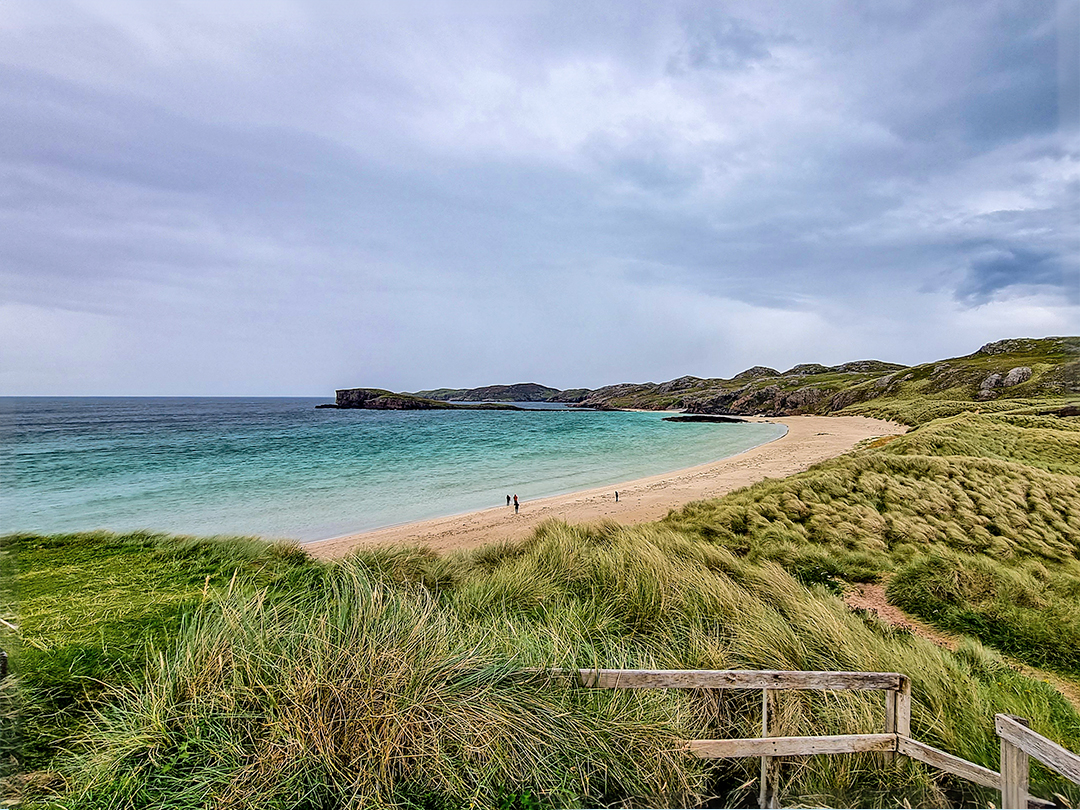
Past Kinlochbervie lies Oldshoremore, my favourite beach in Scotland – white sand, turquoise water, barely another soul even in peak summer. From there, a four-and-a-half-mile walk across moorland reaches Sandwood Bay, with its pink sand, sea stacks and Atlantic waves. Beyond, Cape Wrath is Scotland’s remote north-west corner, reached by minibus across a military firing range, where a lighthouse has marked the edge of Britain since 1828.
Where to stay: Oldshoremore Croft Cabins.
Where to stay on the west coast of Scotland
Accommodation books up fast in summer, especially on Skye, Mull and in popular villages like Plockton and Lochinver — so reserve well ahead, or travel in the shoulder season (May and September) when it’s much easier. For my full picks region by region, see my where to stay in Scotland guide.
Planning a west coast road trip?
If you’d rather follow a route than pick and choose, I’ve mapped the whole thing out — including the eight-day ferry-hopping itinerary through Argyll, Mull, Ardnamurchan and Skye – in my West Coast of Scotland road trip guide. To go further north, it links straight onto the North Coast 500.
Practical information
When to visit: May, June and September are best – long days, decent weather and fewer midges than July–August (when west coast midges can be serious). Winter is dramatic but daylight is very short and many businesses close.
How to get around: a car is essential; public transport is limited, especially north of Ullapool. Most roads north of Fort William are single-track with passing places – never park in a passing place, and expect sheep round every bend. Island ferries are run by CalMac; book ahead for summer.
Frequently asked questions
What's the best part of the west coast of Scotland?
It depends what you want. For dramatic mountains, Torridon and Assynt. For beaches, the Silver Sands of Morar and Oldshoremore. For pretty villages, Plockton and Tobermory. For remote wilderness, Knoydart and Cape Wrath. For a first visit, Glencoe plus Ardnamurchan or Oban plus Mull are hard to beat.
How many days do you need to explore the west coast of Scotland?
A minimum of four days for one region. A week lets you combine two regions. Two weeks covers the full coast from Glasgow to Cape Wrath with time for islands.
Is the North Coast 500 the same as the west coast of Scotland?
No. The North Coast 500 is a 500-mile driving route starting and ending in Inverness that loops around the northern Highlands. It covers part of the west coast (roughly Applecross to Durness) but misses most of it — no Glencoe, no Argyll, no Mull, no Ardnamurchan. The west coast of Scotland is a much bigger area than the NC500.
What's the best beach on the west coast of Scotland?
Oldshoremore, near Kinlochbervie — white sand, turquoise water, rarely busy. Other contenders: Sandwood Bay (remote, walk-in only), Sanna on Ardnamurchan, Camusdarach on the Silver Sands of Morar, Achmelvich in Assynt, and Calgary Bay on Mull.
Are ferries to the Scottish islands expensive?
No. CalMac ferries are relatively affordable compared to other European ferry networks. A foot passenger return to Mull is under £10. A car return is around £50–60. The Hopscotch multi-ferry tickets offer discounts for common routes.
Can you drive the whole west coast of Scotland in one trip?
Yes, but it takes at least 10–14 days to do properly. The driving distance from Glasgow to Cape Wrath is about 400 miles, but single-track roads mean slow progress and plenty of places worth stopping for.
What's the weather like on the west coast of Scotland?
Wet. The west coast gets the brunt of Atlantic weather and rainfall is high, especially around Fort William and the western Highlands. Pack waterproofs year-round. On the plus side, the Gulf Stream means the west coast is milder than the east — palm trees grow in Plockton, Gigha and Logan Garden.
More Scotland road trip reading
- The North Coast 500: Scotland’s most famous road trip
- The South West Coastal 300
- The North East 250
- How to plan a Scotland road trip
- Scottish island hopping guide
Kate — Love from Scotland x

Leave a Reply