

Like you, around 50 million people across the world can trace their family back to Scotland. If you’ve started building your family tree, found a Scottish great-grandmother, or always known your surname is Scottish, this is the step-by-step guide to tracing your ancestry and planning your roots trip to Scotland in 2026.
This post contains affiliate links. Thank you for supporting my site.
Looking for an ancestry tour? Here are the best ancestry and clan heritage tours with booking links.
Jump to section
The Scottish diaspora and the call home
The Scottish diaspora (the dispersion of a group of people from their ancestral homeland) is one of the largest in the world.
From the 17th century to the 20th, around 2 million people left Scotland for the New World. Some went voluntarily, many were pushed out by the Highland Clearances of the 18th and 19th centuries, when landowners (including some of the clan chiefs themselves) replaced their tenants with sheep.
Their descendants now make up huge Scottish-heritage communities in the United States, Canada, Australia, New Zealand and even Argentina.
The good news is that Scotland has some of the best genealogical records in the world. Statutory records of births, marriages and deaths go back to 1855. Old Parish Records (OPRs) reach back to 1553. Census records cover 1841 to 1921. Wills date from 1500. Most of these are now digitised and searchable online.
Thanks to our access laws and historical preservation by the main clans, Historic Environment Scotland and The National Trust for Scotland, if you want to come and visit the lands and the castles your ancesters owned, almost all of the historic clan country is accessible to visitors today.
Here is the step-by-step guide to doing both.
Step 1: Trace your Scottish ancestry
Before you book your trip, do as much research as you can from home. There are several Scottish records sites worth using, often together.
ScotlandsPeople
ScotlandsPeople is the official Scottish government website for family history research and the single most useful resource for tracing Scottish ancestry. The site holds over 100 million individual records, including:
- Statutory registers of births, deaths and marriages from 1855
- Old Parish Records (OPRs) of baptisms, banns and burials from as early as 1553
- Census records from 1841 to 1921 (the 1921 census was released in 2024)
- Wills and testaments from 1500
- Valuation rolls from 1855 onwards
- Coats of arms from the 1672 Public Register
You can search the indexes for free. Viewing the actual record images requires credits (£1.50 to £8 per record depending on type).
Visit ScotlandsPeople
The National Records of Scotland
The National Records of Scotland is the physical archive that houses Scotland’s original records, located at the General Register House on Princes Street in Edinburgh. Opened in 1789, it is one of the oldest purpose-built archives in the world.
If you’re planning an ancestry trip, an in-person visit to the ScotlandsPeople Centre (which is part of NRS) is essential. You can search records that aren’t yet digitised, look at original documents, and get research help from staff. Day passes are £15. Booking ahead is strongly recommended.
Visit the National Records of Scotland
Scottish Indexes
Scottish Indexes is a free index of Scottish records created by professional genealogists Graham and Emma Maxwell. It’s particularly useful for finding unusual surnames, for paupers’ records, mental health records (often missed elsewhere) and for cross-referencing what you’ve found on ScotlandsPeople.
The National Library of Scotland
The National Library of Scotland holds Scottish maps, newspapers, electoral registers, school records and trade directories that can fill out the picture of an ancestor beyond the bare bones of births, marriages and deaths.
The Map Library is on Causewayside in Edinburgh and the main reading rooms are on George IV Bridge.
Ancestry, FamilySearch and MyHeritage
If you live outside Scotland, the international sites are useful for tracing your family back across the Atlantic.
- Ancestry holds immigration records, ship manifests and US/Canadian/Australian census data that can help you trace your ancestors from their point of arrival in the New World backwards to their last Scottish address.
- FamilySearch is free and holds much of the same data, plus useful Scottish parish microfilms.
- MyHeritage is useful for DNA matching with relatives you may not know about.
Most professional genealogists recommend cross-referencing Ancestry with ScotlandsPeople for the most complete picture.
Scottish naming traditions
One useful trick: for around two hundred years, from the 17th century until the late 19th, many Scottish families followed a strict pattern in naming their children.
- For boys, the first son was named after his paternal grandfather, the second son after his maternal grandfather, and the third son after his father.
- For girls, the order of the grandmothers was the opposite: the first daughter was named after her maternal grandmother, the second after her paternal grandmother, and the third after her mother.
The pattern broke down in the late 19th century and was rarely followed from the early 1900s onwards.
The convention is not infallible (families with feuds or duplicate grandparent names sometimes skipped a name, and not every family followed it) but it provides a strong working hypothesis to use when you hit a research dead end.
Professional Scottish genealogists
If you want expert help with a complex line or a brick wall in your research, professional Scottish genealogists can do the work for you.
- Scottish Roots Ancestral Research Service (established 1984) is one of the most reputable.
- The Scottish Genealogy Society in Edinburgh holds the largest collection of graveyard inscriptions in Scotland and a library of over 4,000 resources. Membership is open to researchers worldwide.
Step 2: Find your Scottish clan
Once you’ve identified the Scottish surnames in your family tree, the next step is to work out which clans you once belonged to.
Even if your surname isn’t an obvious one (Campbell, MacKenzie, Stewart), you may still have a clan. Many clans have “sept” surnames: affiliated family names that once came under the clan’s protection.
The Murray family, for example, is a sept of Clan Sutherland. The Beg family was the original surname of the chiefs of Clan Drummond. Hundreds of surnames are linked to a Highland clan in this way.
To find out if you have a clan, use the Scottish surname search tool at the Council of Scottish Clans and Associations. Check both your paternal and maternal lines.
Clan membership traditionally goes through the father (women who married joined their husband’s clan), but a maternal clan connection is just as valid for the purposes of an ancestry trip.
If your search returns a clan, the COSCA site will also tell you where the historic clan lands are, so you can plan the rest of your trip around them.
Read more – my full guide to 12 of the most famous Scottish clans and where to visit, covering Chisholm, Drummond, MacGregor, Campbell, MacKenzie, Fraser of Lovat, Cameron, MacLeod, Bruce, MacLean, Grant and Sutherland.
Looking for an ancestry tour? Here are the best ancestry and clan heritage tours with booking links.
Step 3: Connect with your clan society
The single best source of information on your clan is the clan society itself. There are over 500 clan societies operating in Scotland and internationally, run by volunteers who hold the deepest knowledge of clan history, genealogy and traditions.
Most have members all over the world and many run regular gatherings, newsletters and research support.
Use the ScotClans clan society directory to find your clan society.
Here are 12 of the largest and most active clan societies:
- Clan Chisholm Society
- Clan Drummond Society
- Clan Gregor Society
- Clan Campbell Society of North America
- Clan MacKenzie Society
- Clan Fraser Society
- Clan Cameron Association
- Clan MacLeod Society
- Family of Bruce International (Bruce)
- Clan MacLean International
- Clan Grant Society
- Clan Sutherland Society
Most clan societies welcome new members regardless of where you live.
Step 4: Find your Scottish tartan
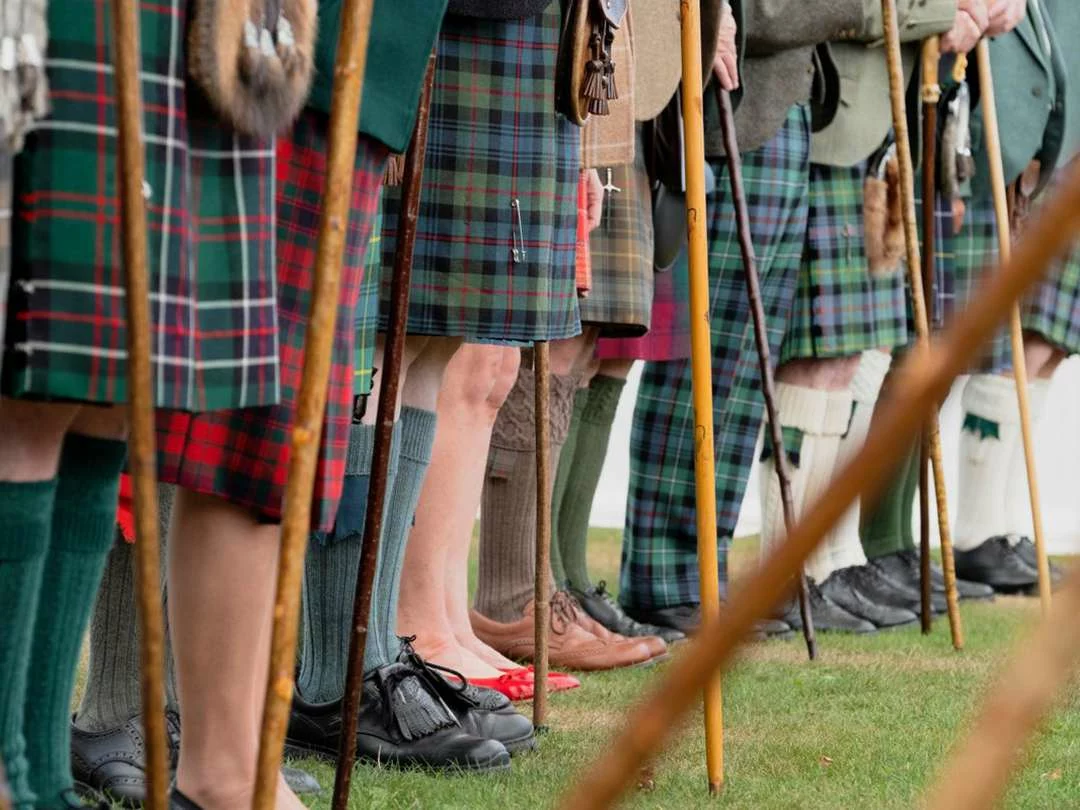
The idea of clan tartans is a more recent tradition than most people realise. Until the late 18th century, tartan (or plaid) was a regional pattern used for clothing across the Highlands, with designs associated with local weavers rather than with specific clans.
The system of officially registered clan tartans was largely invented in the 19th century, in the wake of King George IV’s visit to Edinburgh in 1822 and the rising popularity of Highland gatherings.
Today every clan has at least one registered tartan, and most have variants for individual septs, formal and “hunting” versions, and “ancient” and “modern” colour schemes – the ancient versions use vegetable dye colours, the modern versions use later chemical dyes.
To find your tartan, use
- the Scottish Register of Tartans (the official UK government register)
- Clan.com’s tartan search
- ScotlandShop tartan finder
Step 5: Plan your Scottish ancestry trip
Once you know your clan and your historic lands, the next step is the trip itself. Here is what to do.
Spend a day in Edinburgh at the ScotlandsPeople Centre
The single best place to start is the ScotlandsPeople Centre at the General Register House in Edinburgh. A day pass is £15 and includes access to all the digitised records plus the original parish records and statutory volumes that aren’t online. Staff can help with research questions. Allow a full day and book ahead.
STAY:
- The Balmoral Hotel is the iconic five-star landmark hotel at the top of Princes Street, walking distance from the General Register House.
- For something more affordable, The Hub by Premier Inn and The Edinburgh Grand (a beautiful Art Deco conversion) are both walkable.
Visit your clan lands
Once you know your clan, you know your destination. Clan lands are real places that you can usually still find on a modern map. For the major Highland clans:
- Fraser of Lovat: Beauly and the southern shore of Loch Ness, just south-west of Inverness. The graves of the early Frasers of Lovat are at Beauly Priory; the Wardlaw Mausoleum at Kirkhill holds the later chiefs.
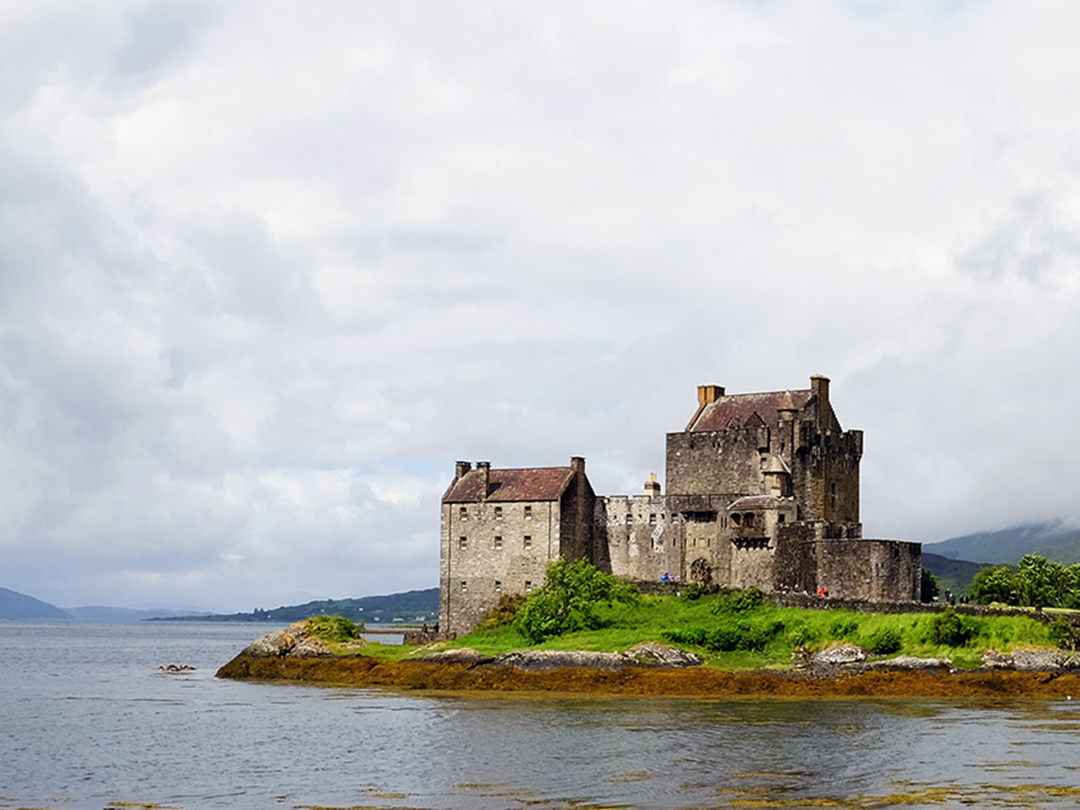
- MacKenzie: Kintail and the West Highlands, with Eilean Donan Castle as the spiritual home.
- Cameron: Lochaber and Fort William, with the Clan Cameron Museum at Achnacarry.
- Campbell: Argyll, with Inveraray Castle and Kilchurn Castle on Loch Awe.
- MacGregor: The Trossachs and Balquhidder, with Rob Roy’s grave in the churchyard.
- Grant: Strathspey and Grantown-on-Spey in the central Highlands.
- Sutherland: The far north, with Dunrobin Castle near Golspie.
- MacLeod: Dunvegan on the Isle of Skye, the only Highland castle continuously occupied by the same family for 800 years.
- Bruce: Dunfermline Abbey (where Robert the Bruce is buried) and Clackmannan in central Scotland.
Read more – my full guide to 12 of the most famous Scottish clans and where to visit.
Looking for an ancestry tour? Here are the best ancestry and clan heritage tours with booking links.
STAY (Highlands):
- Kingsmills Hotel in Inverness is a traditional Highland base
- The Lime Tree Hotel in Fort William is good for Clan Cameron country
- The Cuillin Hills Hotel in Portree is the classic Skye base for MacLeod country
- The Grant Arms Hotel in Grantown-on-Spey is the heart of Clan Grant country.
Attend a Highland Games or clan gathering
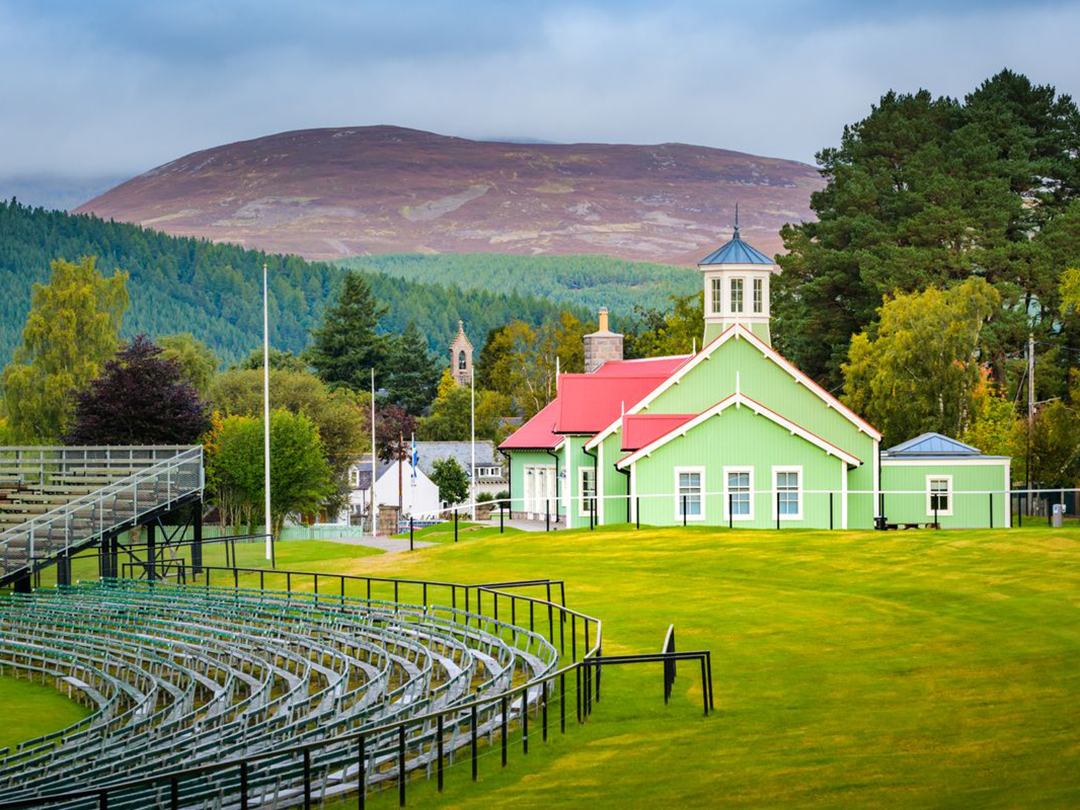
One of the best ways to connect with your Scottish heritage is to attend a Highland Games during your visit. The games are a unique mix of sport, music, dance and clan identity. They feature traditional “heavy” events like the caber toss, hammer throw, shot put and weight over the bar, alongside pipe bands, Highland dancing and tug o’ war.
Most games happen between May and September. The most famous is the Braemar Gathering, held on the first Saturday in September in Royal Deeside and regularly attended by the King and the royal family.
The largest is the Cowal Highland Gathering in Dunoon, in the last weekend of August. The oldest is the Ceres Games in Fife, with a continuous record back to 1314 (when Robert the Bruce supposedly gave the village the right to hold games to celebrate the victory at Bannockburn).
Many clan societies hold their annual gatherings alongside specific Highland Games. The full calendar is at the Royal Scottish Highland Games Association and you can use my events calendar to filter to regions.
Visit a Tartan Day event
Tartan Day on 6 April commemorates the Declaration of Arbroath of 1320, the medieval letter to the Pope asserting Scottish independence.
Tartan Day events run across Scotland and the Scottish diaspora in early April, with the largest concentrated in New York, Edinburgh and Glasgow.
The New York Tartan Day Parade up Sixth Avenue is the biggest single event in the diaspora calendar.
Where to stay on your Scottish ancestry trip
Where you stay depends on your clan and what you want to see. Here is a brief guide by region.
- Far north (Sutherland, Sinclair, Mackay): Dornoch Castle Hotel
- Edinburgh (for the ScotlandsPeople Centre and the National Records of Scotland): The Balmoral Hotel or the The Edinburgh Grand
- Inverness and the Highlands (Fraser, Cameron, MacKenzie, Chisholm, Grant): Kingsmills Hotel or The Lime Tree Hotel in Fort William for Cameron country
- Skye (MacLeod): The Cuillin Hills Hotel, Kinloch Lodge
- Argyll (Campbell, MacLean): The Loch Fyne Hotel, The Inveraray Inn
- Perthshire (Drummond, MacGregor): The Taybank Hotel, Dunkeld, Monachyle Mhor at Balquhidder
- Fife (Bruce, Lowland clans): The Old Course Hotel St Andrews
The Outlander effect
What I love about Outlander is that a TV show has connected so many people to Scotland. You start watching for Jamie and Claire, and somewhere along the way you find yourself reading about Culloden, or looking up where the Frasers actually came from, or working out which clan tartan belongs to your gran’s maiden name. The show is fiction, but Scotland and its history, is real.
Outlander’s filming locations and the real clan lands often overlap, so you can combine your Outlander pilgrimage with your ancestry trip in the same drive.
Read more:
Frequently asked questions
How do I trace my Scottish ancestry?
Start with ScotlandsPeople, the official Scottish government website for family history research. It holds over 100 million individual records, including statutory births, marriages and deaths from 1855, Old Parish Records from as early as 1553, census records from 1841 to 1921, and wills from 1500. Cross-reference with Ancestry.com if you live outside Scotland to trace your family from their point of arrival in the New World back to their last Scottish address.
How do I find my Scottish clan?
Use the Scottish surname search tool at the Council of Scottish Clans and Associations. Many surnames are linked to a clan through “sept” relationships, so you may belong to a clan even if your surname is not the obvious one. Check both paternal and maternal lines. If you have a clan, the search will also tell you where the historic clan lands are.
Can I visit my Scottish clan castle?
Yes, in most cases. Many clan castles are open to the public, including Inveraray Castle (Campbell), Eilean Donan Castle (MacKenzie), Dunvegan Castle (MacLeod), Duart Castle (MacLean), Ballindalloch Castle (Grant) and Dunrobin Castle (Sutherland). Some, like Castle Leod (MacKenzie) and Beaufort Castle (Fraser), are still private homes. The Clan Cameron Museum at Achnacarry traces 27 generations of the chiefly line.
When is the best time for an ancestry trip to Scotland?
Late spring (May and early June) is ideal for both research time at the archives and warm enough weather to drive around the clan lands. Highland Games season runs from May to September, with the most famous Games (Braemar Gathering in September) attended by the royal family. The first Saturday in September is the Braemar Gathering, the last weekend of August the Cowal Gathering. April 6 is Tartan Day, marking the anniversary of the Declaration of Arbroath.
Do I need to know my clan before visiting Scotland?
No. You can find your clan during your trip with the help of the ScotlandsPeople Centre staff in Edinburgh, the Highland Archive Centre in Inverness, or by hiring a professional Scottish genealogist (Scottish Roots, Scots Roots Academy). But identifying your clan in advance is strongly recommended because it lets you plan your road trip around the clan lands.
How much does Scottish ancestry research cost?
Searching ScotlandsPeople indexes is free. Viewing record images costs between £1.50 and £8 per record depending on type. A day pass at the ScotlandsPeople Centre in Edinburgh is £15. Professional Scottish genealogists charge between £30 and £75 per hour, with most family research projects running between £400 and £1,500 depending on complexity. The Scottish Genealogy Society membership is around £40 per year.
What is the Outlander effect on Scottish ancestry tourism?
Since Outlander first aired in 2014, the show has driven millions of additional visits to Scotland’s historic sites. VisitScotland has reported repeatedly that the show has substantially increased ancestry tourism from North America in particular. The show’s portrayal of the Jacobite Risings and the fictional Clan Fraser of Lovat has driven many viewers to research their own Scottish family history. The new prequel, Outlander: Blood of My Blood, is intensifying the effect, particularly for the Fraser, MacKenzie and Grant clans.
Can DNA testing help with Scottish ancestry?
Yes, but with caveats. DNA tests from AncestryDNA, MyHeritage and 23andMe can confirm Scottish ancestry in broad terms and connect you with distant cousins. They cannot, on their own, tell you which clan or village your ancestors came from. The best approach is to use DNA testing as a complement to traditional record-based research, not a replacement for it.
Planning your Scottish ancestry trip? Let me know which clan you’re tracing.
Love from Scotland x

Leave a Reply