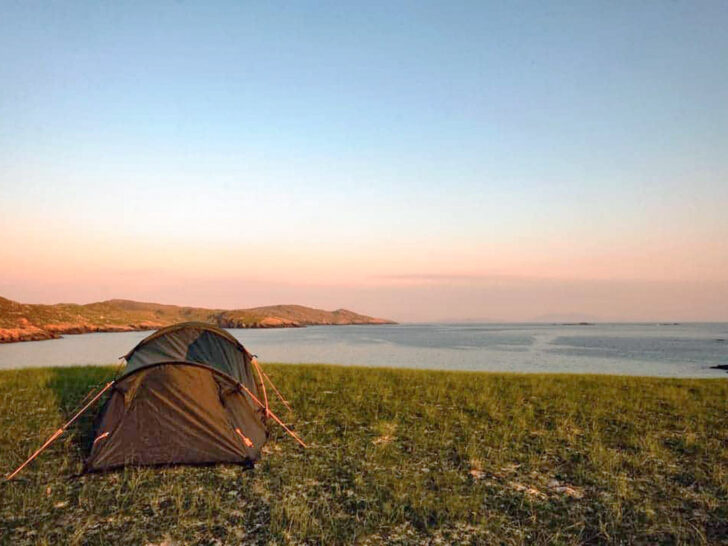


Scotland’s midges are a genuine nuisance, but they’re also largely predictable – a short seasonal window, mostly confined to the west, and easy to avoid if you plan around them. Here’s my honest survival guide.
The Scottish midge season runs from late May to early September, peaking in July and August. You’ll find them mostly on the west coast and in the Highlands, in still, humid, overcast weather. The east coast, Orkney and Shetland are largely midge-free even in peak season.
The rest of this guide breaks down exactly when and where they’re worst, the repellents and kit I actually use, how to treat a bite if you do get caught, and what these tiny beasties actually are.
When are midges worst in Scotland?
Scottish midge season runs from late May to early September, with July and August being by far the worst months. Midges are mainly a problem in the west Highlands and islands; the east coast, Orkney and Shetland are largely midge-free.
Month-by-month midge severity
| Month | Severity | What to expect |
|---|---|---|
| April | None | Too cold for most midges. Safe time to visit. |
| May | Low | First midges appear late in the month in warm, damp western spots. |
| June | Moderate | Numbers build steadily. Manageable on breezy or sunny days. |
| July | Peak | Full swarms, especially after rain. Repellent essential on the west coast. |
| August | Peak | Usually the worst month. Midge forecasts start running daily. |
| September | Moderate | Numbers drop through the month. Late September is usually fine. |
| October | Low | Season effectively over once the first frost hits. |
| November to March | None | Midge-free. Cold weather kills off the adults entirely. |
Planning your trip? You will find midges in Scotland between late May and early September.
There are usually two midge seasons in Scotland – at the start of May and at the start of August, but hot weather can bring them out sooner.
Midges tend to come out in full force at dawn and dusk, just when you want to have a morning coffee or that golden-hour sun-downer drink. But the good news? They hate wind, sun, and dry weather.
Use the Scottish Midge Forecast before heading out, it’s surprisingly accurate and can help you plan your days better.
Thankfully midges can stand a breeze over 6 miles an hour, so search out breezy spots.
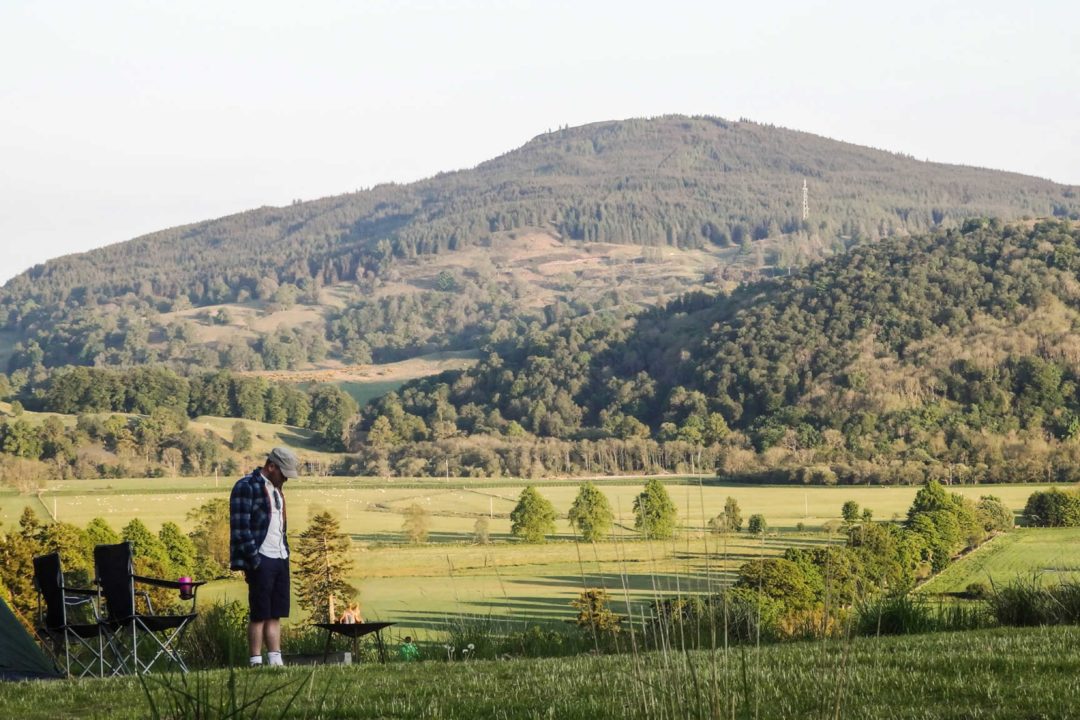
Where are midges in Scotland worst?
Expect to find midges on calm, humid days in the Highlands and west coast.
They also like Scotland’s boggy, peaty wet ground the most.
The worst places for midges in Scotland include
- The west coast and West Highlands
- The Cairngorms
- Loch Lomond & The Trossachs
- Highland Perthshire
- Isle of Skye
You can avoid the dreaded Scottish midge by heading to the south and the east coast of Scotland, so why not visit
Your Scottish Midge survival kit
Pack a midge repellent
- Smidge – Hands down the best midge repellent out there and is DEET free. Designed for Scotland, it contains picaridin and works a treat. You’ll spot it in most shops across the country.
- Avon Skin So Soft Original Dry Oil Body Spray – A cult favourite. Not a repellent, but it seems to put them off biting. Worth packing just in case.
- Deet based repellents – for those who are allergic to biting insects (like I am) a repellent like Jungle Formula with DEET might be your only option.
- The Smoking Midge – one for your campsite, the Smoking Midge are small cones which you light to disguise the 02 from your breath. You could also try the The Wee Midgie Lavender & Bog Myrtle Candle Tin.
- US based? Try Sawyer’s insect repellent which also contains picaridin like Smidge.
Midge and insect repellent clothes
- Midge proof clothing: Scotland’s midges can get everywhere, you can buy clothing that that has insect shield built in. Keela’s insect proof clothing can help keep the midges at bay, with everything from trousers, leggings and t-shirts with insect repellent – you can even get midge proof clothing for your dog!
- Midge net Get a Midge net – yes, you’ll look a bit silly, but if you’re camping or standing still for long, it’s a game-changer.
- Long sleeves and light layers – Midges can’t bite through tight-weave fabrics. Cover up and go for light colours — it could be a myth, but it is thought that pale colours are less attractive to the little beasties.
How to avoid midges when camping and hiking
- Choose your camping pitch carefully – Avoid sheltered, wooded spots near water. High, exposed ground is best.
- Catch the breeze – A 6mph wind is enough to keep midges grounded. Lucky for us, Scotland does wind well.
- Plan your day – Midges are sleepiest in full sun, and most active at dawn and dusk.
- Keep moving – They’re lazy flyers. Walk, cycle, paddle — don’t stop too long and you’ll mostly outrun them.
- Climb a Munro – it is unlikely your will find Scottish midges up a mountain – so why not bag a munro?
- Try a fire – A bit of smoke helps keep the midges away from your tent or picnic table. Follow the Scottish Outdoor Access Code and fire-risk warnings before you light a fire, why not carry a portable fire pit?
Treating midge bites
Midge bites look like small red dots – and they are incredibly itchy. They usually apear a day after you have been been bitten. If you do get bitten then try:
- Anti-histamines – look for over the counter anti-histamines which contain cetirizine such as Piriteze – antihistamines aren’t just for treating hayfever!
- An insect bite cream – I swear by Eurax bite cream to treat my insect bites.
What are Scottish midges, anyway?
The species doing almost all the biting is Culicoides impunctatus, the Highland midge. They’re tiny, about 1mm long, and much smaller than mosquitoes, though equally determined. Only the females bite; they need a blood meal to develop eggs. The males survive on plant nectar and leave you alone.
Midges are attracted to the carbon dioxide you breathe out, which is why they find you even in the middle of nowhere. They can’t fly in wind above about 6mph, dislike direct sunlight, and disappear in cold, dry weather, which is why timing, location, and breezy spots matter far more than any repellent.
Scotland has around 35 species of midge, but Culicoides impunctatus is responsible for roughly 90% of all bites on humans. It breeds in boggy, acidic ground, which is why the west Highlands and islands get the worst of it — that terrain is effectively one enormous midge nursery.
Frequently asked questions
When is midge season in Scotland?
Midge season in Scotland runs from late May to early September, with July and August the peak months. Numbers build through June, hit full swarms in July and August, and drop off through September. The first frost ends the season entirely. Midges are most active at dawn and dusk, and worst on still, humid, overcast days. They cannot fly in winds above about 6mph and disappear in direct sunshine.
Where are midges worst in Scotland?
Midges are worst on the west coast and West Highlands, the Isle of Skye, Loch Lomond and the Trossachs, the Cairngorms, and Highland Perthshire — anywhere with boggy, peaty ground and shelter from wind. You can largely avoid midges by visiting the east coast and south of Scotland: Fife, Aberdeenshire, Moray and Speyside, and the Scottish Borders are much less affected. Orkney and Shetland are windy enough to be essentially midge-free even in peak season.
How do I avoid midges in Scotland?
Use a repellent with picaridin such as Smidge, cover up with long sleeves and light-coloured clothing, and seek out breezy or exposed spots — midges can’t fly in winds over 6mph. Plan outdoor activities for the middle of the day rather than dawn or dusk, and keep moving when walking or hiking. Check the Scottish Midge Forecast at smidgeup.com before heading out. Visiting in spring before May or autumn after September largely avoids them entirely.
What is the best midge repellent in Scotland?
Smidge is widely considered the best midge repellent in Scotland. It’s DEET-free, contains picaridin, and is designed specifically for Scottish conditions — you’ll spot it in most outdoor shops, supermarkets and even petrol stations across the Highlands. Avon Skin So Soft is a cult favourite that many locals swear by, though it isn’t officially a repellent. For people with severe insect allergies, a DEET-based repellent such as Jungle Formula may be more effective.
How do I treat midge bites?
Midge bites appear as small red dots, usually a day after being bitten, and are intensely itchy. Antihistamine tablets containing cetirizine (such as Piriteze) help reduce the reaction. An insect bite cream like Eurax can relieve itching directly. Try not to scratch — it makes the bites worse and can cause them to become infected.
Are Scottish midges dangerous?
Scottish midges are not dangerous. They don’t carry disease and their bites are harmless to almost everyone — just extremely itchy. A small number of people have allergic reactions to the saliva and may develop more noticeable swelling, but medically serious reactions are very rare. The real risk is from scratching bites until the skin breaks, which can cause infection.
Love from Scotland x

Leave a Reply