

Fancy visiting your favourite Outlander filming locations? Then this is the guide for you!
The TV series Outlander was an instant hit when it premiered in 2014. Telling the story of time-travelling lovers Claire and Jamie and their adventures in Jacobite Scotland. Outlander aired its final episode in May 2026 after eight seasons and twelve years on screen.
This is my fully updated 2026 guide to every Outlander filming location in Scotland.
Mild spoilers ahead for the finale.
The top Outlander filming locations
Here are the headline filming locations you’ll want to visit:
- NEW! North Third Reservoir. King’s Mountain, the last scene of Outlander
- Doune Castle. Castle Leoch, home of Clan MacKenzie
- Midhope Castle. Lallybroch, Jamie Fraser’s ancestral home.
- Culross. The fictional village of Cranesmuir.
- Falkland. Stood in for 1940s Inverness, where Claire and Frank honeymoon.
- Bakehouse Close. Jamie’s print shop on Carfax Close, Edinburgh.
- Craigmillar Castle. Ardsmuir Prison, where Jamie is held after Culloden
- Blackness Castle. Fort William, Black Jack Randall’s headquarters.
- Linlithgow Palace. Wentworth Prison interiors.
- Preston Mill. Lallybroch Mill, scene of Jamie’s Mr Darcy moment.
- The Devil’s Pulpit. The Liar’s Spring at Finnich Glen.
- Kinloch Rannoch. The site of the Craigh na Dun stone circle.
- Drummond Castle Gardens. Versailles.
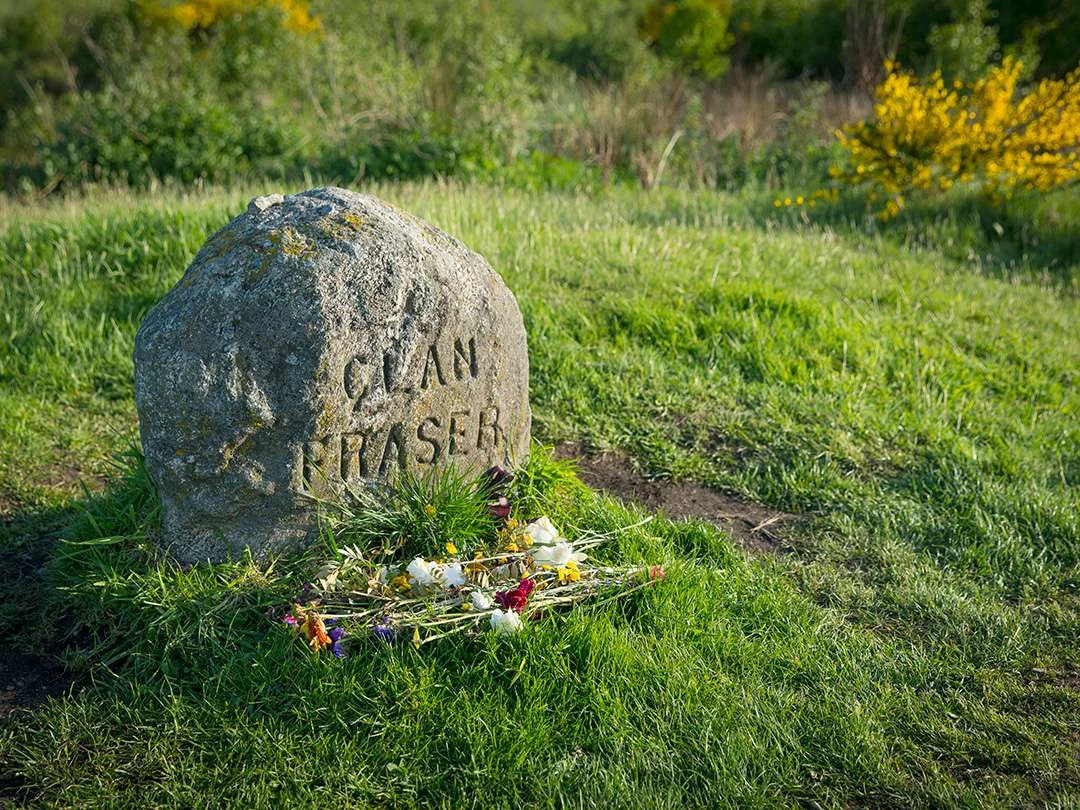
- Culloden Battlefield. The Fraser clan memorial stone.
- Glasgow Cathedral & University of Glasgow. L’Hôpital des Anges and Harvard.
- The Signet Library. The Governor’s Mansion in Jamaica.
Below is the my full guide and map
Outlander and Blood of My Blood filming locations
Every location from both guides on one map. Filter by show, pick a region to zoom in, then tap a pin for how to visit.
OutlanderBlood of My Blood (BOMB)Both
Pick a region to zoom ·
tap a pin
Bakehouse Close
Where Claire finds Jamie again after twenty years. The print shop isn't real, but you can walk through the archway and climb the same steps. Look for the Bakehouse Close sign at Huntly House on the Canongate.
↑ Back to mapTweeddale Court
Almost opposite Bakehouse Close, this is where Claire and Jamie meet Fergus after their reunion. Off the High Street, near the World's End pub.
↑ Back to mapThe Signet Library
The society ball from season three. It's a working legal library, so the way in is to book afternoon tea at Colonnades downstairs.
↑ Back to mapSummerhall
The old veterinary anatomy lecture theatre where Claire starts her medical studies and meets Joe Abernathy. It opens for events and tours rather than every day, so check what's on.
↑ Back to mapCraigmillar Castle
Where Jamie is held after Culloden and first meets Lord John Grey. Far quieter than Edinburgh Castle, with great views back over the city. About 20 minutes by bus from the Royal Mile.
↑ Back to mapMidhope Castle
Jamie's ancestral home, and expected back in Blood of My Blood season two once Brian and Ellen marry. Tickets cover the exterior. The interior was derelict for years and is only now opening to visitors. Use postcode EH30 9RW and follow the single-track road for about a mile and a half.
↑ Back to mapHopetoun House
One of Outlander's hardest-working locations, also used for the duels and for Jamie teaching Willie to ride. Open Friday to Monday. A joint ticket with Midhope is £18.50.
↑ Back to mapBlackness Castle
Black Jack Randall's headquarters in Outlander, and new to Blood of My Blood for season two after closing for three weeks of filming in autumn 2025. Its role in the prequel hasn't been confirmed yet. No car? Take the train to Linlithgow, then the no. 49 bus.
↑ Back to mapLinlithgow Palace
The birthplace of Mary, Queen of Scots gave Wentworth Prison its interiors. Five minutes' walk from Linlithgow station, and an easy pairing with Blackness and Midhope.
↑ Back to mapNewhailes House
A beautifully preserved house with its original Georgian interiors, used in the later American seasons. National Trust for Scotland, free for members.
↑ Back to mapGosford House
The exterior of Helwater, where Jamie works as a groom after Ardsmuir. It's a private house and wedding venue with only occasional tours, so check before you travel.
↑ Back to mapPreston Mill
The working water mill where Jamie strips off to clear the wheel. National Trust for Scotland, free for members. Book in advance.
↑ Back to mapGlencorse Old Kirk
The little kirk in the hills south of Edinburgh where Claire and Jamie marry. It's still used for weddings, so visits are by appointment only. Email ahead.
↑ Back to mapCulross village
Geillis Duncan's village, with the witch trial and pillory scenes filmed around the Mercat Cross. Blood of My Blood used it for period village scenes and came back for season two. It's pronounced coo-ris. Free parking at each end of the village.
↑ Back to mapCulross West Kirk
The ruined kirk from The Way Out, where Claire works out that lily of the valley is poisoning the village boys. About a mile's walk uphill from the village.
↑ Back to mapCulross Abbey House
The exterior of Lady Nairn's home, where the Jacobites meet Rob Roy. The house is private, but you can see it from the grounds of Culross Abbey next door, which is free to visit.
↑ Back to mapAberdour Castle
Where Claire and Murtagh bring Jamie to recover after Wentworth. Look for the painted ceilings and the dovecot in the gardens. The castle is right beside Aberdour station.
↑ Back to mapDysart Harbour
The harbour that stood in for Le Havre. Have a coffee at the Harbourmaster's House, then carry on along the Fife Coastal Path. You can walk here along the coast from Kirkcaldy.
↑ Back to mapFalkland
Where Claire and Frank honeymoon at the start of it all. Find the Covenanter Hotel, which played Mrs Baird's B&B, and the Bruce Fountain, where the ghost of Jamie appears. Falkland Palace is a short walk away.
↑ Back to mapMelville House
The Clan Grant seat, first seen when Henry arrives to act as bladier. The house is private and you can't walk up to it. Booking a stay at Melville Escapes in the grounds is the only way to see it up close.
↑ Back to mapGlasgow Cathedral
The crypt became the Paris hospital where Claire volunteers in season two. Free to visit, with volunteer guides. Walk up to the Necropolis behind it for the view.
↑ Back to mapGeorge Square
Dressed as the 1940s for the flashback where Frank proposes to Claire. Right in the city centre, in front of the City Chambers.
↑ Back to mapUniversity of Glasgow
The cloisters and quadrangle doubled as Harvard, where Frank teaches and Brianna later studies. Free to walk round, best on a weekday. Allow an hour.
↑ Back to mapPark Terrace
The London street where Henry Beauchamp lives. It's residential, so be considerate. Ten minutes' walk from Kelvingrove Art Gallery.
↑ Back to mapPark Circus
The exterior of Julia Moriston's flat, five minutes from Park Terrace. These are people's homes, so keep it quick and quiet.
↑ Back to mapKelvingrove Park Garden Steps
Julia waits at the top of these steps when Henry comes home from the trenches. Look for the grand flight of stairs leading up from the park towards Park Terrace.
↑ Back to mapPollok Country Park
The woods stood in for the land around Leoch and for the French countryside. The park is also home to the Burrell Collection and Glasgow's own fold of Highland cows.
↑ Back to mapLuss village
Dressed as an 18th-century Highland settlement for the clan gatherings, the deer hunt and the Beltane celebrations. One of the busiest villages in Scotland in summer, so come early or on a weekday.
↑ Back to mapFinnich Glen & the Devil’s Pulpit
Where Dougal tests whether Claire is lying. The path down is steep, muddy and seriously slippery, and people have been badly hurt here. Wear boots and stay away after heavy rain.
↑ Back to mapLoch Katrine
Where Brianna and Roger spend time together in season two. Sail it on the steamship Sir Walter Scott from Trossachs Pier, April to October.
↑ Back to mapDoune Castle
The MacKenzie seat in both shows, and one of the few locations you can go inside. Pick up the audio guide narrated by Sam Heughan. Parking at the castle is tight, so use the village car parks when it's busy.
↑ Back to mapNorth Third Reservoir
The last scene of Outlander was filmed on the crags of Lewis Hill above the reservoir. It's a 5.6km circular walk, steep at first, from a small layby by the bridge over the Bannock Burn. Parking is very limited.
↑ Back to mapBannockburn House
One of the few Blood of My Blood locations you can go inside. Guided tours led by the head of conservation take in the Laigh Hall and the Bonnie Prince Charlie Bedchamber. Book ahead.
↑ Back to mapKilbride Castle Chapel
Seen in scenes with Julia, Lord Lovat, Davina, Brian and a young Murtagh. It's on a working estate down single-track lanes, with room for only a car or two at the gate. Park considerately.
↑ Back to mapBalvaird Castle
Lord Lovat's bleak tower house, and back again for season two. The interior is derelict, but the outside is intact and open all the time. Wear sensible shoes, the ground is uneven and often muddy.
↑ Back to mapTibbermore Parish Kirk
The interior of the witch trial in The Devil's Mark. Open daily from April to October, and by request at other times. Postcode PH1 1QJ.
↑ Back to mapDrummond Castle Gardens
The parterre doubled as the gardens of Versailles, where Claire comes face to face with Black Jack Randall. Gardens only, open May to October.
↑ Back to mapThe Blood of My Blood bridge
A small stone bridge on a working estate. Park at Glenartney Church, walk about 500 metres back along the road to the white estate gate, then follow the track for 20 minutes. Go quietly, close the gates and leave it exactly as you found it.
↑ Back to mapCraigh na Dun, Kinloch Rannoch
Claire goes through the stones here in Outlander, and Henry and Julia in Blood of My Blood. The stones were a film set and are long gone, but the outcrop is still there and the views over Loch Rannoch are spectacular. Park in the village and walk up.
↑ Back to mapCulloden Battlefield
Claire visits the Fraser stone at the end of season two. The battle scenes weren't filmed here, out of respect for the war graves, so keep your voice low. Allow two to three hours with the visitor centre.
↑ Back to mapClava Cairns
Not a filming location, but the 4,000-year-old cairns and stone circle that inspired Diana Gabaldon's Craigh na Dun. Free, usually quiet, and ten minutes from Culloden.
↑ Back to mapHighland Folk Museum
The turf-roofed township from the rent-collecting episodes with Dougal. The site is huge, so allow three to four hours.
↑ Back to mapGlencoe
The Three Sisters and the Pass of Glencoe give Outlander its sweeping Highland shots. The NTS visitor centre tells the story of the 1692 massacre.
↑ Back to maplocations showing
Several of these are private homes, working estates and war graves, so go quietly, park considerately and stick to the Scottish Outdoor Access Code. Prices and opening times change, so check before you set off. Blood of My Blood season two is still airing, and I add new locations as each episode confirms them.
Outlander filming locations in central Scotland
The vast majority of Outlander’s iconic locations sit in central Scotland’s within an hour’s drive of either Edinburgh or Glasgow.
NEW! North Third Reservoir (King’s Mountain)
The closing moments of the show – Jamie and Claire lying side by side on King’s Mountain after the battle that fans had been dreading for an entire season – were filmed not in North Carolina, but on the edge of a North Third Reservoir, near Stirling.
From the top of Lewis Hill, an outlier of the Touch Hills with a trig point perched right on the edge of the crags, you get panoramic views across the reservoir and, on a clear day, all the way to Ben Ledi, Stùc a’Chròin, and Ben Vorlich in the southern Highlands.
You can Lewis Hill on a circular route of around 5.6km (3½ miles), starting from a small layby beside the bridge over the Bannock Burn at the south end of the reservoir. The path climbs steeply at first through beech, larch, and oak woodland before opening out onto the crags and the trig point where the final scenes were filmed.
Free, open access. Very limited parking at layby on the south side of the reservoir near the bridge over the Bannock Burn.
Doune Castle (Castle Leoch)
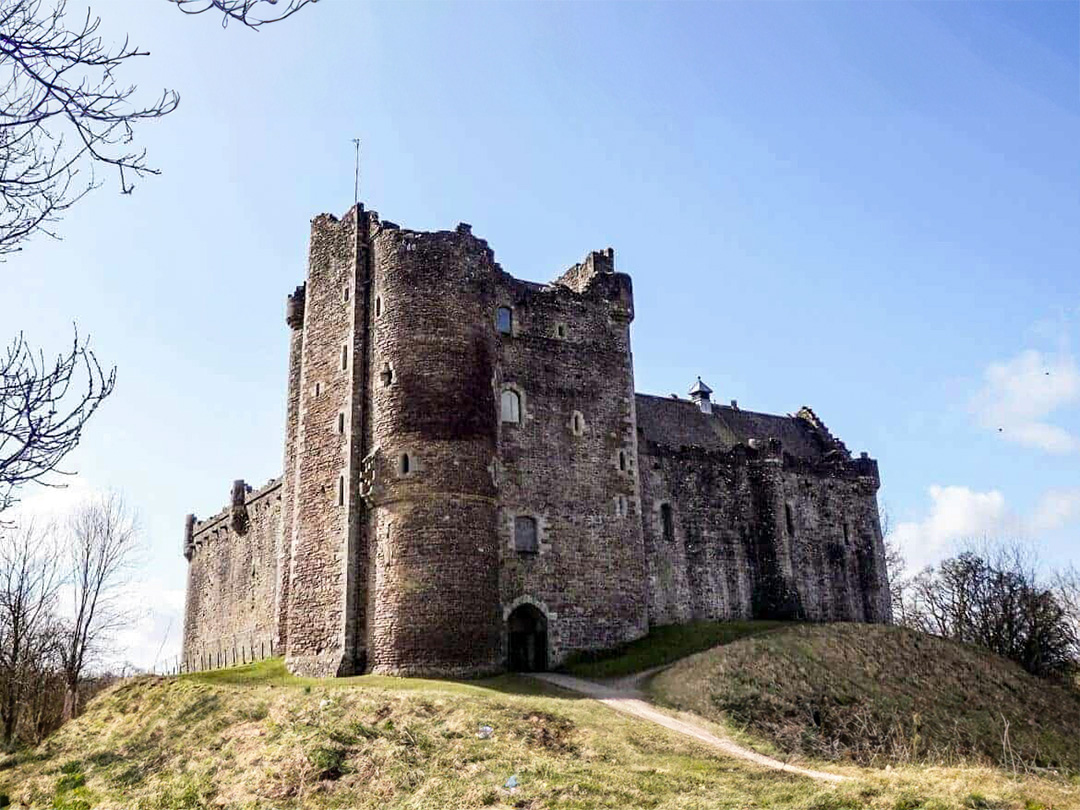
Sitting on the River Teith between Stirling and Callander, this 14th-century castle was used as Castle Leoch, home of Clan MacKenzie, where Claire first meets Colum after being thrown back in time. The Great Hall, the kitchen, the courtyard, and the gatehouse all appear in countless scenes from season one onwards.
Doune Castle is one of Scotland’s best-preserved medieval castles, also famously the filming location for the Holy Grail in Monty Python and the original pilot of Game of Thrones. The audio guide narrated by Sam Heughan is brilliant.
Doune Castle is managed by Historic Environment Scotland. Adults £10, free for members. There is restricted parking at the castle, use parking in the village car parks where possible.
Midhope Castle (Lallybroch)
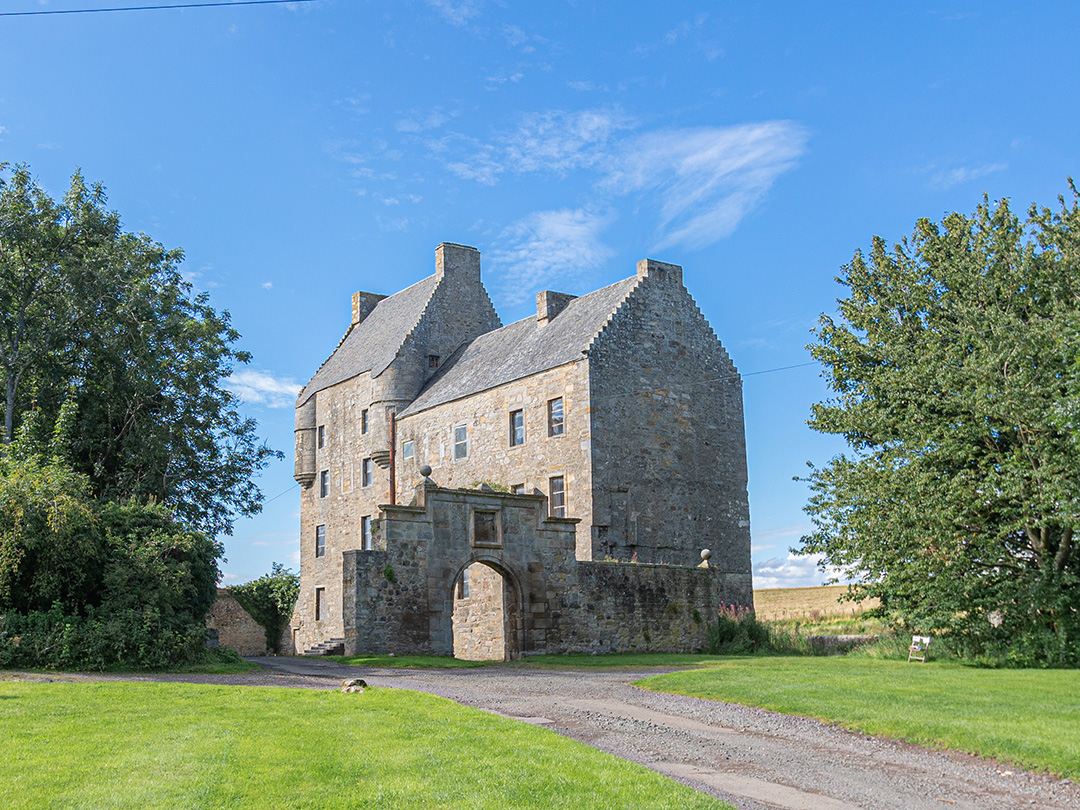
The other immediately recognisable Outlander filming location, Midhope Castle is the 15th-century tower house that stands in for Lallybroch, the Fraser family seat (also known as Broch Tuarach). Tucked away on the Hopetoun Estate near South Queensferry, the castle has become a pilgrimage site for fans.
A note – Midhope is the exterior only, the interior remains derelict but has recently been opened to the public.
The wider Hopetoun Estate appeared in countless other Outlander scenes too. The Paris street market, Jamie teaching Willie to ride, sword fights, duels. The estate has produced their own Outlander filming locations map if you want to find every spot.
Midhope Castle tickets are £6 for adults, or you can book a joint Midhope and Hopetoun House ticket for £18.50. Use postcode EH30 9RW and follow the single-track Farquhar Terrace for around 1.5 miles.
Blackness Castle (Fort William)
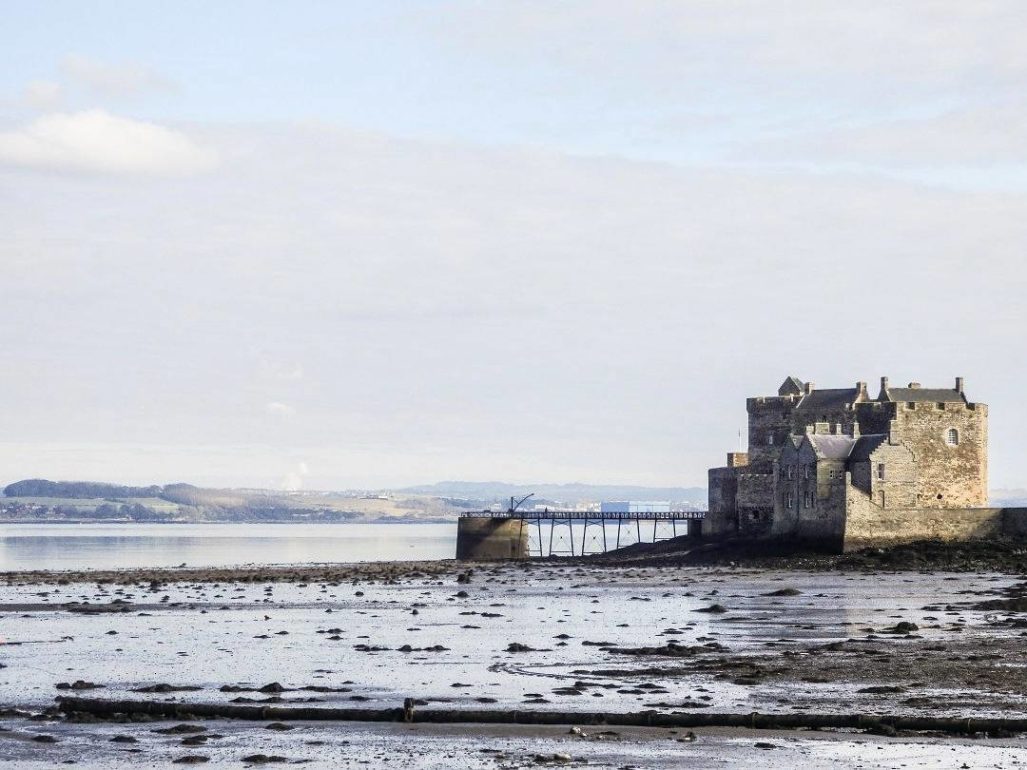
Blackness Castle juts out into the Firth of Forth on a rocky promontory, shaped so much like a ship that it’s been nicknamed “the ship that never sailed.”
Built in the 1440s and fortified through the 16th century, it’s fortress not palace. Blackness is the perfect setting for one of Outlander’s most brutal storylines. In the show, Blackness stands in for Fort William, the headquarters of Black Jack Randall, and the scene of Jamie’s flogging. (You’ll remember.)
Blackness Castle is managed by Historic Environment Scotland. Adults £7.50. There’s car parking on site, or you can catch the train to Linlithgow and the no. 49 First Bus.
Linlithgow Palace (Wentworth Prison)
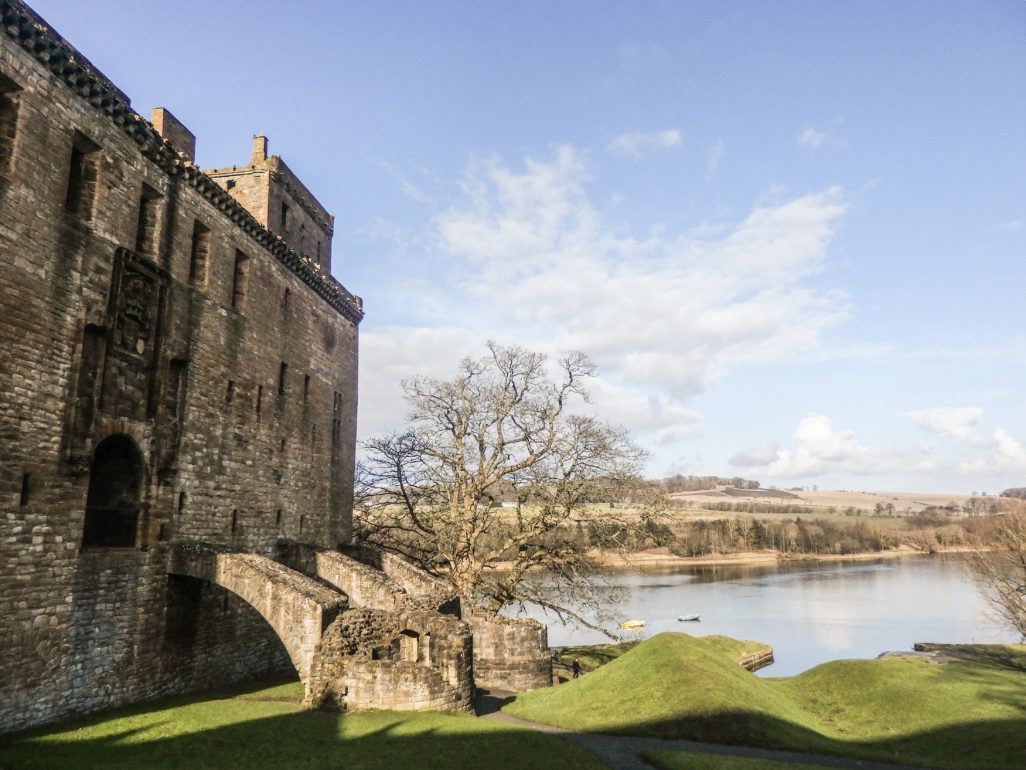
Linlithgow Palace was the birthplace of Mary, Queen of Scots, and it’s one of the most romantic ruined palaces in Scotland. In Outlander, the interiors of Linlithgow Palace become Wentworth Prison, the site of one of the most harrowing storylines in season one. Exterior shots of Wentworth were filmed at Bamburgh Castle in northern England. Linlithgow gave the interiors.
The palace itself is well worth a visit. The Great Hall, the King’s Fountain in the central courtyard, the chapel are all extraordinary.
Linlithgow Palace is managed by Historic Environment Scotland. Adults £8.50, free for members. There’s a small car park on site, or it’s a five-minute walk from Linlithgow station.
Falkland (1940s Inverness)
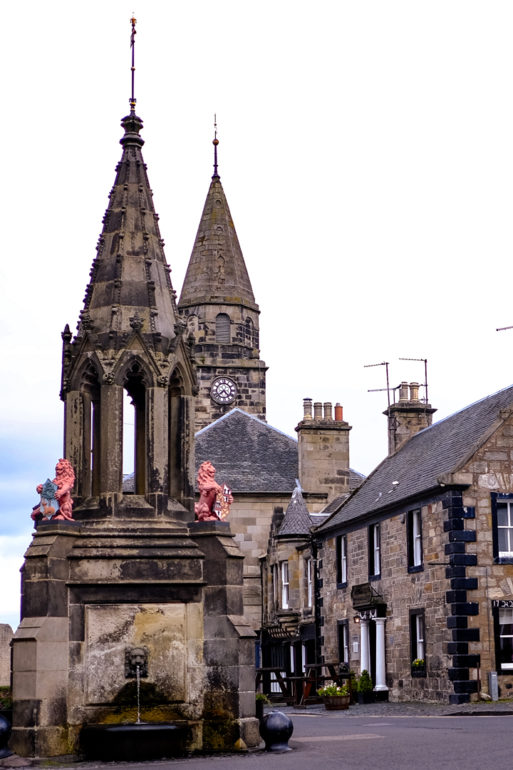
Falkland in north-east Fife is one of Scotland’s prettiest conservation villages. The village has Royal Burgh status, cobbled streets, and painted shopfronts. In Outlander, the village stood in for 1940s Inverness, the setting for Claire and Frank’s second honeymoon at the start of season one.
In Falkland you can visit the Covenanters Inn (used as the exterior of Mrs Baird’s B&B) and the Bruce Fountain in the village square, behind which Claire first thinks she sees the ghost of Jamie.
After your filming location tour, don’t miss Falkland Palace (where Mary Queen of Scots played tennis) and the lovely Falkland Estate with its waterfall walks up the Maspie Den. East Lomond is the steep climb to the top for views across Fife.
Read more – How to visit Fife.
Culross (Cranesmuir)
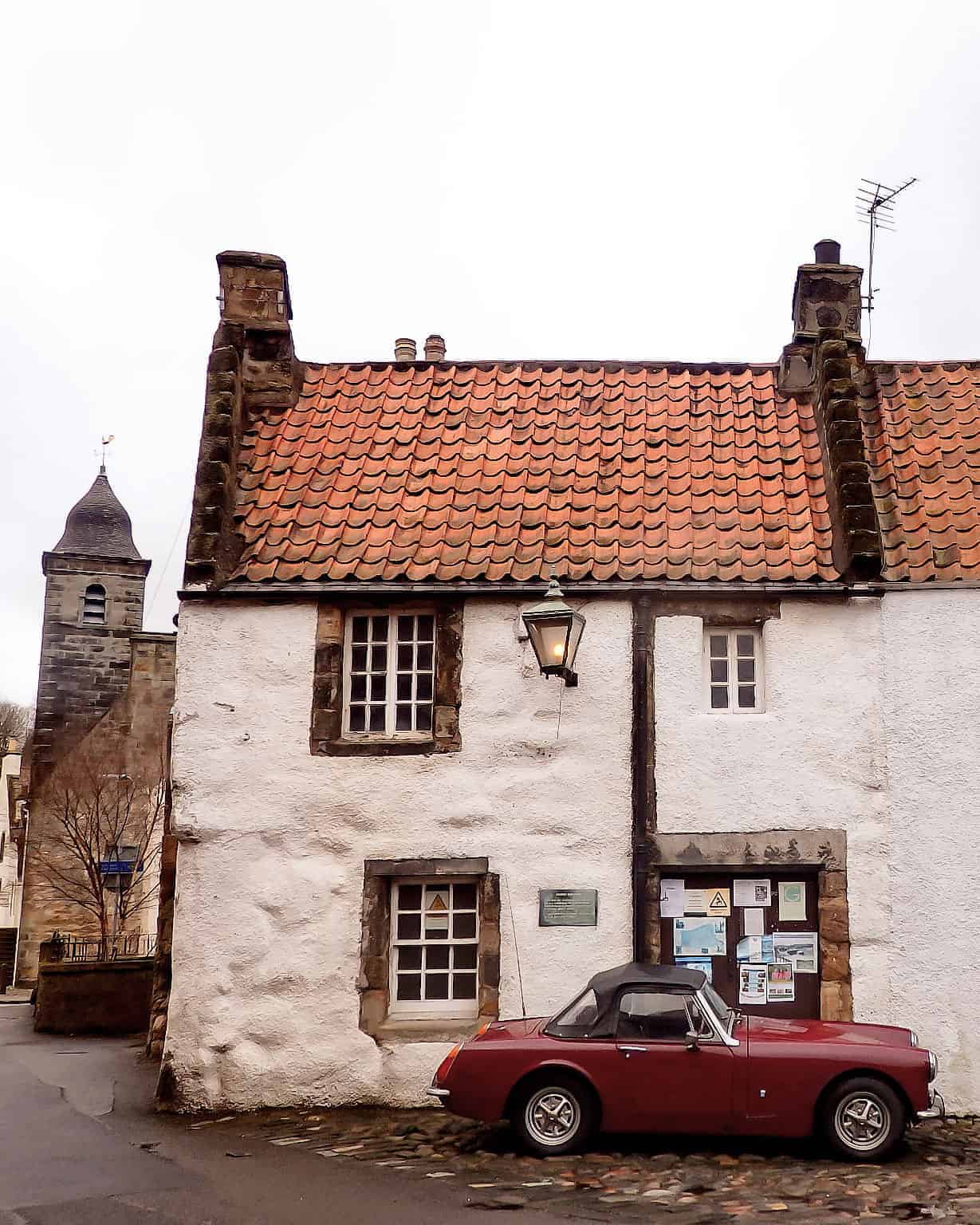
Culross (it’s pronounced “coo-ris,” not “cull-ross”) is one of Scotland’s best-preserved 17th-century villages, and is located in West Fife on the Firth of Forth. In Outlander, the village becomes Cranesmuir, home of Geillis Duncan and the village closest to Castle Leoch.
The square at the Mercat Cross was used for many of the most memorable scenes. Including the witch trial of Geillis and Claire, and the squeamish pillory scene from season one. The buildings around the square were painted blue for filming. The Study House, built in 1610 for a wealthy Culross merchant, became Geillis Duncan’s home. The gardens of Culross Palace and the West Kirk outside the village were also used as Outlander filming locations.
Culross is in West Fife near Dunfermline. From Edinburgh or Glasgow the drive is around 40 minutes to an hour. Free parking at each end of the village.
Read more my full guide to Culross.
Culross West Kirk (the Black Kirk)
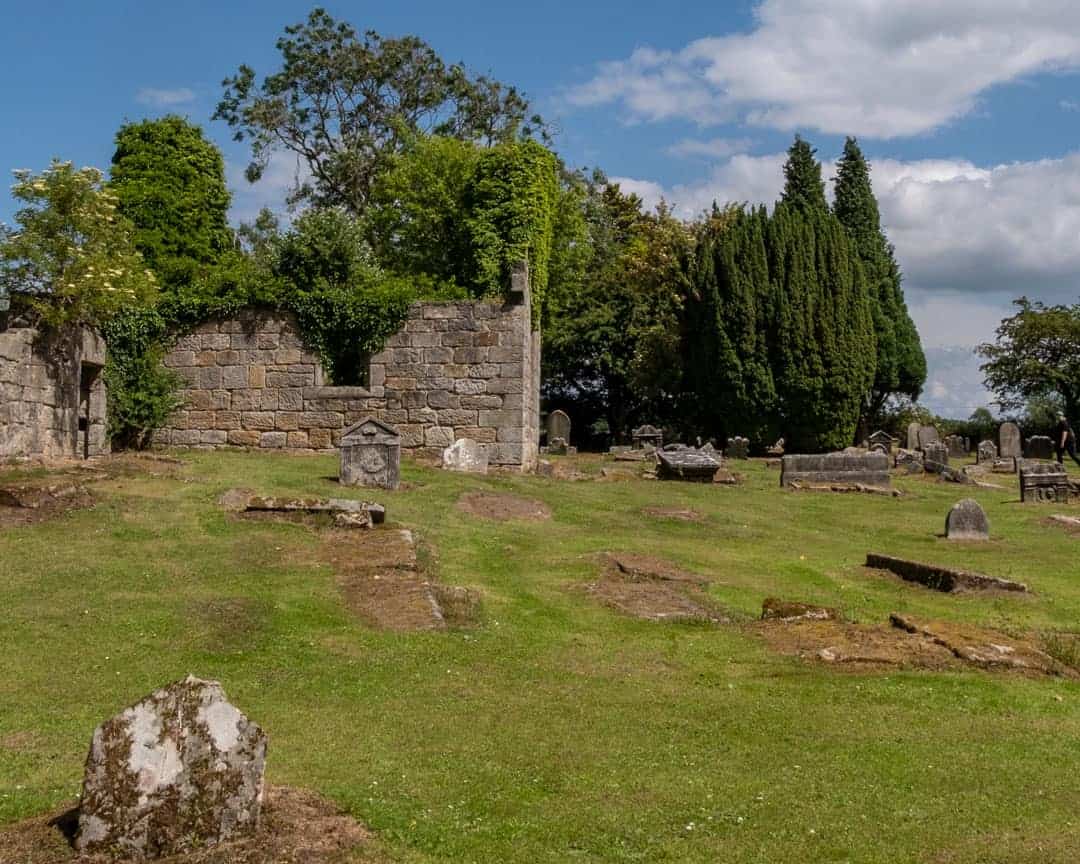
A mile west of Culross village, are the ruins of Culross West Kirk. In season one episode three, “The Way Out,” the West Kirk stands in for the Black Kirk: the ruined Benedictine monastery where two boys from Cranesmuir are believed to have been possessed by demons. Claire investigates with Jamie and works out the real culprit: lily of the valley, mistaken by the boys for wild garlic.
Free, open access. About a mile’s walk uphill from Culross village.
Aberdour Castle (the monastery)
Aberdour Castle in Fife is one of the oldest castles in Scotland, dating back to the 12th century. In Outlander, the castle was transformed into the monastery in France where Claire and Murtagh bring Jamie to recover after his time in Wentworth Prison. The painted ceilings in the upper rooms and the medieval dovecot in the gardens are particularly beautiful.
Aberdour Castle is managed by Historic Environment Scotland. Adults £8.50, free for members.
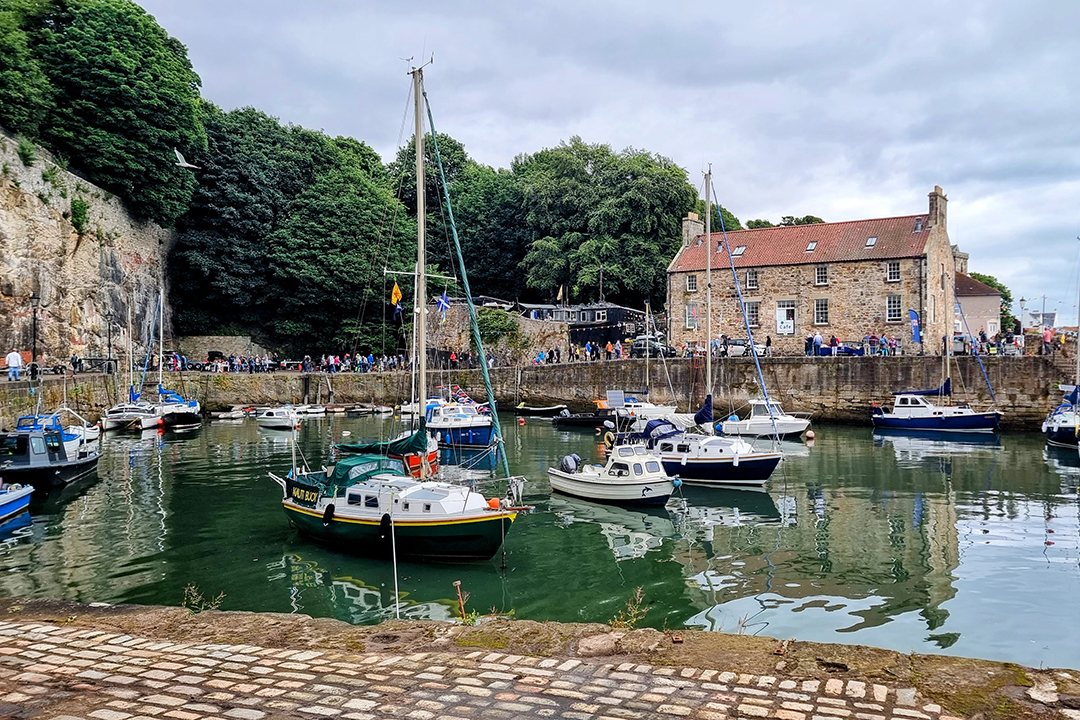
Dysart Harbour (Le Havre, France)
Just along the Fife coast from Kirkcaldy is Dysart, a small fishing village with an enchanting harbour. In Outlander, Dysart Harbour stood in for Le Havre in France, the harbour from which Claire and Jamie sail to America.
Stop for a coffee at the Fife Coastal Path centre at the Harbourmaster’s House before wandering on along the coast path to West Wemyss. Along the way is the small but mighty Ravenscraig Castle, built in 1460. Dysart is accessible along the Fife Coastal Path from Kirkcaldy.
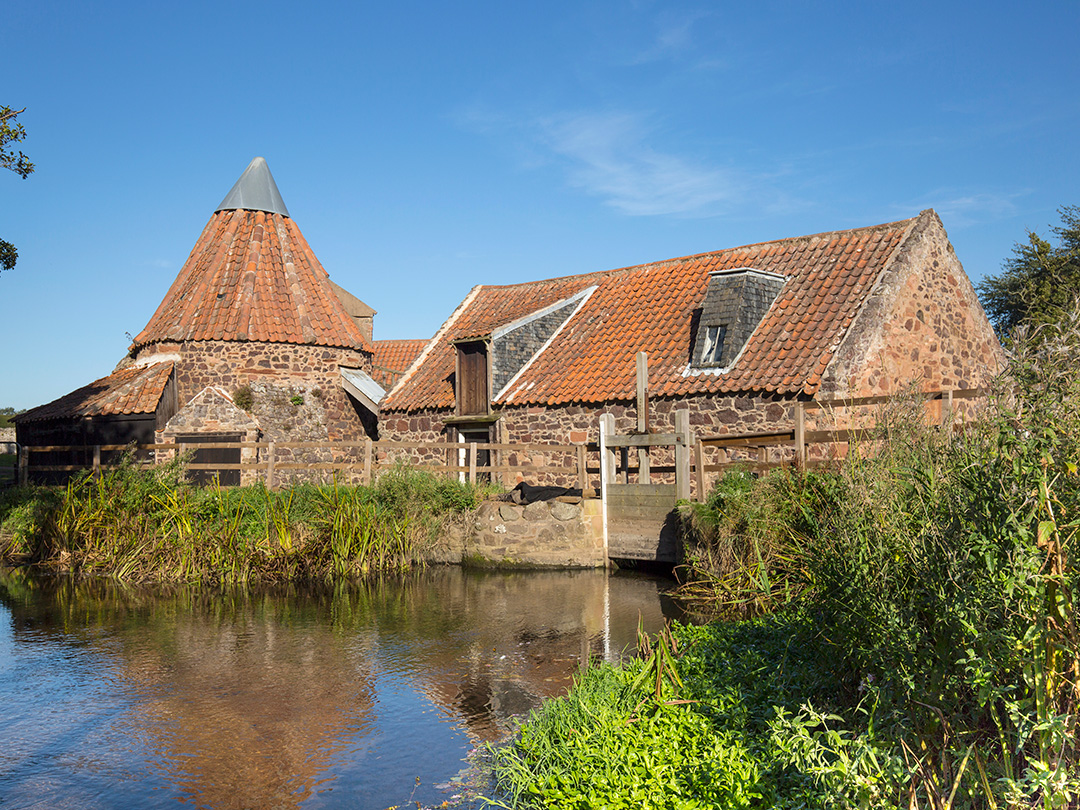
Preston Mill (Lallybroch Mill)
Preston Mill in East Lothian is a working 18th-century water mill with a distinctive conical kiln and red pantile roof. In Outlander, it becomes Lallybroch Mill, the scene where Jamie strips off and goes for a swim, Mr Darcy style, to clear a blockage.
The mill is now run by the National Trust for Scotland and has been carefully restored.
Preston Mill & Phantassie Doocot is £11 for adults, free for NTS members. Book in advance.
Glencorse Old Kirk (Jamie and Claire’s wedding)
The lovely little Glencorse Old Kirk sits in the hills south of Edinburgh, near Penicuik. This is where Claire and Jamie get married in season one. The kirk dates back to the 12th century in some form, with the present building from the early 1800s, and it’s still a working church for occasional services and weddings.
Glencorse Old Kirk is open by appointment only. Plan ahead and email the kirk to arrange a visit.
Outlander filming locations in Edinburgh
Edinburgh’s Old Town gave Outlander some of its most atmospheric scenes. Particularly in season three, when Claire returns through the stones to find Jamie running a print shop on Carfax Close. Many of the closes off the Royal Mile were used for filming, often heavily dressed and decorated to recreate 18th-century Edinburgh.
Bakehouse Close (Carfax Close. Jamie’s print shop)
Bakehouse Close, just off the Royal Mile near Canongate, stood in for the fictional Carfax Close, home to A. Malcolm’s Print Shop, where Claire is reunited with Jamie after twenty years apart.
The print shop itself doesn’t exist. The door at the top of those famous steps leads to a dead end. But you can walk through the tunnelled archway and up the same staircase that Claire climbed.
The neighbouring Acheson House also appeared in Outlander, its exterior used for Madame Jeanne’s brothel. And the building was, historically, actually a brothel called the Cock and Trumpet.
Free, open access. Look for the sign for Bakehouse Close at Huntly House on the Royal Mile, near Canongate. Easy to miss if you’re not looking for it.
Tweeddale Court (the marketplace)
Almost opposite Bakehouse Close is Tweeddale Court, another atmospheric Edinburgh close.
In season three of Outlander, the court was transformed into a bustling 18th-century marketplace, where Claire and Jamie meet Fergus shortly after their reunion. The court dates from the 14th century and includes a surviving section of the medieval King’s Wall.
Free, open access. Off the High Street, near the World’s End pub.
The Signet Library (the Governor’s Mansion in Jamaica)
The Signet Library on Parliament Square has one of the most spectacular Georgian interiors in Edinburgh. A double-height hall with Corinthian columns and ornate plasterwork. In Outlander season three, it was transformed into the Governor’s Mansion in Jamaica, where Claire and Jamie attend a society ball.
The library is a working legal institution and not generally open to the public, but the Colonnades restaurant downstairs serves one of the best afternoon teas in Edinburgh, in the same building.
Book afternoon tea at Colonnades to access the Signet Library building. The Upper Library is closed to the public except on special open days.
Craigmillar Castle (Ardsmuir Prison)
Craigmillar Castle is a 14th-century fortress just south of Edinburgh’s city centre, with one of the best-preserved medieval interiors in Scotland. In Outlander season three, Craigmillar stands in for Ardsmuir Prison, where Jamie is held after Culloden alongside other Jacobite prisoners. And where he meets Lord John Grey for the first time.
Craigmillar is also where Mary, Queen of Scots took refuge after the murder of David Rizzio. The local area is still known as “Little France” because of her French retinue. It is quieter than Edinburgh Castle, often almost empty, and the views over the city are remarkable.
Craigmillar Castle is managed by Historic Environment Scotland. Adults £8, free for members. About 20 minutes from the Royal Mile by bus, or 10 minutes by car. The Northwest Gilmour Tower is currently closed.
Summerhall (Claire’s medical school)
The atmospheric anatomy lecture theatre at Summerhall, in Edinburgh’s southside, was used to film the scene where Claire begins her medical studies in 1960s Boston and meets her friend Joe Abernathy. The room is the original Royal (Dick) School of Veterinary Studies anatomy lecture theatre, with steep banks of wooden benches.
Summerhall hosts events year-round and the lecture theatre is sometimes open as part of arts events and tours.
The Palace of Holyroodhouse (in the books)
The Palace of Holyroodhouse, the King’s official Scottish residence at the foot of the Royal Mile, doesn’t actually appear as a filming location. But Outlander book readers will know it as the palace where Claire and Jamie beseech Bonnie Prince Charlie to abandon his Jacobite cause. The real Prince Charlie did indeed spend time at Holyrood in 1745, and a visit makes a perfect bookend to a Royal Mile Outlander walk.
The Palace of Holyroodhouse is open year-round. Adults £20.
Outlander filming locations in Glasgow
Glasgow’s grand Victorian architecture and dense city centre stood in for a number of Outlander’s overseas locations. Paris, Boston, and 1960s Harvard. Most are walkable in an afternoon.
Glasgow Cathedral (L’Hôpital des Anges, Paris)
Glasgow Cathedral is the only medieval cathedral on mainland Scotland to have survived the Reformation intact, dating from the 12th century. In Outlander season two, the cathedral’s crypt was used to film the scenes set in L’Hôpital des Anges in Paris. The hospital where Claire volunteers as a healer and where she suffers the stillbirth of her daughter Faith. The atmospheric vaulted stone of the crypt makes it one of the most affecting filming locations in Scotland.
Glasgow Cathedral is free to visit, open year-round. Volunteer guides offer free tours.
Don’t miss the Glasgow Necropolis on the hill behind the cathedral. A vast Victorian garden cemetery with sweeping views over the city.
University of Glasgow (Harvard University)
The University of Glasgow’s Gothic Revival Main Building, with its vaulted cloisters and Bute Hall, doubled as Harvard University in seasons three and four. This is where Frank Randall teaches in 1960s Boston, and decades later where Brianna studies and Roger Wakefield works. The cloisters and main quadrangle are the most recognisable spots.
The university sits in the West End, surrounded by the Hunterian Museum, Kelvingrove Park, and some of Glasgow’s best restaurants and bars. Free to walk the cloisters and quadrangle. Best visited Monday to Friday. Allow an hour.
Pollok Country Park (the grounds of Castle Leoch)
Pollok Country Park, south of the Clyde, is one of Glasgow’s largest parks. The woodlands and grounds were used for several Outlander filming scenes. Including the surrounding grounds of Castle Leoch and parts of the French countryside in season two.
The park is also home to the Burrell Collection, one of the UK’s best art galleries.
Pollok Country Park is free, open year-round.
George Square (Frank and Claire’s 1940s Boston)
Glasgow’s George Square was dressed for filming as 1940s Boston, where Frank Randall proposes to Claire in flashbacks from season one.
George Square is at the centre of Glasgow, surrounded by City Chambers and the city’s classic Victorian and Edwardian architecture.
Outlander filming locations in the Highlands
The Highlands provide Outlander’s emotional core. Culloden, Clava Cairns, Craigh na Dun. These are the sites worth crossing the country for, and they pair well with a road trip up the A9 from Perthshire to Inverness.
Kinloch Rannoch (Craigh na Dun)
The stone circle at Craigh na Dun, where Claire first hears the buzzing and travels back in time to 1743, isn’t real. The stones were a film set, installed on a remote outcrop above Kinloch Rannoch in Highland Perthshire and removed after filming. But you can still visit the outcrop itself, and the views across Loch Rannoch and the surrounding mountains are some of the most spectacular in Scotland.
The outcrop is on private estate land but the path up is accessible under the Scottish Outdoor Access Code. Park in Kinloch Rannoch village and walk up.
Clava Cairns
If Kinloch Rannoch is the filming location for Craigh na Dun, Clava Cairns near Inverness is the inspiration. The 4,000-year-old Bronze Age burial cairns are surrounded by a real stone circle. And Diana Gabaldon has confirmed they inspired the fictional Craigh na Dun in her novels.
It is a deeply atmospheric place. The cairns are aligned to the midwinter solstice and the surrounding standing stones still mark a real prehistoric calendar. It’s free to visit, almost always empty, and unforgettable.
Clava Cairns is managed by Historic Environment Scotland. Free, open access. About 10 minutes from Culloden Battlefield.
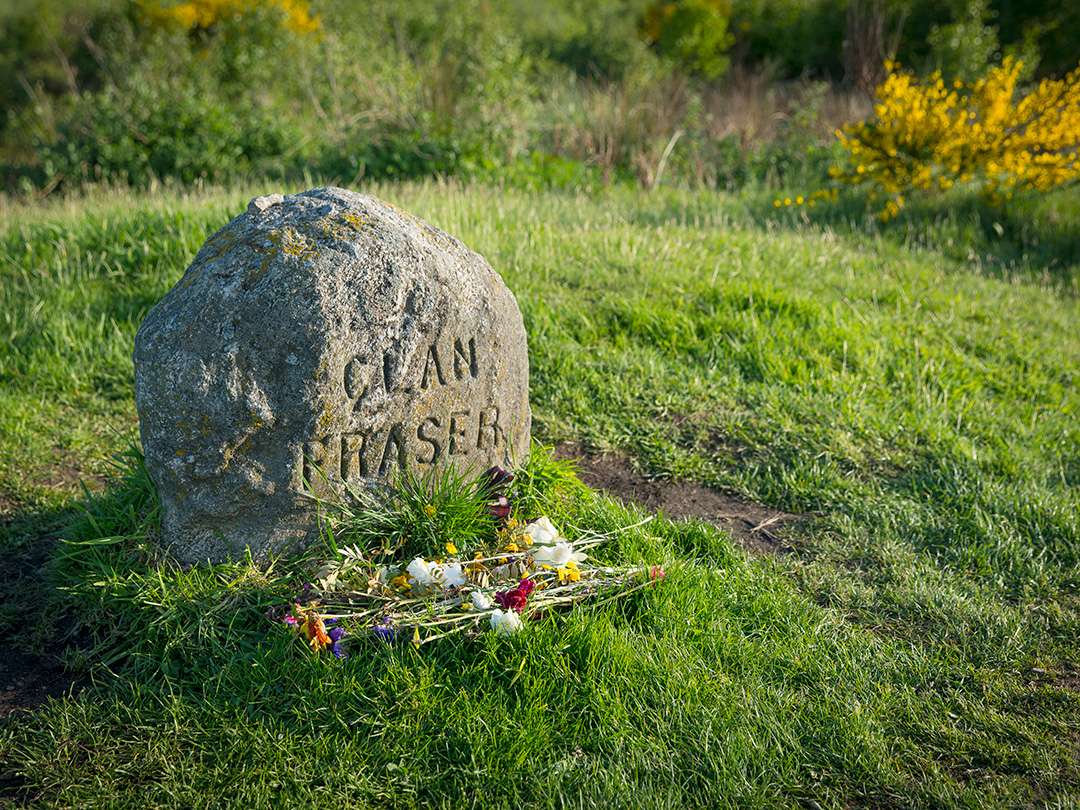
Culloden Battlefield (the Fraser memorial stone)
The Battle of Culloden took place on Culloden Moor in April 1746, ending the Jacobite cause and changing Highland Scotland forever. In Outlander, the show’s battle scenes weren’t filmed on the moor itself. Out of respect for the war graves it still contains. But Claire visits the field at the end of season two to see the Fraser clan memorial stone.
The National Trust for Scotland visitor centre is excellent. The walk out across the moor itself is sobering. Please remember that the real Fraser clansmen who died here have nothing to do with the fictional Outlander story. Keep voices low and respect the graves.
Culloden Battlefield is £16 for adults, free for NTS members. Allow 2-3 hours including the moor walk.
Read more – How to visit Inverness.
Highland Folk Museum, Newtonmore (the MacKenzie village)
The Highland Folk Museum at Newtonmore is an open-air living history museum, with a recreated 18th-century township of turf-roofed cottages. In Outlander season one, the township was used for the rent-collecting scenes where Dougal MacKenzie and his men visit a Highland clachan. A beautifully atmospheric set that gives a real sense of what 18th-century Highland life looked like.
Highland Folk Museum is free to visit, open April to October. The site is huge, so allow 3-4 hours.
Glencoe (the Highland landscape)
Glencoe is one of Scotland’s most dramatic mountain landscapes, the site of the 1692 Massacre of Glencoe, and the backdrop for several Outlander sweeping landscape shots throughout the series. The Three Sisters, the Pass of Glencoe, and the surrounding mountains provide the iconic Highland scenery that defines Outlander’s visual identity.
Free, open access. The NTS visitor centre explains the area’s history. 2 hours from Glasgow, 1.5 hours from Inverness.
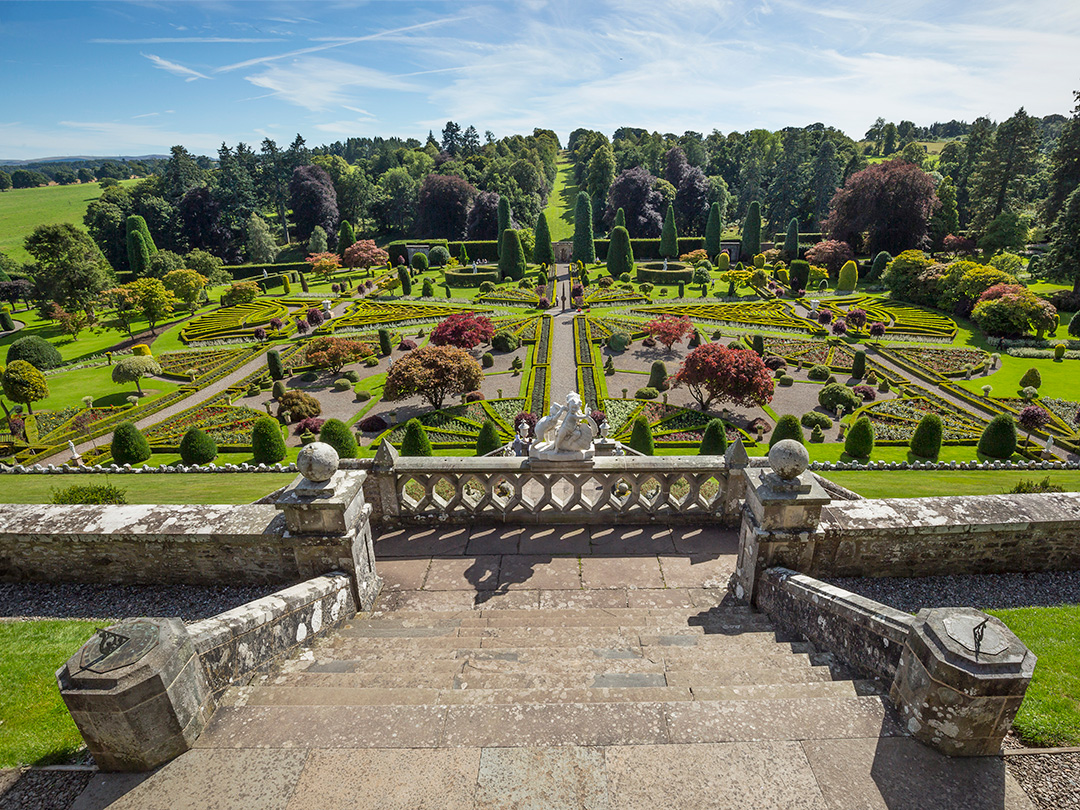
Drummond Castle Gardens (Versailles)
Drummond Castle, built in 1490 on the Gask Ridge near Crieff, has one of the most spectacular formal gardens in Europe. A vast 17th-century parterre with intricate boxwood patterns, sculpted yew, statues and fountains. In Outlander, the gardens stood in for Versailles, where Claire comes face to face with Black Jack Randall in the gardens of the French court in season two.
The tower house itself is private, but the gardens are open to the public from May to October. Adults £8, children £4. About 20 minutes’ drive from Crieff.
Tibbermore Parish Kirk (Cranesmuir Church and the witch trial)
Four miles west of Perth, tucked between the A9 and the A85, is Tibbermore Parish Kirk. The 17th-century church became Cranesmuir Church in season one episode 11, “The Devil’s Mark.” This is where the interior witch trial scenes were filmed.
Tibbermore ceased to be a parish church in 1986 and is now cared for by Historic Churches Scotland. Free, donations welcomed. Open daily April to October, by request at other times. Postcode PH1 1QJ. About 15 minutes’ drive west of Perth.
Outlander filming locations in the Loch Lomond and The Trossachs
The Loch Lomond and Trossachs National Park sits just north of Glasgow and was used for some of Outlander’s most memorable scenes.
Finnich Glen and the Devil’s Pulpit (the Liar’s Spring)
One of Outlander’s most famous scenes. Dougal MacKenzie taking Claire down into St Ninian’s Spring to test whether she is lying. Was filmed at the Devil’s Pulpit in Finnich Glen, near Drymen. The narrow red sandstone gorge is dramatic, ethereal, and entirely otherworldly.
A word of warning: the access path is steep, muddy and seriously slippery. People have been seriously hurt here. Avoid after heavy rain.
Access to Finnich Glen is by car only via the A809/B834 junction near Drymen. Wear walking boots.
Loch Katrine (Brianna and Roger’s first date)
Loch Katrine in the heart of the Trossachs is where Brianna and Roger spend time together in season two. The loch sits at the heart of Sir Walter Scott country, and you can sail across it on the Victorian steamship Sir Walter Scott. One of the loveliest day trips from Glasgow.
Loch Katrine cruises run from Trossachs Pier from April to October.
Stately homes used as Outlander filming locations
Hopetoun House
Hopetoun House, near South Queensferry, is one of the finest 18th-century stately homes in Scotland. And one of Outlander’s hardest-working filming locations. The estate has appeared as the streets of Paris (season two), the Duke of Sandringham’s home (season one), the location where Jamie teaches Willie to ride, and many of the sword fights and duels across multiple seasons.
The house itself is a Robert Adam masterpiece, with Georgian state rooms, an Adam-designed entrance hall, and 6,500 acres of parkland. The same estate is home to Midhope Castle (Lallybroch).
Hopetoun House is open Friday to Monday. Adults £14 for the house and grounds, £5.50 for grounds only. Joint Midhope/Hopetoun tickets £18.50.
Gosford House, East Lothian (Helwater Estate)
Gosford House, near Longniddry in East Lothian, is one of the great Robert Adam houses of Scotland. The exterior stood in for Helwater Estate, where Jamie is sent to work as a stable hand after his imprisonment at Ardsmuir. And where he fathers his illegitimate son William.
Gosford House is a wedding venue with occasional tours of the house.
Newhailes House, Musselburgh (Governor Tryon’s North Carolina home)
Newhailes is a perfectly preserved 17th-century house just east of Edinburgh, with original Georgian interiors. In Outlander, it doubled for Governor Tryon’s home in North Carolina in the later seasons.
Newhailes House is managed by the National Trust for Scotland. Adults £15, free for NTS members.
How to plan an Outlander filming locations tour
If you want to visit the headline locations in one trip, here’s how I’d structure a few different itineraries depending on how much time you have.
One day from Edinburgh: Hire a car or join a tour. Drive west to Midhope Castle (Lallybroch), then to Blackness Castle (Fort William), then to Linlithgow Palace (Wentworth Prison). After lunch, drive to Doune Castle (Castle Leoch). Return to Edinburgh via Culross (Cranesmuir) if you have energy left.
2nd day from Edinburgh: Drive north from Edinburgh to Aberdour, Dysart and then Falkland.
One day in Edinburgh: Walk the Royal Mile to see Bakehouse Close (Carfax Close), Tweeddale Court, and the Signet Library. Afternoon at Craigmillar Castle (Ardsmuir Prison).
A week in Scotland: Edinburgh first as above, then drive north via Drummond Castle Gardens (Versailles) to Kinloch Rannoch (Craigh na Dun) and the Highland Folk Museum at Newtonmore. End in Inverness for Culloden Battlefield and Clava Cairns. Drive back via the Trossachs for Finnich Glen.
Tour operators including Timberbush, Highland Explorer Tours, Rabbie’s, Mercat Tours and Private Tours Edinburgh all run dedicated Outlander day tours from Edinburgh, Glasgow and Inverness. Useful if you don’t want to drive.
Frequently asked questions
Where is Outlander filmed?
Outlander is filmed almost entirely in Scotland, with most interior scenes at Wardpark Studios in Cumbernauld, near Glasgow. Location filming takes place across the country, including Doune Castle (Castle Leoch), Midhope Castle (Lallybroch), Culross (Cranesmuir), Falkland (1940s Inverness), Edinburgh’s Royal Mile (Carfax Close), the Highlands (Culloden and Clava Cairns), and the Trossachs.
Can you visit Castle Leoch in real life?
Yes. Castle Leoch is Doune Castle in Stirling, managed by Historic Environment Scotland. Adults £10, free for members. The audio guide is narrated by Sam Heughan (Jamie Fraser).
Can you visit Lallybroch?
Yes. Lallybroch is Midhope Castle on the Hopetoun Estate near South Queensferry, around 25 minutes’ drive from Edinburgh. Only the exterior is accessible, as the interior is derelict. Tickets are £6.97 for adults, or £18.50 for a joint Midhope and Hopetoun House ticket.
Where is Craigh na Dun?
The stone circle at Craigh na Dun isn’t real. The stones were a film set and were removed after filming. But you can visit the outcrop where they stood, on a hillside above Kinloch Rannoch in Highland Perthshire. For real standing stones that inspired the fictional Craigh na Dun, visit Clava Cairns near Inverness.
Where was the Outlander finale filmed?
The closing scenes of the show, set on King’s Mountain in North Carolina, were filmed on the edge of North Third Reservoir near Stirling. You can climb Lewis Hill to reach the trig point where the final scenes were shot. A 5.6km circular walk.
Is Blood of My Blood filmed in Scotland?
Yes, Blood of My Blood is filmed entirely in Scotland, like the main Outlander series. Season one filmed at Doune Castle (Castle Leoch), Balvaird Castle (Castle Leathers), Park Circus in Glasgow, Luss village, Kelvingrove Park, and Kilbride Castle Chapel. Season two began filming in 2025 and is expected to air in late 2026.
How long do you need to visit all the Outlander filming locations?
You can visit the headline locations on a one-day tour from Edinburgh (Midhope Castle, Blackness, Doune Castle, Culross). A full week lets you cover the Highlands too (Culloden, Clava Cairns, Kinloch Rannoch). A dedicated Outlander tour will get you to 12-15 locations in a week.
Are there official Outlander tours from Edinburgh?
Yes. Tour operators including Timberbush, Rabbie’s, Private Tours Edinburgh and Mercat Tours run dedicated Outlander day tours from Edinburgh, Glasgow and Inverness. Most cover Doune Castle, Midhope Castle, Falkland, Culross and Blackness in a single day.
Are you planning your Outlander pilgrimage? Let me know your favourite filming location.
Love from Scotland x
Read more
- NEW! My guide to Blood of my Blood filming locations
- The Jacobite Rising and the real Bonnie Prince Charlie
- Clans of Scotland travel guide
- How to visit Culross, Fife. The Outlander village
- How to visit Hopetoun House
- How to visit the Buccaneers filming locations
- Best places to visit in Fife
- How to visit Inverness

Leave a Reply