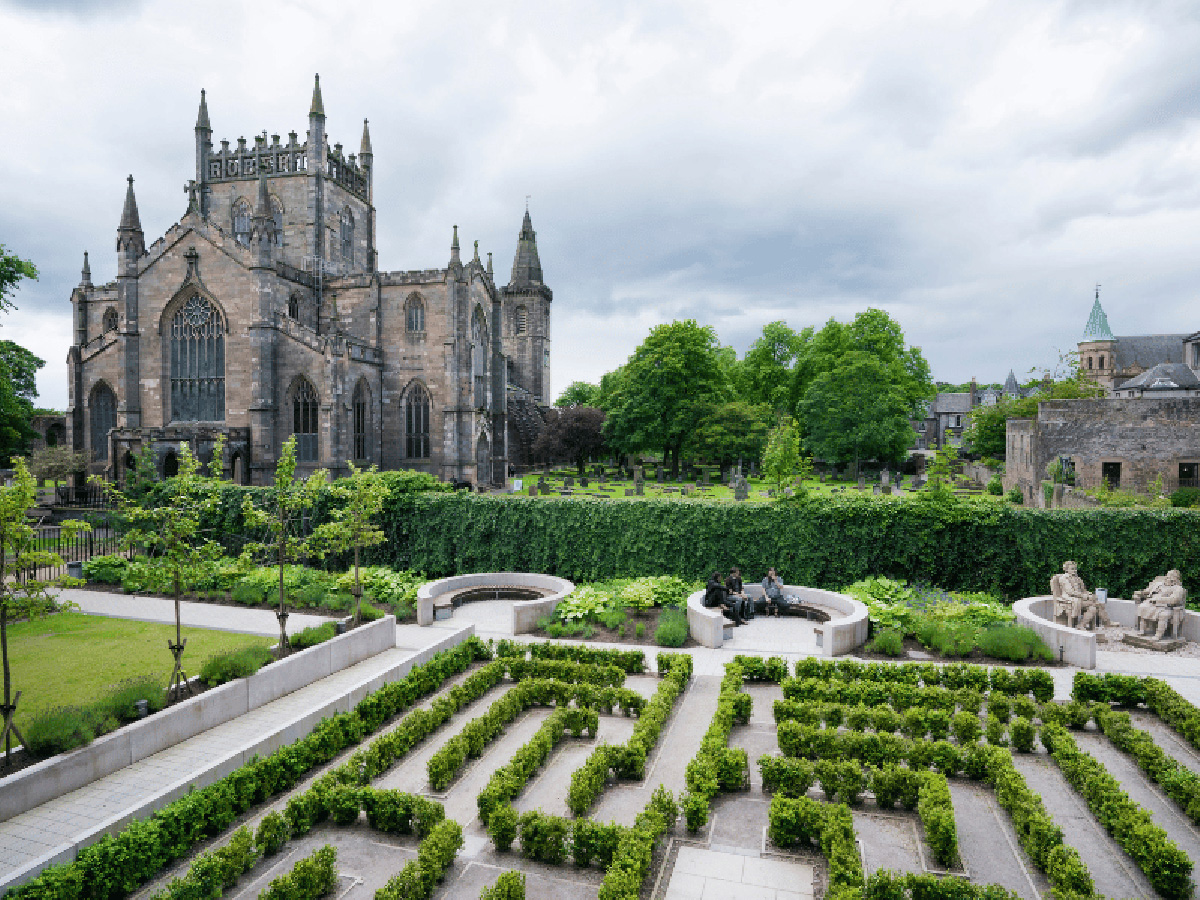


Dunfermline is Scotland’s newest city and oldest capital. It’s the burial place of King Robert the Bruce, the birthplace of Andrew Carnegie, and home to one of the country’s best urban parks. It’s also 30 minutes from Edinburgh by train, which makes it either a proper day trip or a good base for exploring West Fife.
This is my guide to the best things to do in the city, from the Abbey and Palace to Pittencrieff Park, the Carnegie heritage, where to eat, and where to stay.
How to use this guide
- Dunfermline’s royal history, from Malcolm III to Robert the Bruce
- Dunfermline Abbey and Palace
- Pittencrieff Park (The Glen)
- The Heritage Quarter and Abbot House
- The Andrew Carnegie heritage
- Culture, theatres and music
- Where to eat and drink in Dunfermline
- Where to stay in Dunfermline
- Day trips from Dunfermline
- Practical information: getting here, parking, how long to spend
- Dunfermline FAQs
Dunfermline’s royal history
Dunfermline was Scotland’s capital for 400 years before the crown moved to Edinburgh. The city grew up around the abbey founded by Queen Margaret in 1070, and it was the burial place of Malcolm III, David I, Alexander I, Alexander III, and famously Robert the Bruce. Seven Scottish kings and queens are buried here in total.
Charles I, the last monarch born in Scotland, was born in Dunfermline Palace in 1600. The city lost its royal residency when the crown moved south after the Union of the Crowns in 1603, and the palace gradually fell into ruin. But the abbey church still stands, the street layout is the oldest surviving in Scotland, and the sense of being in a once-capital is real.
Dunfermline was granted city status in 2022 as part of the Queen’s Platinum Jubilee. That makes it Scotland’s newest city and oldest capital, which is a decent claim to fame.
Dunfermline Abbey and Palace
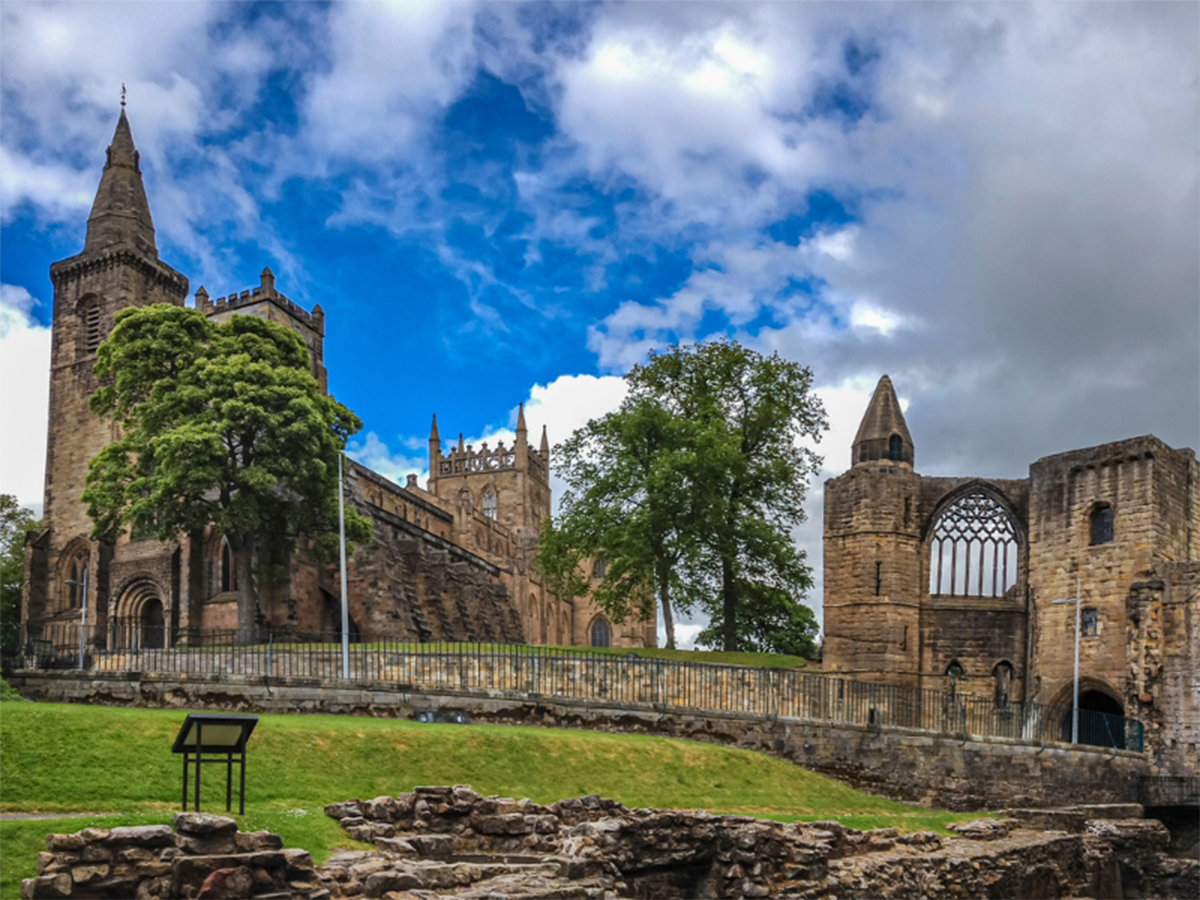
The Abbey and Palace sit together at the west end of the town, managed by Historic Environment Scotland. You can explore the abbey church, the palace ruins, and the surrounding grounds.
Dunfermline Abbey
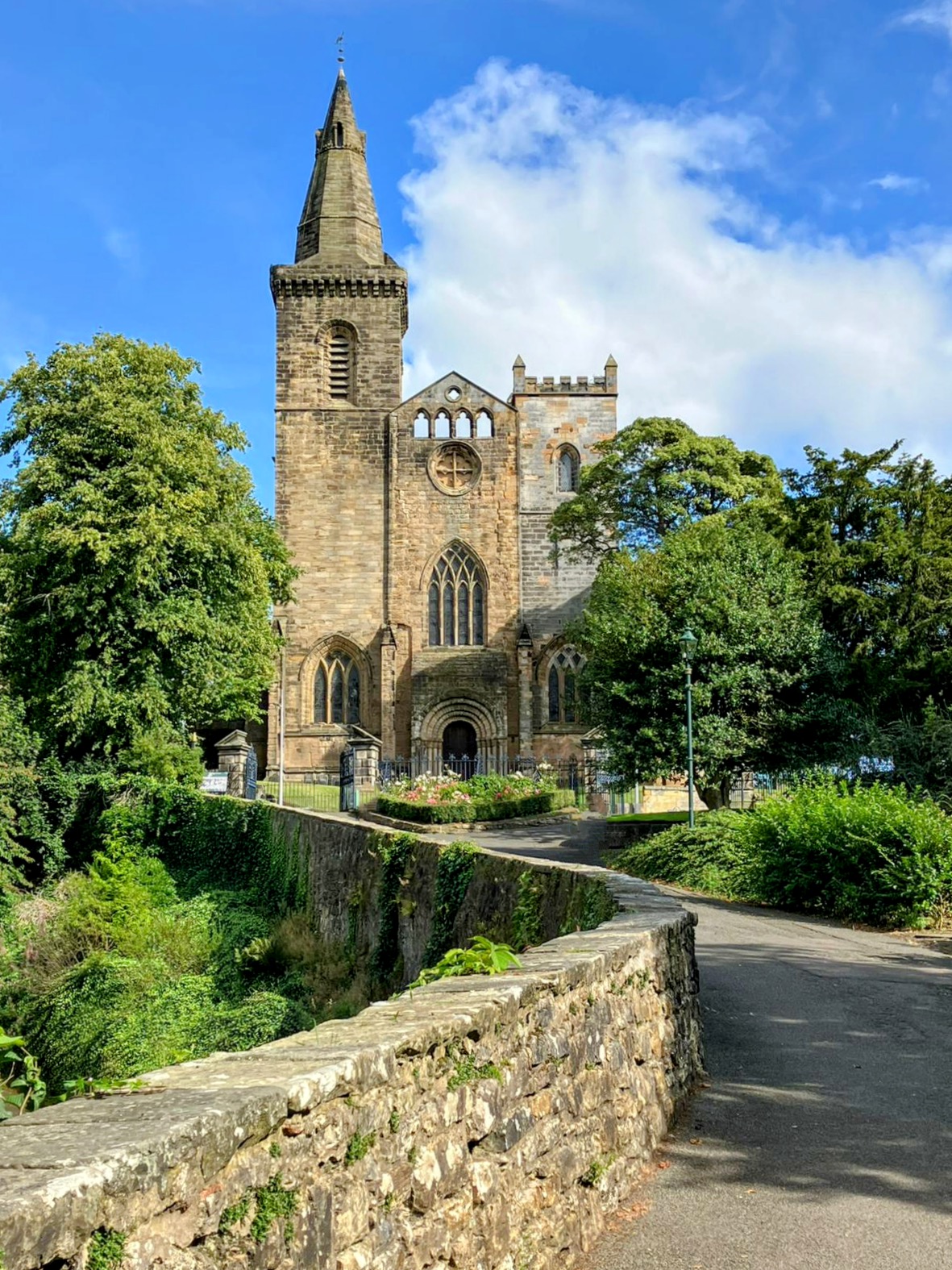
The abbey church is actually two churches joined back to back. The old medieval abbey, founded by Queen Margaret in 1070 and rebuilt in the 12th century, and a newer parish church added in the 19th century. The parish church is still in use today.
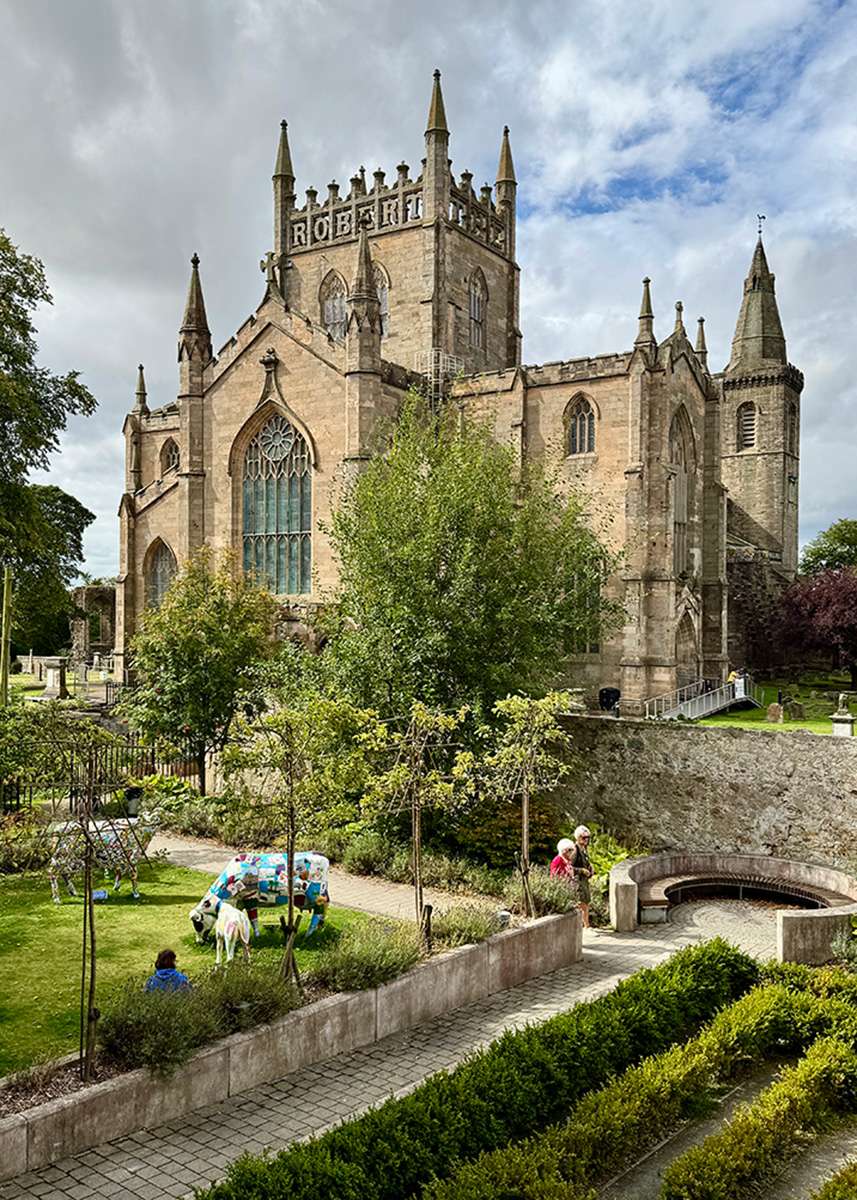
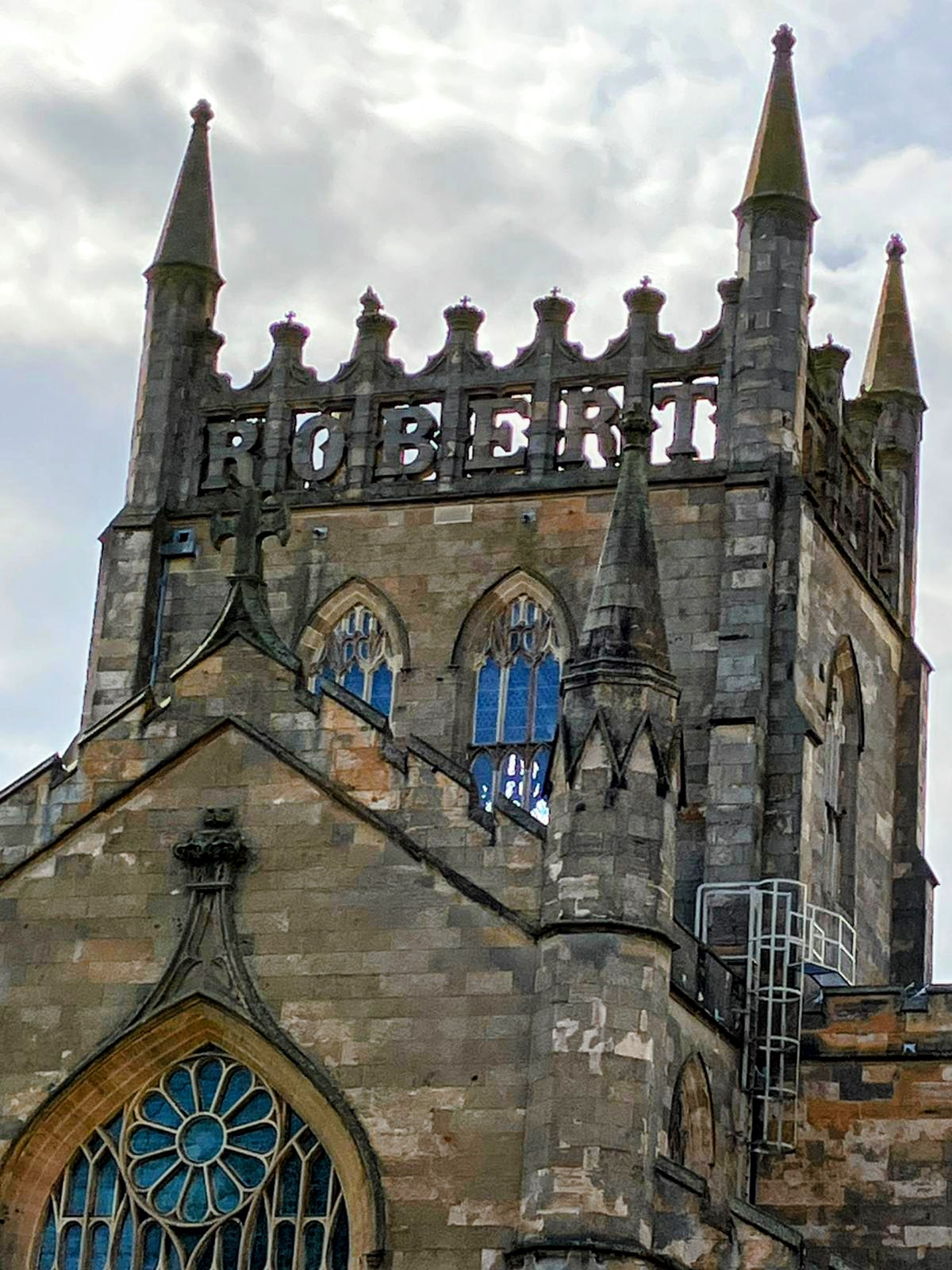
Robert the Bruce was buried under the pulpit of the parish church in 1329. His heart is buried at Melrose Abbey, but his bones lie here. Look up at the abbey tower and you’ll see “King Robert The Bruce” carved around the top in large stone letters.
Also buried in the abbey: Queen Margaret herself (later canonised as Saint Margaret), Malcolm III, David I, and Alexander III. The tombs aren’t always individually marked, but the interpretation boards will help you find them.
Dunfermline Palace
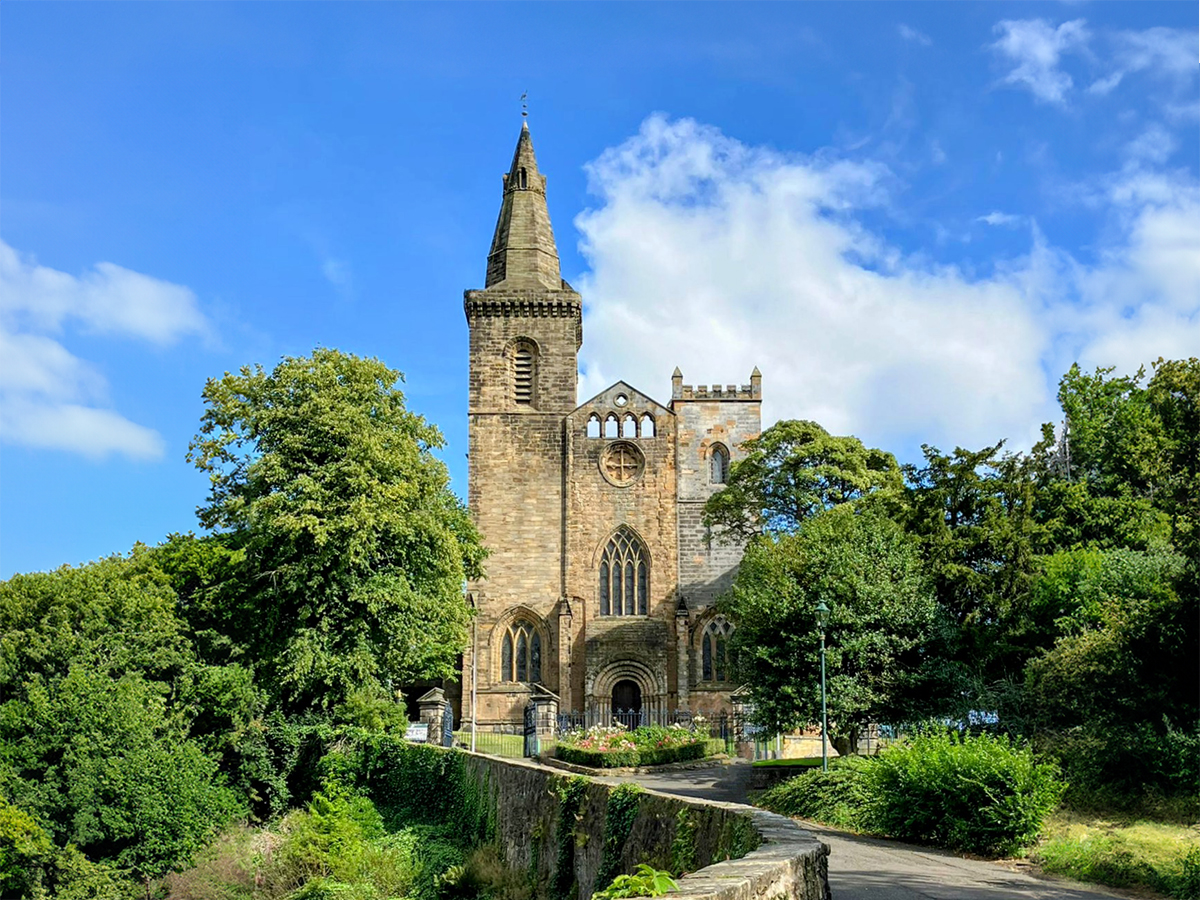
Next to the abbey sits the Palace, once a royal residence and birthplace of Charles I. The surviving structure is the palace kitchen and the south gable wall, enough to get a sense of the scale but a long way from intact. It’s free to wander the grounds.
Entry to the abbey and palace is free but you need to book in advance to guarantee entry. Allow around an hour for both.
One of the best spots to view the Abbey is from the garden of the Dunfermline Carnegie Library, accessed off The Maygate.
Pittencrieff Park (The Glen)
Pittencrieff Park is Dunfermline’s great park, known locally as The Glen. The name means “farm of the trees” and the 76-acre estate was gifted to the town by Andrew Carnegie in 1903. Carnegie had been banned from the park as a boy because his family couldn’t afford the entry fee, and he bought it when he could so the people of Dunfermline would never be excluded again.
There are woodland paths, formal gardens, glasshouses, a peacock aviary, and the ruins of Malcolm’s Tower, a 14th-century building that was once a royal residence. Look out for Wallace’s Well, one of four wells in Scotland named after Sir William Wallace. It’s unlikely Wallace visited any of them. The name probably comes from the water being called “Well of Spaw” which morphed into Wallace over the centuries.
The Glen Pavilion, an art deco building in the centre of the park, hosts weddings and events and has welcomed guests including the Queen and the Dalai Lama. The pavilion cafe is open during park hours. Pittencrief House sits in the centre of the park, originally built in the 15th century, it was originally used as a museum but is now closed to the public.
Pittencrieff Park is a 10-minute walk from Dunfermline train station, and there’s a free car park on Pittencrieff Street if you’re driving.
The Heritage Quarter and Abbot House
Between the park and the abbey sits the Heritage Quarter, the historic centre of the old town. The street layout here has barely changed since the medieval period. Maygate is particularly pretty, a narrow cobbled street running below the abbey.
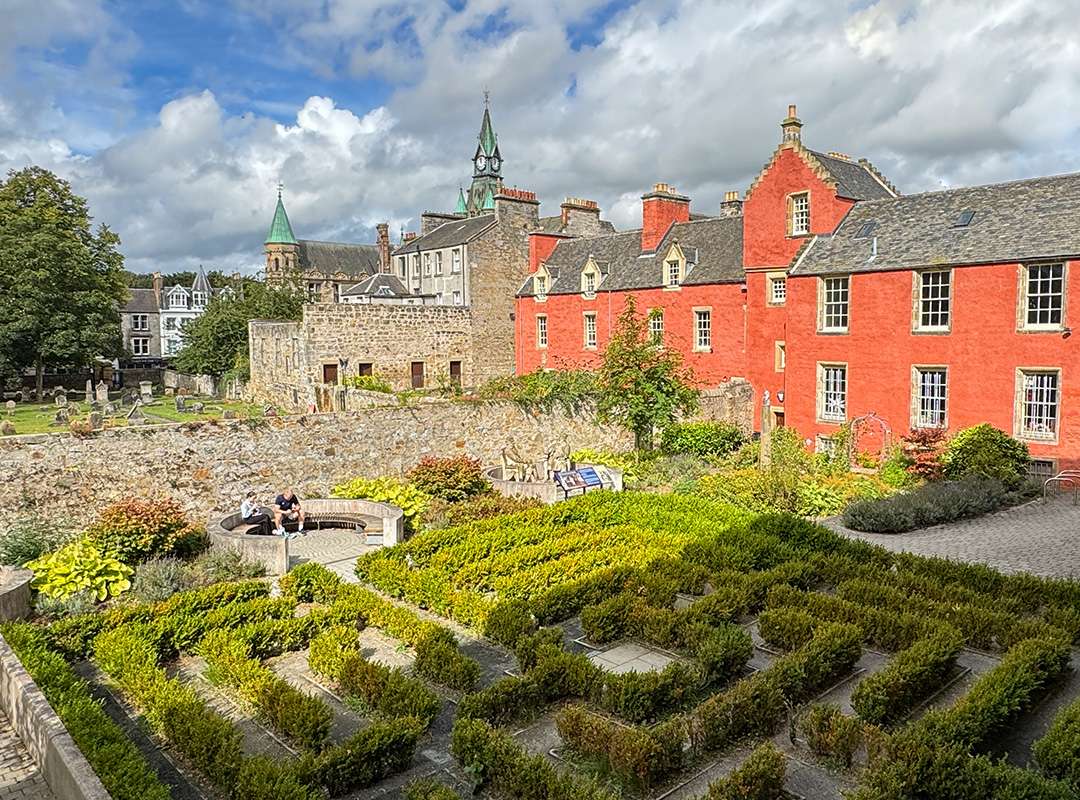
Abbot House, known locally as the Pink Hoose, is the oldest surviving secular building in Dunfermline. It dates to the 15th century and was originally the residence of the Abbot of Dunfermline Abbey. The house has a walled garden that’s open to visitors, and is painted in a distinctive shade of dusty pink that makes it hard to miss.
Heading up towards the High Street, look for Dunfermline’s old town houses and the dramatic gothic tower of Dunfermline City Chambers, built in 1879 and still the city’s civic centre.
The Andrew Carnegie heritage
Andrew Carnegie is Dunfermline’s most famous son. Born here in 1835 to a handloom weaver, he emigrated to America as a child, worked his way up from a bobbin boy in a cotton mill to become one of the richest men in history, and spent his later years giving most of it away. He funded over 2,500 libraries worldwide, endowed universities, and founded peace organisations.
The Andrew Carnegie Birthplace Museum
The Andrew Carnegie Birthplace Museum is a small museum built around the cottage where Carnegie was born. The cottage itself is a single room downstairs and one room above, a genuine weaver’s cottage preserved as it would have been in the 1830s. The museum next door covers his emigration, his business empire, and his philanthropy.
It’s one of the best small museums in Fife. Allow an hour, and don’t miss the display on Carnegie’s connections with Marie Curie, Theodore Roosevelt, and the Diplodocus carnegii (the dinosaur species named after him).
Dunfermline Carnegie Library & Galleries
Next door to Abbot House is the Dunfermline Carnegie Library & Galleries, the first of Carnegie’s libraries anywhere in the world. The original 1883 building has been extended with a modern wing housing a museum covering Dunfermline’s royal and industrial history, and a gallery space that shows rotating exhibitions.
Entry is free. The cafe on the ground floor is one of the better spots for coffee in the city.
Culture, theatres and music
Dunfermline has a surprisingly strong cultural scene for a city its size.
- The Alhambra Theatre is a beautifully restored Edwardian theatre that hosts plays, musicals, comedy and concerts. It’s the main receiving house in Fife and gets national touring productions.
- The Carnegie Hall (the Dunfermline original, not the New York one named after it) is an art deco theatre with a programme of music, drama and children’s shows.
- For live music, PJ Molloy’s on New Row has regular gigs and a loyal following. Fire Station Creative is a converted fire station now run as an artists’ collective with studio spaces, a gallery and a cafe.
- Dunfermline also hosts the Outwith Festival every September, a city-wide arts festival covering music, theatre, literature and visual arts across 35 venues. It’s genuinely good.
Where to eat and drink in Dunfermline
Dunfermline’s food scene has improved significantly in the last few years. These are the spots I actually go to.
- Jack ‘O’ Bryan’s — modern tapas near the abbey. The black pig is the signature dish. Good wine list.
- Dhoom — Indian food with an ambitious cocktail list. Better than it needs to be.
- 269 Vegan — a popular vegan cafe on East Port.
- Juniper Wine Cafe — a wine shop at the front, lunches and cheese boards served through the back. Small, friendly, often busy.
- The Commercial Inn — proper real ale pub with hearty food. A Dunfermline institution.
- The Bruce Arms, Limekilns — locals’ pub on the Forth shore. Good food, good beer.
Where to stay in Dunfermline
Dunfermline isn’t packed with hotels. These are the options worth considering.
In the city
Garvock House Hotel is a traditional country house hotel on the edge of the city. Pitbauchlie House Hotel is similar, a 50-room hotel in landscaped grounds. The City Hotel is central and has its own cocktail bar.
Near Dunfermline
If you want more character, Craigduckie Shepherds Huts on a working farm just north of the city are excellent for a couple or a small family. Coorie in Limekilns has two rooms above the bistro, with views across the Forth. The Dundonald Guest House in Culross is a stylish B&B on one of Scotland’s prettiest villages.
Day trips from Dunfermline
Dunfermline makes a good base for exploring West Fife and the Forth. These are the trips I’d recommend:
- Culross — the beautifully preserved 17th-century royal burgh, 15 minutes west. The Outlander filming location if that’s your thing.
- Limekilns and Charlestown — coastal villages 10 minutes south, with good pubs and views of the Forth Bridges.
- North Queensferry — for the Forth Bridges view. 15 minutes by car or direct train.
- The Lomond Hills and Falkland — 30 minutes north-east. Proper hill walks and a pretty conservation village.
- The West Fife Woodlands Way — a 10-mile circular walk starting in Culross.
Edinburgh is 30 minutes by train from Dunfermline, making a city day trip easy if you want a change of pace.
Practical information
How to get to Dunfermline
By train: Dunfermline Town is on the direct line from Edinburgh Waverley. Around 30 minutes each way, with trains every 30 minutes or so during the day. The station is a 10-minute walk from the abbey and Pittencrieff Park.
By car: From Edinburgh, cross the Queensferry Crossing and follow the M90 north. Junction 2 for Dunfermline town centre, around 25 minutes total. From Glasgow, take the M80 to Stirling then the M876 to the Kincardine Bridge, around an hour.
By bus: Stagecoach East Scotland runs regular services between Edinburgh and Dunfermline.
Where to park
Free parking on Pittencrieff Street at the western edge of the park. Paid council parking in the town centre at the St Margaret Drive, Carnegie Drive and Kingsgate multi-storey car parks.
How long to spend
Half a day covers the abbey, palace and Pittencrieff Park at a reasonable pace. A full day adds the Heritage Quarter, the Carnegie heritage (birthplace museum and library) and time for lunch. Two days lets you combine Dunfermline with a day trip to Culross or the Limekilns coast.
Dunfermline FAQs
Is Dunfermline worth visiting?
Yes. Dunfermline is often overlooked next to Edinburgh and Stirling, but it has genuine claims on Scottish history — Robert the Bruce’s tomb, the ancient abbey, the former royal palace, Andrew Carnegie’s birthplace, and one of the best urban parks in Scotland. It’s also 30 minutes from Edinburgh by train, which makes it an easy day trip.
What is Dunfermline famous for?
Dunfermline is famous for three things: being Scotland’s ancient capital (the royal seat for 400 years before Edinburgh), the burial place of King Robert the Bruce in the abbey, and the birthplace of Andrew Carnegie, the Scottish-American industrialist who funded over 2,500 libraries worldwide. It was granted city status in 2022, making it Scotland’s newest city.
How long do you need in Dunfermline?
A half-day covers the main historic sights (abbey, palace, Pittencrieff Park). A full day lets you add the Heritage Quarter, the Carnegie Birthplace Museum, the Carnegie Library & Galleries, and a proper lunch. Two days allows for day trips to Culross, the Limekilns coast, or Edinburgh.
Is Dunfermline a city?
Yes — Dunfermline was granted city status in 2022 as part of the Queen’s Platinum Jubilee celebrations. It’s Scotland’s newest city and ancient capital, a combination no other place in Scotland can claim.
What's the best thing to do in Dunfermline?
For adults, the historical sights (Abbey, Palace, Carnegie Birthplace Museum) combined with cultural venues (Alhambra Theatre, Carnegie Hall, Fire Station Creative) make for a full day. Add lunch at Jack ‘O’ Bryan’s or Dhoom, a walk through Pittencrieff Park, and drinks at 1703 or The Commercial Inn.
Can you do Dunfermline in a day from Edinburgh?
Yes, easily. The train from Edinburgh Waverley to Dunfermline Town takes around 30 minutes and runs every half hour. From the station it’s a 10-minute walk to both Pittencrieff Park and the Abbey — a day trip gives you enough time for the abbey, park, lunch and the Heritage Quarter.
More Fife reading
- The complete guide to Fife
- How to visit Culross
- The West Fife Woodlands Way
- The complete guide to the Firth of Forth
- A guide to the East Neuk of Fife
- Dog-friendly Fife
Kate — Love from Scotland x


Leave a Reply