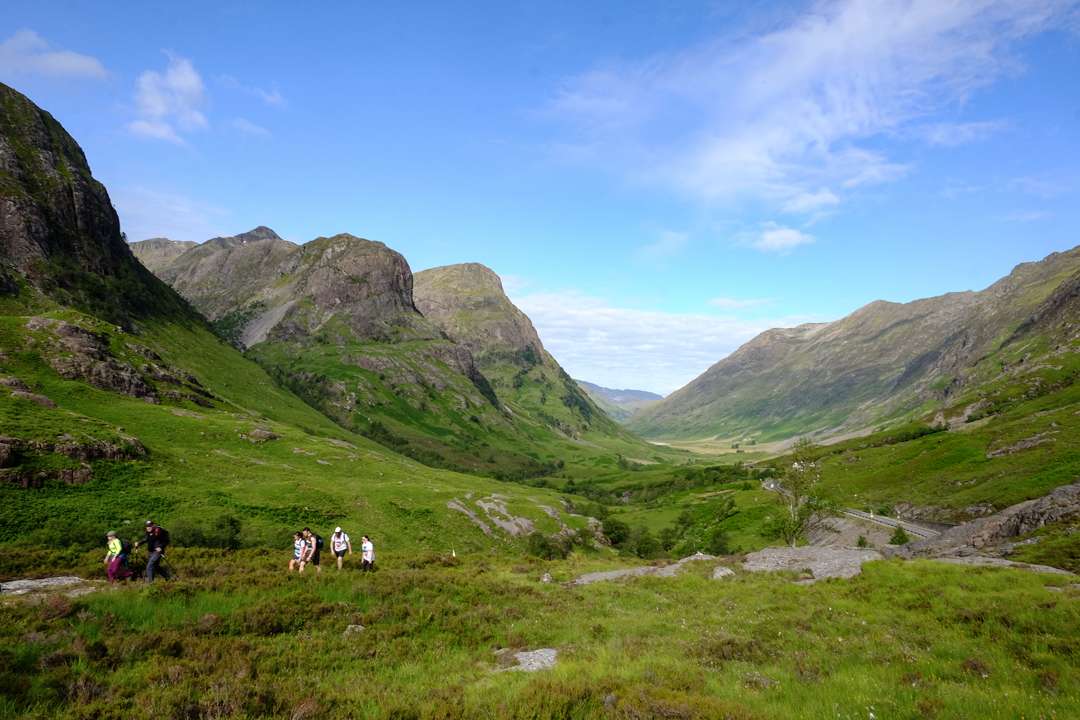


Scotland is famous for its dramatic Highlands, hundreds of historic castles and vibrant, endlessly surprising cities. It’s also often described as an expensive destination.
You might assume you need a large budget to experience Scotland properly. The good news? You absolutely don’t.
Read my guide to the latest money saving tips for Scotland travel in 2026.
With smart accommodation choices, clever transport passes, excellent-value food and more free cultural experiences than you could shake a sgian-dubh at, you can explore Scotland affordably, without missing out on a single thing that makes this country extraordinary.
This is your complete guide to:
- Cheap and budget accommodation in Scotland
- Budget travel in Scotland
- Free (or nearly free) tours and attractions
- Eating in Scotland on a budget
- Frequently asked questions about budget travel in Scotland
Let’s go to Scotland on a budget — the smart way.
Looking for budget travel? Read my complete guide to how to get to Scotland.
Cheap & budget accommodation in Scotland
Accommodation is one of the biggest travel costs in Scotland. But with a little planning, you can sleep somewhere genuinely brilliant for very little. Hostels, campsites, wild camping and bothies are powerful budget tools — especially if you avoid the peak summer rush.
Hostels in Scotland
Hostels in Scotland are not what they were twenty years ago. Gone are the damp sleeping bags and questionable showers. Today’s Scottish hostels range from beautifully converted farm buildings and former schoolhouses to eco-retreats accessible only by boat. Staying in one is often a travel experience in its own right.
Chains like Hostelling Scotland (formerly SYHA) offer reliable, well-maintained facilities across the country, from city-centre Edinburgh to the remotest corners of the Highlands and Islands. There are also dozens of excellent independent hostels, browse listings at Scottish Hostels.to find ones that suit your route.
The real budget superpower of a hostel is the shared kitchen. Cook your own breakfast, pack your own lunch, and you’ve already saved yourself £20–£30 a day compared with eating out for every meal.
Pro tip: Book early for summer. Edinburgh hostel beds disappear at lightning speed during the Edinburgh Festival Fringe in August, sometimes months in advance. University halls of residence also open to travellers in summer and offer a practical, affordable alternative with a bit more space than a bunk bed.
Hostel dorm prices start around £20–£28 per night. Private rooms are available in many and cost more, but still significantly less than a hotel.
My favourite hostels in Scotland:
Knoydart Bunkhouse — a remote eco-hostel in the tiny village of Inverie, only reachable by a CalMac ferry from Mallaig or a very long hike through the hills. If you want to feel like you’ve fallen off the edge of the map, this is the place. It’s utterly magical. Book Knoydart Bunkhouse
Achmelvich Beach Hostel — located right next to one of the most beautiful beaches on the North Coast 500 route. Wake up to white sand and turquoise water that looks like it belongs somewhere much further south. Book Achmelvich Beach Hostel
Loch Ossian Youth Hostel — only accessible by train to remote Corrour Station, deep in the Rannoch Moor, or a very long walk in. No roads. No cars. Just mountains, a loch, and the stars. One of the most atmospheric places to sleep in the whole of Scotland. Book Loch Ossian Youth Hostel
Ratagan Hostel — a lochside hostel with views towards the Isle of Skye, sitting at the foot of the dramatic Kintail hills. Fall asleep with mountains reflected in the water. Book Ratagan Hostel
Glen Prosen Hostel — a beautifully converted primary school in a quiet glen, perfectly placed for exploring the lesser-visited Angus Glens. A proper hidden gem. Book Glen Prosen Hostel
Sail Loft in Portsoy — a 25-bed bunkhouse with a garden, decking, hot tub and BBQ in the gorgeous coastal village of Portsoy in Aberdeenshire. This is budget travel with a serious upgrade. Book Sail Loft in Portsoy
Glen Nevis Youth Hostel — a five-star hostel near Fort William with easy access to Ben Nevis and the Great Glen. The perfect base for serious walkers and Munro baggers. Book Glen Nevis Youth Hostel
Glen Affric Youth Hostel — a former bothy deep in one of Scotland’s most beautiful glens, tucked away in ancient Caledonian pine forest. Arrive on foot for the full experience. Book Glen Affric Youth Hostel
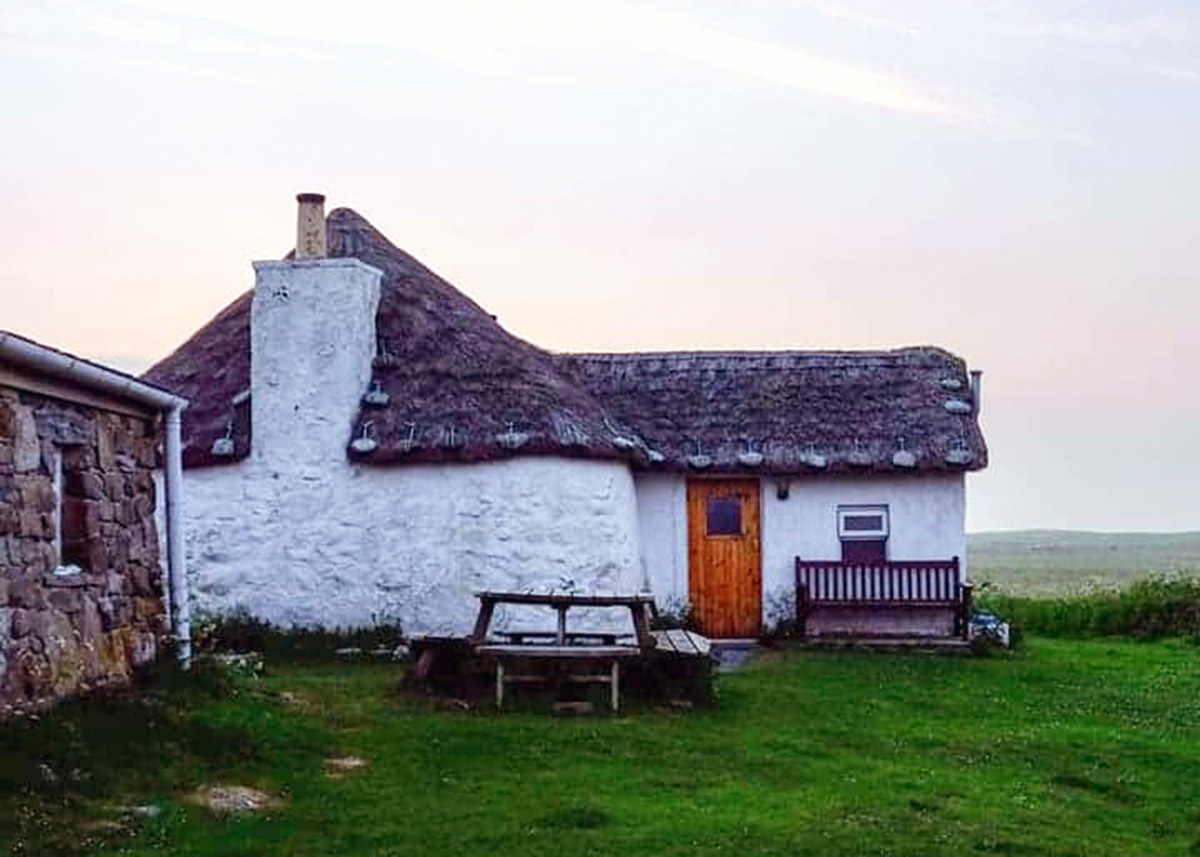
Howmore Hostel — a traditional thatched croft house on South Uist in the Outer Hebrides, sitting on the machair with views across the Atlantic. It doesn’t get more authentically Scottish than this. Book Howmore Hostel
Inchnadamph Explorers Lodge, Assynt — the perfect base for exploring the extraordinary mountains of Assynt: Suilven, Stac Pollaidh, Quinag. Remote, peaceful and completely wonderful. Book Inchnadamph Explorers Lodge, Assynt
Camping in Scotland
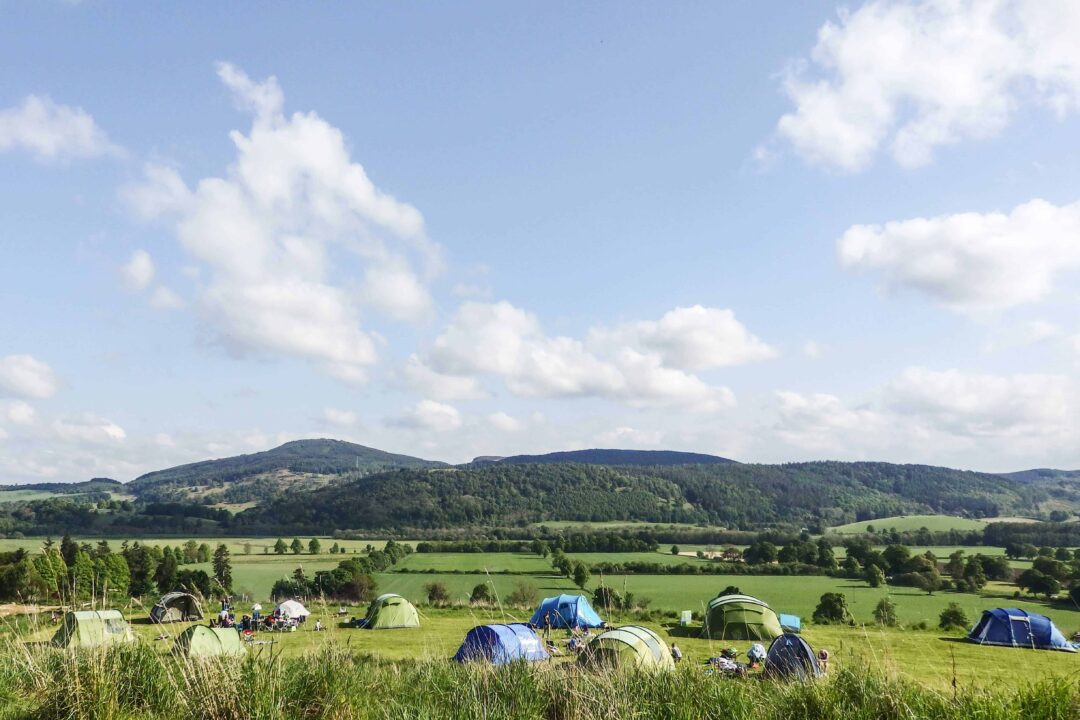
If you have the gear, camping is one of the very best ways to see Scotland on a budget – and frankly, it’s one of the best ways to see Scotland full stop. Waking up with a mountain view and nothing between you and the landscape is worth every slightly chilly morning.
Campsites range from around £10–£25 per night depending on facilities. Many are in jaw-dropping locations that you simply couldn’t afford to stay near in a hotel.
My favourite campsites in Scotland:
Comrie Croft, Perthshire — this is a cracking campsite with beautiful views across Perthshire, a laid-back friendly vibe, mountain bike trails, a great little café and a gold award for green tourism. A brilliant all-rounder. Book Comrie Croft, Perthshire
Greenhillock, Angus — camping in beautiful wildflower meadows close to the Angus Glens and perfectly located for exploring the stunning Dundee to Aberdeen coast. Peaceful, pretty and well off the tourist trail. Book Greenhillock, Angus
Sands Campsite at Gairloch — where whales have been spotted off the coast and the beaches stretch seemingly forever. The sunsets here are quite something. Pack your binoculars. Book Sands Campsite
Red Squirrel, Glencoe — located deep in the heart of Glencoe on the banks of the River Coe, this is one of the most dramatic campsites in Scotland. The Clachan Inn is just down the road, which is either a temptation or a bonus depending on your perspective. Book Red Squirrel, Glencoe
Three Lochs Forest Drive — camping spots alongside the lochs of the Trossachs, inside the National Park. The scenery is spectacular and the midges are formidable. Remember to book a permit in summer. Book Three Loch’s Forest Drive
Wild camping in Scotland
Scotland has some of the most progressive access rights in the world, and yes — wild camping is legal here. But before you pitch your tent anywhere that takes your fancy, it’s important to understand what wild camping actually means in Scotland.
Under the world-leading Scottish Outdoor Access Code, wild camping is defined as lightweight camping – a tent or bivvy, not a motorhome or campervan. And with that right comes responsibility. To camp legally and responsibly, you must:
- Camp lightweight and for no more than two or three nights in the same spot
- Stay away from enclosed farmland, homes and livestock
- Leave absolutely no trace – take everything with you
- Walk away from your car (this is important – the right to wild camp does not apply to roadside parking spots)
Scotland’s wild camping right is something to be proud of and protect. Popular spots including much of Loch Lomond and areas of Loch Lomond and the Trossachs National Park now require a permit to camp between 1st March and 30th September. Book a spot through the National Park website in advance.
Motorhomes and campervans in Scotland
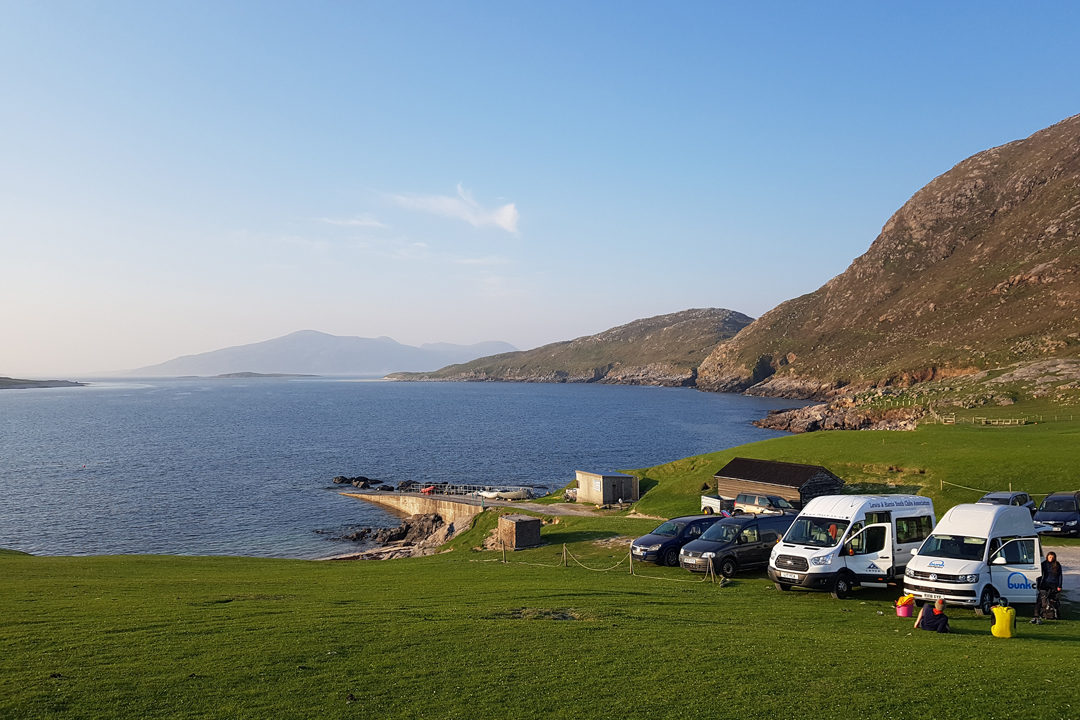
It’s worth being very clear about this: Scotland’s wild camping right does not extend to motorised camping. Campervans, motorhomes, caravans and rooftop tents are not covered.
Instead, use formal lay-bys or car parks where overnight stays are specifically marked as permitted. If you don’t have an onboard toilet, always use a campsite – please. This is not a small thing.
The good news is that there are some excellent official overnight options for campervan travellers, with many areas operating pass systems that cost around £6–£15 per night:
- Highland Council North Coast 500 Campervan Pass — for overnighting along the NC500 route. Book the North Coast 500 campervan pass system
- Forestry and Land Scotland’s Stay the Night Pass — covering 50 forests and woodlands across Scotland. Book Stay the Night Pass
- Loch Lomond and the Trossachs National Park – book a Motorhome Permit
- Cairngorms National Park campervan spots – book a Cairngorm’s National Park Permit
- Stopover spots on Scottish Canals – book a spots on Scottish Canals
One important note: apps like Park4Night can be useful, but treat their suggestions with a good pinch of salt. If you lived next door to a quiet lochside lay-by, would you want a line of campervans there every night? Leave spots better than you found them, and Scotland will keep opening its arms to visitors.
The Outer Hebrides has gone further than most and now effectively requires campsite bookings for motorhomes before you travel. Plan ahead if the islands are on your itinerary.
Bothies in Scotland
Bothies are a uniquely Scottish institution and one of the most romantic ways to experience the wild landscape. Maintained entirely by volunteers through the Mountain Bothies Association, they are free, unlocked shelters in remote areas – stone buildings, usually in spectacular settings, with no facilities whatsoever.
No booking. No electricity. No running water. Just four walls, a roof, a fireplace if you’re lucky, and occasionally some very interesting fellow walkers to swap stories with.
Bothies are wonderful, but they’re for serious hikers who are comfortable in remote terrain and know how to look after themselves in the hills. They’re not for casual holidays, and they need to be treated with respect. Carry a stove, carry food, carry out everything you bring in, and leave the bothy cleaner than you found it.
Budget travel in Scotland
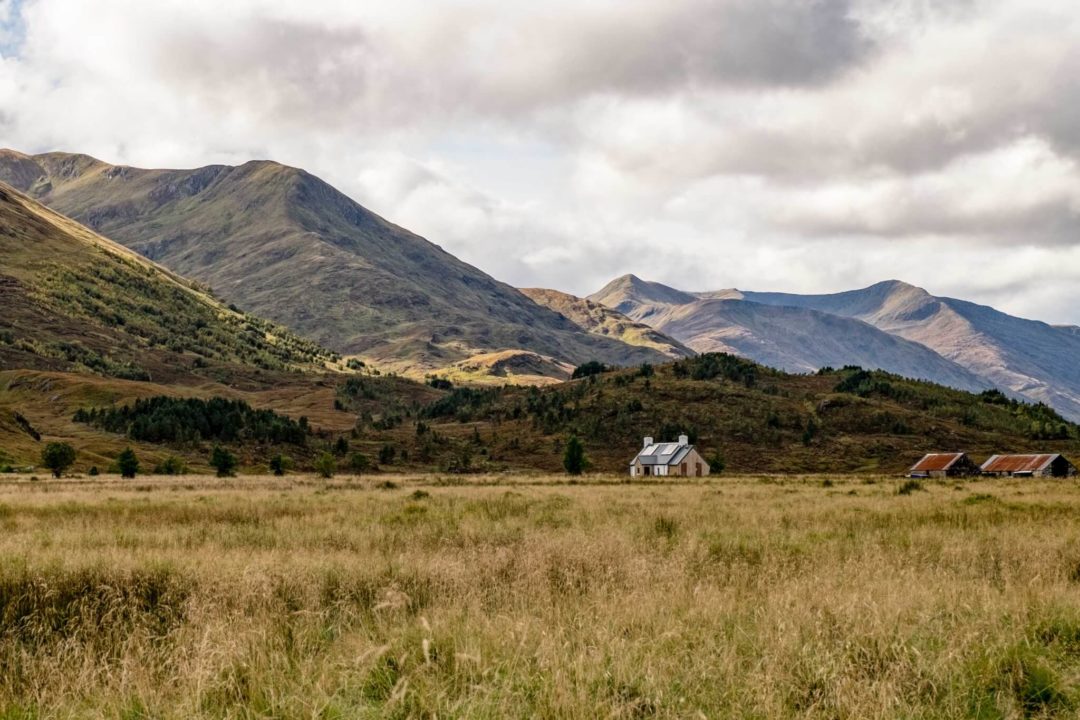
Getting around Scotland can eat into your budget quickly if you’re not careful – but it doesn’t have to.
Trains
Scotland’s rail network is genuinely brilliant for certain routes, and some of the train journeys here are among the most scenic in the world. The West Highland Line from Glasgow to Fort William (and on to Mallaig) crosses the Glenfinnan Viaduct – yes, the Harry Potter one – and passes through landscapes so extraordinary that people travel from across the world just to ride it. Book it, even if you’re not going far.
Check out my guide to the best places to visit in Scotland by train.
Railcards can save up to one-third. Consider a 16–25 Railcard, 26–30 Railcard, Senior or or Two Together Railcard.
You can also buy a Spirit of Scotland Travelpass – unlimited train/bus/ferry within set days or a Highland Rover which is a flexible pass for highland routes.
Check out Split My Fare (for split-ticket train savings)
To get the best prices, book 12 weeks in advance via ScotRail directly or through Trainline. Early booking can save you a significant amount on longer routes.
Buses
For intercity travel on a budget, Scotland is well served by coach operators:
- Citylink — the main intercity coach network, reliable and comfortable
- Flixbus — growing its Scottish routes, worth checking for Edinburgh and Glasgow
- Ember— a newer, all-electric coach service running between Edinburgh and other Scottish cities with genuinely comfortable seats
Within Edinburgh, the local Lothian Buses network is frequent, reliable and far cheaper than taxis. A day ticket gives you unlimited travel across the city for around £4.50. Don’t get in a taxi in Edinburgh when a bus will do it — the traffic is terrible anyway.
Free things to do in Scotland: tours, museums & festivals
Free museums in Scotland
Scotland’s national museum collections are free to enter, which is genuinely extraordinary given the quality of what’s inside. The National Museum of Scotland on Chambers Street in Edinburgh is a world-class museum covering everything from Scottish history and archaeology to science, technology and design – you could spend a full day here.
The Scottish National Gallery on the Mound houses one of the finest collections of European art outside London, and it won’t cost you a penny.
In Glasgow, the Kelvingrove Art Gallery and Museum is one of the great municipal museums of Britain – an extraordinary Victorian building housing an eclectic and brilliant collection, from arms and armour to Dalí’s Christ of Saint John of the Cross. The building alone is worth the (free) visit.
Other free highlights include:
- The Scottish National Portrait Gallery, Edinburgh
- The Museum of Scotland, Edinburgh
- The Hunterian Museum, Glasgow
- The McManus Gallery, Dundee
- Inverness Museum and Art Gallery
Check out my guide to free things to do in Edinburgh and free things to do in Glasgow.
Free walking tours
Tip-based free walking tours run in both Edinburgh and Glasgow and are consistently brilliant. You pay what you think it was worth at the end, and the guides – usually trained historians or enthusiastic locals – are excellent.
Tip-based tours in Edinburgh & Glasgow include:
These typically cover the Old Town, the history of the Royal Mile, Mary Queen of Scots, body snatchers and all the dark tales that Edinburgh specialises in. Highly recommended.
For cheap tours check out Get your Guide in Scotland and my guide to the best tours in Scotland.
The outdoors
And then there’s the big one. Hiking in Scotland is entirely free, and it is some of the finest walking in the world.
Arthur’s Seat rises right in the middle of Edinburgh – an ancient volcano turned into a dramatic hill with views across the entire city and out to the Firth of Forth. It takes about 45 minutes to reach the summit and costs nothing. Do it on your first morning in Edinburgh.
Glencoe is one of the most cinematic landscapes in Europe. Pull off the road and walk into the valley and you’ll understand immediately why filmmakers keep coming back. Free to visit, free to walk, unforgettable.
The Fairy Pools on the Isle of Skye — a series of crystal-clear blue pools at the foot of the Black Cuillin mountains – are among the most photographed places in Scotland, and they don’t charge you a thing to visit (though there’s a car park fee).
The Highlands offer hundreds of walking routes from easy lochside strolls to serious Munro bagging – Scotland’s 282 mountains over 3,000 feet. The landscape is your playground. Bring good waterproofs, proper boots, a map and a phone with offline navigation, and go.
Getting outdoors is always free – so why not do one of my favourite walks in Scotland.
Festivals and events in Scotland
There are lots of free (or cheap) festivals and events across Scotland all year round, from the Edinburgh Fringe Festival to local Highland Games and agricultural shows.
Check out my guide to all the festivals and events in Scotland.
Eating in Scotland on a Budget
Scottish food has a complicated reputation. “Deep-fried Mars bar?” people say, raising an eyebrow. But let me tell you, Scotland has become one of the most exciting food destinations in Britain, and it is entirely possible to eat brilliantly here without spending a fortune.
The trick, as ever, is knowing where to look.
Michelin Bib Gourmand Value
The Michelin Guide is not only about white tablecloths and eye-watering bills. It also highlights restaurants offering exceptional quality at genuinely accessible prices through its Bib Gourmand award. Scotland has a growing number of these, informal, neighbourhood-style restaurants where serious chefs are cooking beautiful seasonal produce without the ceremony or the price tag.
Look out for:
- Bib Gourmand restaurants — recognised by Michelin for great cooking at moderate prices
- Michelin Guide listed restaurants — often refined but relaxed spots
- Set lunch menus — usually two or three courses at a fraction of the evening price
This last point is the real secret weapon of eating well in Scotland on a budget. Many of Scotland’s best chefs offer lunchtime menus that showcase exactly the same seasonal produce and technical skill as dinner service, for significantly less. A tasting menu that might cost £70–£90 at dinner will often translate into a beautifully executed £35–£45 lunch. Book the lunch. You’ll eat just as well and spend half as much.
Seafood Shacks
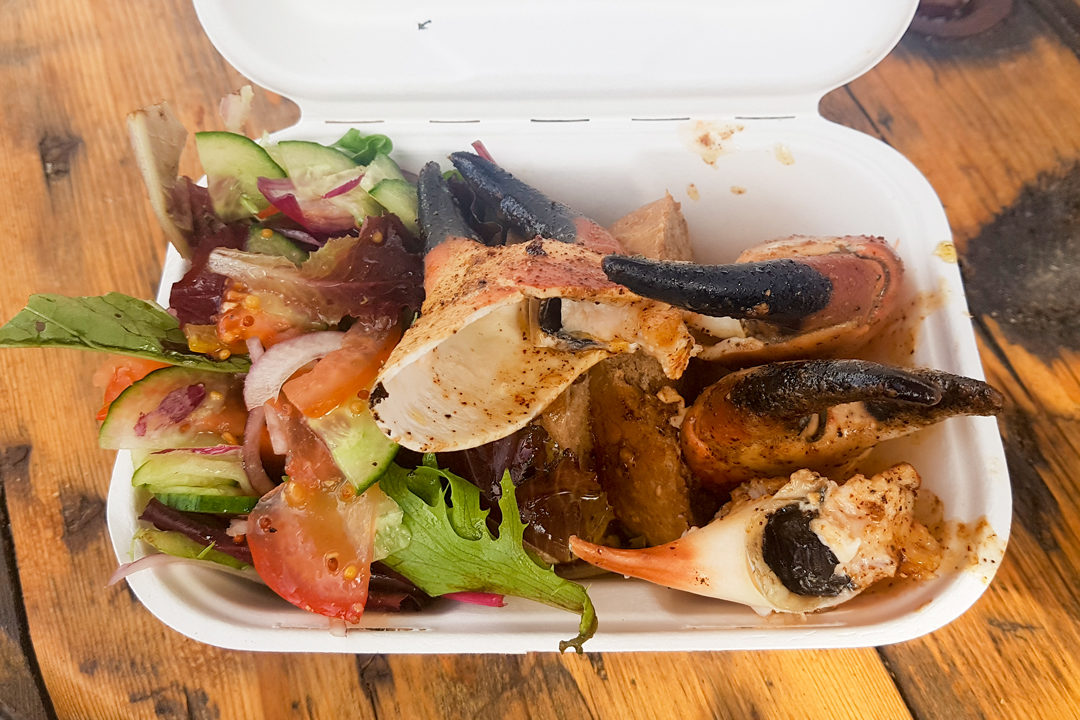
Scotland’s seafood is world-class — langoustines, crab claws, mussels, lobster and oysters hauled straight from some of the cleanest waters on the planet. And the best value way to eat it is often at a harbourside seafood shack or van.
The seafood shack in Ullapool is legendary for a reason, pull up a bench, get your hands dirty with a pile of crab claws, and gaze out at Loch Broom. It doesn’t get much better. Similar setups can be found at Oban, Tobermory, Tarbert and along the NC500 coast. These are some of the best food experiences in Scotland, and they cost a fraction of what you’d pay in a restaurant.
Check out my favourite seafood shacks in Scotland.
Everyday Budget Hacks
When you need to keep costs down, here’s where to look:
Supermarket meal deals are excellent value across Scotland, Boots, Tesco, Sainsbury’s and Co-op all do meal deals for around £3–£4.50 including a sandwich, snack and drink. Perfect for a packed lunch before a big walk.
Greggs has an enormous presence in Scotland and is your friend for cheap breakfasts, a bacon roll and a coffee will barely dent a fiver.
Wetherspoons exists across Scottish cities and towns and offers reliably low-cost pub meals and drinks. Not glamorous, but perfectly serviceable.
Traditional chippies are a Scottish institution. A fish supper (that’s fish and chips, wrapped in paper, ideally eaten outdoors) is one of life’s great pleasures and rarely costs more than £8–£10. Seek out the local favourite in whatever town you’re in, there’s always one.
Breakfast rolls — known as rolls and square sausage, rolls and bacon, or rolls and egg depending on your preference — are often under £3 at local cafés and bakeries and will set you up for a full morning’s adventuring. They are magnificent.
Too Good To Go — the app that lets you buy surplus food from cafés and restaurants at a discount, has good coverage across Scottish cities. Worth downloading before you arrive.
Student discounts apply at many attractions, museums and cafés in Edinburgh and Glasgow. If you’ve got a valid student card, use it.
Set lunch menus — mentioned above but worth repeating – are the single best upgrade you can make to your Scotland food experience on a budget.
A few of my favourite great value restaurants in Scotland include:
- Ka Pao, Glasgow, casual, vibrant Thai and Asian-inspired dining.
- Ox and Finch, Glasgow – small plates with big flavour.
- Ardfern, Edinburgh – classic bistro-style dishes at moderate prices. Try their brunch menu.
- The Fish Shop, Ballater – fresh seafood and local produce. Set lunch 2 Courses for 21.50 / 3 Courses for 26.00.
- The Wee Restaurant, North Queensferry – a local favourite. Set lunch 2 courses for £20 / 3 course for 25.
Frequently Asked Questions: Budget Travel in Scotland
How much does it cost to travel Scotland on a budget?
A realistic backpacker-style budget — staying in hostel dorms, cooking some of your own meals, using public transport and taking advantage of free attractions — comes in at around £50 per day. For more comfortable value travel, with a mix of hostel private rooms or budget hotels, eating out once a day and hiring a car, budget £80–£120 per day. A rough daily breakdown on a £50 budget might look like: Accommodation (hostel dorm): £22 | Breakfast (supermarket or bakery roll): £3 | Lunch (packed or meal deal): £4 | Dinner (supermarket cook-up or chippy): £9 | Transport (bus or day pass): £6 | Attractions (mostly free): £6
Is Scotland an expensive country to visit?
It has a reputation for being expensive — and some things genuinely are, particularly accommodation in peak season in popular spots like Edinburgh and Skye. But it’s also a country with free world-class museums, free wild landscapes, extraordinary value seafood and a hostel network that rivals anywhere in Europe. The key is planning ahead, especially for summer visits, and being smart about where you spend and where you save.
What's the cheapest time of year to visit Scotland?
Spring (March–May) and autumn (September–October) offer significantly lower accommodation prices than summer, fewer crowds, and the most beautiful light of the year. Spring has the added advantage of no midges. Autumn has the most astonishing colours. Winter is the quietest and often cheapest time to visit, though some rural accommodation closes and ferry services can be reduced. But if you want Edinburgh or Glasgow to yourself and cosy log fire evenings, it’s genuinely magical.
Is wild camping legal in Scotland?
Yes. Thanks to Scotland’s Right to Roam law (Land Reform Act 2003), wild camping is legal on most unenclosed land. Camp responsibly: stay away from houses, leave no trace, and use a stove instead of open fires.
What's the cheapest way to travel around Scotland?
The cheapest way is usually by bus (Megabus, Citylink, Flixbus, Ember) for intercity routes. For rail trips consider the Spirit of Scotland Travelpass or a railcard, which can cut train costs by up to one-third.
Are hostels in Scotland safe?
Yes. Scotland’s hostels are generally safe, social, and well-run. Many have secure lockers, kitchens, and communal areas. Booking early during busy seasons is recommended.
What free things can you do in Scotland?
Lots! Visit free museums and galleries like the National Museum of Scotland, join free walking tours, hike up Arthur’s Seat, or explore natural wonders such as Glencoe and the Fairy Pools.
Can you drink tap water in Scotland?
Yes! Scotland’s tap water is among the cleanest in the world, so carry a reusable bottle and save money on bottled water.
Do you need to book trains in advance in Scotland?
Yes, if you want to save money. Booking in advance through ScotRail or Trainline can be much cheaper than buying tickets on the day. Flexible passes are another good option for longer trips.
Are museums in Scotland really free?
Most major museums and galleries in Scotland are completely free, including the National Museum of Scotland, Kelvingrove Art Gallery, and the Scottish National Gallery. Special exhibitions may have a small fee.
Can you get around Scotland without a car?
Absolutely. Scotland has an extensive train and bus network, plus walking and cycling routes. With railcards, travel passes, and budget buses, you can see almost all of Scotland without renting a car.
Is Scotland an expensive country to visit?
It has a reputation for being expensive – and some things genuinely are, particularly accommodation in peak season in popular spots like Edinburgh and Skye. But it’s also a country with free world-class museums, free wild landscapes, extraordinary value seafood and a hostel network that rivals anywhere in Europe.
The key is planning ahead, especially for summer visits, and being smart about where you spend and where you save.
What’s the cheapest time of year to visit Scotland?
Spring (March–May) and autumn (September–October) offer significantly lower accommodation prices than summer, fewer crowds, and — in my opinion — the most beautiful light of the year. Spring also has the added advantage of no midges. Autumn has the most astonishing colours.
Winter is the quietest and often cheapest time to visit, though some rural accommodation closes and ferry services can be reduced. But if you want Edinburgh or Glasgow to yourself and cosy log fire evenings, it’s genuinely magical.
What are your best budget tips for Scotland?
A few things that make the biggest difference:
- Book accommodation early, especially for summer. The best budget spots fill up fast.
- Eat your big meal at lunch, not dinner. Set lunch menus at good restaurants are dramatically cheaper than dinner.
- Use train railcards and buy tickets 12 weeks in advance.
- Take advantage of Scotland’s extraordinary free museums.
- Pack good waterproofs – the weather is part of the experience, not a reason to stay indoors.
- Use the hostel kitchen. Even cooking three or four times a week saves a meaningful amount.
- Allow yourself to do absolutely nothing sometimes – sit by a loch, walk up a hill, watch the light change. The best things in Scotland don’t cost a thing.
Love from Scotland x

Leave a Reply