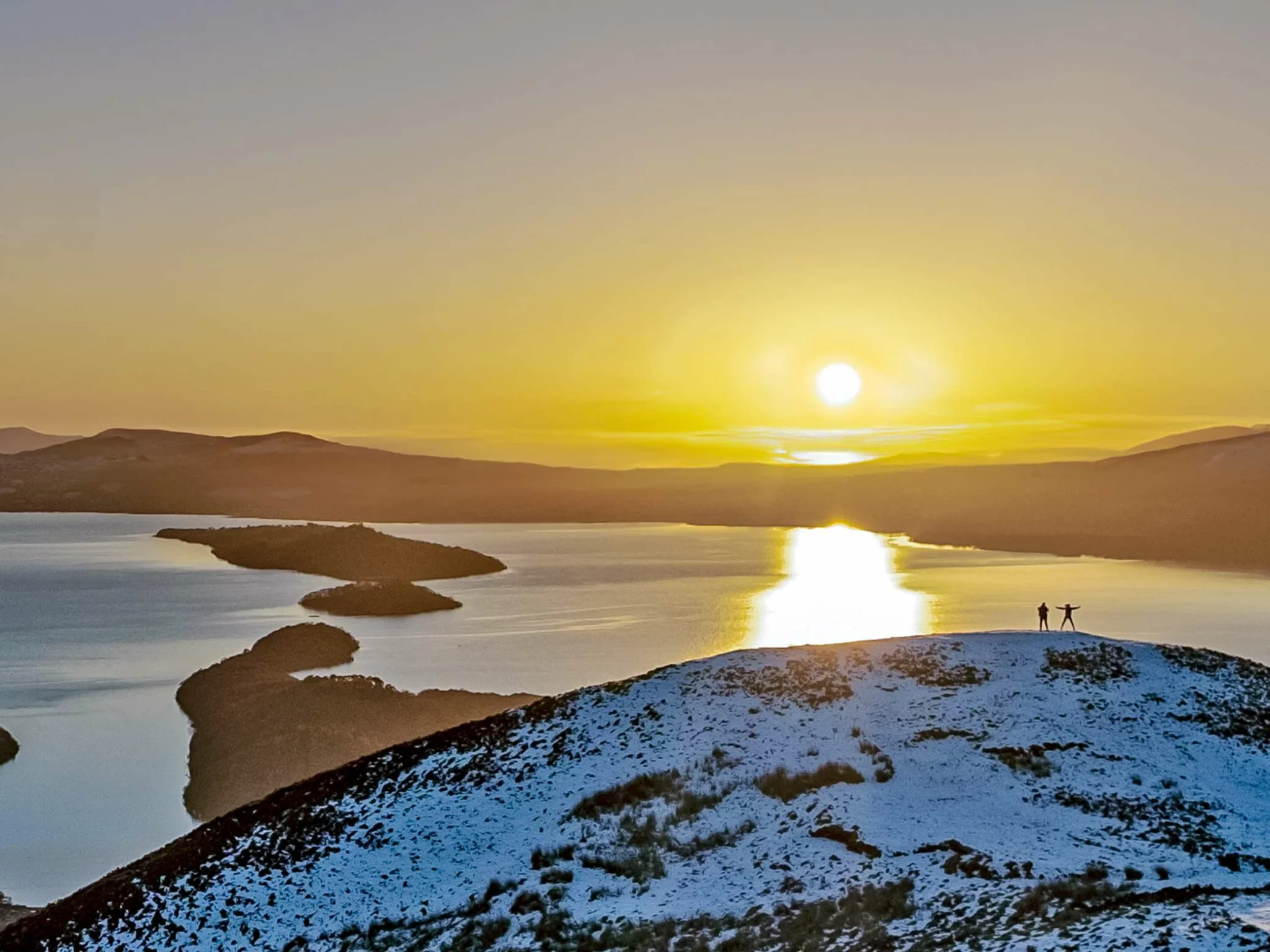


Frosty mornings, roaring fires and cosy pubs – winter is one of the most atmospheric times of year to explore Scotland. From Viking fire festivals and whisky tastings to wild saunas and snow-dusted walks, here are ten ways to make the most of Scotland’s coolest season. This is why you should visit Scotland in winter.
You’ll also need → my ultimate packing guide for Scotland
10 Ways to Experience Scotland in Winter
1. Celebrate the New Year on Hogmanay
Scotland’s New Year celebrations are legendary.
Join the fireball festival in Stonehaven, where locals swing blazing balls of fire through the streets to welcome in the year. Or head to Edinburgh for the famous Hogmanay street party and concert beneath the castle.
If you’d rather something slightly less raucous, check into a Highland hotel for ceilidhs and champagne by the fire.
2. Witness Up Helly Aa, Shetland
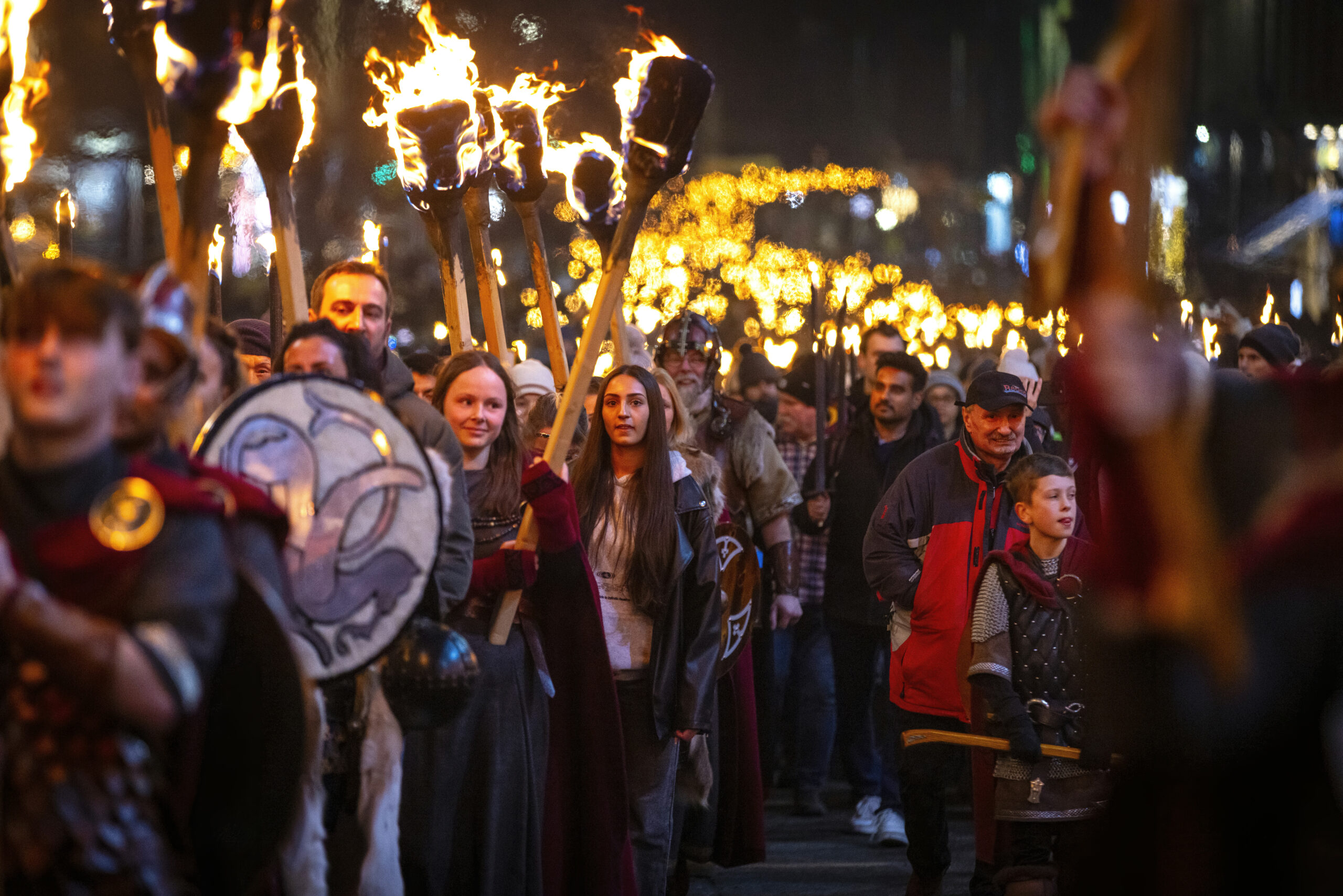
Each January, the streets of Lerwick blaze with torchlight as the Viking fire festival of Up Helly Aa marks the end of Yule. Expect processions, costumes, music and the dramatic burning of a longship.
3. Join a Burns Night Supper
Raise a glass to Scotland’s national bard.
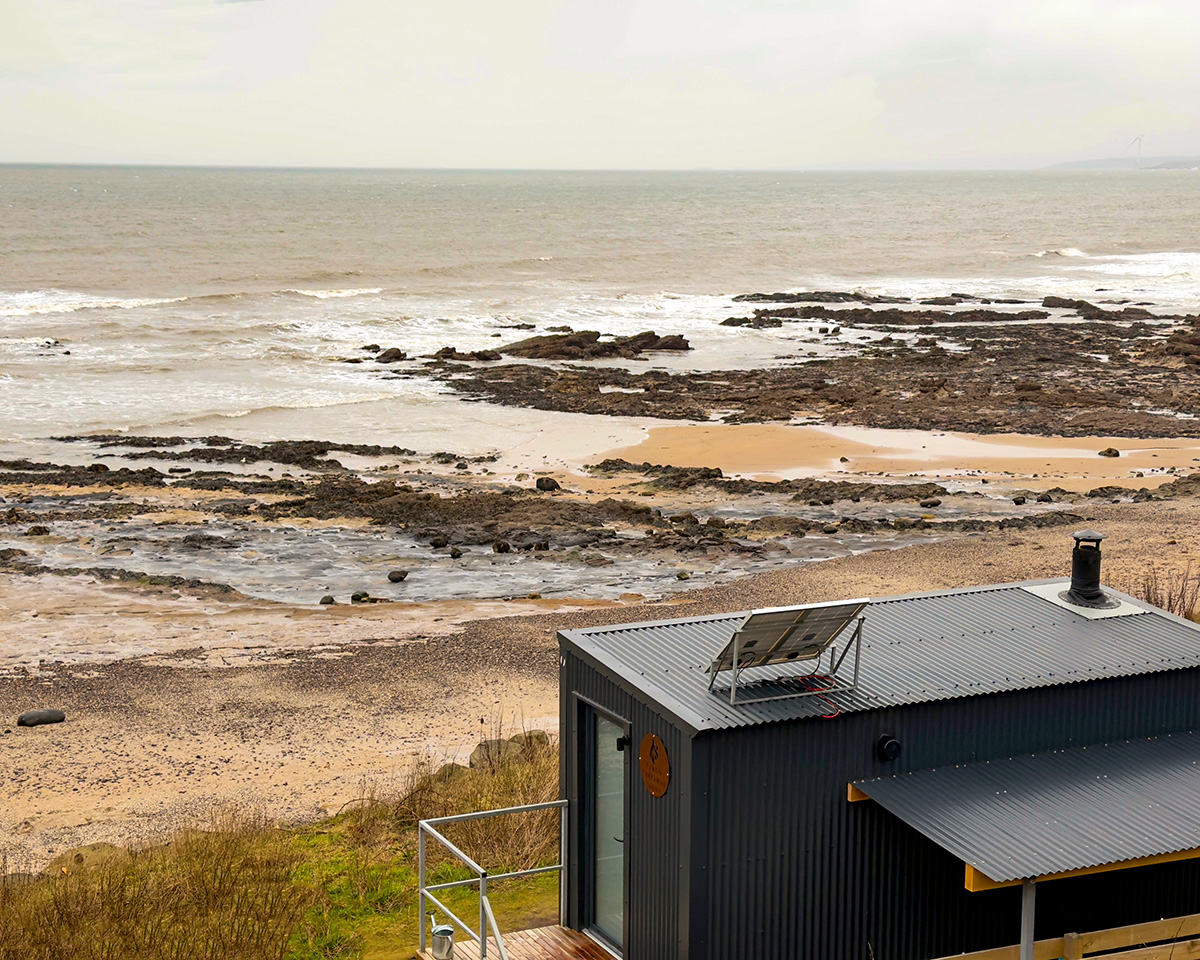
On or around January 25, Burns Night suppers take place across the country — from local village halls to fine dining restaurants. Expect poetry, traditional fare and, of course, whisky.
Explore more → how to host a Burn’s Night Supper
4. Try Winter Wellness: Wild Saunas
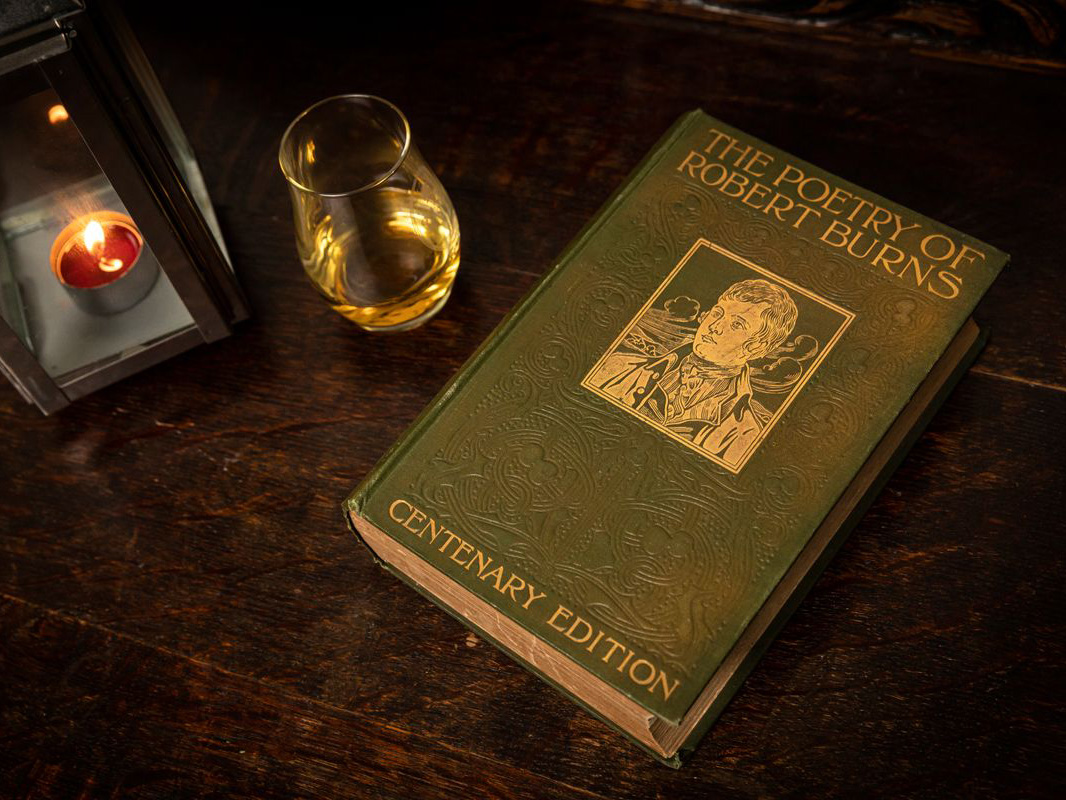
Winter in Scotland isn’t all about the cold. There’s a growing “wild wellness” scene bringing a little Nordic calm to the coast. Here are my favourites:
- Wild Scottish Sauna, Kingsbarns Beach, Fife — this mobile wood-fired sauna is perched on the beach in Fife and offers a 90-minute sauna and sea experience.
- Soul Water Sauna, Portobello, Edinburgh — a traditional wood-fired sauna on Portobello Beach. Ideal for a sauna and sea plunge combo.
- Watershed Sauna, Findhorn — a wood-fired sauna along the Moray Firth shore, with sea views.
- Wild Dook Sauna, Dumfries & Galloway — a mobile sauna that moves to rugged locations across Dumfries & Galloway, designed for wild swimmers and wellness seekers.
- Hot Tottie Sauna, Luss — sauna sessions by Loch Lomond.
Wrap up warm, dip in the sea and then warm up again by the stove.
Read more → my complete guide to winter wellness – wild saunas and wild swimming
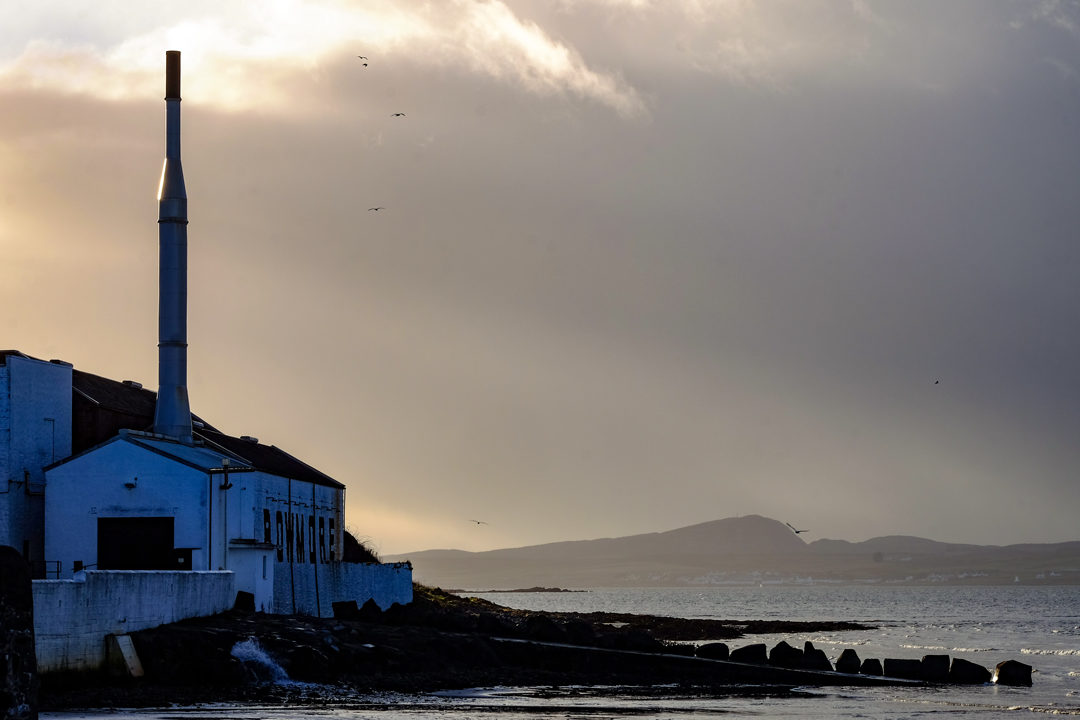
5. Warm Up the Scottish Way — in a Distillery
When the temperature drops, there’s no better way to warm up than with a dram of Scotland’s national drink. Two of my favourite distilleries in Scotland are:
- Glenfiddich, Speyside’s whisky heartland — Speyside is home to more distilleries than anywhere else in the world, and Glenfiddich is one of its best known. Their winter tours tell the story of the Grant family who’ve run it since 1887, plus plenty of drams.
- Talisker, the taste of Skye — over on the Isle of Skye, Talisker’s distillery sits right by the sea at Carbost, with views across Loch Harport. The whisky here captures the island perfectly: smoky, salty and full of character. After your tour, grab lunch or a coffee in the small visitors’ café overlooking the water.
Discover → the best whisky distilleries to visit
6. Chase the Northern Lights
Yes, really — the Aurora Borealis can be seen from Scotland. Known locally as the Mirrie Dancers, they sometimes shimmer across northern skies between November and February.
Even if the lights don’t appear, you’ll find some of the clearest stargazing in Europe.
Best spots: Caithness, Shetland, the Outer Hebrides and Galloway Forest Park.
When to go: November to February.
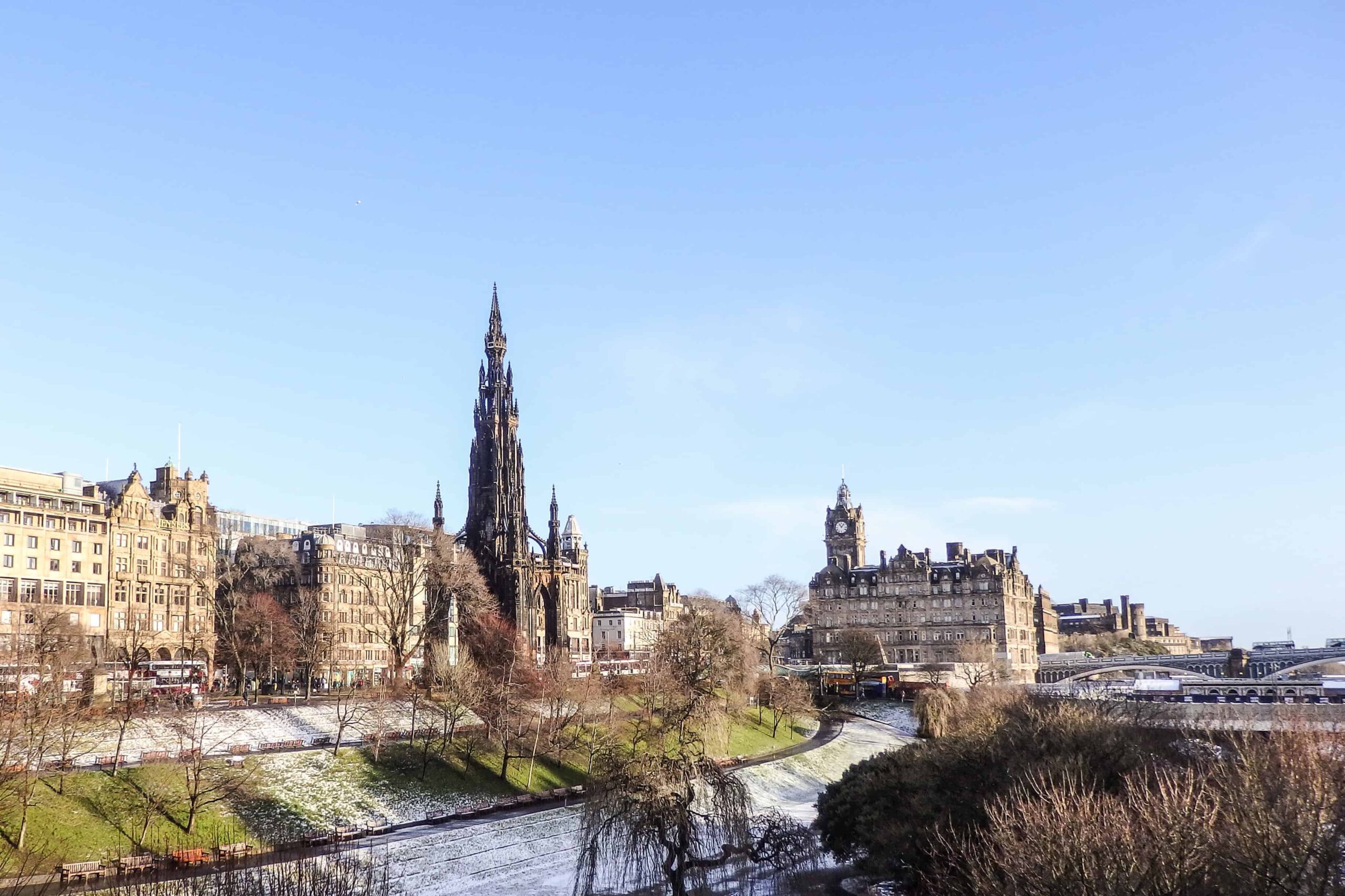
7. Head to the Cairngorms for a Winter Wonderland
With forests dotted with dark green lochans, vast tundra that can reach -27°C in winter, and wildlife including ospreys, reindeer, pine martens and red squirrels, the Cairngorms National Park is one of Scotland’s last great wildernesses.
In winter, Scotland’s biggest national park turns into a winter playground. Here’s what to get up to:
- Walk in Rothiemurchus Forest — beautiful year-round, but winter brings a special hush to the pinewoods. Try the easy trails around Loch an Eilein and keep your eyes peeled for red squirrels and roe deer darting through the trees.
- Visit the Cairngorm Reindeer Centre near Aviemore and walk out onto the hillside to meet Britain’s only free-roaming reindeer herd. It’s a short, guided walk (usually around an hour) and perfect for families.
- Ski or snowboard — the Cairngorms are home to three ski resorts: Cairngorm Mountain, Glenshee and The Lecht. Each has slopes for beginners through to experts.
- Try a winter skills course — if you fancy heading into the high tops, book a winter skills day with a local guide. You’ll learn how to use crampons and an ice axe, read snow conditions and move safely in the mountains.
Aviemore makes a great base, with easy access to trails, gear hire and cosy lodges.
Guide → How to visit the Cairngorms
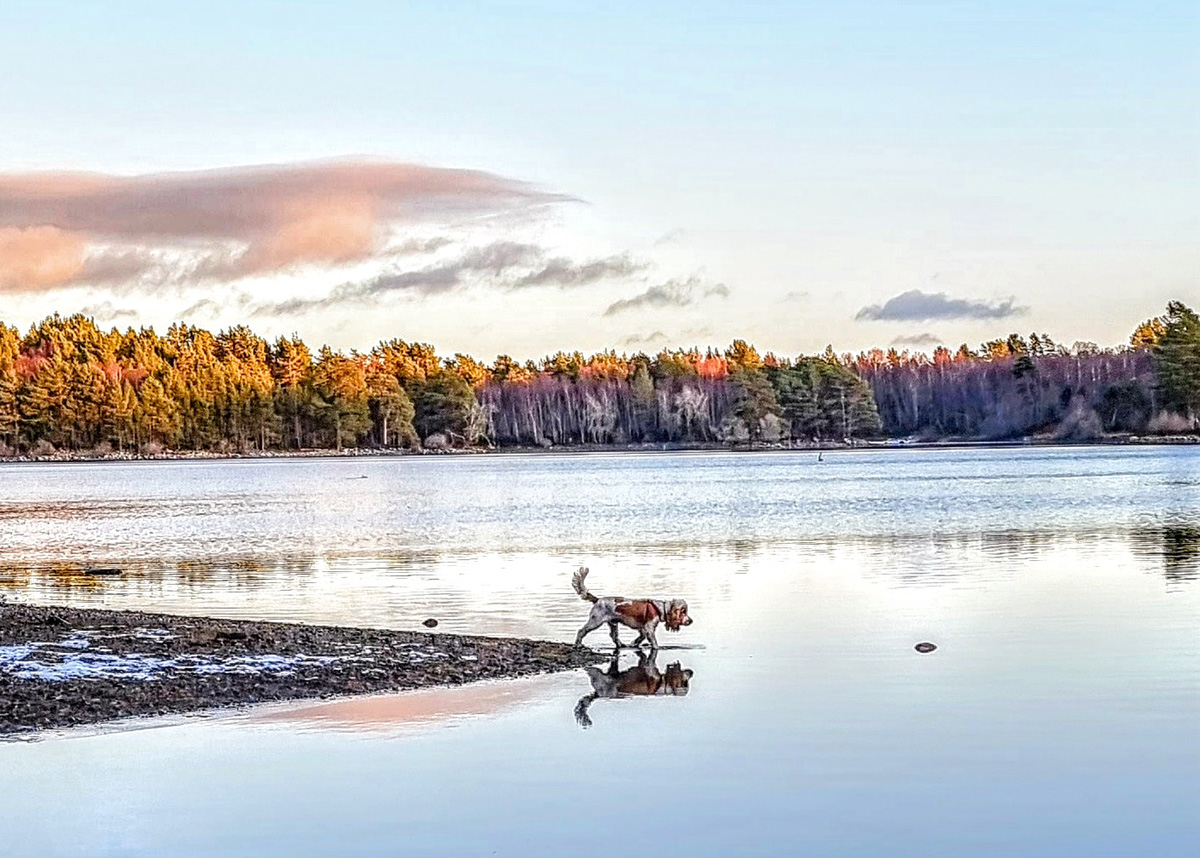
8. Get Còsagach — Scotland’s Art of Cosy
The Gaelic word còsagach (pronounced kaw-sa-goch) means snug, sheltered and warm — and it perfectly captures how to enjoy a Scottish winter. Think log fires, thick blankets and nowhere you have to be except exactly where you are.
- Eat: winter menus across Scotland come into their own. You’ll find slow-cooked stews, cullen skink, venison with root vegetables and plenty of sticky toffee pudding.
- Stay: choose a lodge with a log burner, a cabin with a hot tub, or a small hotel where you can curl up with a book as snow falls outside.
- Do: read by the fire with a whisky in hand, wrap up and take a short riverside walk at dusk, or soak in a hot tub under clear, starry skies.
Read more → the art of cosagach in Scotland
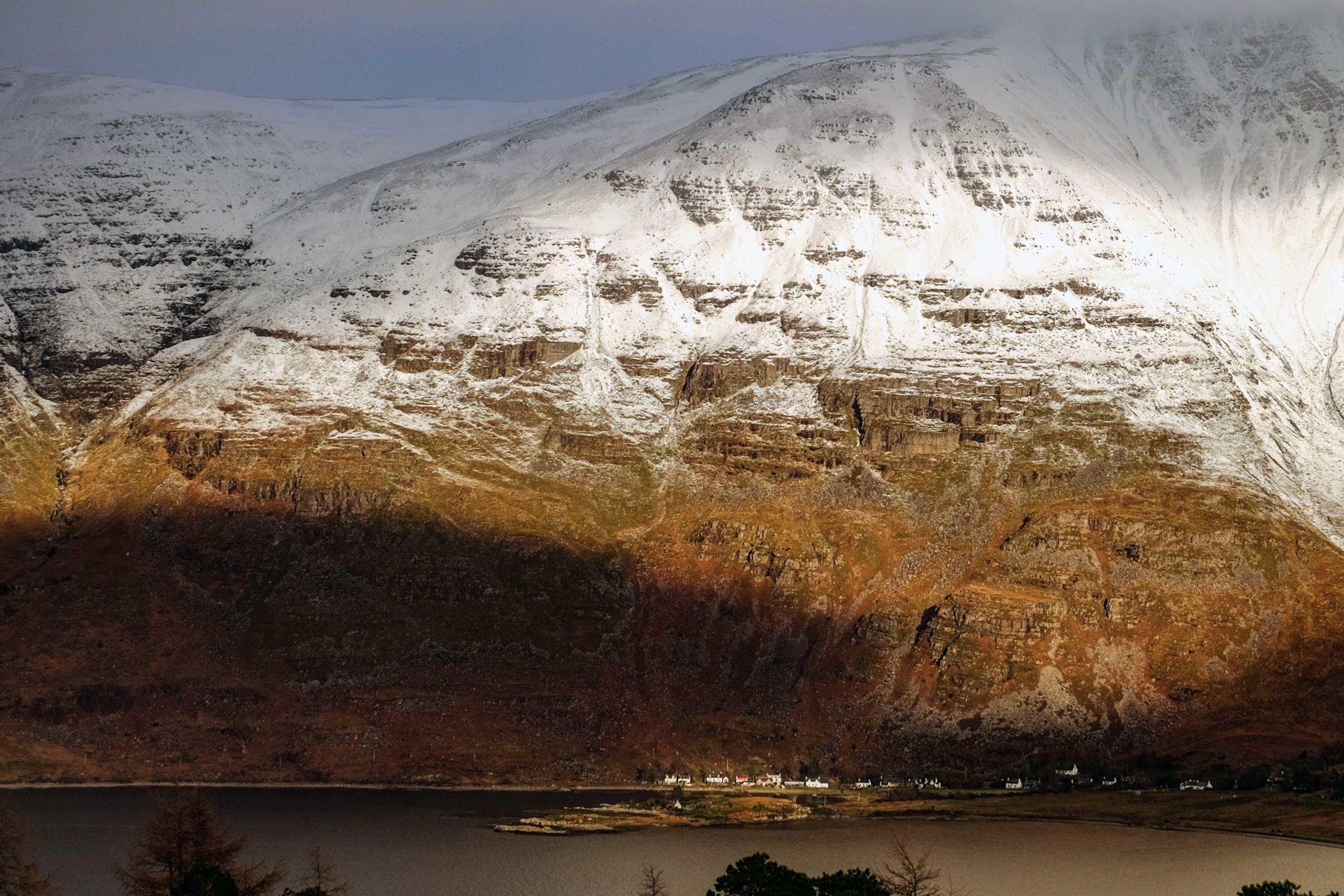
9. Get Outside for a Winter Walk
Walking is one of the best ways to experience Scotland’s winter magic.
Winter walking doesn’t have to mean mountaineering. Scotland’s low-level paths and forest routes offer plenty of safe options for all abilities. You can set out for an hour or two, return to a warm café or pub, and still feel like you’ve stepped into another world.
My favourite winter walks in Scotland:
- Loch an Eilein, Rothiemurchus (Cairngorms) — a classic circular walk through ancient pinewoods, with views of the ruined castle sitting on a frozen loch. Flat, easy and magical after fresh snow.
- The Hermitage, Dunkeld (Perthshire) — follow the River Braan through towering Douglas firs to the roaring Black Linn Falls. The forest feels like something from a fairytale when the frost settles on the branches.
- Glencoe Lochan Trail (Glencoe) — short and peaceful, this lochan walk gives mirror-still reflections of the surrounding peaks, especially beautiful at sunrise or sunset in winter.
- St Abb’s Head (Berwickshire Coast) — if you fancy a coastal route, the clifftop path at St Abb’s Head is stunning in any season. Winter brings crisp air, big skies and a good chance of spotting seals in the bays below.
- Loch Morlich Beach Walk (Aviemore) — yes, there’s a beach in the Highlands. A loop around Loch Morlich combines mountain views, snowy pines and a café for hot chocolate at the finish.
Read more → more of my favourite walks in Scotland
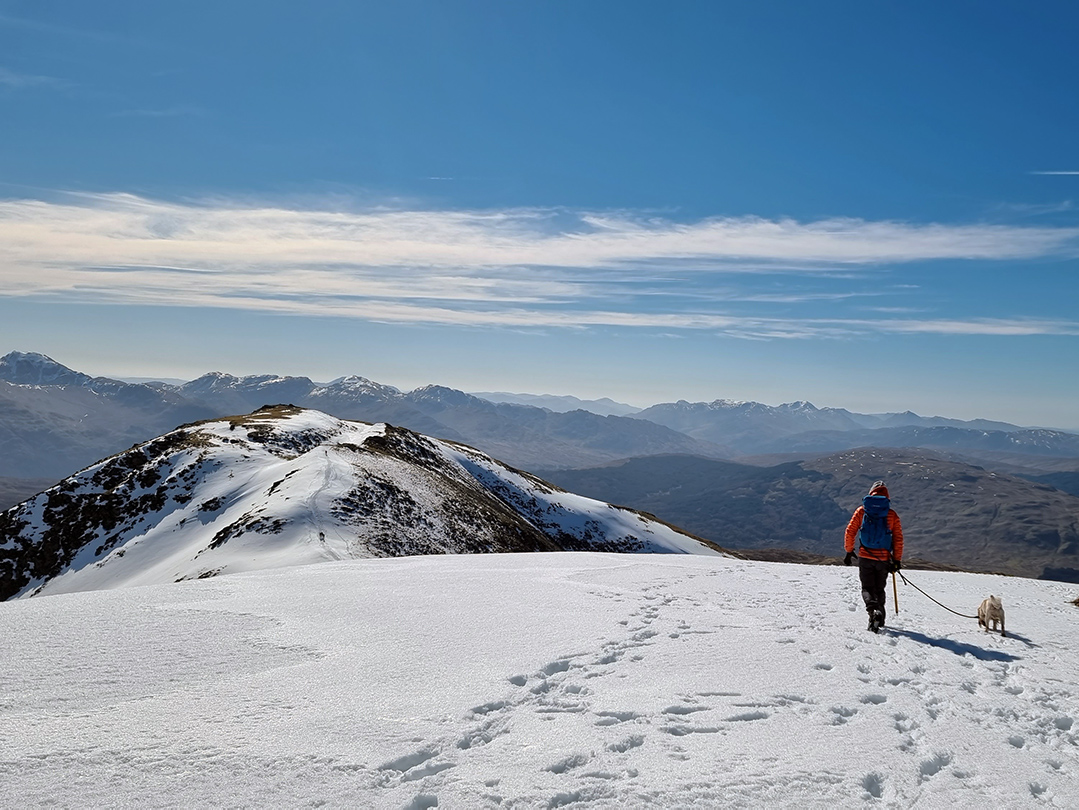
10. Go Skiing or Snowboarding
Scotland has five ski resorts — and when the snow comes, they’re fantastic.
You don’t need to head to the Alps for a proper winter adventure; a good Scottish snow day can be every bit as exciting (and unpredictable).
Each mountain has its own character, from family-friendly slopes to steep backcountry lines.
- Glenshee: known as the ‘Three Glens’, Glenshee is the largest ski area in the UK, covering 22 lifts and 36 runs that stretch across four mountains. The terrain suits everyone from first-timers to seasoned snowboarders, with gentle learner slopes near the café and red runs that roll down to the Cairnwell Chairlift.
- Nevis Range: located near Fort William, the Nevis Range offers dramatic scenery and some of the most exciting runs in the country. The gondola, the only one in Scotland, whisks you up the mountain for skiing, snowboarding and snowshoeing with a view of Ben Nevis itself.
- Glencoe Mountain: set in one of Scotland’s most iconic glens, Glencoe combines history, scenery and solid snow when the weather plays ball. It’s the oldest ski centre in the country, dating back to the 1950s, and still one of the most characterful.
- The Lecht: tucked in the eastern Cairngorms near Tomintoul, the Lecht is small but perfectly formed. Its compact layout and well-groomed slopes make it ideal for families and first-timers. The centre’s chairlifts and snowmaking equipment mean it often has snow even when others don’t.
- Cairngorm Mountain: high above Aviemore, Cairngorm Mountain is Scotland’s best-known resort, with high-altitude runs, a reliable snow record and easy access from town. There are long cruising blues, scenic reds and off-piste opportunities for more experienced skiers.
Scotland in Winter: Your Questions Answered
Where to stay in Scotland in winter
Looking for somewhere to stay while you explore? Here are the best areas to visit in Scotland in winter:
- Aviemore — for skiing, reindeer spotting and snowy forest walks.
- Glencoe & Fort William — ideal for mountain adventures.
- Dunkeld or Pitlochry — cosy small towns with great pubs and winter walks.
- Edinburgh & Stirling — perfect for festive city breaks.
Read more → my favourite places to stay in Scotland
The weather in Scotland in winter — is it really that bad?
In one word: no. Winters are like any season in Scotland — you never know quite what the weather is going to do.
Scotland’s winter weather is famously changeable. Rain, snow, wind and blue skies can all arrive in a single day, so be ready for everything.
Temperatures typically range from just below zero to around +10°C, but cold snaps can drop it far lower. Snow is most likely from January to March, especially in the Highlands.
Just follow the Scottish philosophy: wait five minutes and the weather will probably change again.
When is winter in Scotland?
Scotland’s winter runs from December to March. Expect short days (around six or seven hours of daylight in midwinter), cold crisp weather and the occasional dusting of snow, especially in the Highlands and Cairngorms. It’s the quietest time of year to travel, so you’ll often have the views all to yourself.
How cold does it get in Scotland in winter?
Temperatures in Scotland in winter generally range from just below zero to +10°C. However, we do get ‘proper’ winters — during the ‘Beast from the East’, temperatures dropped as low as -16°C in Edinburgh and snow lay in the cities for a few weeks.
Does it snow in Scotland in winter?
Yes — you’re likely to see snow in Scotland in January, February and March each year, particularly across the Highlands and Cairngorms.
Driving in Scotland in winter
Winter driving in Scotland requires caution:
Main roads are regularly gritted, but minor roads may remain icy or snow-covered. Pull away gently in a low gear, avoid sudden braking, and drive slowly. Remember that stopping distances in winter are far longer than you expect — on ice they can be up to ten times greater — so leave plenty of room and slow down early.
You can use snow chains legally, but remove them once the snow clears. Most cars here don’t bother with them: thanks to Scotland’s maritime climate and salty air, the snow rarely stays for long. A pair of sunglasses is worth having too, as the low winter sun can dazzle.
Always check road closures and weather alerts via Transport Scotland and the Met Office.
If you’re hiring a car, avoid rear-wheel-drive vehicles and opt for safer all-wheel or 4WD options. If you do get stuck, pulling away in a higher gear can help you up a slippery hill, and it’s worth carrying a shovel in case you need to dig yourself out. And if you start to slide, don’t brake — ease off, stay in a low gear and steer into the skid.
For more winter driving advice:
- The Transport Scotland website also notifies you of road closures due to essential winter roadworks or weather.
- For winter driving advice visit Police Scotland.
- The Met Office put out yellow, amber and red snow and ice weather warnings, you can download an app to your phone which will alert you.
- Follow the brilliantly named trunk road gritters on the Transport Scotland website.
What to wear in Scotland in winter
If you’re just visiting Edinburgh or Glasgow, dress how you normally would on a cold, wet day — a good waterproof, a woolly hat, hood, gloves and a scarf.
An umbrella is generally useless in a Scottish winter: the wind in Edinburgh can destroy one in seconds.
If you’re heading out into the countryside or up to the Highlands, you’ll need proper outdoor clothing — think quick-drying fabrics and lots of warm layers.
Start with a good base layer (I like merino wool), then a thin fleece or tech-material jacket. On top, I always wear a thin windproof and waterproof jacket — the best ones for Scotland use a Gore-Tex or Nikwax coating. I also carry lightweight waterproof trousers that pack down small enough to fit in my bag.
I can’t live without touchscreen gloves, either — you don’t have to keep taking them off to use the maps on your phone or GPS. And if you’re planning any walking or hiking, you’ll want waterproof hiking boots.
My complete Scotland packing list covers everything you’ll need, from waterproof clothing and outdoor essentials to tech accessories and family-friendly gear — so no matter when or where you visit, you’ll be ready for anything the Scottish skies throw your way.
My complete Scotland packing list covers everything you’ll need for a memorable trip, from waterproof clothing and outdoor essentials to tech accessories and family-friendly gear.
How much daylight is there in Scotland in winter?
Not much! While we don’t have an eternal night here in Scotland, it can feel like it — no wonder so many Scots are prescribed vitamin D. Expect it to get light around 8.30am and go dark by 4pm, leaving roughly six or seven hours of daylight. Squeeze plenty in, or be prepared to spend the rest by a roaring fire (or in a distillery — a wee whisky warms up any Scottish winter).
Do attractions stay open in Scotland in winter?
Many castles, historic houses and attractions close for the winter, often from October until Easter. Their grounds or gardens may still be accessible, so always check the site’s calendar before you visit.
Planning a Trip to Scotland in Winter?
Winter in Scotland isn’t for the faint-hearted, but for those who embrace it, the rewards are unforgettable: frosty mornings, quiet landscapes, festive events and that special hush after a snowfall.
If you’re planning a winter trip, I’d love to help. Drop me a message with your travel dates or route ideas and I’ll suggest custom itineraries, or leave a comment below — I’m always happy to share more hidden gems.
Safe travels and happy planning!
Kate, Love from Scotland x
- Plan your trip to Scotland in Spring.
- Plan your trip to Scotland in Autumn.

Leave a Reply