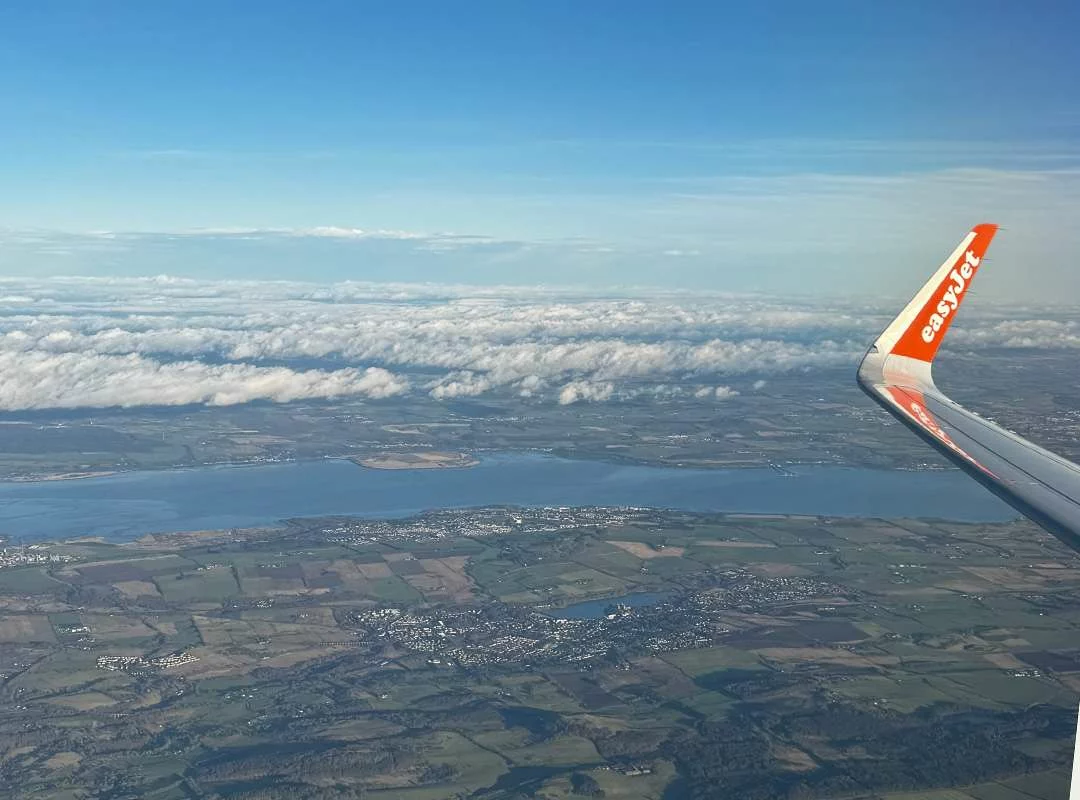


The good news is that Scotland is pretty easy to reach from most parts of the UK, and reasonably straightforward from much of Europe and beyond.
The less good news is that your choice of transport can make a real difference to your trip, depending on where you’re starting from, what your budget looks like, and whether you want to arrive in Edinburgh city centre or somewhere considerably more remote.
Here’s a rundown of how to get to Scotland, so you can pick the one that works for you.
You might also like my complete guide to planning a trip to Scotland and my guide to the latest money saving hacks in Scotland
How to get to Scotland by plane
Flying is the obvious choice if you’re coming from outside the UK, or if you’re based in the south of England and want to save time. Scotland has four main airports.
Edinburgh Airport is the busiest and best connected. It sits about six miles west of the city centre and has direct flights from across Europe, plus transatlantic routes to New York, Boston, Philadelphia and beyond. Getting into Edinburgh from the airport is easy: the Airlink 100 bus runs every ten minutes during the day and every 15-20 minutes during the night. The bus takes around half an hour. You can also take the Edinburgh Trams service which drops you right on Princes Street.
Glasgow Airport handles a similar range of routes, including direct services to North America and plenty of European destinations. It’s in Paisley, about eight miles from Glasgow city centre. There’s no rail link, but the 500 bus runs frequently and takes around 25 minutes.
Aberdeen Airport serves the northeast of Scotland, with good connections to London and several European cities. It’s particularly useful if the Highlands or Aberdeenshire are your main destination.
Inverness Airport is the most northerly of the four and a genuinely useful option if you’re heading straight into the Highlands. There are daily connections to London Heathrow, London Gatwick and some regional UK airports. Arriving in Inverness means you’re already in the heart of the Highlands before you’ve even left the terminal.
If you’re flying from London, the journey time to Edinburgh or Glasgow is around 90 minutes. Factor in airport faff at both ends and the train starts to look very appealing, but if you’re in Bristol, Birmingham, Manchester, or anywhere in the south, flying can genuinely save you time.
Budget airlines including easyJet and Ryanair serve Scottish airports from a range of UK and European cities, often at very reasonable prices if you book ahead.
Loganair is Scotland’s own regional airline. If you’re heading to Orkney, Shetland, Stornoway on Lewis, Tiree, Islay, Campbeltown, or Benbecula, Loganair is almost certainly how you’re getting there by air.
Loganair also connects Scottish cities to regional UK airports including Birmingham, Bristol, Cardiff, Liverpool, Manchester and Newcastle, which is useful if you’re not travelling from London.
Two things that make Loganair genuinely special: it operates Barra Airport in the Outer Hebrides, where the runway is a beach, one of only a handful of scheduled beach landings in the world, and timed around the tides.
Loganair also flies the world’s shortest scheduled commercial flight, between the Orkney islands of Westray and Papa Westray, which takes under two minutes. Neither of these facts is relevant to planning your journey, but both are worth knowing.
Getting to Scotland by train
Honestly? The train from London to Edinburgh is one of the nicest ways to travel in the UK. You board at King’s Cross, settle in, watch the English countryside give way to the Borders, and pull into Edinburgh Waverley station right in the heart of the city. No airport queues, no security, no middle seat.
The East Coast Mainline runs from London King’s Cross to Edinburgh, with the fastest services taking around four and a half hours. Some trains continue north to Aberdeen or Inverness. LNER operates most of these services.
If you’re coming from the west of England or the Midlands, the West Coast Mainline via Avanti West Coast is a better option. Trains run from London Euston to Glasgow Central in just over four hours, and you can also pick up connections from cities like Manchester, Birmingham, Liverpool and Preston.
The Caledonian Sleeper
The Caledonian Sleeper is a night train that departs London Euston in the evening and arrives in Edinburgh, Glasgow, Aberdeen, Inverness and Fort William the following morning. You can book a seat, a seated cabin, or a proper bed in a private room with your own en suite.
It’s an experience as much as a transport option. You fall asleep somewhere around the Midlands and wake up in Scotland. If Inverness or Fort William is your destination, it’s an incredibly efficient use of your time.
Prices vary hugely depending on how far ahead you book and what type of accommodation you choose.
Train booking tips
Book through Trainline or directly with the train operator. Advance fares are significantly cheaper than turn-up-and-go tickets. The cheapest fares tend to release around 12 weeks before travel. If you travel regularly by train, a Railcard (16-25, 26-30, Two Together, Senior) can save you a third on most fares.
How to get to Scotland by ferry
The main ferry route into Scotland from outside England is from Northern Ireland, and it’s a popular one, particularly if you’re touring Ireland and want to continue into Scotland.
Stena Line runs services between Belfast and Cairnryan, on the Ayrshire coast. The crossing takes around two hours and fifteen minutes on the fast ferry. Cairnryan is about 90 miles from Glasgow, so you’re looking at around an hour and a half’s drive once you disembark.
P&O Ferries also operates between Larne (just north of Belfast) and Cairnryan. Both operators run several crossings a day and you can travel as a foot passenger or bring your vehicle.
If you’re a cyclist or travelling without a car, it’s worth knowing that you can take bikes on the ferry, and there are onward bus services from Cairnryan to Stranraer, from where you can pick up trains north.
Getting to the Scottish islands by ferry
Once you’re in Scotland, island hopping by ferry become a way of life if you’re heading to the islands. CalMac (Caledonian MacBrayne) operates most of the west coast island routes, serving places like Arran, Islay, Mull, Skye (though Skye also has a road bridge), Lewis and Harris, and more.
NorthLink Ferries runs services to Orkney and Shetland from Aberdeen and Scrabster.
If the islands are part of your trip, book your ferry crossings well in advance for summer travel. Vehicle spaces in particular sell out months ahead on popular routes.

Driving to Scotland
Driving to Scotland is a perfectly good option, particularly if you want the freedom to take your own car once you arrive, or if you’re travelling from somewhere that’s awkward by public transport.
The East Coast route
The most direct road from London to Edinburgh follows the A1 north through Hertfordshire, Lincolnshire, and Northumberland, crossing the border near Berwick-upon-Tweed. The distance is around 400 miles and takes eight to nine hours without traffic. This route also works well if you’re coming from the East Midlands or Yorkshire.
The West Coast route
From London, Birmingham, or Manchester, the M6 and A74(M) is the standard route northwest into Scotland. You cross the border near Gretna Green and can continue north to Glasgow (around an hour from the border) or head east towards Edinburgh. From Manchester, Glasgow is roughly four hours.
Driving tips
Scotland’s motorway network covers the central belt well, but once you head north, road conditions change.
Single-track roads with passing places are common in the Highlands and islands, and they require patience, awareness, and some adjustment if you’re used to dual carriageways. A good general rule is to add 30 to 40 percent to any journey time Google Maps gives you for Highland routes.
Read more – first time driving tips in Scotland & the NC500
If you’re driving an electric vehicle, charging infrastructure in the Highlands has improved significantly but is still patchy in remote areas. Plan your stops using Zap-Map or a similar service before you set off.

How to get to Scotland by bus / coach
If budget is a priority, bus / coach travel is worth considering. National Express runs services from London Victoria and other major cities to Edinburgh and Glasgow, as does Megabus. Journey times are longer than the train (often 8 to 10 hours from London) but prices are frequently very low if you book ahead.
Getting around Scotland by bus
Once you’re in Scotland, the bus network is more useful than people give it credit for, especially for getting between cities without a car, or for stretching a budget. It’s not the answer to everything (rural areas can be patchy), but for the main routes it’s genuinely good.
- Scottish Citylink is the main long-distance coach operator within Scotland, covering over 200 towns and linking all the major cities. Routes run from Glasgow and Edinburgh to Inverness, Fort William, Oban, Aberdeen, Skye, Ullapool and beyond. Book in advance through their website for the best fares.
- Ember runs 18 routes connecting Edinburgh, Glasgow, Dundee, Aberdeen, Stirling, Perth, Inverness, Fort William and Oban. Fares are fixed regardless of when you book (no surge pricing, no booking-ahead penalty) and there is live bus tracking so you’re not standing at a stop wondering. Bikes and wheelchair spaces can be booked for free.
- FlixBus operates between Edinburgh, Glasgow, Aberdeen and Dundee, as well as connecting Scottish cities to destinations across England and Europe. Fares are typically very low if you book ahead, and the coaches are comfortable with Wi-Fi and USB charging. Worth checking for cross-border journeys especially, as prices can undercut the train significantly.
Getting to Scotland from outside the UK
If you’re travelling from North America, Australia, or elsewhere in the world, the good news is that Scotland is far better connected internationally than most people realise. You don’t necessarily need to fly into London first.
Flying from the United States
There are direct flights to Scotland from the US, and the number of routes has grown steadily.
Edinburgh is the main hub for transatlantic arrivals, with year-round non-stop services from New York (JFK and Newark) and seasonal direct flights from Boston, Chicago O’Hare, Atlanta, Philadelphia, Washington Dulles and Orlando. Glasgow has fewer direct US routes but does operate services from New York.
Flight times from the East Coast are around six to seven hours. From Chicago it’s closer to seven and a half, and from the West Coast you’re looking at connecting through a hub rather than flying direct.
A few things worth knowing:
- US citizens don’t need a visa, but the UK has introduced an Electronic Travel Authorisation (ETA) scheme. It’s a simple online application, costs £10, and covers multiple trips over two years. You need to apply before you travel, it’s not something you sort out at the airport.
- If you can’t find a direct flight from your city, the most common connecting options are London Heathrow, Amsterdam Schiphol, Dublin and Paris CDG, all of which have good onward connections to Edinburgh or Glasgow.
Flying from Canada
Direct flights run year-round from Toronto Pearson to Edinburgh, and seasonally from other Canadian cities including Montreal. Air Canada and British Airways are the main operators.
From Toronto, the crossing takes around seven hours. Calgary and Halifax have had seasonal routes to Scotland in recent years, worth checking what’s running when you travel.
Canadian visitors also need an ETA for UK travel, same process and cost as for US travellers.
Flying from Australia and New Zealand
There are no direct flights from Australia or New Zealand to Scotland, you’ll connect through a hub, typically Singapore, Dubai, Abu Dhabi, Doha, or a European city.
The route matters more than you might think – flying via Dubai or Singapore often gets you into Edinburgh or Glasgow directly from the hub, which is much easier than routing via London and adding a domestic leg.
Given the journey time (22+ hours from the east coast of Australia), it’s worth considering whether you want to build in a stopover somewhere on the way.
Many travellers coming from Australia combine Scotland with Ireland or mainland Europe in a longer trip, which makes the flying distance feel more worthwhile.
Flying from Europe
If you’re in mainland Europe, Edinburgh and Glasgow are both well connected to the major hubs and to a growing number of secondary cities. Ryanair and easyJet fly to Scottish airports from cities across France, Germany, Spain, the Netherlands, Scandinavia, Italy, Poland and beyond.
For European visitors, no visa is required to enter the UK. However, since Brexit, EU nationals do need a valid passport rather than just a national ID card, and the ETA requirement for EU visitors is being phased in, check the current rules for your nationality before you travel, as the situation continues to change.
The Eurostar from Paris or Brussels to London St Pancras, followed by the train north to Edinburgh, is a practical option if you’re travelling from France, Belgium, or the Netherlands.
London to Edinburgh is around four and a half hours on the East Coast Mainline, so the full journey Paris to Edinburgh by rail takes around eight hours with a change at St Pancras.
A note on entry requirements
Whatever your starting point, check the UK government’s official guidance on entry requirements before you travel. The ETA system, visa rules, and passport requirements have all changed in recent years and vary by nationality. The official source is gov.uk/visit-the-uk.
Frequently asked questions
What's the fastest way to get to Scotland from London?
The train is usually the best door-to-door option. London King’s Cross to Edinburgh Waverley takes around four and a half hours on a fast service, and you arrive right in the city centre. Flying is technically quicker in the air, but once you account for getting to and from the airport and the time spent in security, the train is often comparable.
What's the cheapest way to get to Scotland?
A National Express or Megabus coach booked in advance is usually the cheapest option from England. Budget flights can beat this if you book well ahead and keep an eye on sales, particularly from airports outside London.
Can I get a sleeper train to Scotland?
Yes. The Caledonian Sleeper runs from London Euston to Edinburgh, Glasgow, Aberdeen, Inverness and Fort William. You can book a seat, a cabin seat or a private room with a bed. It’s a lovely way to travel and an efficient use of time if your destination is north of Edinburgh. Worth booking as far ahead as possible.
How do I get to Scotland from Ireland?
Stena Line and P&O Ferries both run crossings from Belfast and Larne to Cairnryan in southwest Scotland. The crossing takes roughly two to two and a half hours. From Cairnryan it’s about 90 miles to Glasgow. If you’re on the Republic of Ireland side, you can also fly into Edinburgh or Glasgow directly from Dublin.
How long does it take to drive from London to Edinburgh?
Around eight to nine hours in normal traffic via the A1. It’s worth breaking the journey, particularly around Newcastle or Alnwick, which is a good stop in its own right.
Do I need a passport to travel from England to Scotland?
No. Scotland is part of the United Kingdom, so there are no border controls and no passport required for UK citizens. International visitors should check the standard UK entry requirements for their nationality.
Are there direct flights from the US to Scotland?
Yes. Edinburgh has non-stop services to New York JFK, New York Newark, Boston, Philadelphia, Chicago O’Hare and Toronto, among others. Glasgow also has direct transatlantic routes. Specific routes vary by season, so check with airlines directly.
Can I travel to Scotland with my dog?
Driving and taking the ferry are the easiest options if you’re travelling with a dog. Most ScotRail trains allow dogs, and many hotels, cottages and B&Bs in Scotland are dog-friendly. Domestic flights within the UK generally don’t allow dogs in the cabin, so flying with a pet isn’t practical for most people.
What's the best way to get to the Scottish islands?
CalMac ferries serve most of the west coast islands, including Arran, Islay, Mull, Tiree, Colonsay, and the Outer Hebrides. NorthLink Ferries covers Orkney and Shetland. Skye is connected to the mainland by road bridge. For summer travel, especially if you’re taking a car, book as early as you possibly can.
Right then. Scotland’s waiting. Time to get here.
Love, from Scotland x

Leave a Reply