

Wild Atlantic beaches, ten world-famous whisky distilleries, and a pace of life that slows from the moment the ferry docks, the Isle of Islay is one of Scotland’s most characterful islands.
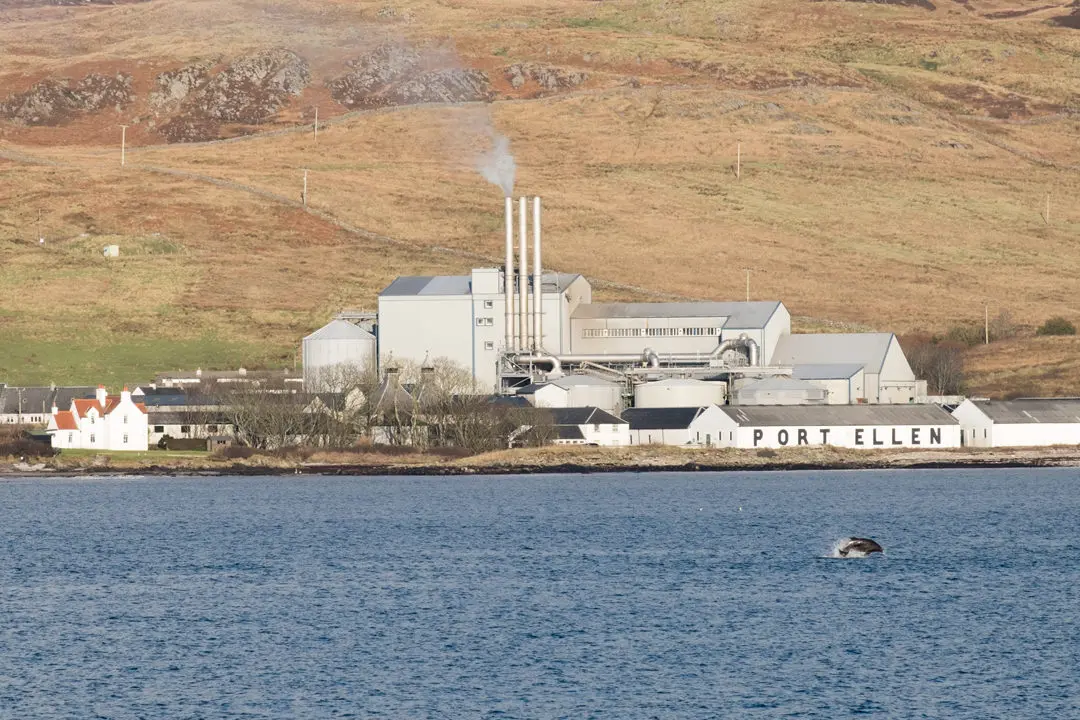
From peaty drams to dolphins leaping in the bay at Port Ellen, this Hebridean island has a way of making you want to miss your ferry home.
This complete Islay travel guide covers everything you need to plan your trip: how to get there, the best things to do, where to stay, how long you need, and all the practical tips that make the difference between a good Islay trip and an unforgettable one.
Here is how to visit Islay.
10 things to do on the Isle of Islay
- Tour a world-famous whisky distillery – Islay is home to ten working distilleries, each with its own character and tasting experience. My personal favourite is Bunnahabhain for its gorgeous setting and unpeated 18-year-old sherry cask.
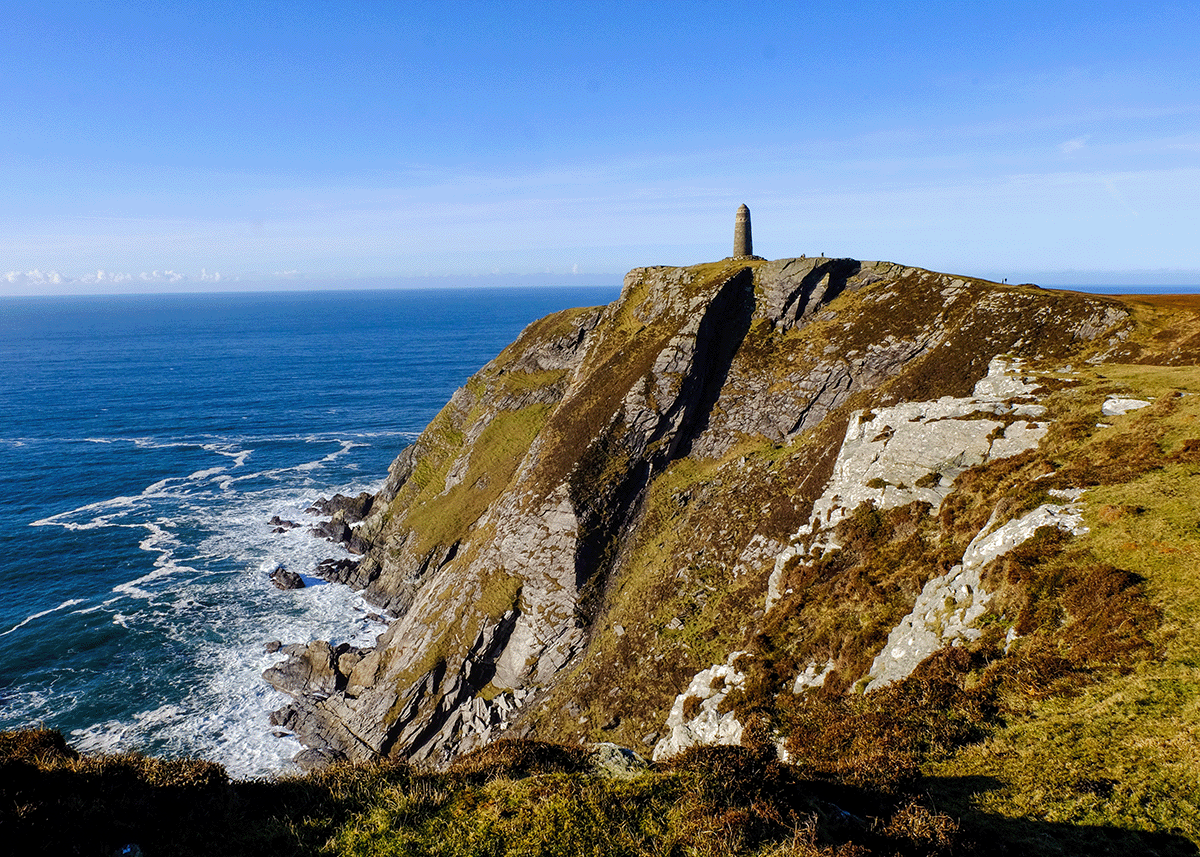
- Walk the Oa cliffs to the American Monument – a dramatic clifftop walk on the Mull of Oa, commemorating two 1918 shipwrecks. Watch for sea eagles overhead and Highland cows ambling across the path.
- Spend a day at Machir Bay – arguably one of Scotland’s most beautiful beaches. A perfect sweep of pale sand backed by dunes, with crashing Atlantic waves and often not another soul in sight.
- Spot dolphins from Carraig Fhada lighthouse – a short, lovely walk from Port Ellen to the lighthouse built in memory of Lady Eleanor Campbell. Dolphins are regularly seen in the bay and you can continue on to Singing Sands beach.
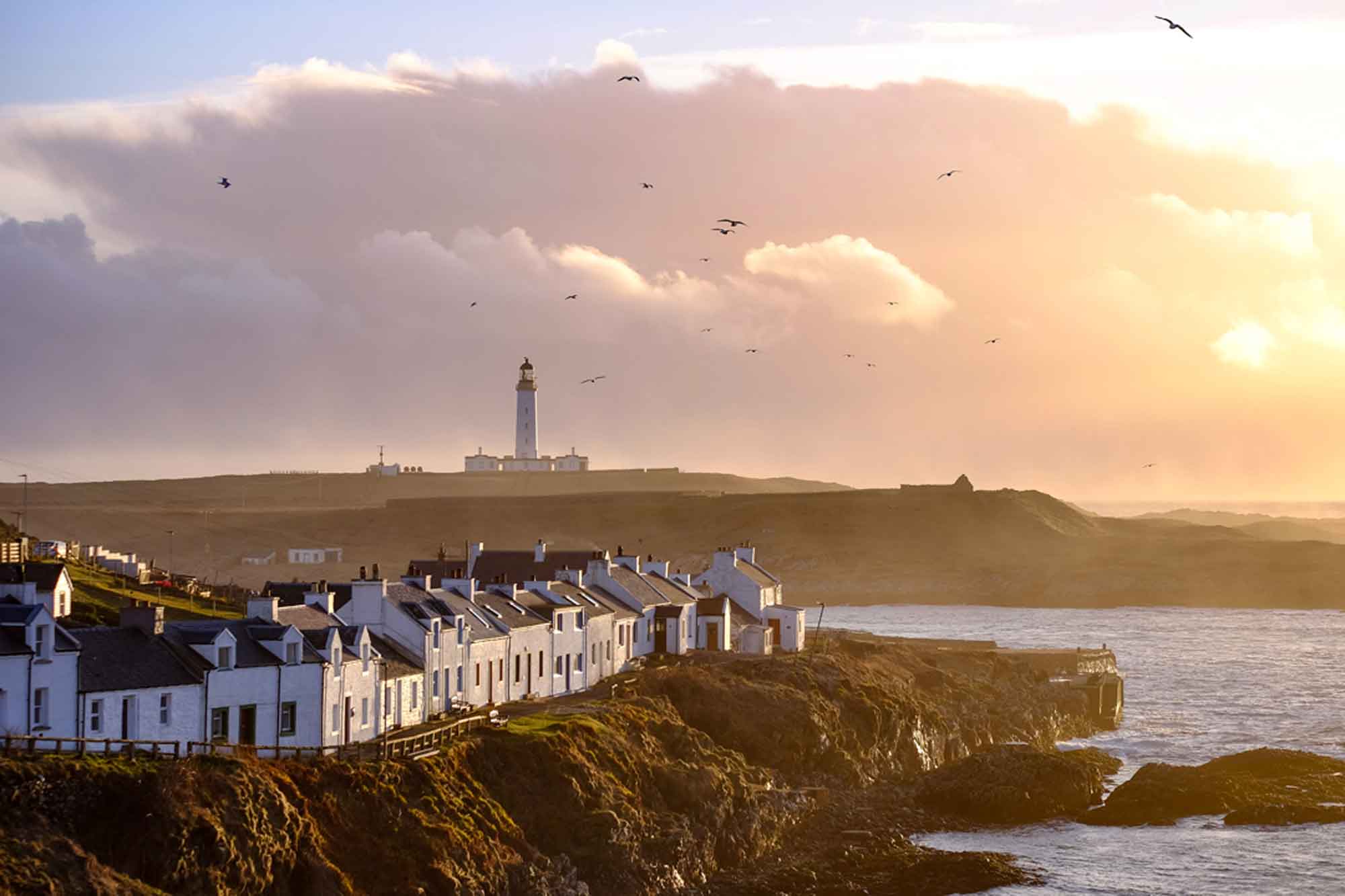
- Explore the Rhinns of Islay and Portnahaven – walk the coastal path between Portnahaven and Port Wemyss for views of the Rhinns of Islay lighthouse on the tiny island of Orsay, with grey seals popping up in the bay to watch you pass by.
- Experience Fèis Ìle, the Islay whisky festival – ten days of distillery open days, ceilidhs, traditional music, and community events every May. 2026 marks the festival’s 40th anniversary.
- Take a day trip to the Isle of Jura – a 5-minute CalMac ferry from Port Askaig takes you to Jura, home to 180 people, 5,000 deer, one distillery, and the mighty Paps of Jura.
- Watch for wildlife at Loch Gruinart – Islay is one of the best wildlife destinations in Scotland. Tens of thousands of barnacle geese winter here, plus otters along the east coast (the famous Bunnahabhain otters) and sea eagles year-round.
- Discover Islay’s ancient history – the 8th-century Kildalton Cross near Port Ellen is one of the finest surviving Celtic crosses in Scotland, and the medieval ruins at Finlaggan were once the seat of the Lords of the Isles.
- Join in the Islay Wave – every driver waves at every other driver on Islay’s single-track roads. It’s a tradition, it’s mandatory, and it perfectly captures the warmth of the island.
Here’s how to plan a visit to the Isle of Islay.
Jump to:
- Islay at a glance
- Where is the Isle of Islay
- How to get to Islay
- How long do you need?
- Best things to do on Islay
- History and Heritage on Islay
- Best beaches on Islay
- Walking on Islay
- Islay whisky distilleries guide
- The Islay Whisky Festival
- Where to stay on Islay
- Where to eat on Islay
- Best time to visit
- Practical tips & the Islay Wave
- FAQs
The need to know before you plan a trip to Islay
- Location: Inner Hebrides, off the west coast of Scotland
- Population: Approximately 3,200
- Capital town: Bowmore
- How to get there: Ferry from Kennacraig (to Port Ellen or Port Askaig), or fly from Glasgow
- Languages spoken: English and Scottish Gaelic
- Pronunciation: Islay is pronounced EYE-LA — not Eye-Lay
- Also known as: Banrìgh nan Eilean (The Queen of the Hebrides)
- Currency: British Pound (£)
- Best for: Whisky lovers, wildlife watchers, beach walkers, quiet-escape seekers
- How many days you need: 3 minimum, 5–7 ideal
Did you know?
- Islay is pronounced EYE-LA, not EYE-LAY. Islay is also known as Banrìgh nan Eilean – translated as the Queen of the Hebrides.
- The Gaelic name for the island is ‘ile’ and a person from Islay is a Ìleach – which is also the name of the Island’s newspaper. You might meet the newspaper editor either taking people around the Bunnahabhain Distillery or counting geese.
- Driving? On the Isle of Islay everyone waves at you. The ‘Islay Wave’ is famous worldwide and you have to join in. We counted 9 waves in a row until someone was navigating a sheep and couldn’t cope with waving at the same time.
- Many of Islay’s roads are single track, so learn to drive on one. Remember that the Islay locals probably have somewhere to go, so if you see someone (like a huge whisky lorry) roar up in your rearview mirror please use a passing place to let them past.
Step into an Islay pub (try the public bar at the Bowmore Hotel) and you will be welcomed with typical loud, noisy and nosy Scottish west coast charm. You probably won’t understand a word of what anyone is saying, don’t worry, I am not sure the locals do either!
Where is the Isle of Islay?
The Isle of Islay lies off the west coast of Scotland, part of the Inner Hebrides, sitting south of the Isle of Jura and west of the Kintyre Peninsula. It’s the southernmost of the Hebridean islands and at roughly 25 miles long by 20 miles wide, it’s one of the largest too.
Islay is world-famous for whisky, ten working distilleries call the island home, but it’s also one of Scotland’s most important wildlife destinations, with huge populations of barnacle geese wintering here, and dolphins, otters, and sea eagles all regularly spotted.
How to get to the Isle of Islay
There are three ways to reach Islay: by ferry, by plane, or on the summer island-hopping route from Oban.
By Ferry (most popular)
Caledonian MacBrayne (CalMac) ferries run year-round from Kennacraig on the Kintyre Peninsula to either:
- Port Ellen (south coast) — 2 hours 20 minutes
- Port Askaig (east coast) — 2 hours 5 minutes
Book well in advance, particularly for the summer months and the May whisky festival. Taking a car is strongly recommended, see below.
Getting to Kennacraig from Glasgow takes around 3 hours by road (via the A82 and A83 through Loch Lomond and Inveraray).
By summer ferry from Oban
In summer months, a CalMac service runs from Oban via the Isle of Colonsay to Port Askaig on Islay. This is slower but adds a second island to your trip and is a lovely scenic option.
By Plane
Loganair operates short domestic flights from Glasgow Airport to Islay Airport (near Port Ellen), taking around 35 minutes. This is ideal if you’re short on time, but you’ll need to hire a car on arrival or arrange transfers.
Do you need a car on Islay?
While it’s possible to visit Islay without a car, driving gives you far more freedom, especially if you want to explore distilleries, beaches, and rural corners at your own pace. If you are doing whisky tours and wish to drink alcohol, remember that you will need a designated driver.
How long do you need on Islay?
This is the question I’m asked most often. Here’s the honest answer:
- 1–2 days: Honestly? Not enough. You’ll spend most of it on the ferry. If that’s all you have, save Islay for another trip.
- 3 days: Enough to cover the highlights, visit 2–3 distilleries, see Machir Bay, drive the Oa, and get a feel for the island.
- 5 days: The sweet spot. Time for 4–5 distilleries, proper beach days and a trip to Jura.
- 7 days: Full island exploration, every distillery, and time to explore the quieter corners.
When is the best time to visit Islay?
Late spring to early autumn offers the best weather and longest days, while May’s Feis Isle whisky festival brings a lively atmosphere, though accommodation fills quickly.
- May – Peak time. Longer days, settled weather, and the Fèis Ìle whisky festival in the last week. Book early.
- June–August – Busy but beautiful. Long daylight hours (sunset after 10pm in midsummer).
- September–October – My personal favourite. Good light, quieter, and the geese start arriving.
- November–March – Wild, atmospheric, and quiet. Fewer distilleries offer full tours. Expect closures.
- April – Walk Islay Walking Festival takes place across Islay, Jura, and Colonsay, a great time to visit for hikers.
Best Things to Do on Islay
Islay has four distinct areas, each with its own character, whisky style, and attractions. A good Islay itinerary takes in all four.
Port Ellen and the Mull of Oa
(‘Porth-eilan’ and ‘Mull of o’)
Islay’s south-west corner is the island’s most dramatic. Port Ellen is guarded by the pretty Carraig Fhada lighthouse, built in memory of Lady Eleanor Campbell. Walk out to the lighthouse and onwards to the Singing Sands beach, keep an eye on the bay for dolphins.
Beyond Port Ellen, the Mull of Oa is one of Scotland’s great coastal walks. The American Monument, commemorating two 1918 shipwrecks (the Tuscania and HMS Otranto), sits on dramatic Atlantic cliffs. The clifftop walk is spectacular, look out for sea eagles, wild goats, and Highland cows ambling across the path.
East of Port Ellen, the road passes three of Islay’s most famous distilleries – Laphroaig, Lagavulin, and Ardbeg – and ends at Kildalton Church, home to an 8th-century Celtic cross that’s one of the finest surviving in Scotland.
The Rhinns of Islay and Portnahaven
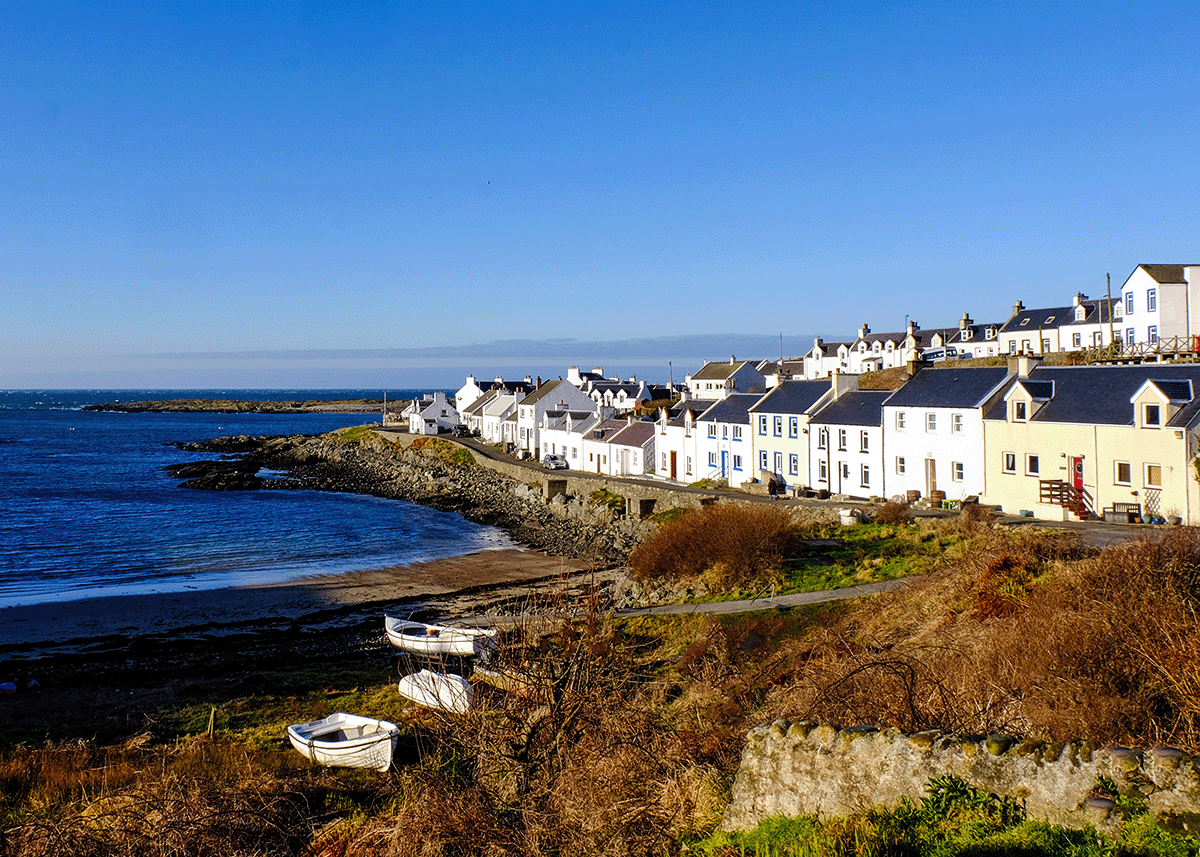
The Rhinns is Islay’s westernmost peninsula, stretching from Bruichladdich down to the twin villages of Portnahaven and Port Wemyss, some of the prettiest villages in the Hebrides.
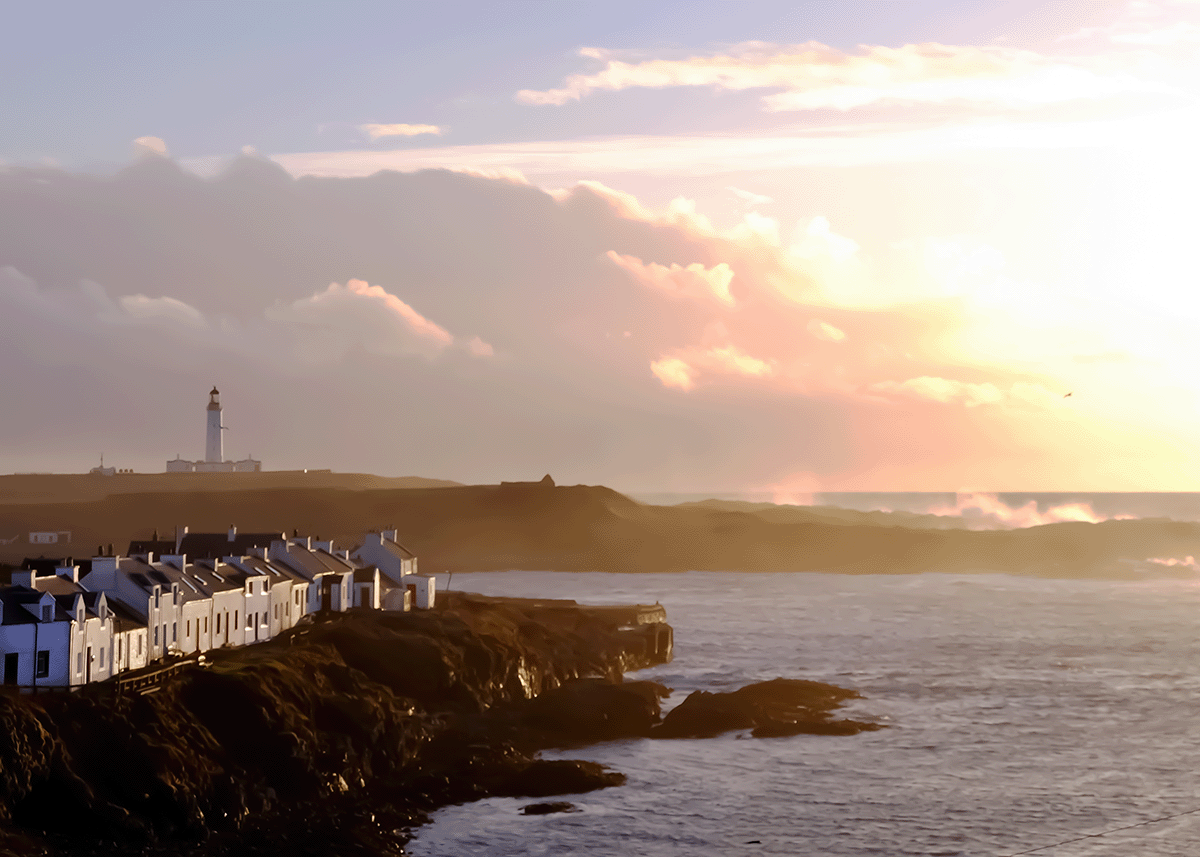
My favourite walk on Islay is the coastal path between the Portnahaven and Port Wemyss, with views of the Rhinns of Islay lighthouse on the tiny island of Orsay. Grey seals pop up in the bay constantly, watching you walk by with interest.
Loch Gruinart, on the north coast of the Rhinns, is an RSPB reserve with two bird hides. In winter, the reserve holds tens of thousands of barnacle geese, there are far more geese than there are people on Islay.
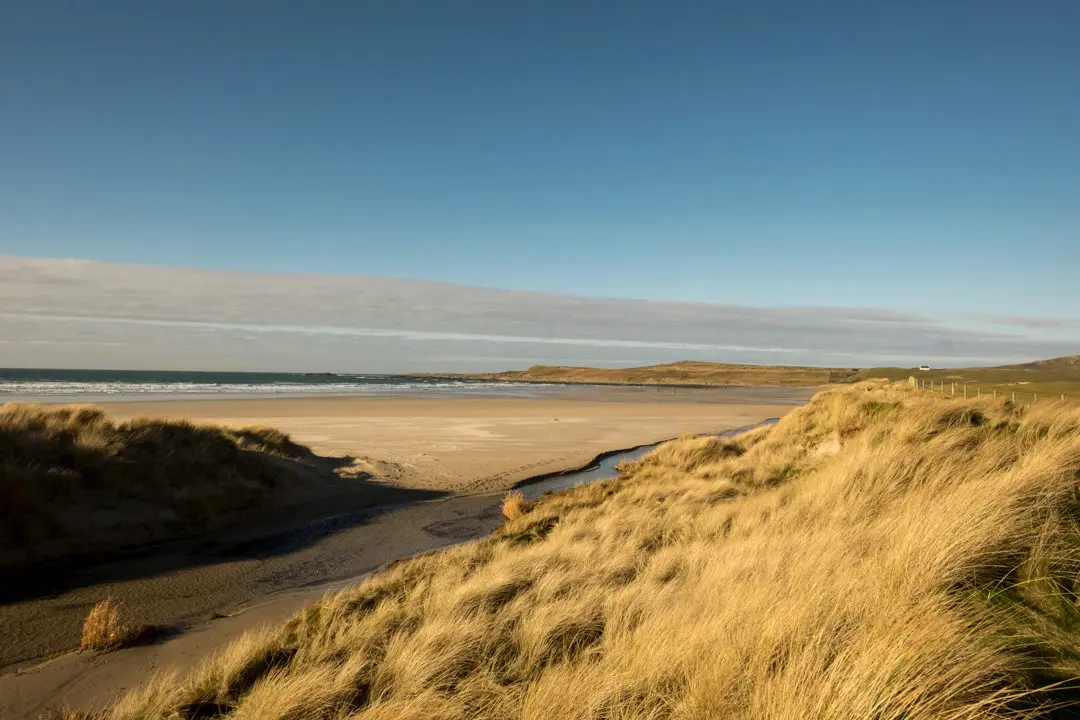
Islay’s best beach is arguably Machir Bay – a sweep of perfect sand, dramatic cliffs and crashing waves backed by huge dunes, it is well worth the drive to get to.
Machir Bay is close to Islay Cottages accommodation at Kilchoman.
Port Askaig and Ardnave Point
Port Askaig on the east coast serves ferries to both the mainland and the Isle of Jura. From the Bunnahabhain distillery, a rough track leads out towards Rhuvval Lighthouse at the island’s most northerly point, watch the weather roll in across the Sound of Islay from Mull and Jura.
Keep an eye out for the Bunnahabhain otters, made famous by the BBC’s Winterwatch. They’re regularly spotted along the shoreline.
Bowmore
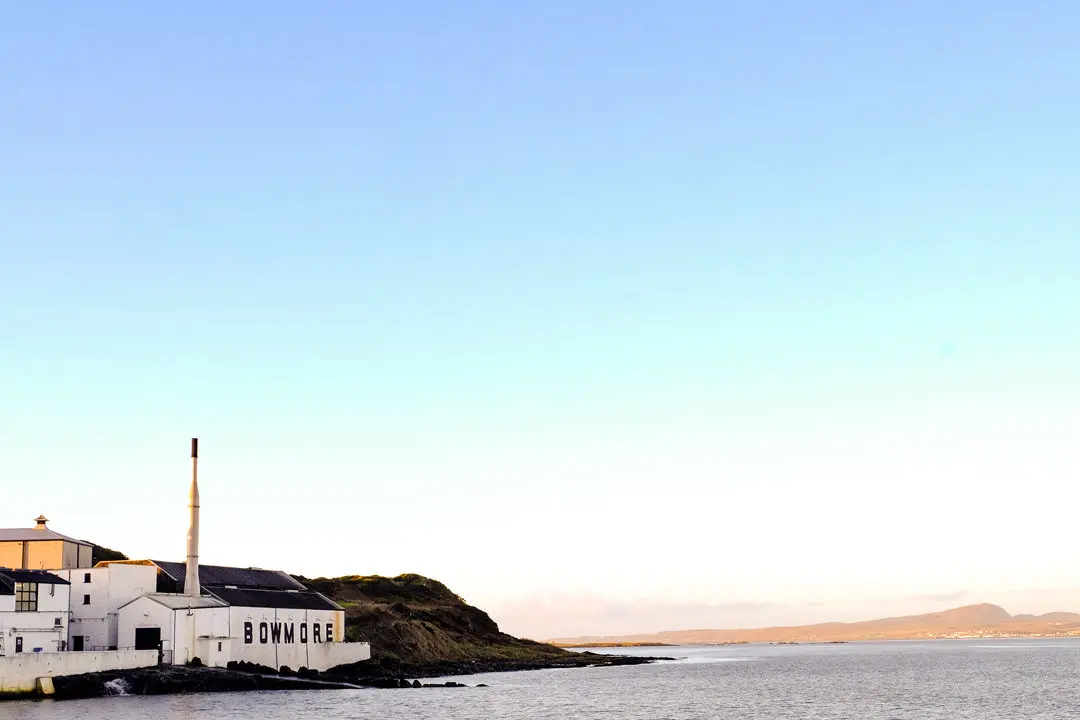
Bowmore is Islay’s capital, a bustling little town with pubs, restaurants, the island’s main supermarket, a pharmacy, a swimming pool, and the Bowmore distillery. It’s the most central base for exploring the island, most villages, beaches, and distilleries are within a 30-minute drive.
Don’t miss the Round Church (Kilarrow Parish Church) on Bowmore’s main street, built in 1767. Local legend says it was built round so there are no corners for the devil to hide… personally, I believe that the devil would have more fun in one of the distilleries!
Take a Day Trip to Jura
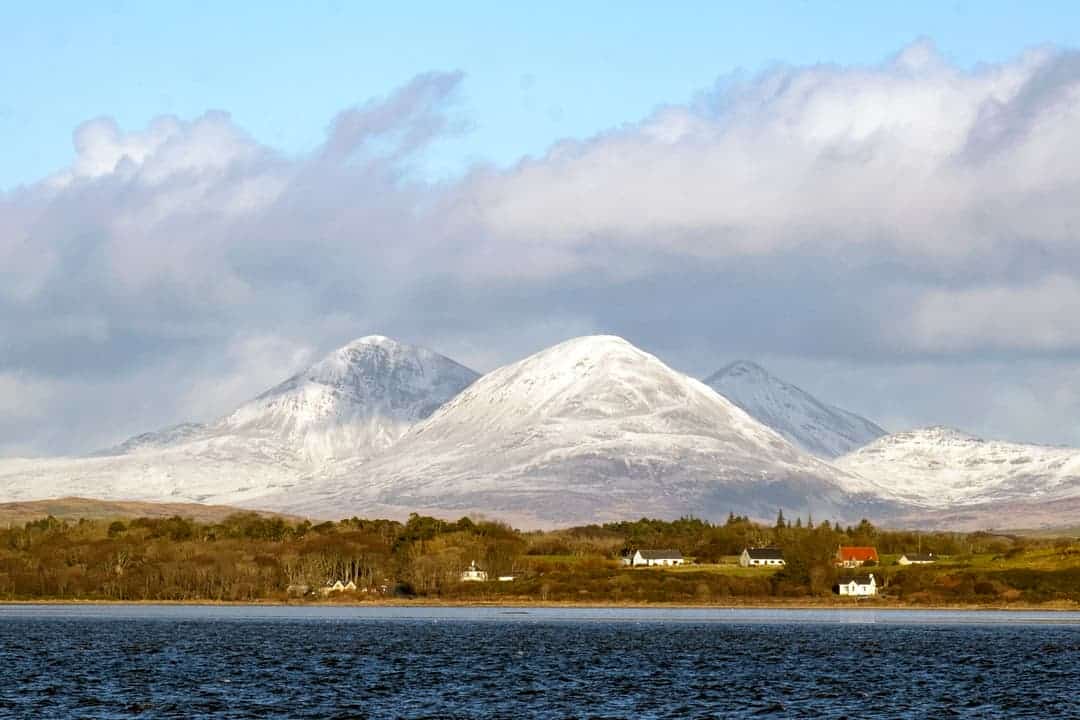
From Port Askaig, a small CalMac ferry crosses the Sound of Islay to Feolin on the Isle of Jura, a 5-minute crossing. Jura is home to just 180 people, around 5,000 deer, a single road, one whisky distillery, and the mighty Paps of Jura.
Even if you don’t have time to climb the Paps, a day trip to Jura is a brilliant addition to an Islay itinerary, the Jura Hotel does excellent lunches and the distillery is walkable from the ferry.
History & Heritage on Islay
Long before Islay became synonymous with whisky, it was one of the most politically important places in medieval Scotland. The island wears its history lightly, but the sites are extraordinary and spread across the island.
Finlaggan – The seat of the Lords of the Isles for almost four centuries, from the 12th to the 16th. From this small complex of islets on Loch Finlaggan, the MacDonald chiefs ruled a vast maritime kingdom that stretched from Kintyre to Lewis and across to the Glens of Antrim, meeting the kings of Scotland, England, and France as equals. Islay is known as the “Cradle of Clan Donald” because of it.
Today you can walk out across a wooden bridge onto Eilean Mòr, the “Great Isle”, to see the ruins of the medieval chapel, carved graveslabs, and the stone foundations of the hall where the Lords held court. A short causeway leads on to Eilean na Comhairle, the Council Island, where policy and law were decided. It’s a genuinely moving place — the sense of history is palpable, especially on a quiet day.
- Location: Signposted off the A846 about a mile north of Ballygrant, on the road to Port Askaig
- Visitor Centre: Open Monday–Saturday from Easter through autumn, typically 11am–4.30pm (check the Finlaggan Trust website for current hours)
- Access: The historic site and walkway to the island are open year-round; the visitor centre is seasonal
- Cost: Free — donations welcomed
- Extras: A virtual-reality reconstruction of the 15th-century settlement, created by St Andrews University with the Finlaggan Trust, is on display in the visitor centre
Kildalton Cross – One of the finest surviving Celtic high crosses anywhere in the British Isles, carved around the late 8th century from a single slab of local bluestone. It stands in the ruins of the old Kildalton Chapel about 8 miles east of Port Ellen, a short detour when you’re visiting Ardbeg, Lagavulin, or Laphroaig. The carving is astonishingly well-preserved given it has stood in this graveyard for over 1,200 years.
The Round Church, Bowmore – Built in 1767 as part of the planned “new town” of Bowmore, Kilarrow Parish Church is one of only a handful of round churches in Scotland. Local legend says the round shape means there are no corners for the devil to hide in. A short walk up Bowmore’s main street from the distillery, and still an active parish church today.
Museum of Islay Life, Port Charlotte – A small but excellent community-run museum covering Islay’s archaeology, illicit whisky distilling, wartime history, and the shipwrecks of the Tuscania and HMS Otranto commemorated at the American Monument. Worth an hour on a rainy afternoon.
Map of Islay things to do
Best Beaches on Islay
Machir Bay
Arguably Islay’s finest beach, a long sweep of pale sand backed by dramatic dunes, with crashing Atlantic waves and towering cliffs. Remote, wild, and often nearly empty even in summer.
Singing Sands (Port Ellen)
A short walk from Port Ellen past Carraig Fhada lighthouse. The sand “sings” underfoot in dry conditions, a genuine phenomenon. Keep watch for dolphins in the bay.
Saligo Bay
Just north of Machir Bay, equally wild but with lots of rock formations. Excellent for storm-watching in rough weather.
Kilchoman Beach
A quieter, more intimate stretch of sand near the Kilchoman distillery, with natural dunes and often a few seals in the surf.
Walking on Islay
Islay is one of Scotland’s most rewarding walking destinations with a dramatic coastline.
The best walks on Islay
Portnahaven to Port Wemyss coastal path – My personal favourite walk on Islay. A gentle 2-mile there-and-back along the rocky shore between the twin villages, with views of the Rhinns of Islay lighthouse on the tiny island of Orsay. Suitable for all abilities.
The Oa clifftop walk to the American Monument – A dramatic 3-mile round trip across the high clifftops of the Mull of Oa to the monument commemorating the 1918 shipwrecks of the Tuscania and HMS Otranto. Watch for sea eagles, wild goats, and Highland cows on the path. Start from the RSPB Oa car park. Moderate.
The Three Distilleries Pathway – A 3-mile mostly-level path linking Port Ellen with Laphroaig, Lagavulin, and Ardbeg along the south coast. The local bus runs back so you can walk one way and ride the other. The perfect combination of walking and whisky, and accessible for most abilities.
Carraig Fhada lighthouse to Singing Sands – A short, lovely 1.5-mile walk from Port Ellen out to the lighthouse built in memory of Lady Eleanor Campbell, and on to the Singing Sands beach. You might spot solphins in the bay and seals on the rocks. The sand “sings” underfoot in dry conditions. Easy.
Rhuvval Lighthouse from Bunnahabhain – A rougher 5-mile round trip from the Bunnahabhain distillery out to the lighthouse at Islay’s most northerly point. The track is rough and exposed. The reward is views across the Sound of Islay to the Paps of Jura and, in bad weather the storms rolling in off the Atlantic. Moderate to hard.
Loch Gruinart RSPB reserve – A gentle circular paths with two bird hides. In winter, thousands of barnacle geese. In summer, hen harriers and corncrakes. Easy and accessible for wheelchair users on some sections.
Beaches walks — Machir Bay and Saligo Bay – Not formal paths, just long beach walks backed by dunes. Machir Bay is ideal at low tide; Saligo is spectacular in rough weather.
Walk Islay — the Walking Festival
The Walk Islay Walking Festival takes place each April across Islay, Jura, and Colonsay, a week of guided walks led by local experts, covering everything from easy coastal rambles to proper hill days including the Paps of Jura. If you want to see parts of the island you wouldn’t find on your own and meet other walkers, this is the time to come. Accommodation is much easier to book than during Fèis Ìle in May.
Islay Whisky Distilleries: a complete guide
With ten working distilleries, Islay is the most concentrated whisky region in Scotland, and touring its distilleries is the reason many people visit. But remember, Scotland’s drink-drive limit is effectively zero. You will need a designated driver or you’ll need to take distillery-provided drams home to enjoy later.
The South Coast
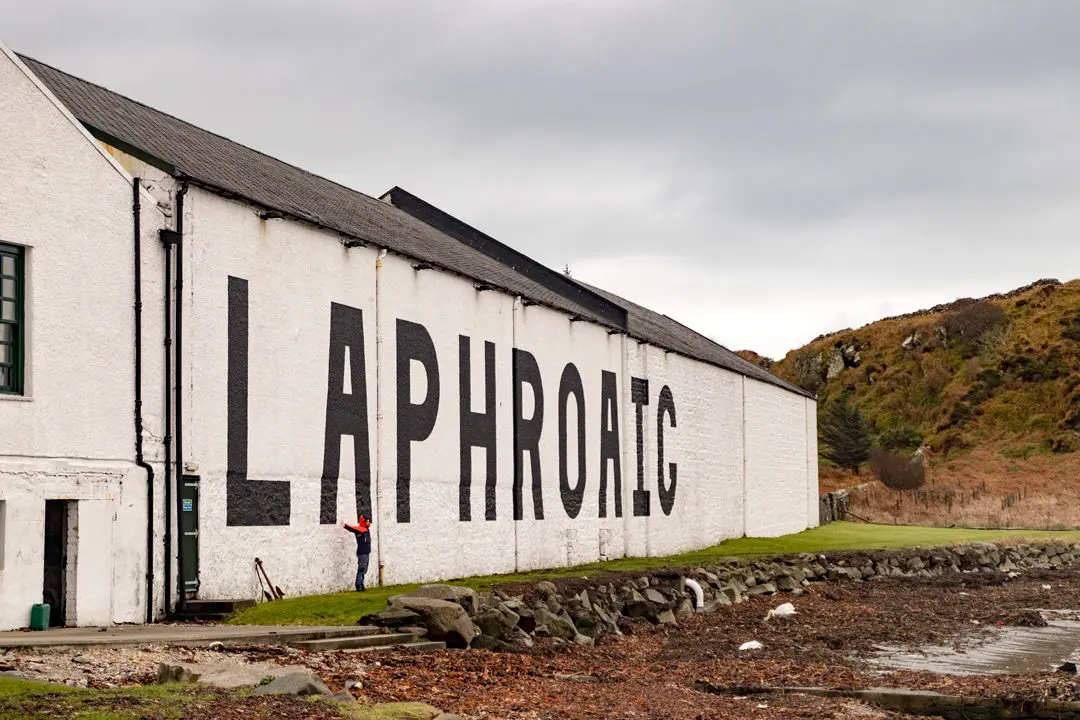
The south coast of the Isle of Islay by the village of Port Ellen is dominated by three of the Island’s whisky giants – Laphroaig, Lagavulin and Ardbeg – all famous for that Islay peaty taste. Port Ellen itself has recently restarted production. Laphroaig has a great visitor centre and peat kilns and Ardbeg, a well-regarded cafe.
- Laphroaig – Instantly recognisable medicinal, peaty smoke. Superb visitor centre and peat kilns to explore.
- Lagavulin – Richer and more balanced than its neighbours. Iconic distillery buildings on the shore.
- Ardbeg – Intense peat and huge character. Excellent café and visitor centre.
- Port Ellen – The legendary “ghost distillery”, silent from 1983 until its reopening in 2024. Tours are limited and in high demand – book well in advance.
The distilleries can be reached on foot via the Three Distilleries Pathway – a 3-mile walk connected by the local bus to get you back.
Loch Indaal
- Bruichladdich (pronounced Brook-laddie) – Modern, innovative, and bold. Their Octomore is the peatiest whisky in the world.
- Bowmore – Islay’s oldest licensed distillery (founded 1779), right in the centre of Bowmore town. Lovely tasting room with loch views.
Port Askaig
Port Askaig has three distilleries sitting on the Sound of Islay and have wonderful views across the water to the Isle of Jura. Bunnahabhain is the most remote distillery on the Island and produces a whisky quite unlike the rest of the island – their 18-year-old sherry cask non-peated whisky is my favourite whisky if you ever see me in the pub.
- Bunnahabhain (Boo-na-ha-ven) – The most remote distillery on the island, producing largely unpeated whisky quite unlike most of Islay.
- Caol Ila (Cull-ee-la) – Classic peated Islay with stunning views across the Sound of Islay to Jura.
- Ardnahoe – Islay’s newest major distillery. Has tasting rooms, a café, and tours.
Rural Islay
- Kilchoman The island’s smallest distillery and the only one not on the coast. A proper farm distillery, near Machir Bay.
Read my full Islay whisky distillery guide
The Islay Whisky Festival (Fèis Ìle)
If there’s one time of year to experience Islay at its best, it’s the last week of May during Fèis Ìle, the Islay Festival of Music and Malt. A ten-day celebration of Islay’s whisky, culture, music, and island life, the festival turns the whole island into one enormous, welcoming party.
Founded in 1986 and celebrating its 40th anniversary in 2026, Fèis Ìle has grown from a small community cultural event into one of the most famous whisky festivals in the world. But it’s important to know it’s not just about whisky, the festival programme is packed with traditional music, ceilidhs, walking days, fishing competitions, and community gatherings that capture the real spirit of Islay.
How Fèis Ìle works
The festival lasts roughly ten days, running from the Friday before the late May Bank Holiday through to the following Sunday. Each day has a “main event” an open day hosted by a different distillery, with live music, food stalls, whisky cocktails, and limited-edition festival bottlings.
A typical day might include:
- Distillery open day with free entry, tastings, and ticketed experiences
- Live Scottish folk, traditional music and modern Scottish bands
- Ceilidh dancing in the evenings
- Food from Islay suppliers – oysters, Islay lamb, local cheese
- Festival-exclusive whisky releases – hugely collectible
Fèis Ìle dates
- 2026: Friday 22 May – Sunday 31 May (40th anniversary)
- 2027: Friday 28 May – Sunday 6 June
Do you need a ticket?
No, you don’t need a ticket to attend Fèis Ìle itself. The festival is essentially free to join. What you’ll need tickets for are individual events and experiences, the masterclasses, tastings, boat trips, and committee-run ceilidhs. These go on sale via the Fèis Ìle mailing list from February/March onwards and sell out fast. Sign up to the Fèis Ìle mailing list well in advance if you want to book specific events.
Planning a trip to Fèis Ìle
- Book accommodation 6–12 months in advance. The festival triples Islay’s population and every cottage, hotel, and B&B on the island sells out. Accommodation is the bottleneck, not the festival itself.
- Book ferries early. Car spaces on the CalMac ferry to Port Ellen and Port Askaig sell out for Fèis Ìle week.
- Plan which distillery days you want to attend. You physically can’t do all ten, pick your favourites and build your itinerary around those.
- Stay flexible about weather. Late May can be glorious or wild, and sometimes both in the same afternoon.
- Don’t drive and drink. Most distilleries now let you take your drams home in branded bottles, and organised transport runs between venues during festival days.
Where to Stay on Islay
With a population of just over 3,000, Islay’s accommodation is mostly small-scale and books out months in advance for peak season. The Fèis Ìle whisky festival in late May is nearly impossible to book for less than 6 months ahead.
Best areas to stay:
- Bowmore – Most central, best for first-time visitors. Walkable to the distillery, restaurants, and supermarket.
- Port Charlotte – Prettiest village on the island, home to the Port Charlotte Hotel and Museum of Islay Life.
- Port Ellen – Ideal if your focus is the south-coast distilleries (Laphroaig, Lagavulin, Ardbeg).
- Port Askaig – Quiet and dramatic, with direct access to Bunnahabhain, Caol Ila, and the Jura ferry.
- Portnahaven – The most remote and peaceful option, right on the south western edge of the island.
Accommodation types:
- Luxury Hotels (Ardbeg House, The Other Place The Machrie, Islay House Hotel)
- Small hotels (Port Askaig Hotel, Port Charlotte Hotel, Lochside Hotel, No 1 Charlotte Street, Bridgend Hotel, Lochindaal Hotel)
- Self-catering cottages (Islay Cottages at Kilchoman is well-located for Machir Bay)
- B&Bs and guesthouses throughout the villages (Glenegedale House)
- Youth Hostel (Islay Youth Hostel)
- Camping options (campsite at Port Mòr, Port Ellen Motorhome Park)
Where to Eat on Islay
- The Peatzeria serves fabulous pizzas and Italian food in Bowmore.
- The Bowmore Hotel serves pub grub and a huge whisky selection and a warm welcome from staff and locals alike.
- The Lochside Hotel has a stylish bar, serves classic Scottish dishes and has a conservatory perfect for spotting otters and dolphins in the bay.
- The An Tigh Seinnse in Portnahaven serves seafood platters (order in advance) and is characterful with a real fire.
- The Port Charlotte Hotel serves up excellent chowder, real ales, and on a Wednesday evening, live traditional music.
- The Port Askaig Hotel is the oldest inn on the island and has its original interior. Seafood platters are served from the scallop, crab and lobster boats which dock right in Port Askaig’s Bay. Look out for the owner’s wee white dugs which greet each and every ferry arriving with much enthusiasm!
- The Islay Hotel in Port Ellen and serves modern Scottish food in its restaurant and whisky bar.
Practical Tips
Single-track roads – Most of Islay’s roads are single-track. If someone catches you up (particularly a whisky lorry), pull into a passing place and let them past. Locals have somewhere to be.
Phone signal – Patchy in parts of the Rhinns and the Oa. Download offline maps before you head out exploring.
Fuel – There are petrol stations in Bowmore, Port Ellen, and Port Charlotte. Fill up before heading remote.
ATMs – In Bowmore, Port Ellen, and at the Co-op supermarket.
Weather – Changeable. Bring layers, waterproofs, and good walking shoes even in summer.
Islay FAQs
How do you pronounce Islay?
Islay is pronounced EYE-LA, not Eye-Lay. The Gaelic name for the island is Ìle, and a person from Islay is called an Ìleach.
How do I get to the Isle of Islay?
Most visitors reach Islay by CalMac ferry from Kennacraig on the Kintyre Peninsula, landing at either Port Ellen or Port Askaig. Loganair also operates short flights from Glasgow to Islay Airport. In summer, a CalMac ferry also runs from Oban via Colonsay.
How many days do you need on Islay?
Three days is the minimum for a worthwhile visit. Five days is the sweet spot for most travellers — enough time to see the beaches, visit several distilleries, and make a day trip to Jura. A full week lets you explore without rushing.
Do you need a car on Islay?
Yes, strongly recommended. Public transport on Islay is limited and most of the distilleries, beaches, and walks are scattered across the island. Bring your car on the ferry or hire one at Islay Airport.
How many whisky distilleries are on Islay?
There are currently ten working whisky distilleries on Islay: Laphroaig, Lagavulin, Ardbeg, Bowmore, Bruichladdich, Bunnahabhain, Caol Ila, Kilchoman, Port Ellen and Ardnahoe. Several more are in development.
Is Islay worth visiting if you don't like whisky?
Absolutely. While whisky is Islay’s most famous export, the island has extraordinary beaches, wildlife, and walks. Machir Bay, the Mull of Oa cliff walk, and the villages of Portnahaven and Port Charlotte are all worth the trip on their own.
Is Islay a good destination for families with children?
Yes. Islay isn’t a theme-park kind of holiday, but it’s a wonderful slow-travel destination for families. Wild beaches, seal watching at Portnahaven, the bird hides at Loch Gruinart, ferry spotting at Port Askaig, Finlaggan castle, and the Museum of Islay Life all work brilliantly with kids. A car and self-catering accommodation make family trips much easier.
What is Finlaggan and is it worth visiting?
Finlaggan was the seat of the Lords of the Isles from the 12th to the 16th century — the political and ceremonial centre of a medieval Gaelic kingdom that ruled much of western Scotland. Today you can walk out to the ruins on Eilean Mòr in Loch Finlaggan. It is free to visit, the visitor centre is open Monday–Saturday in the warmer months, and it is one of the most historically significant sites in Scotland.
Are there good walks on Islay?
Yes — Islay has some of the best coastal walking in Scotland. Highlights include the Portnahaven to Port Wemyss coastal path for seals and lighthouse views, the Mull of Oa clifftop walk to the American Monument, and the Three Distilleries Pathway linking Port Ellen with Laphroaig, Lagavulin, and Ardbeg. The Walk Islay Walking Festival runs each April across Islay, Jura, and Colonsay.
When is the best time to visit Islay?
May to September offers the best weather and longest days. The Fèis Ìle whisky festival in late May is Islay’s biggest event but accommodation books out months ahead. September and October are quieter and still have good conditions, with the added bonus of arriving geese.
What wildlife can you see on Islay?
Islay is one of the best wildlife destinations in Scotland. Barnacle and white-fronted geese arrive by the tens of thousands each winter. Dolphins are frequently seen off Port Ellen. Otters live along the east coast — the Bunnahabhain otters are famous. Sea eagles, red deer, and seals are all regularly spotted.
What is the Islay Wave?
The Islay Wave is a local tradition — every driver waves at every oncoming car on the island’s single-track roads. Visitors are expected to wave back. It’s one of the small but defining experiences of driving on Islay.
Whisky, waving, wildlife, and walking – the Isle of Islay offers up a truly unique Scottish island experience.
Add in the incredibly warm welcome from the locals and you’ll quickly be working out how to miss your ferry back to the mainland. Islay – you stole our hearts.
You might also like:
- Islay whisky: a complete distillery guide
- The ultimate Scottish island hopping guide
- Things to do in Argyll and Bute
Kate, Love from Scotland x


Leave a Reply