

The Royal Burgh of Culross is one of Scotland’s best preserved 17th-century villages, and the Outlander filming location that has been bringing fans to Fife for over a decade. Here’s how to visit, what to see, and how to visit as a day trip from Edinburgh.
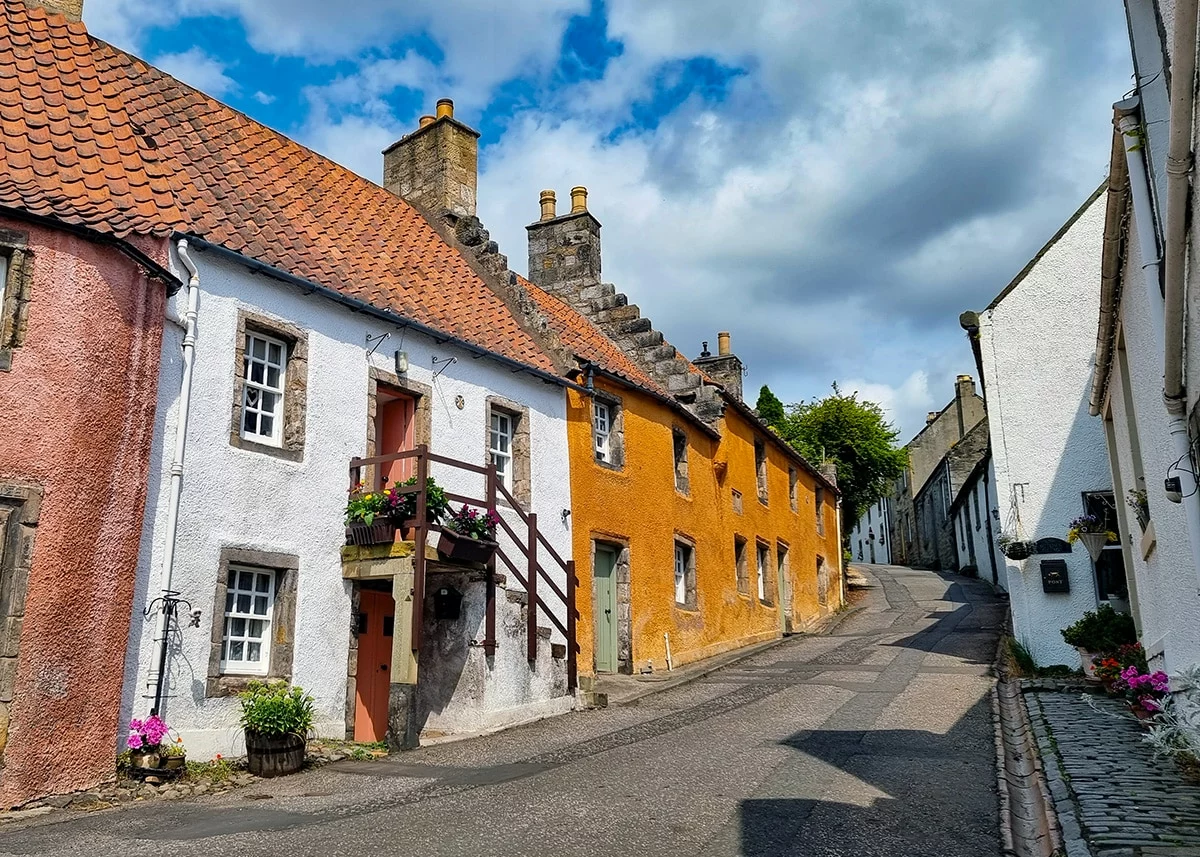
Culross (pronounced “coo-ris,” not “cull-ross”) is the most complete 17th and 18th-century burgh in Scotland. White-harled houses with red-tiled roofs line the cobbled streets that climb from the harbour to the hilltop abbey.
The key buildings in the village are cared for by the National Trust for Scotland, which has been quietly keeping it as a perfect snapshot of 17th-century Scotland since 1932.
Here is how to visit.
Jump to section
Why visit Culross
A few reasons:
- It’s the best preserved 17th-century village in Scotland. Culross was a thriving port until the late 18th century, then quietly bypassed by the industrial revolution. The village stayed put while the rest of Scotland modernised around it. The result is the most complete and atmospheric Scottish burgh of its kind anywhere in the country.
- It’s Outlander’s Cranesmuir. Geillis Duncan’s house, the witch trial square, the herb gardens of Castle Leoch, and the Black Kirk were all filmed here. If you’ve watched the show, you’ll recognise half of the village as Outlander filming locations.
- It’s an easy day trip from Edinburgh. Forty minutes’ drive over the Queensferry Crossing. Free parking at both ends of the village. Half a day will do it justice.
- It’s the prettiest place to wander in Fife. Tanhouse Brae is the colourful row of houses everyone photographs. Look for the substation hidden behind a 17th-century facade.
Culross as a day trip from Edinburgh
Culross is one of the easiest day trips from Edinburgh. Allow half a day if you’re going for the village stroll, a full day if you want to add Culross Palace, the West Kirk, and lunch.
By car: Take the M90 north over the Queensferry Crossing and leave at junction 1. Follow the A985 west towards Kincardine. About 40 minutes door to door from central Edinburgh. From Glasgow, take the M80 north, merge onto the M876 and cross the Kincardine Bridge. Around an hour. There are two free car parks, one at each end of the village.
By public transport: Train to Dunfermline, then Stagecoach buses 71 or 78 from James Street, or the 74 from Dunfermline bus station. Alternatively, train to Falkirk and the 8 or 28 bus to Culross. Allow around two hours each way.
On a tour: Plenty of operators run Outlander day tours from Edinburgh that include Culross alongside Doune Castle, Midhope Castle (Lallybroch), Blackness Castle and Falkland. Timberbush, Rabbie’s, Mercat Tours and Private Tours Edinburgh all run them.
Outlander Filming Locations Explorer Tour
Highland Explorer Tours
What to see and do in Culross
A suggested day: Arrive at 10am, park at the west car park, walk down through the village to the Mercat Cross. Visit the Study House and Culross Palace (book a Palace slot in advance during summer). Have lunch at the Red Lion, Bessie’s Café or The Mercat. Walk up to Culross Abbey for the views, then west to the West Kirk for the Black Kirk photo opportunity.
Stroll around the Royal Burgh
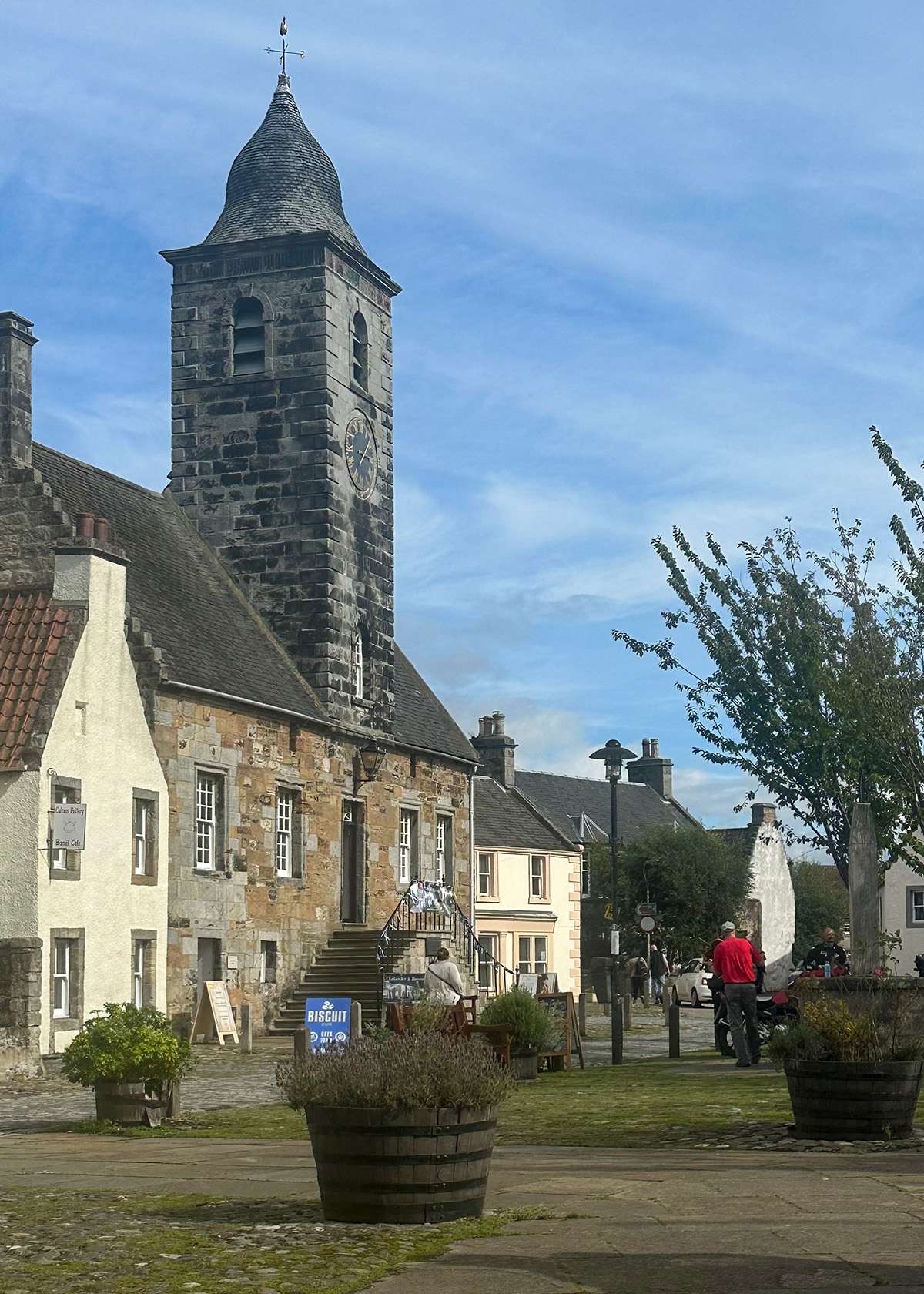
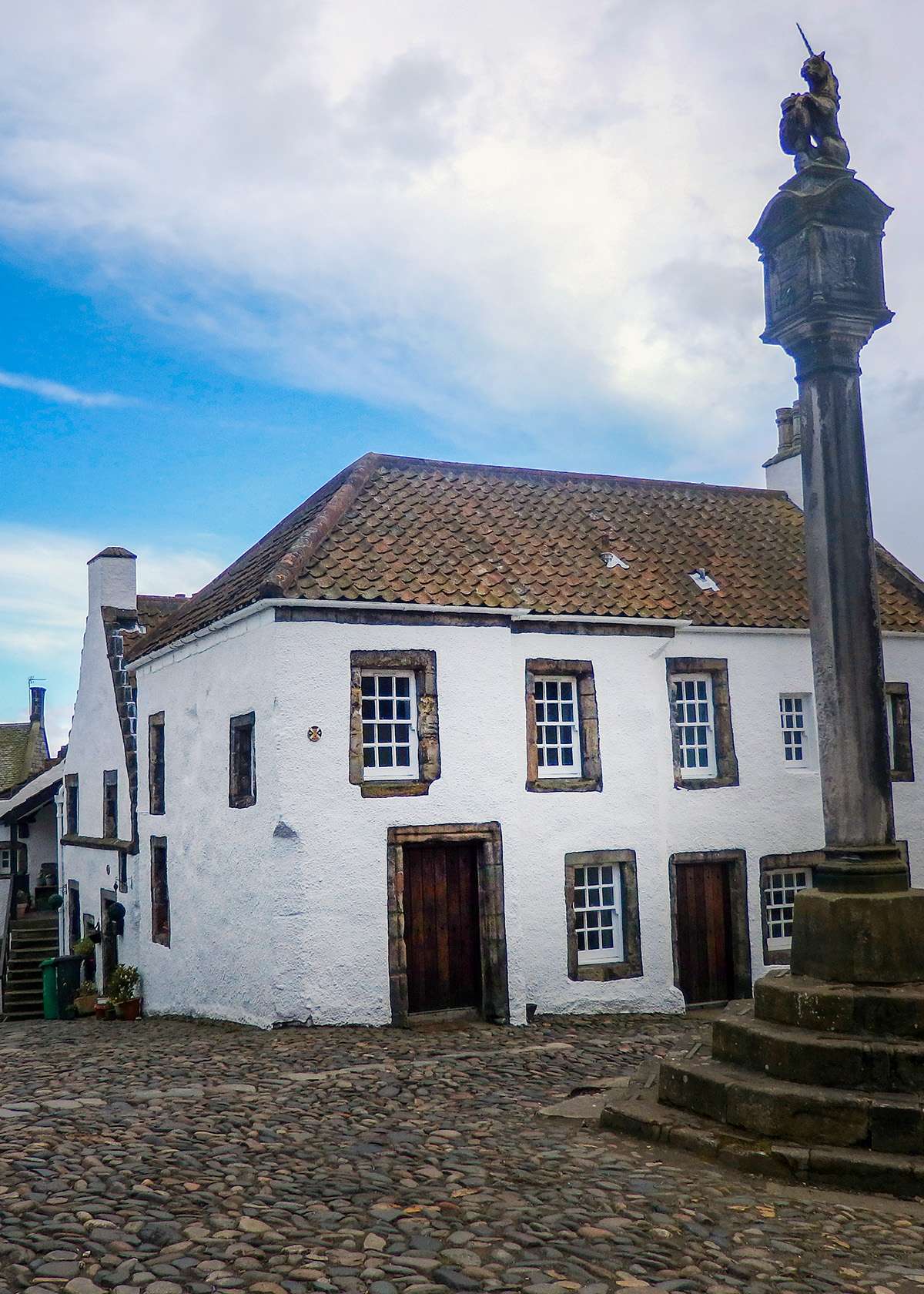
Culross is small, walkable in an hour, and one of the prettiest places to visit in Fife. Start at the Mercat Cross at the centre, which is also Outlander’s main filming spot. From there, the village climbs in three directions: west along the Back Causeway towards the West Car Park, north up the steep Tanhouse Brae towards the Abbey, and east towards Dunimarle.
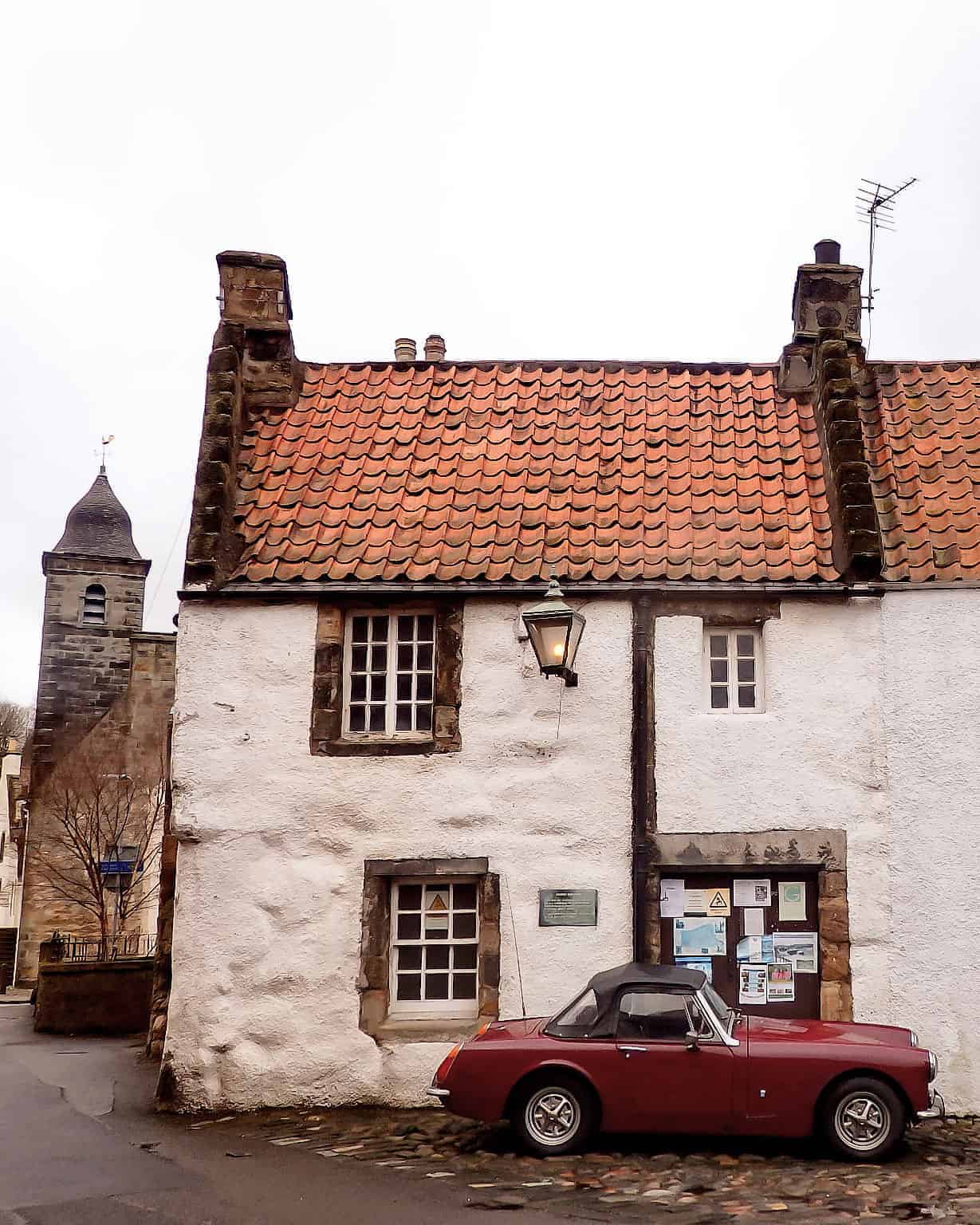
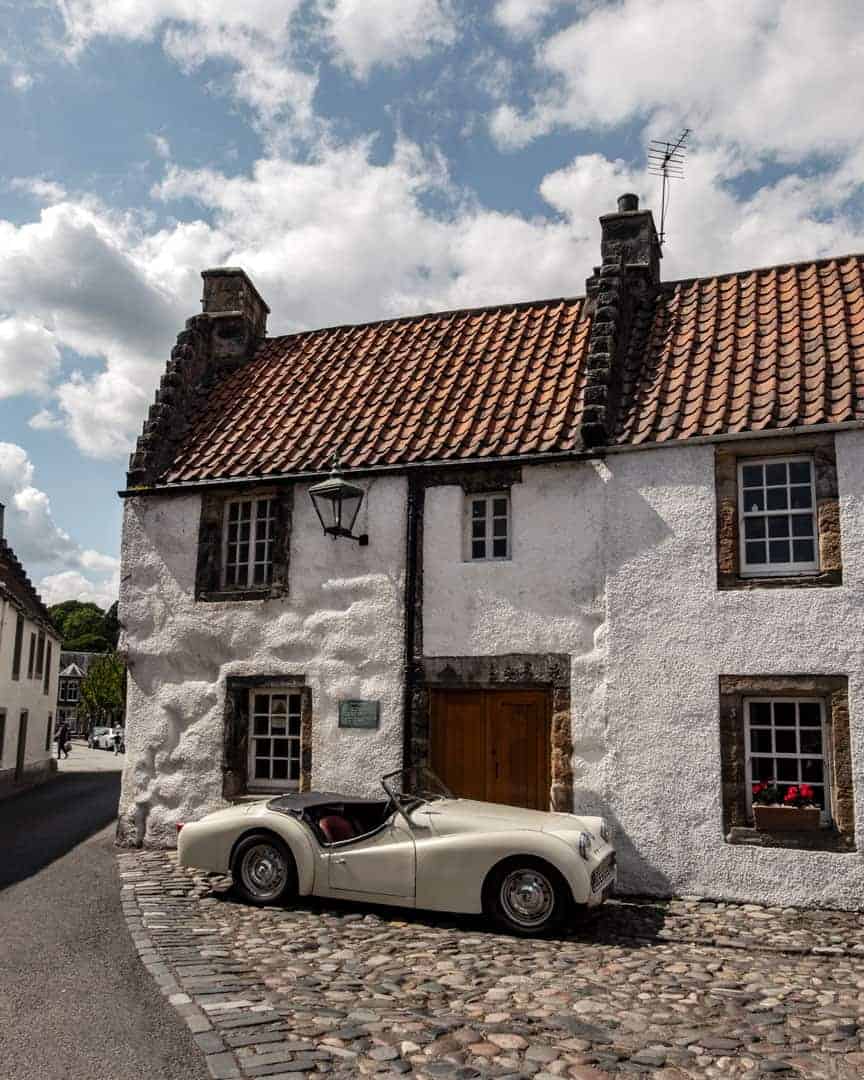
Tanhouse Brae is my favourite of the streets and the one that ends up on everyone’s Instagram. Don’t miss the discreetly disguised electricity substation built into a 17th-century facade, there is often a classic car parked outside.
Visit Culross Palace
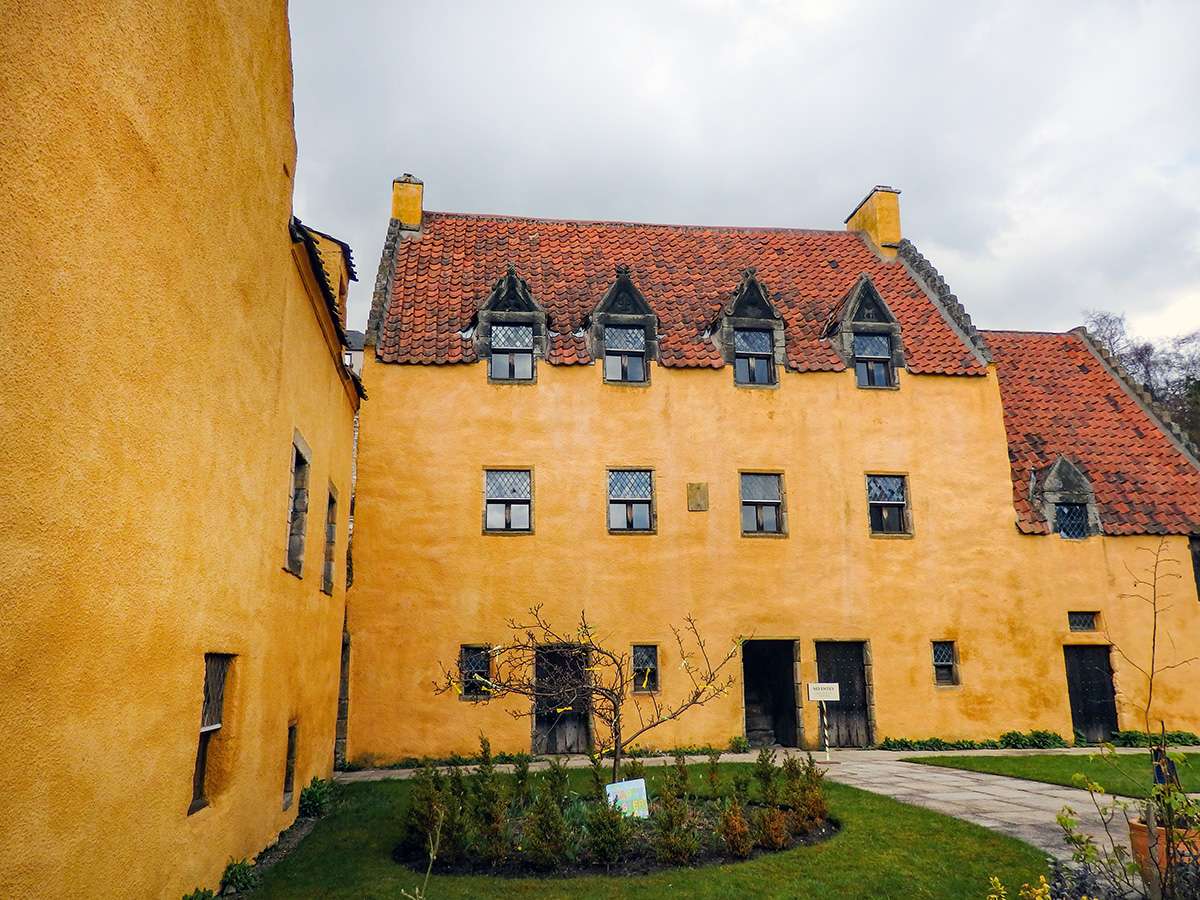
Culross Palace, the ochre coloured building at the centre of the village, was built between 1597 and 1611 for Sir George Bruce, a wealthy mine owner and a distant relative of Robert the Bruce. Bruce had developed a revolutionary mining technology that allowed him to dig out under the Firth of Forth, and the Palace was his rather impressive home. King James VI visited in 1617, and the burgh was made a Royal Burgh shortly after.
Inside the Palace, the rooms are tiny and dark, with original painted ceilings depict biblical scenes with Latin maxims. The Withdrawing Room is the one Outlander fans will recognise as Geillis Duncan’s parlour.
The terraced garden behind the Palace is a partial recreation of the 17th-century kitchen garden, with herbs, fruit and vegetables grown in a layout designed to feed a wealthy merchant’s household. The view across the rooftops to the Firth of Forth from the top of the garden is one of the best in Fife.
Culross Palace is open March to October. Adult tickets are £14.00, free for NTS members.
See Geillis Duncan’s house (the Study)
The Study, just off the Mercat Cross, is a tall stone house with an external stair and a projecting upper floor, built in 1610 for a wealthy Culross merchant. In Outlander, it became home to Geillis Duncan, the village herbalist who turns out to be rather more than she seems.
The building was later home to Bishop Robert Leighton of Dunblane in the 17th century, who reputedly composed his sermons in the upper room.
Visit Culross Toll Booth and the witches of Fife
The Culross Toll Booth at the centre of the village was built in 1626 and served as the burgh’s administrative centre and jail. It was also a holding place for women accused of witchcraft awaiting trial. The Toll Booth is now a visitor centre and shop.
Fife had more witch trials than any other region of Scotland. More than 280 people, mostly women, were accused, convicted and executed in the county between the 1560s and the 1700s. Further along the coast at Torryburn there’s a “witches’ stone” used in the trials. There are plans to install a permanent memorial to Scotland’s witch trial victims on the Fife coast.
Walk up to Culross Abbey
Above the village sits Culross Abbey, originally built in the 13th century by the Cistercian order. It is the birthplace and childhood home of St Mungo, the patron saint and founder of Glasgow. The abbey itself is largely ruined, but the western half is still the parish church and free to visit. The walk up from the Mercat Cross takes 10 minutes and the views from the top are excellent.
Dunimarle Castle gardens
A little west of the village sits Dunimarle Castle, also known as Culross Castle, with a beautiful walled garden and a tiny chapel. You’ll see Dunimarle peeping out from the hillside if you walk west along the Fife Coastal Path from the village.
Outlander filming locations in Culross
Culross is the base for the fictional village of Cranesmuir in Outlander, the village closest to Castle Leoch. Almost every street and building has appeared on screen across the seasons. Here are the spots Outlander fans walk to first.
The Mercat Cross square
The square at the Mercat Cross is the most-filmed corner of Culross. It appears in countless scenes from season one onwards. This is where Geillis Duncan is led to the pyre for the witch trial in The Devil’s Mark. It’s where Claire is dragged out after their joint sentencing. It’s the setting for the squeamish pillory scene with the boy and the ear. The buildings around the square were painted blue for filming.
The Study House (Geillis Duncan’s home)
The Study, on the corner of the Mercat Cross, became home to Geillis Duncan, the village herbalist with secrets. Claire first meets her here at the start of season one. The exterior is exactly as seen on screen.
Culross Palace gardens (Castle Leoch’s herb garden)
The terraced kitchen garden behind Culross Palace was used as Claire’s herb garden at Castle Leoch. The backdrop of Castle Leoch itself was added in by CGI, since Doune Castle, the real Castle Leoch, is 30 miles away. The Palace’s Withdrawing Room was used as Geillis’s parlour, where Claire first sees what Geillis really is.
The Wee Causeway (witch trial procession)
The narrow cobbled street known as the Wee Causeway, just off the Mercat Cross, was used for the procession where Claire and Geillis are dragged from the Thieves’ Hole to the trial. Geillis is later carried out the same way after Claire and Jamie escape. Another house on Little Causeway was used in season four as the exterior of Laoghaire’s home, where Brianna stays after fainting in the cold.
Mrs Baxter’s House (Outlander season 1)
Off the Mercat Cross on the Wee Causeway is the pathway to Mrs Baxter’s house, where Claire investigates the poisoning of young Tammas Baxter in season one episode three, The Way Out.
Culross West Kirk (the Black Kirk)
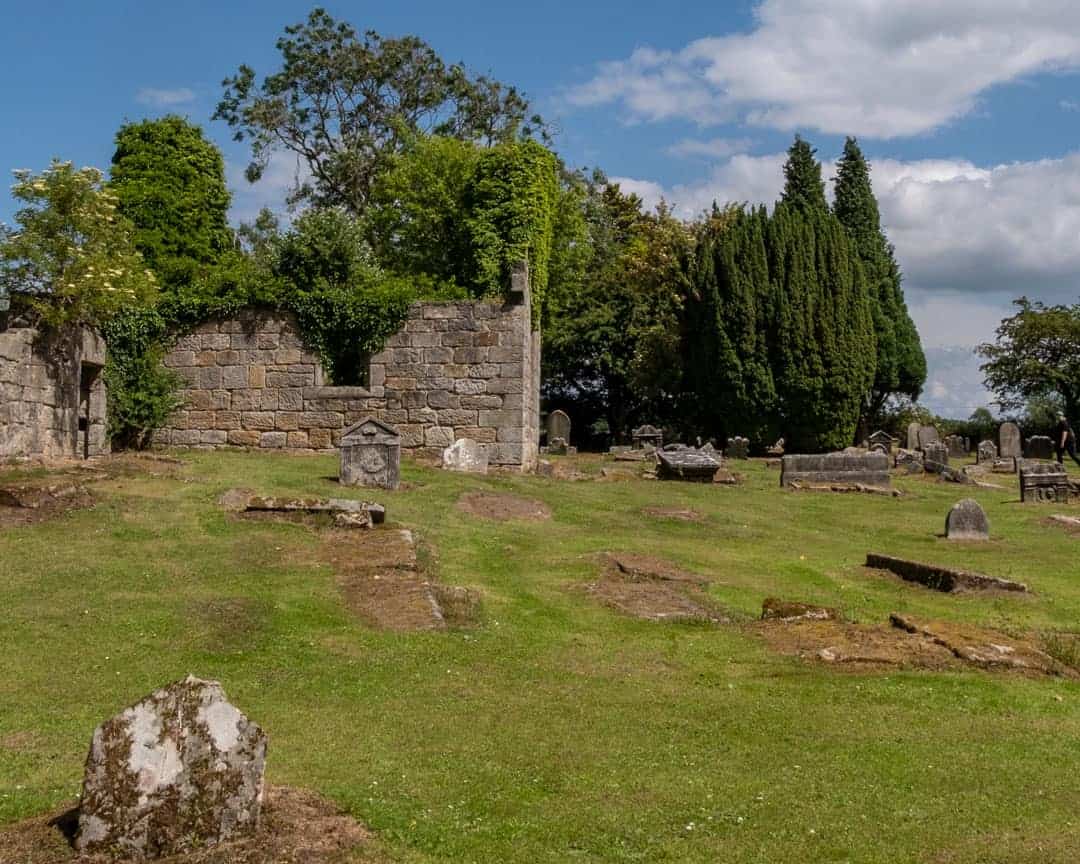
A mile west of the village stand the ruins of Culross West Kirk, the former 16th-century parish church. In Outlander season one, it stands in for the Black Kirk: the ruined Benedictine monastery where two boys from Cranesmuir are believed to have been possessed by demons. Claire and Jamie investigate and Claire works out the real culprit: lily of the valley, which the boys had mistaken for wild garlic.
Park at the west car park, cross the road at the village entrance, and follow the steep cobbled path up the hill to the church. The Claire and Jamie photo opportunity is the gate at the front of the kirk.
A note for fans
The interior witch trial scenes in The Devil’s Mark weren’t filmed in Culross. The courtroom interior was Tibbermore Parish Kirk near Perth, 40 miles away. The exterior procession was Culross, but the trial itself was elsewhere. Outlander does a lot of stitching together of locations.
Where to eat in Culross
Culross has half a dozen places to eat, all within a five-minute walk of the Mercat Cross.
- The Red Lion: village pub with the kind of menu you want after a morning of cobbles. Haggis nachos, fish and chips, pies.
- The Mercat: a lovely café and homewares shop right on the main square.
- Stickman Food Co.: a taco van next to the west car park, open only on weekends and until they sell out.
- Bessie’s Café at Culross Palace: sits in the Palace grounds and uses produce from the Palace kitchen garden. Coffee, cakes and soups. The cafe closes at 3pm, earlier than the Palace itself.
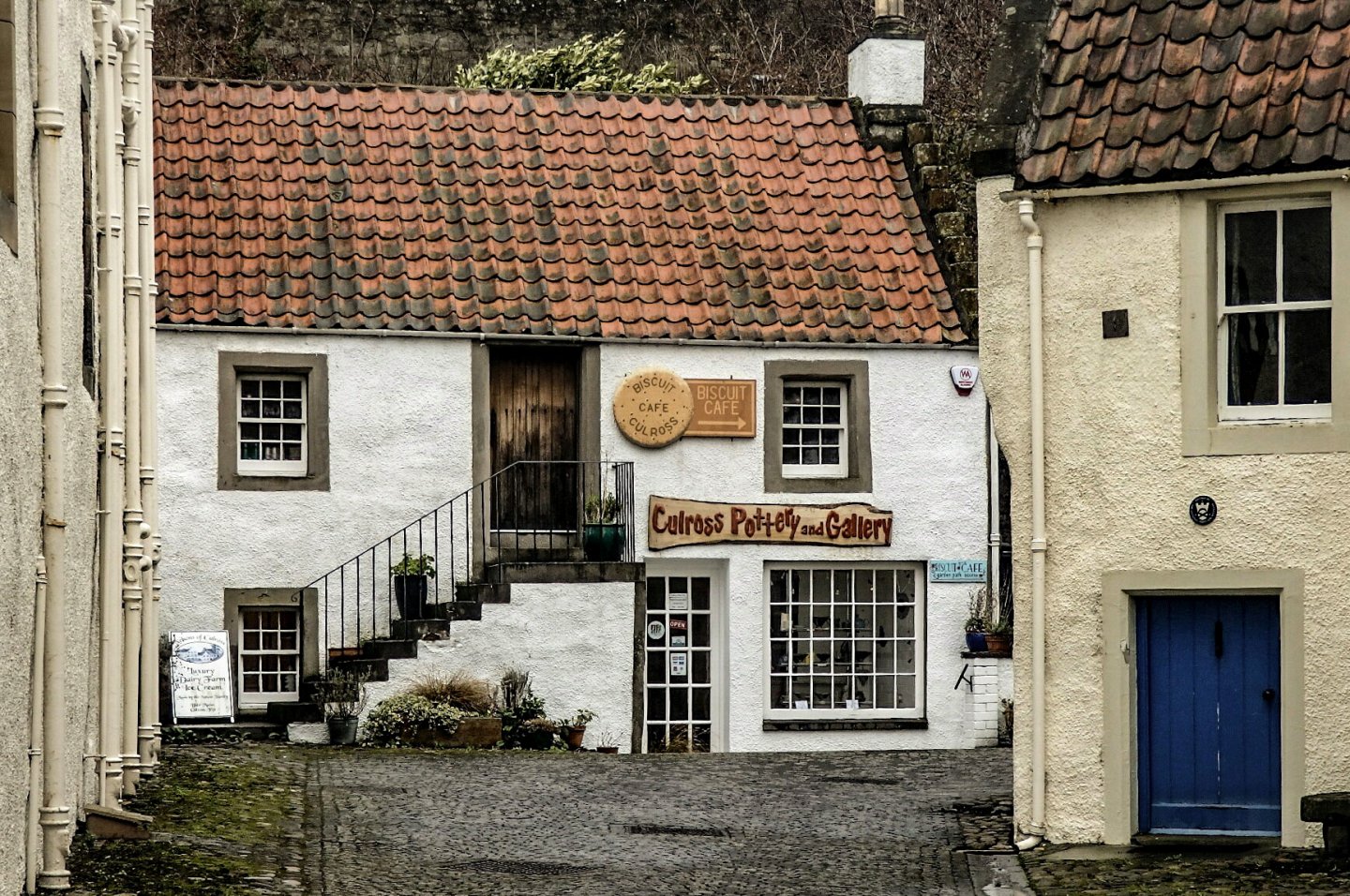
- The Biscuit Café: above the Pottery Shop, doing toasties and soup.
- The ice cream van: usually parked on the green, doing caramel and vanilla cones that are worth the queue.
Where to stay in Culross
Culross is a living village and thankfully not taken over by holiday accommodation. The best place to stay is The Dundonald, a lovely guest house on one of the most characterful streets.
Frequently asked questions
Is Culross worth visiting?
Yes. Culross is the most complete 17th-century village in Scotland and one of the prettiest places to wander in Fife. It’s also the Outlander filming location for the fictional village of Cranesmuir, with Geillis Duncan’s house, the witch trial square, Castle Leoch’s herb garden, and the Black Kirk all here.
How do you pronounce Culross?
Culross is pronounced “coo-ris,” with the emphasis on the first syllable. Not “cull-ross.” The unusual spelling and pronunciation come from the village’s Pictish origins.
What is Culross in Outlander?
Culross is the real-life village used as the fictional Cranesmuir in Outlander, the village closest to Castle Leoch. The Mercat Cross square, the Study House (Geillis Duncan’s home), the Culross Palace gardens (Claire’s herb garden at Castle Leoch), Wee Causeway, and the West Kirk (the Black Kirk) all appear in seasons 1, 2, 4 and 7. Geillis Duncan’s dress is on display at Culross Palace.
Is Culross a day trip from Edinburgh?
Yes. Culross is around 40 minutes’ drive from central Edinburgh over the Queensferry Crossing. Half a day is enough for the village stroll, and a full day if you want to add Culross Palace, the West Kirk, and lunch. Public transport requires a train to Dunfermline and a Stagecoach bus.
How much does Culross Palace cost?
Adult entry to Culross Palace is around £10.50, with concession at £7.50 and family tickets from £18 to £24.50. National Trust for Scotland members go free. The ticket also covers the Town House and the Study. Booking ahead is recommended in summer as entry is limited to 8 visitors every 15 minutes.
Where is the Black Kirk in Outlander?
The Black Kirk in Outlander is Culross West Kirk, a ruined 16th-century parish church a mile west of Culross village. Park at the west car park, cross the road and follow the steep cobbled path up the hill. The kirk is free, open access, and unforgettable.
Where did Geillis Duncan live in Outlander?
Geillis Duncan’s house in Outlander is the Study, a 1610 merchant’s house on the Mercat Cross in Culross. The exterior is exactly as seen on screen. The interior is open to visitors as part of the Culross Palace ticket.
Is there parking in Culross?
Yes. There are two free car parks, one at each end of the village. The west car park is closer to Culross Palace and the path up to the West Kirk. The east car park is closer to the harbour and Culross Abbey.
When is the best time to visit Culross?
Spring and early autumn are quietest. July and August bring more visitors, mostly Outlander day-trippers from Edinburgh, so arrive before 11am to have the village to yourself. Culross Palace closes November to February, but the village itself can be walked at any time of year.
For more on Outlander filming locations across Scotland, read my full Outlander filming locations guide.
Love from Scotland x


Leave a Reply