

If you’ve heard the North Coast 500 is now overrun and you’re wondering whether there’s a better road trip in Scotland, the answer is yes. It’s called the North East 250.
250 miles around Aberdeenshire, Speyside, Royal Deeside and the Moray Firth, mostly empty, with more castles per mile than anywhere in Britain, more whisky distilleries per mile than anywhere in the world, and fishing villages that look like they were designed for a Visit Scotland advert. It is one of the great road trips of Britain and almost nobody knows about it. Unlike the NC500 to the north, you won’t be stuck behind six campervans trying to pass you on a single-track road.
Here’s how to drive it.
This is my complete guide to the whole 250 miles: a four-stage itinerary, what to do on each leg, where to stay, and when to go. If you’re planning to drive the route, read on.
What is the North East 250?
The North East 250 is a Scotland road trip which takes you on a journey around the north east Scotland – discovering the fantastic city of Aberdeen, cliffside castles and literary villains, gorgeous fishing villages, heavenly whisky, and the dramatic Cairngorms National Park– it is a road trip with something for everyone.
Starting in Glenshee, your NE250 road trip will first take you up through the Cairngorm Mountains to Braemar, home of the Highland Games and then onwards to explore Royal Deeside.
Turning north the route takes you to the granite city of Aberdeen with its street art and pretty villages. Then follow the NE250 north to Peterhead, discovering hidden gems and castles along the way.
Turning west, the North East 250 takes you along the stunning Moray Firth coast line with its tiny fishing harbours hugging the cliffs before turning south into Speyside and its famous whisky distilleries. Returning to the Cairngorms, you complete your trip around the NE250.
When to go
April, May and September are the best months. The roads are quiet, the days are long, and the gardens at the castles are at their best.
July and August get busy at the headline distilleries (Glenfiddich, Macallan), particularly during the Spirit of Speyside Whisky Festival in early May. Worth booking distillery tours in advance.
October is excellent for autumn colour in the Cairngorms and Royal Deeside. The Snow Road has its name for a reason though, so check the forecast.
Winter is genuinely beautiful but limiting. Many of the bigger castles close from October to Easter (the grounds usually stay open). The Snow Road in winter is dramatic but needs proper tyres and confidence. If you’re driving in winter, base yourself on the coast, where it’s milder.
How to plan your North East 250 Itinerary around the east coast of Scotland
The NE250 is a circular loop, so you can start anywhere and go either direction. Most people start in Aberdeen because it’s the biggest city on the route. The official suggestion is to start at Spittal of Glenshee, but that requires getting yourself there first.
I’d recommend going anti-clockwise from Aberdeen: Cairngorms first, then Royal Deeside, then up to the Moray coast, finishing through Speyside. This gets the dramatic mountain driving done early, leaves the seaside for the middle, and saves the whisky for the end (which makes sense).
The route divides into four stages. If you are travelling anti-clockwise – try this itinerary:
- Stage 1 – The Cairngorms and Royal Deeside – visit the pretty towns of Braemar, Ballater, Aboyne & Banchory on The River Dee.
- Stage 2 – Aberdeen and the Aberdeenshire Coast – with castles, quirky villages, street art, and dolphins, explore the NE coast of Scotland.
- Stage 3 – The Moray Firth – picturesque harbour villages, waves crashing over towering sea cliffs, huge swathes of beach, incredible changing light and not forgetting a famous soup.
- Stage 4 – Speyside – like whisky? Explore the distilleries of Speyside.
An alternative route if you are arriving by train or air into Aberdeen is:
- Stage 1 – Aberdeen and the Aberdeenshire Coast
- Stage 3 – The Moray Firth
- Stage 4 – Speyside
- Stage 4 – Royal Deeside
I would suggest that you need a minimum of four days to do the route, a week would be perfect, and 10 days or more if you want to spend a few days on each stage.
Hire a car for driving the NE250 here, book your journey to Aberdeen with the Trainline.com*
Need help planning a Scotland itinerary? Check out my guide to planning a road trip in Scotland
Five things I’d tell a friend before they drive the NE250
- Don’t try to do Speyside in a day. Plan three nights minimum if whisky is your reason for the trip. Three distilleries a day is the maximum if you want to remember any of them.
- Book Speyside accommodation early in summer. The Spirit of Speyside Festival in early May fills the area for miles. Outside the festival, Aberlour and Craigellachie hotels still book up well in advance for July and August.
- The Snow Road in winter is dramatic but check the forecast. Decent tyres, ideally a four-wheel drive, and a willingness to turn back. The alternative coast route via Inverness is longer but always passable.
- Cullen Skink in Cullen is mandatory. The smoked haddock, potato and onion soup is named after the village and the version at the Cullen Bay Hotel is the original. Drive past at your peril.
- Take an extra day. Everyone who does this trip ends up wishing they’d had longer. Speyside in particular always takes more time than you’ve allowed for. Build in a buffer.
North East 250 Tours
Don’t want to drive yourself? Get a taste of the North East 250 with this tour from Aberdeen
Things to do on the North East 250
You might want to purchase a 3, 7, or 14-day Historic Scotland Explorer Pass*
Stage 1: The Cairngorms and Royal Deeside
Best for: mountain landscapes, royal castles, autumn colour How long: 1 to 2 days Where to base yourself: Braemar or Ballater
You start by driving through the Cairngorms, Britain’s largest national park, on the famous Snow Road (the A93 from Glenshee to Braemar, the highest public road in Britain). On a clear day it’s spectacular. On a cloudy one it’s atmospheric. In a snowstorm it’s terrifying. Check before you leave.
Braemar is the village where the Royal Family go to the Highland Games each September. Visit the Braemar Highland Games Centre for the history, then dinner at The Fife Arms, one of Scotland’s most stylish hotels (whether you stay there or just go for a drink, the interior is worth the visit alone).
Drive on along Royal Deeside through Ballater, Aboyne and Banchory, with Balmoral Castle on the way. Balmoral opens to the public from April to August (closed in autumn when the Royal Family are in residence). The grounds are beautiful, the castle interior is more interesting than you’d expect, and you can walk to the Balmoral Cairns, including a giant stone pyramid built for Prince Albert.
Try Royal Lochnagar Distillery on the Balmoral Estate for a proper Royal Deeside dram.
Read more: my full guide to Royal Deeside and the best hotels in Royal Deeside.
Here is what to do on Stage 1 of the NE250:
- Bag The Cairnwell – got your hiking boots with you? If you have ever fancied bagging a Munro, then one of the best Munros from beginners is right at the start of the NE250. The Cairnwell towers above the Spital of Glenshee, but the path up the mountain is easy – just follow the ski lifts! Climb the Cairnwell – and read my beginners guide to bagging a Munro. There is a great cafe at the Glenshee ski centre.
- Visit the Braemar Highland Games Centre – discover the history of the famous Braemar Highland Games which are attended by the Royal Family each year when they take their holidays at Balmoral Castle. The games pavilion and visitor centre has a lovely cafe. Visit the Braemar Highland Games Centre.
- Eat at The Fife Arms – in the heart of Braemar, is the truly dramatic Fife Arms. One the most romantic hotels in Scotland, the Fife Arms is all Scottish drama at its best. Book the Fife Arms for a stay or pop in for lunch (booking recommended).
- Visit Braemar Castle – a large tower house sitting on the River, the grounds of Braemar Castle are always open to visitors. The castle is now community-run and tours are available.
- See Balmoral Castle and Estate – the home of the Queen in Scotland is open from April to July for visitors. Explore the estate to find the Balmoral Cairns, historical memorials to the Royal Family including a huge stone pyramid for Prince Albert.
- Take a photo of Crathie Kirk – the pretty parish church at Crathie is the Royals local church when they visit the Balmoral Estate.
- Try a dram at Royal Lochnagar Distillery – awarded a Royal Warrant in 1848 after a visit from Prince Albert, Royal Lochnagar is located on the Abergeldie Estate. Tours of the distillery are available where you can try Royal Lochnagar’s 12 year old whisky. Visit Royal Lochnagar.
- Visit The Old Royal Station (Rothesay Room) – now a restaurant, the Old Royal Station at Ballater has been restored to its former glory, you can still visit the platform and waiting room and a replica carriage in which once brought Queen Victoria to Ballater.
- Walk Cambus o Mey – explore the woods and lochans of this pretty woodland on a 3 mile walk including a lovely suspension bridge. Visit Cambus O May.
- Visit the Linn of Dee – a favourite royal picnic spot, visit this beautiful spot on the River Dee. Visit the Linn of Dee.
- Explore Burn O’Vat – explore the Burn O’Vat sunken cavern along a 4 mile walk through the pretty Muir of Dinnet National Nature Reserve.
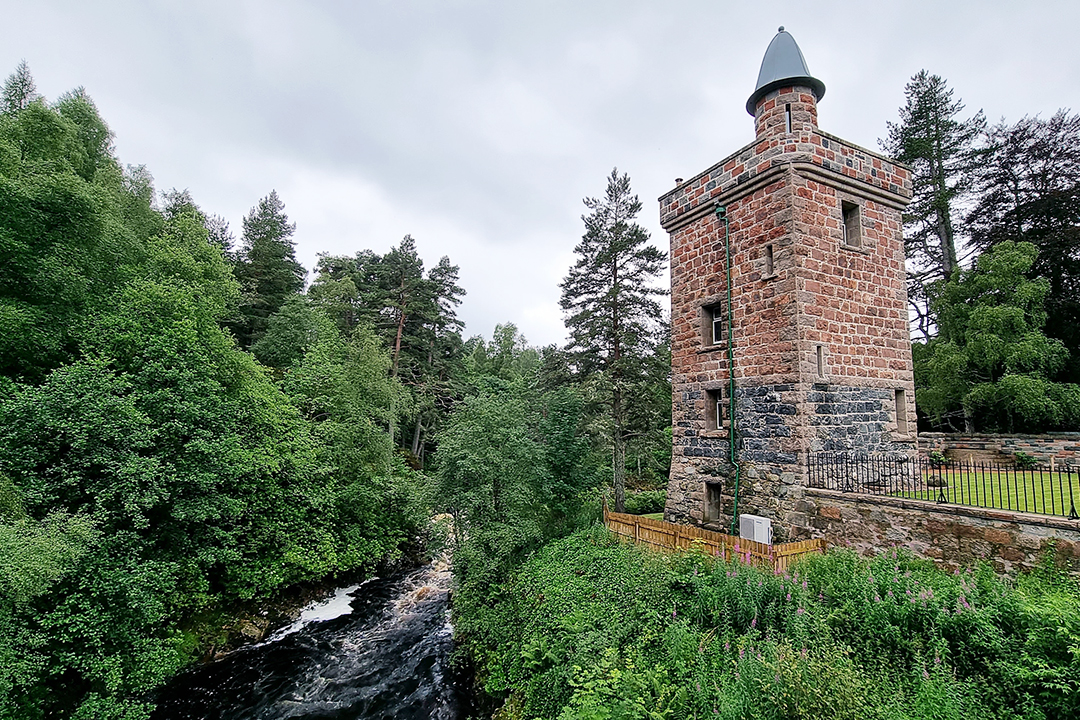
- Visit Glen Tanar and the Tower O’Ess – visit this beautiful glen on a variety of walks including a fairy pool and beautiful pinwoods, along with one of the best routes up Munro Mount Keen. Look out for the gorgeous gatehouse. Visit Glen Tanar.
- Take a trip on Royal Deeside Railway – take a steam train along the Royal Deeside Railway on a 1-mile restored section of track – the return ride along the river takes about 20 minutes.
- Visit Crathes Castle – set within beautiful gardens, this 16th-century castle is managed by the National Trust for Scotland. Visit Crathes Castle.
- Photograph Craigievar Castle – said to have inspired Walt Disney’s Cinderella castle, Craigievar has a bright pink exterior. Definitely one not to miss! Visit Craigievar Castle.
- Climb Lochnagar – meaning ‘little loch of the noisy sound’ in Gaelic, Lochnagar is one of Scotland’s most dramatic mountains. Climb Lochnagar.
- Find the Falls of Feugh – spot salmon leaping up the river Dee from this very pretty spot. Visit the Falls of Feugh.
Read more: my guide to things to do in Royal Deeside
Stage 2: Aberdeen and the north east of Scotland coast
Best for: city stops, dolphin watching, dramatic ruined castles How long: 1 to 2 days Where to base yourself: Aberdeen city or Cruden Bay
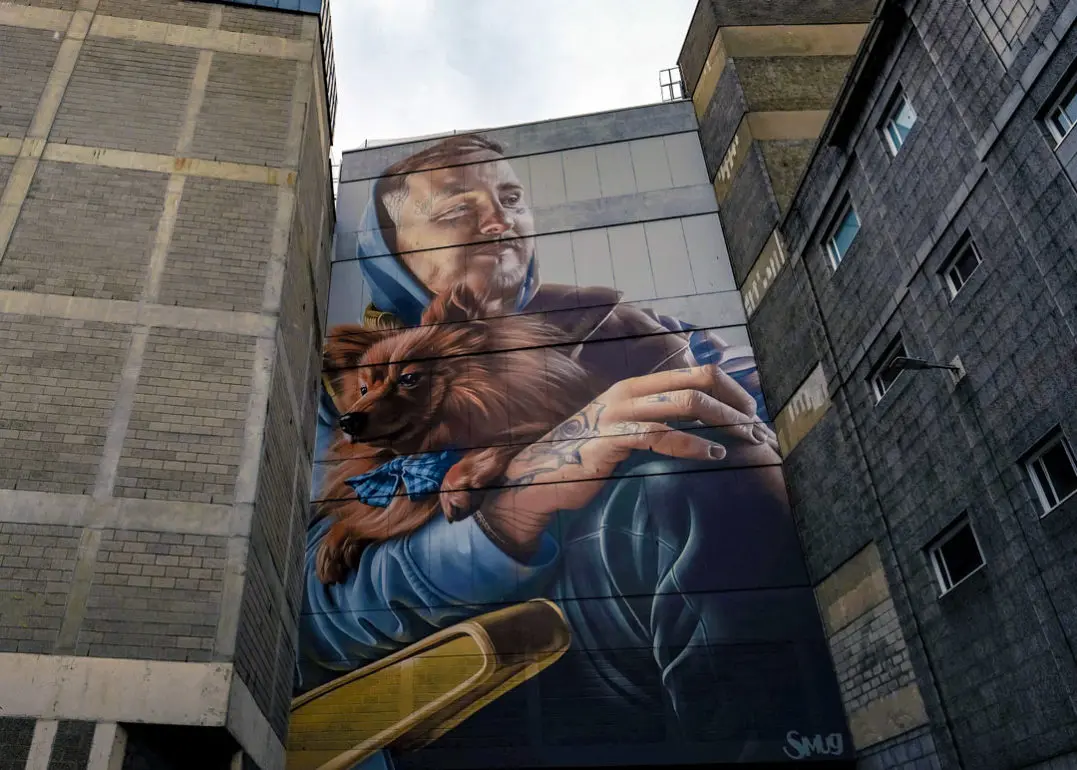
Aberdeen has had a quiet renaissance. Get past the granite-grey first impressions and you’ll find one of the best food scenes in Scotland, brilliant street art (look out for SmugOne and Ernest Zacharevic murals), and a harbour where bottlenose dolphins swim right up to the city. Few cities in Britain offer that.
A few essential stops in Aberdeen:
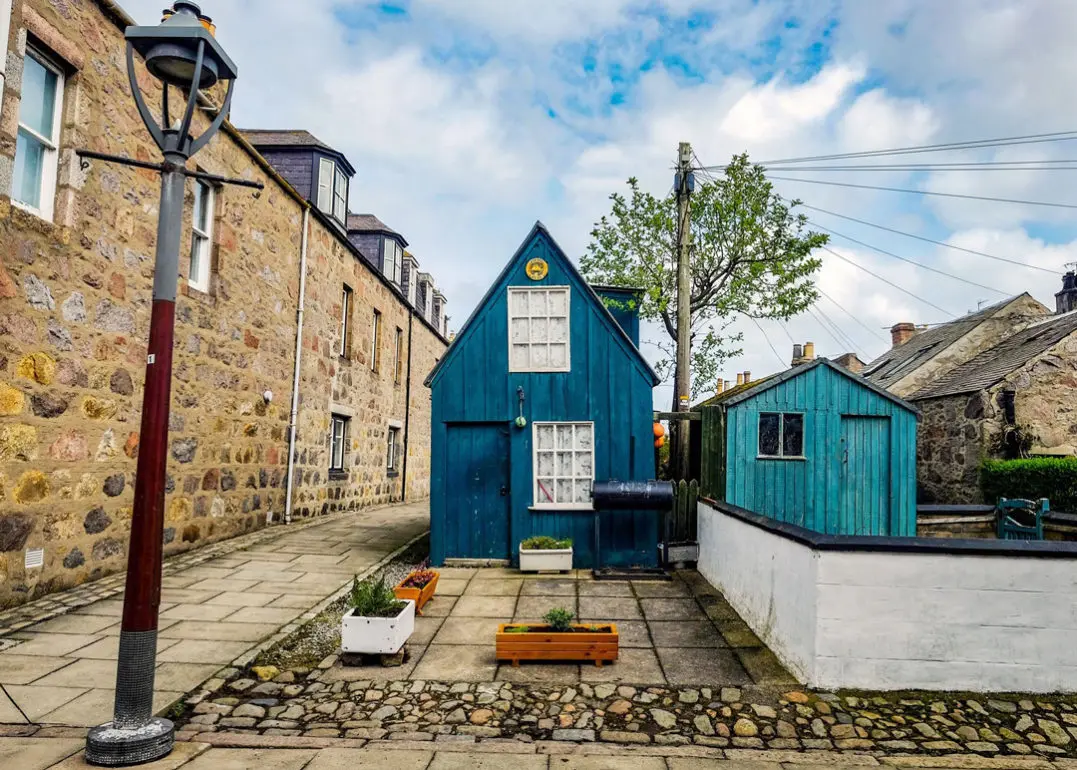
- Footdee (pronounced “Fittie”), a tiny fishing village at the mouth of the harbour with quirky tarry sheds and 19th century cottages
- Old Aberdeen for cobbled streets, the Brig o’ Balgownie, and the Powis Gate (which looks like something out of Game of Thrones)
- The Maritime Museum for the city’s oil and shipping history
- Dinner at The Silver Darling at the harbour mouth, with dolphins outside the window
Read more: my full guide to things to do in Aberdeen.
Drive north from Aberdeen along the dramatic Aberdeenshire coast. The headline stop is Dunnottar Castle, a ruined cliff-top fortress that featured in the 1990 Mel Gibson Hamlet, now one of the most-photographed castles in Britain. Worth the queue in summer.
The NE250 will now take you up the Aberdeenshire coast, here is where to stop:
- Forvie National Nature Reserve Visitor Centre – visit one of the largest sand dunes in Britain – 1,000 hectares of sand dunes and dune heath between the North Sea and the estuary of the River Ythan.
- Old Slains Castle – built in the fourteenth century, Old Slains Castle is a ruined tower house overlooking the north east Scotland.
- New Slains Castle – New Slains Castle sits on the coast beside Cruden Bay and is said to be the inspiration for Count Dracula’s castle; Bram Stoker visited Aberdeenshire in 1895 and Dracula was published two years later. You can also see Bram Stoker’s signature in the guest book at the Kilmarnock Arms in Cruden Bay near the castle.
- Visit Peterhead Prison Museum – a visit to the Victorian HM Convict Prison Peterhead is one of Scotland’s best quirky experiences. Discover 125 years of prison life, meet the guards and learn the history of this fascinating prison and its dangerous inmates – along with the story of the only time the SAS were used to end a domestic siege on mainland Britain. Peterhead Prison is Scotland’s Alcatraz. Visit Peterhead Prison Museum. Entry is £9 for adults.
Read more: Things to do in Aberdeenshire
Stage 3: The Moray Firth
Best for: seaside villages, dolphins, beaches How long: 1 to 2 days Where to base yourself: Cullen or Findhorn
The Moray Firth coast is the prettiest stretch of the NE250, a proper north Scotland Riviera that runs from Banff in the east to Findhorn near Forres in the west. Dolphin sightings are common from any clifftop. The light is extraordinary.
Headline stops:
- Bow Fiddle Rock at Portknockie, a natural quartzite arch that looks exactly like the tip of a violin bow
- Cullen for the prettiest village on the coast and a bowl of Cullen Skink (the soup is named after the village, this is the original)
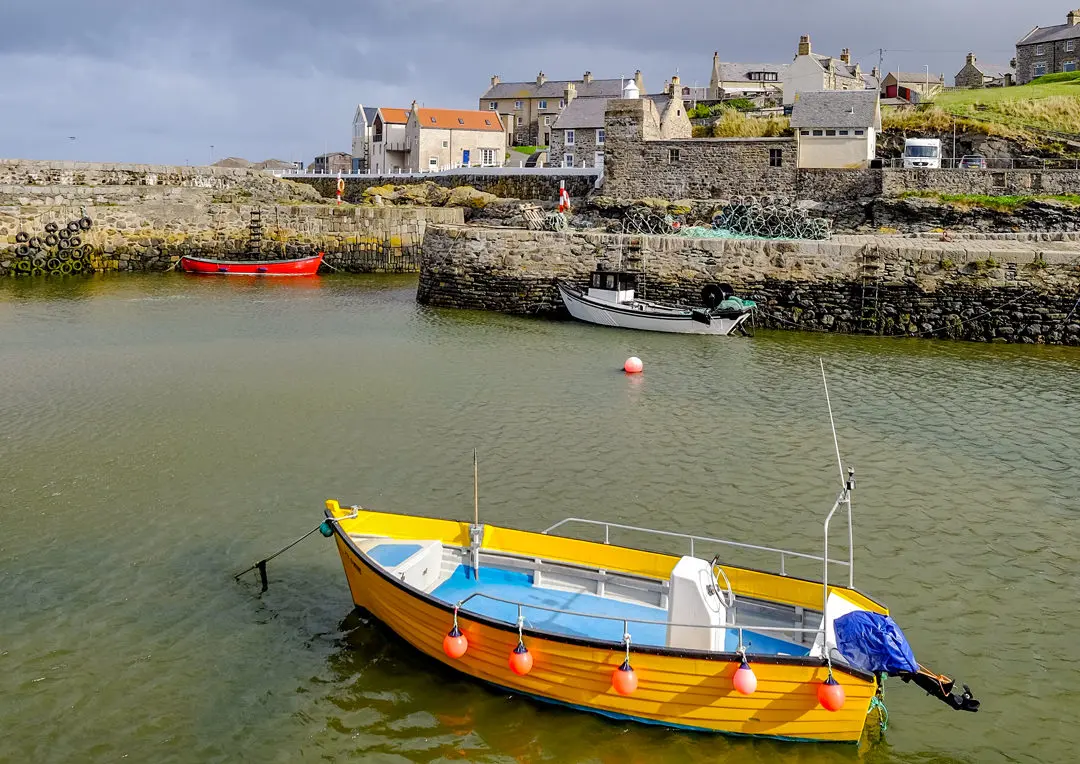
- Portsoy with its 17th century harbour and the annual Scottish Traditional Boat Festival
- Findhorn for the seven-mile beach and the Findhorn Foundation eco-community
- The Tugnet Ice House at Spey Bay, where you can watch the river meet the sea and almost certainly spot dolphins
Eat at The Bothy in Burghead, or seafood at No 1 Bow Fiddle in Portknockie. Stay at the Cullen Bay Hotel for sea views, or Boath House near Nairn (a Michelin-starred Georgian country house) for something special.
Read more: my guide to the Moray Firth.
The Scottish coastline from Inverness to Peterhead has picturesque harbour villages, huge swathes of beach, and not forgetting a famous soup. Here is where to stop along the Moray Firth.
- Visit the most famous red telephone box in the world at Pennan – visitors come to this wee village for one thing – the cult Scottish film about an oil company trying to buy an Aberdeenshire Village. Lined with washing poles, a traditional hotel, and a harbour, you can see why Pennan was chosen to represent the a-typical Scottish seaside village in Local Hero.
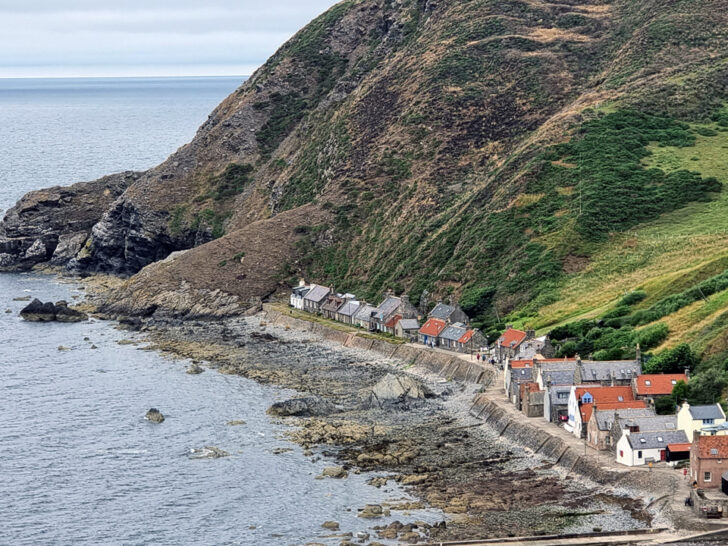
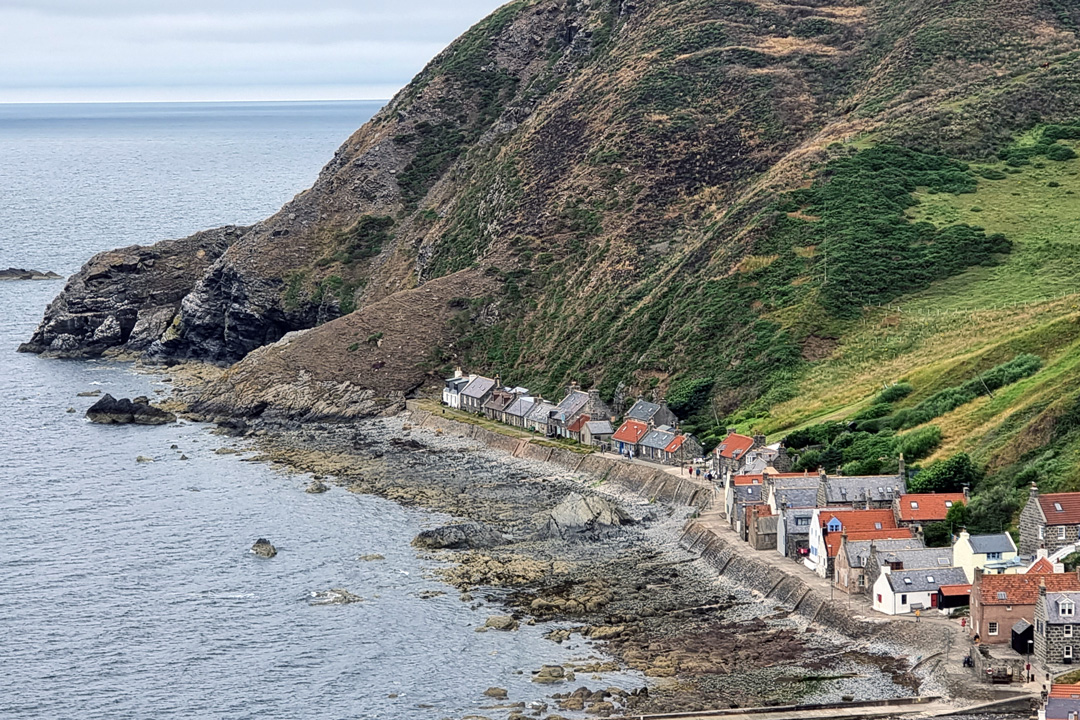
- Visit Gamrie – Gardenstown and Crovie – the most picturesque of the Moray Firth villages – and a popular spot for photos of the traditional fishing cottages hugging the coast. Gardenstown has a lovely 19th Century Harbour and Crovie has no road – the cottages are only accessed by foot.
- Macduff Marine Aquarium – Telling the story of the Moray Firth habitats, the aquarium has a unique kelp reef, daily talks and touch shows, as well as some greedy stingrays! Visit MacDuff Marine Aquarium
- Portsoy – Boasting the oldest harbour on the Moray Coast (much of what was built in 1692 remains) Portsoy is thought to mean Saithe (fish) Harbour – you can just imagine the harbour bustling with people and boats.
- Eat Cullen Skink, at Cullen – What must be Scotland’s most famous soup, try Cullen Skink in the lovely village of Cullen.
- Portknockie and Bow Fiddle Rock – The star of many Instagram shots, Bow Fiddle Rock is a humongous arch rock formation just to the north of the seaside town of Portknockie. Does it look like an elephant or a whale to you? Read more: a lovely walk to Bow Fiddle Rock from Cullen.
- Dolphins at Spey Bay – The Moray Firth is famous for its dolphin population and it is estimated that around 130 Bottlenose Dolphins live in the waters off the Moray Firth. Visit Spey Bay and the Scottish Dolphin Centre.
Read more: Things to do on the Moray Firth
Stage 4: Speyside and Whisky
Best for: whisky distilleries, food, gentle river walks How long: 1 to 3 days Where to base yourself: Aberlour, Dufftown or Craigellachie
The whisky bit is what most people come for, and rightly so. Speyside has the highest concentration of malt whisky distilleries in the world, with around 50 within a small area. The trick is not trying to do them all.
The smart move is to base yourself in Aberlour. From the door of the Mash Tun pub (one of Scotland’s best whisky bars) you can walk to Aberlour Distillery in 10 minutes. Drive 15 minutes to Glenfiddich and Balvenie. Drive another 15 to Macallan, Cardhu and Glenlivet. Six distilleries, three days, no need to move base.
A short list of distilleries actually worth visiting:
- Glenfiddich for the heritage and the size (still family-owned, the visitor centre is excellent)
- The Macallan for the architecture (the new visitor centre opened in 2018 looks like something from a James Bond film)
- Aberlour for the small-distillery feel
- The Glenlivet for the history (legitimate distillation in Scotland started here)
- Cardhu for the only female-led distillery in the early days
If you only do one and you want the full experience, Glenfiddich is the safe choice. If you want something different, Aberlour is more personal and equally good.
Don’t drive between distilleries if you’re tasting. The Speyside Whisky Trail runs a hop-on hop-off bus, or arrange a guided whisky day with Speyside Tours or Spirit of Speyside Distilleries.
The Spirit of Speyside Festival runs in early May and is genuinely brilliant if you can time your visit. Book accommodation months ahead.
For a stop that isn’t whisky, the Speyside Cooperage in Craigellachie shows you how the casks are made (the workshop is mesmerising), and the Tugnet Ice House at the mouth of the river is where Atlantic salmon were once stored on ice for the London market.
Read more – things to do in Speyside
North East 250 route map
My route map has lots of ideas of things to see and do to help you plan your itinerary.
- Yellow – places to visit
- Red – places to stay & eat
- Green – walks and mountains to climb
- Blue – petrol stations
Download my north coast 500 map to your smartphone. Click on the link via your phone and it will open in the google maps app so you can follow it. Use the wifi in your accommodation to download your daily sections of the route to Google Maps.
Where to stay on the North East 250
There are lots of ways to do the North East 250 – with a tent, staying in b&bs or self-catering. How you do it is up to you! There are hundreds of places from fancy hotels, luxury lodges, AirBnBs and cool campsites. If you are looking for options for staying in certain areas use my (affiliate) links :
- Stage 1 – the Cairngorms and Deeside, stay in Braemar, Ballater or Aboyne
- Stage 2 – Aberdeen and Aberdeenshire coast, stay in Aberdeen, Peterhead or Fraserburgh
- Stage 3 – The Moray Firth, stay in Banff, Cullen
- Stage 4 – Speyside, stay in Aberlour
Self-Catering Accommodation on the North East 250
- Gulabin Lodge, Spitall of Glenshee – group accommodation plus backpacking style rooms in the Cairngorms.
- The Queen’s Hut, Aboyne – gorgeous cabin on the edge of its own loch near Aboye
- Milne’s Brae – self catering in the heart of Braemar
- Drumnail Cottage – Ballater
- Tanar View – self catering with a hot tub
- The Bothy Aberdeen – self catering cottage north of Aberdeen
- Schoolhill Croft – self catering cottage north of Aberdeen
Hotels and b&bs on the North East 250
- The Fife Arms – a glamorous luxury art hotel with a spectacular interior
- Ballater Hostel – tourist hostel in Ballater
- Hilton Grand – Ballater
- Cambus O May Hotel – Ballater
- The Boat Inn, Aboyne – pub and restaurant with rooms in Aboyne
- Saplinbrae, Mintlaw – wood-panelled rooms and four poster beds in a country house hotel
- Meldrum House Hotel – a 240-acre estate with highland coos and an 800 year old cave bar.
- Aberdeen Altens Hotel – a comfortable hotel located to the south of Aberdeen city centre. with a spa and pool, and a bar on site, it is a good stopping point for visiting the city.
- Trump International Aberdeen
- Banff Springs Hotel, Banff
- The Aberlour Hotel, Aberlour
- The Dowans of Speyside Hotel
- The Mash Tun
North East 250 campsites and glamping
- Howe of Torbeg – glamping pods in the countryside outside of Ballater
- Door to the Shore – glamping pods on the Moray Firth
- East Balthangie Campsite, Banff
- Shepherd’s Loch Glamping, Aberdeenshire
- Peterhead Marina Bay, Peterhead
North East 250 FAQs
How long is the North East 250?
The North East 250 is 250 miles long, making it a shorter but equally rewarding alternative to the North Coast 500.
Where does the North East 250 start?
The NE250 is a circular route so you can start from anywhere. The route starts in the Cairngorms at the Spittal of Glenshee, but Aberdeen or Inverness are equally good starting points depending on how you are arriving.
How long does it take to drive the North East 250?
You could drive the route in a day, but that would miss the point entirely. Allow at least four days for a decent experience, a week is ideal, and ten days or more if you want to spend proper time exploring each of the four stages — the Cairngorms and Royal Deeside, Aberdeen and the Aberdeenshire coast, the Moray Firth, and Speyside.
What is the best time of year to drive the North East 250?
April to May and September are the best months. July and August are busy with school holidays and June and August can be wet. Note that many National Trust and Historic Scotland properties close from October to Easter. The east coast of Scotland is much less affected by midges than the west coast, making the NE250 a good choice in summer.
What are the four stages of the North East 250?
The NE250 divides neatly into four stages: Stage 1 — the Cairngorms and Royal Deeside, visiting Braemar, Balmoral and Ballater along the River Dee. Stage 2 — Aberdeen and the Aberdeenshire coast, including Dunnottar Castle and Peterhead. Stage 3 — the Moray Firth, with its picturesque fishing villages, Cullen Skink and dolphin spotting. Stage 4 — Speyside, home to over half of Scotland’s whisky distilleries.
Are there petrol stations on the North East 250?
Yes — there are plenty of petrol stations along the route. It’s worth filling up regularly rather than waiting until you need fuel, as some sections pass through remote areas. Petrol stations are marked on the NE250 route map.
Planning other Scotland road trips? See also my guides to the North Coast 500 (the big one) and the South West Coastal 300 (the smallest of Scotland’s signed routes).
Love from Scotland x


Leave a Reply