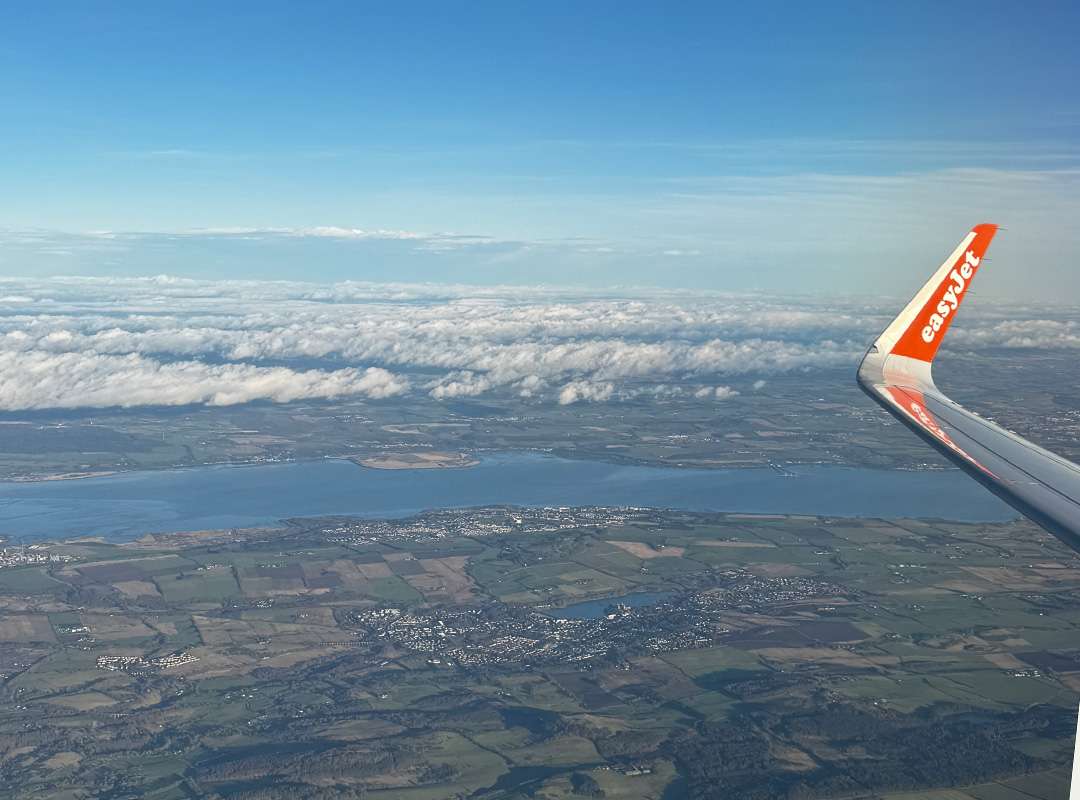
Fife is the peninsula that sits between the Firth of Forth and the Firth of Tay, just across the water from Edinburgh. The locals call it The Kingdom, a name that comes from a Pictish myth about a prince called Fib.
Fife has 117-miles of stunning coastline, gorgeous fishing villages, huge swatches of sandy beaches, Michelin-starred restaurants and fish n chips, and the pretty and historic towns of Dunfermline and St Andrews.
I live on the Fife coast and have spent years walking its paths, eating in its pubs, and deciding which East Neuk village is my favourite (Crail). This is my complete guide to the Kingdom. Where to visit, where to walk, where to stay, and how to plan a trip.
How to use this guide
Fife divides into regions. Each section covers the main places to visit, with links out to my detailed guides where you’ll want more depth.
- The East Neuk villages, from Elie through Anstruther to Crail
- St Andrews, the home of golf and Scotland’s oldest university
- North Fife, including Tentsmuir and the Cambo Estate
- West Fife, from Culross to Dunfermline
- Central Fife, including North Queensferry, Kirkcaldy and Dysart
- Falkland and the Lomond Hills
- Walks, beaches and outdoor activities
- Where to stay in Fife
- How to get to Fife and when to visit
The East Neuk of Fife
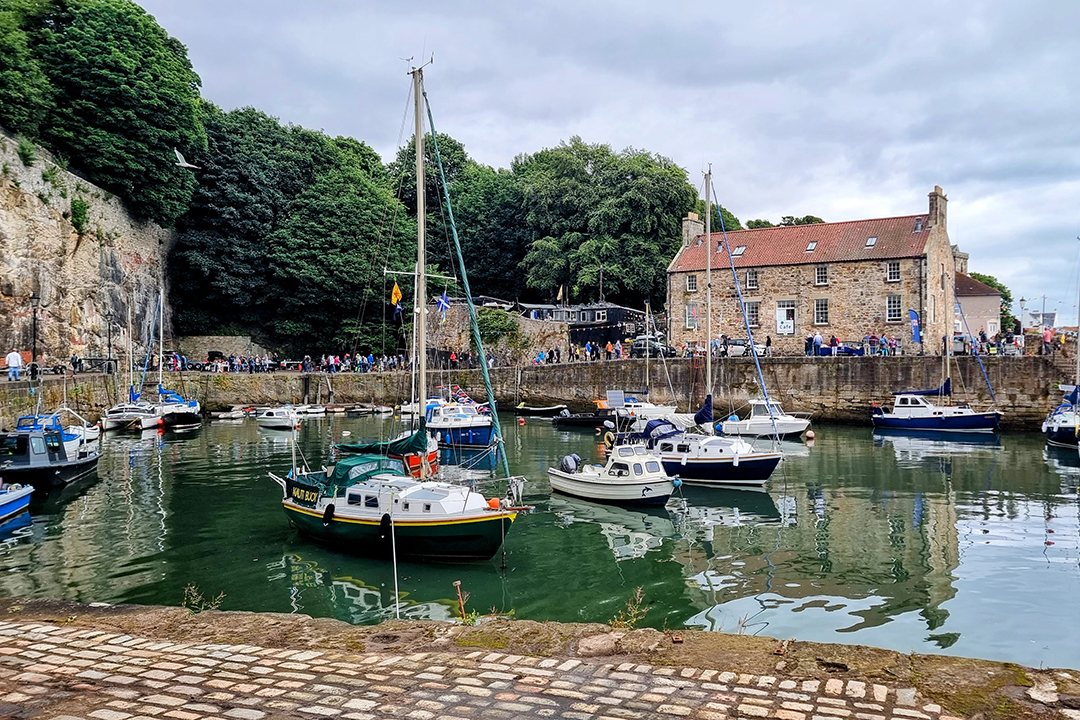
The East Neuk, Scots for east corner, or ‘east nose’ is the stretch of coast from Earlsferry in the south up to Crail in the north. It’s a series of small beautiful fishing villages, with working harbours, pantiled cottages, independent shops, and good places to eat. It’s the most visited part of Fife and with good reason. If you have a weekend, spend it here.
Read more – how to visit the East Neuk of Fife
Elie and Earlsferry
Elie and Earlsferry are my favourite spot on the Fife coast. The beach is wide and sandy, the harbour is pretty, and the village has kept a local feel. The Ship Inn sits right on the sand. In summer the beer garden looks out over a beach cricket match.
East of Elie, the Elie Chain Walk uses iron chains bolted into the cliff to traverse the coast. It’s Scotland’s closest thing to a via ferrata. Tidal, challenging in places, but a proper highlight if you have a head for heights.
The Elie Seaside Sauna is a wood-fired horsebox sauna above the shoreline, with a cold dip in the Forth to follow. It’s one of the better spots in Scotland’s new wave of outdoor saunas.
St Monans
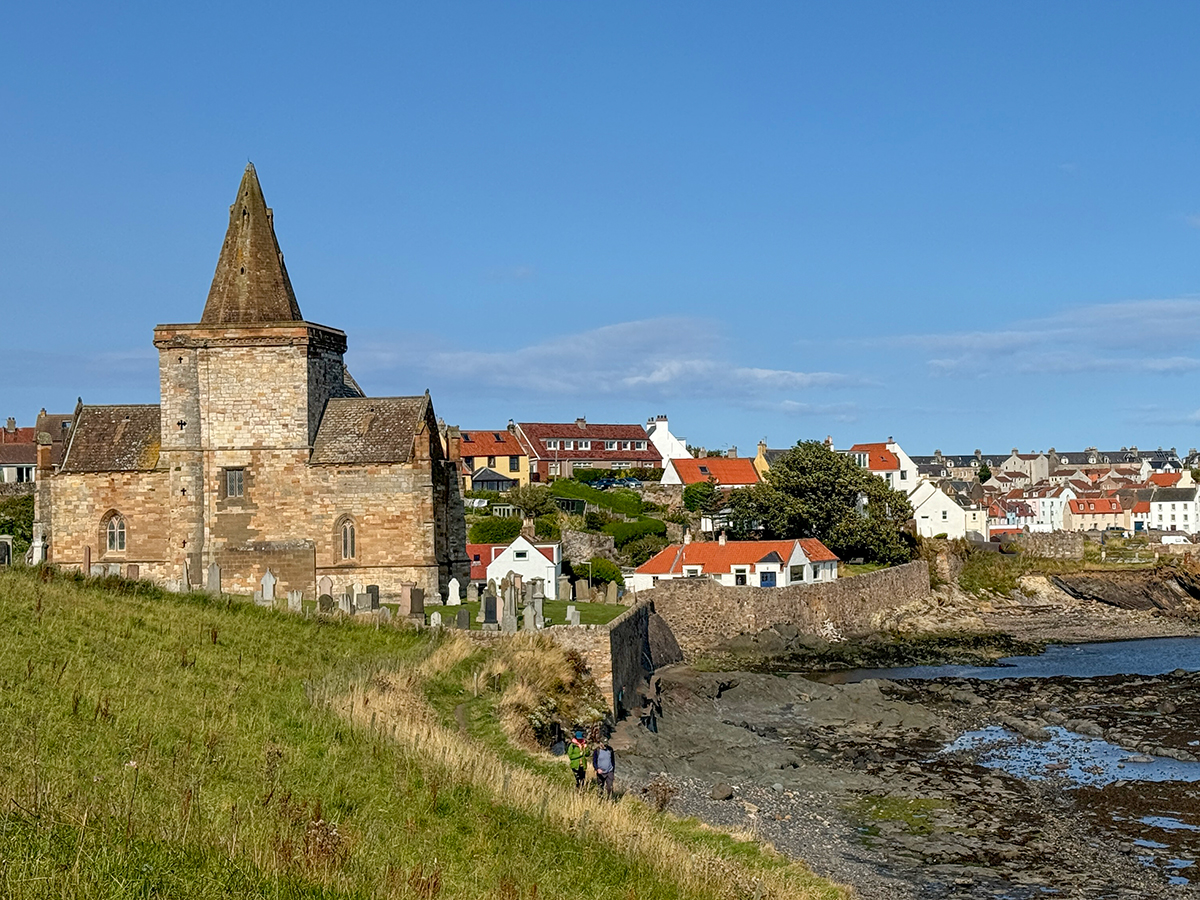
St Monans is the smallest and probably the quirkiest of the East Neuk villages. It’s named after a saint martyred out on the Isle of May. The fourteenth-century church sits almost on the waterline, close enough that at high tide the sea reaches the graveyard wall. There’s an unusual wiggly harbour (climb the wall for the view) and on the slipway, a welly boot garden started by a local teacher. The St Monans windmill, a relic from the 1770s salt panning industry, is a short walk along the Fife Coastal Path.
For lunch, East Pier Smokehouse is worth the trip on its own. The Diving Gannet does excellent coffee and cake.
Pittenweem
Pittenweem is a working fishing port. The fish market runs most mornings in season, so if you want to see the boats unload, arrive early. The name means “place of caves”, and St Fillan’s Cave in the village was home to a seventh-century Irish missionary.
In August the Pittenweem Arts Festival takes over the village, with over 100 artists showing their work in galleries, garages and front rooms. The Pittenweem Chocolate Company and its cafe are worth a visit any time of year.
Anstruther
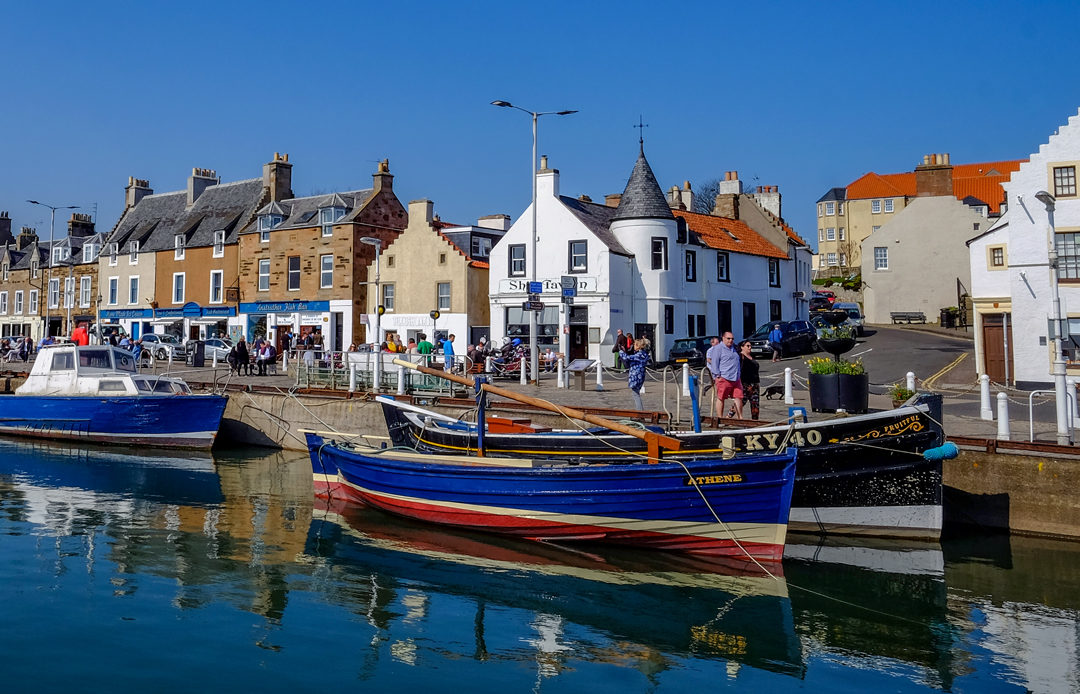
Anstruther (pronounced Anster by the locals) is the largest East Neuk town and the one most first-time visitors head for. The Scottish Fisheries Museum is really good. It covers the full history of Scottish fishing from the early days to the herring boom and its collapse. One of the eighteen boats on display, the Reaper, appeared in Outlander.
The fish and chips at the Anstruther Fish Bar have a reputation that stretches well beyond Fife, and they live up to it. The Wee Chippy is a local alternative that avoids the queue (and some say is much better)
Anstruther is also the departure point for boats to the Isle of May, Scotland’s best place to see puffins in summer.
Read more: the complete guide to Anstruther and the East Neuk.
Crail
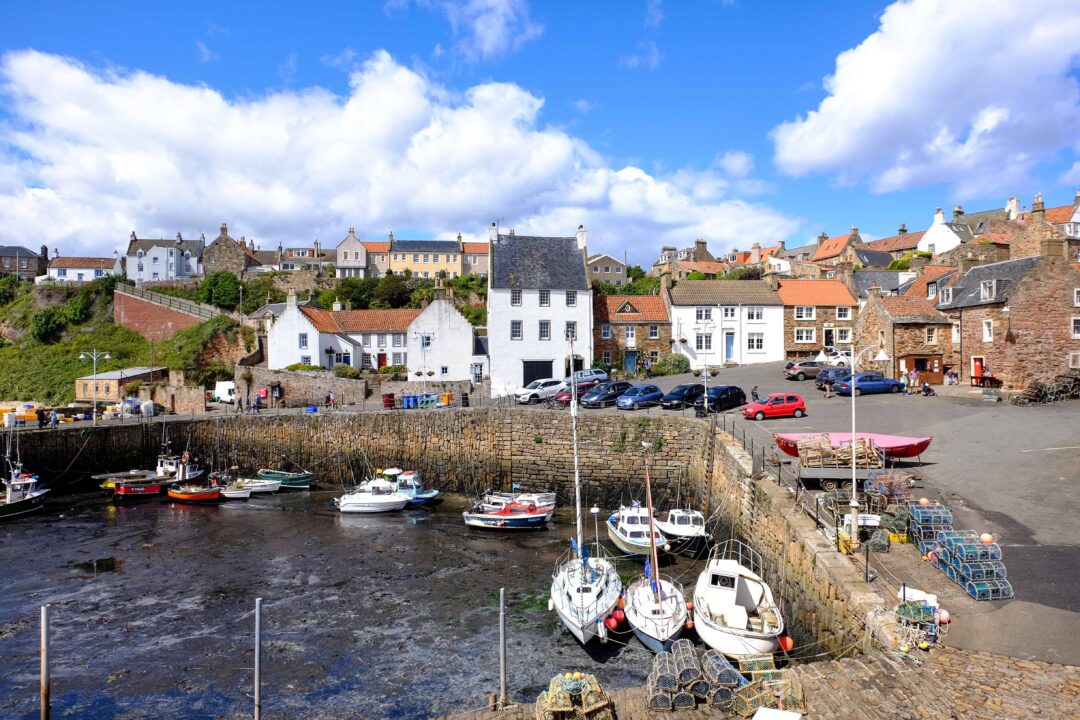
Crail is the most easterly and most photographed of the East Neuk villages. The harbour is reached down a steep lane from the market square. It’s small and lovely, full of lobster pots and painted boats and old stone buildings. The Lobster Hut on the harbour wall serves crab rolls and lobster plates in summer. Bring the champagne, grab a bench on the wall, and sit and eat.
The Crail Food Festival runs every June. Outside of the festival, the pottery on the high street is worth a browse. The walk east along the clifftop to Fife Ness is one of my favourite short walks in the East Neuk.
More East Neuk reading: my complete guide to the East Neuk, the best fish and chips in Anstruther, and my Elie Chain Walk guide.
St Andrews
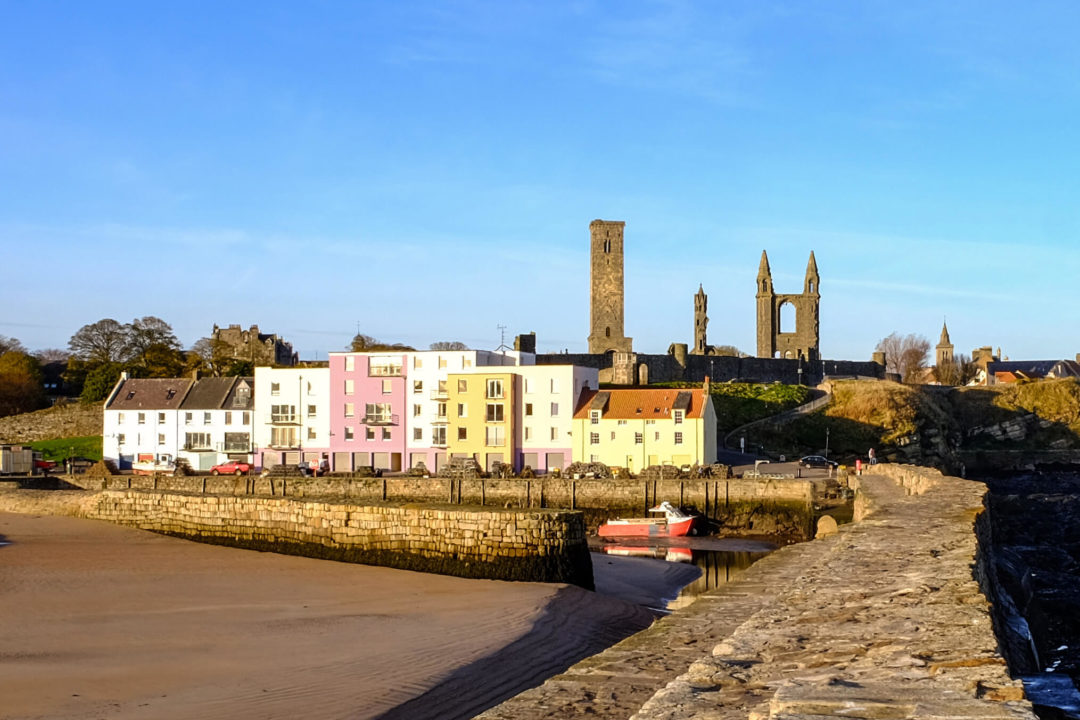
St Andrews sits on the east coast of Fife, and is home to Scotland’s oldest university (founded in 1413), the Royal and Ancient Golf Club (1754), and the ruins of what was once Scotland’s largest cathedral.
The compact town centre has independent shops, bookshops, good restaurants and the kind of cafe density you only get in a proper university town.
Don’t miss St Andrews Cathedral, once Scotland’s largest building. You can climb the 33m tall St Rule’s Tower for the view. St Andrews Castle has an unusual underground mine and counter-mine from the sixteenth-century siege. West Sands is the beach from the opening of Chariots of Fire, long enough for a proper walk. The St Andrews Aquarium is small but well done, particularly for families.
For food, Forgan’s on Market Street is a reliable stop. The Adamson is smarter. Ziggy’s has been serving burgers to generations of students. For something special, The Peat Inn outside town is Michelin-starred and worth the drive.
More St Andrews reading: 10+ things to do in St Andrews and my Fairmont St Andrews review.
North Fife
North Fife is the quieter, more rural part of the Kingdom. Farmland, woodland, the Tay estuary, and the long sweep of Tentsmuir on the coast.
Tentsmuir Beach and Forest
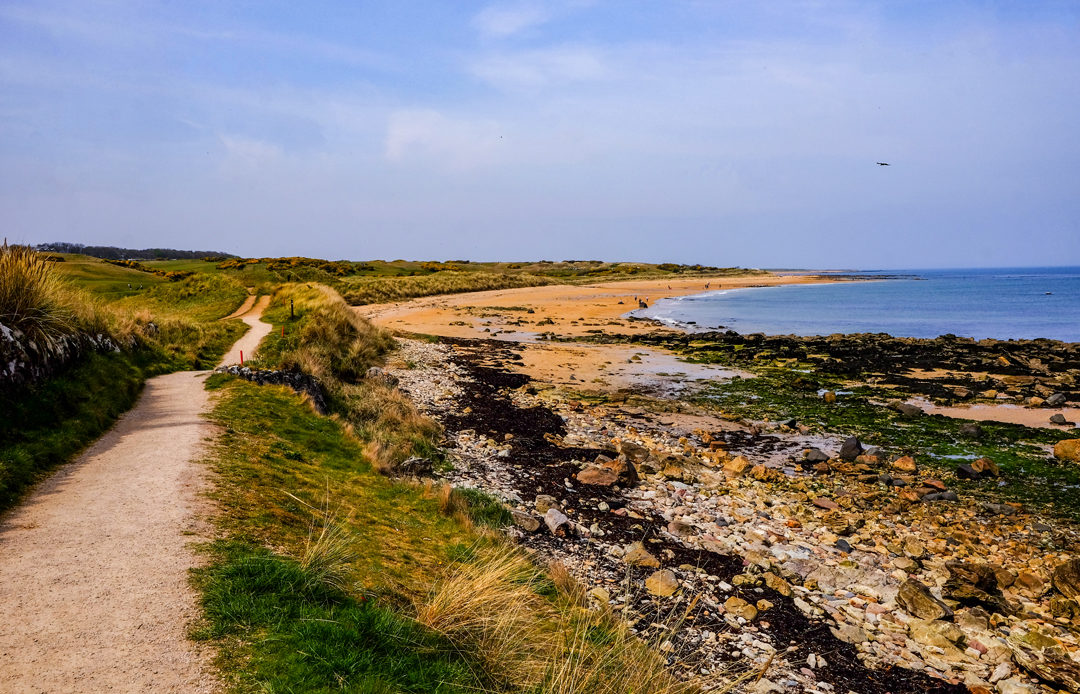
In the competition for the best beach in Scotland, Tentsmuir is one of the best. Tentsmuir National Nature Reserve, beach and forest covers a huge 5 sq miles along the coast, north of St Andrews on the Tay river estuary. Offering wild walks on extensive sand dunes, a huge swathe of beach perfect for dogs to run around on, all bounded by a pretty forest full of walking and cycling trails – Tentsmuir is just gorgeous!
Read more – how to visit Tentsmuir Beach and Forest
Kingsbarns and the Cambo Estate
Kingsbarns is famous for its golf course. Kingsbarns Links sits on the European Tour schedule. The real draw for non-golfers is the Cambo Estate just inland. The walled garden is full of unusual species and a lovely glasshouse, and the estate has its own beach reached through woodland.
The Nosebag Cafe on the estate, in the old stable block, serves Scottish comfort food made largely from the estate’s own produce. Dog-friendly and family-friendly.
Cupar and Newport-on-Tay
Cupar is north Fife’s market town. It’s big enough for a proper high street, and the Hill of Tarvit Mansionhouse is nearby.
Newport-on-Tay sits on the south bank of the Tay looking across to Dundee. It’s home to The Newport Restaurant, owned by MasterChef: The Professionals winner Jamie Scott, and one of the best places to eat in Fife.
West Fife
West Fife is the oldest part of the Kingdom. It grew up on coal mining, salt panning and lime burning, and spent the twentieth century quietly declining as the industries went away.
What’s left is a string of coastal villages, some remarkably preserved, and the town of Dunfermline with its abbey and royal burial ground.
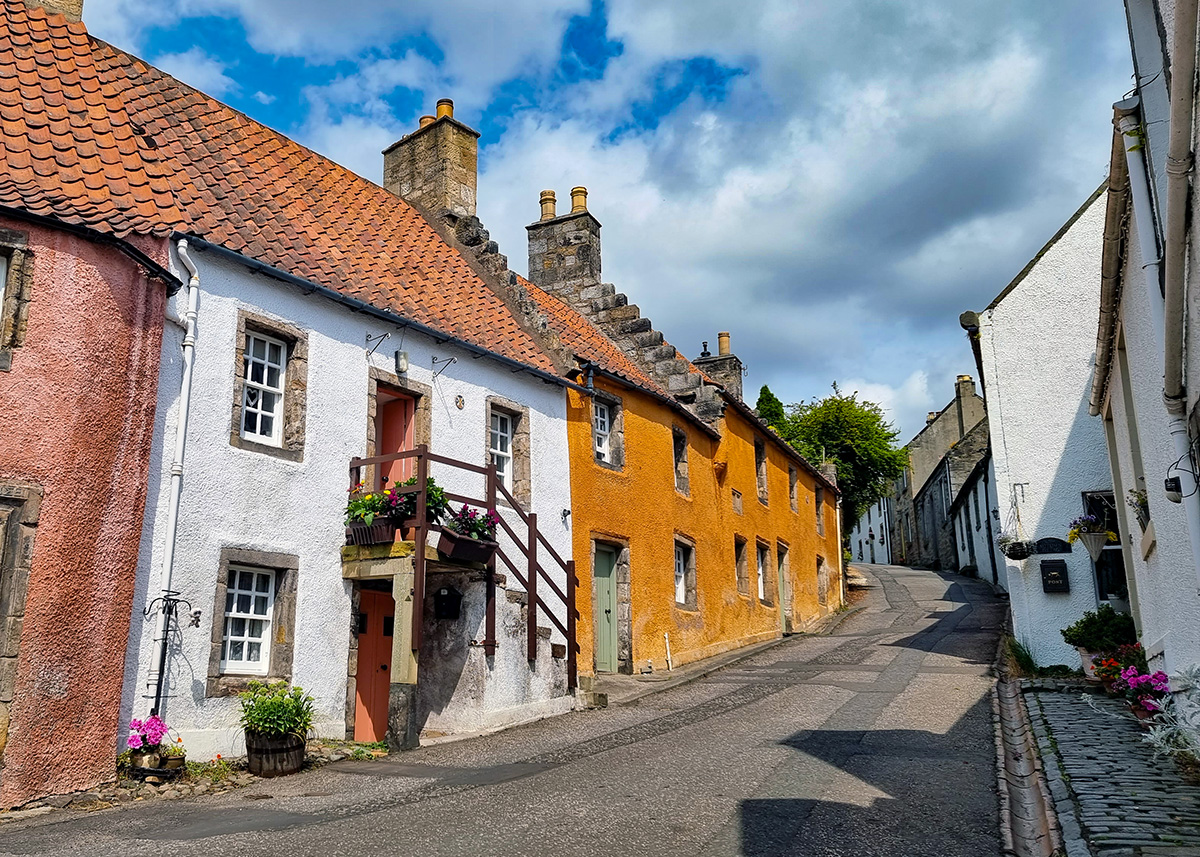
Culross
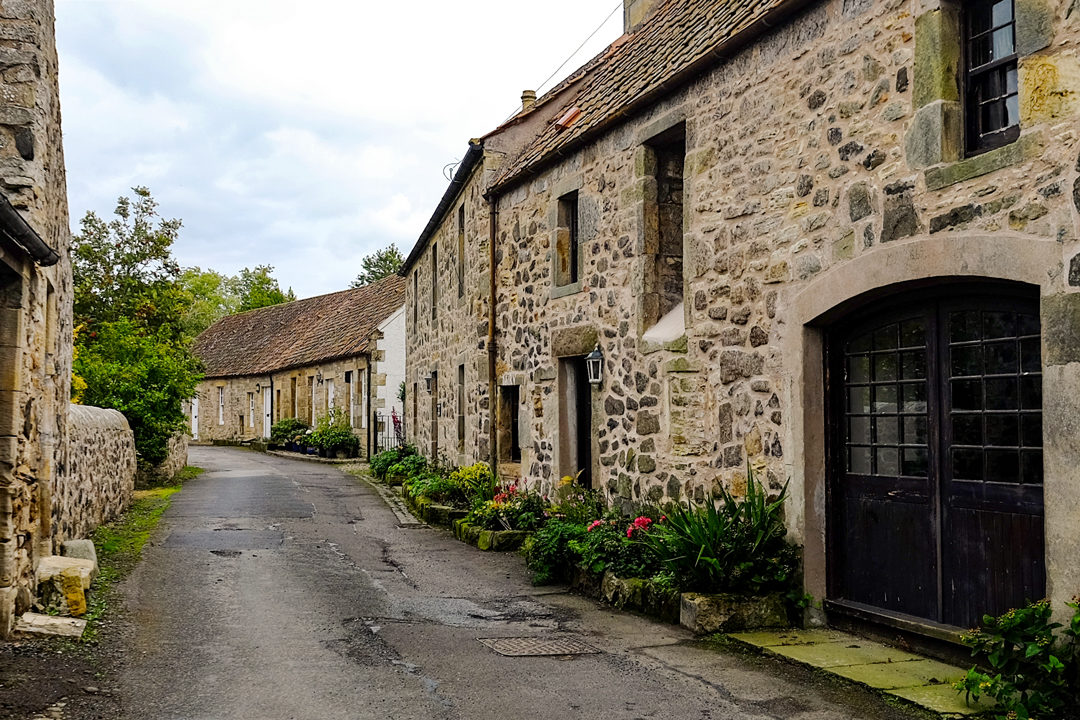
Culross (pronounced Coo-russ) is one of the best-preserved Scottish burghs of the sixteenth and seventeenth centuries. The National Trust for Scotland has carefully conserved its tight streets of cottages with their orange pantile roofs. It’s one of the most complete pictures of an early modern Scottish town you’ll find anywhere.
The town prospered because of the Forth. Coal was mined here and salt was panned from seawater, both exported from the small harbour below the village. It’s now more famous for its role in Outlander, filmed in The Cross (the village’s main square) and in the Palace’s gardens.
What to see: Culross Palace (a prosperous merchant’s house despite the name), the Town House, and the Culross Abbey ruins on the hill above. There’s a Sunday market on the village green most weekends, weather permitting.
Eat and drink: The Red Lion is a community-run pub that serves food. The Mercat on The Cross does coffee and cakes. At weekends, The Stickman serves inventive tacos from a stall near the east car park.
Read more: how to visit Culross.
Limekilns and Charlestown
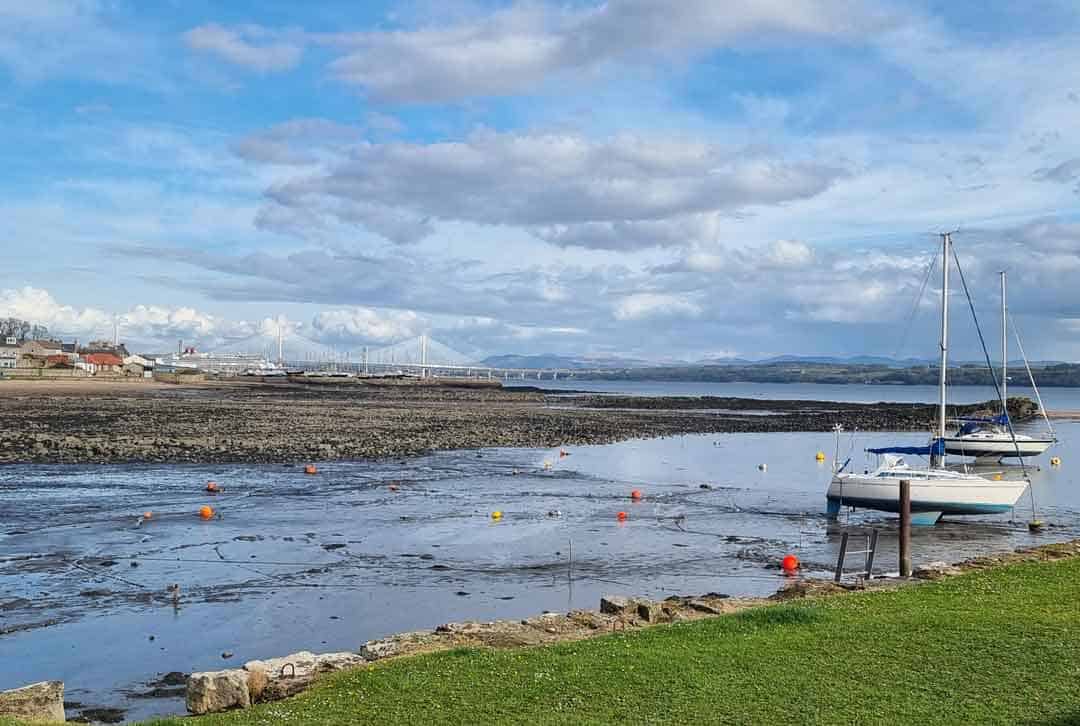
The twin villages of Limekilns and Charlestown sit on the Forth shore a few miles west of the bridges. Charlestown was laid out in the 1750s by the Earl of Elgin to house workers in his limestone industry. Rows of workers’ cottages and the remains of fourteen lime kilns are still there. Limekilns is older. It’s a small harbour village with views across to the Forth Bridges and South Queensferry. Robert Louis Stevenson set scenes from Kidnapped here.
The coastal path between the two villages is an easy 2.5 miles. For lunch, Coorie by the Coast in Limekilns has a cult following for its chicken waffles. The Bruce Arms and The Inn at Charlestown all serve proper pub food.
Dunfermline
Dunfermline was Scotland’s capital before Edinburgh. It’s the royal burial site of King Robert the Bruce and seven other Scottish monarchs. It has an abbey, a palace, and the oldest surviving medieval street layout in the country.
Dunfermline Abbey and Palace are the historical centrepiece. Founded in the eleventh century, the abbey church still stands, and the palace ruins are substantial. The tomb of Robert the Bruce is inside the abbey church. Adjacent is Pittencrieff Park, known locally as The Glen, a seventy-six-acre Victorian park with a glen, glasshouses and peacocks. It was gifted to the town by Andrew Carnegie, Dunfermline’s most famous son.
Andrew Carnegie’s Birthplace Museum, a small cottage just up from the abbey, is worth half an hour. The jump from weaver’s son to richest man in the world is well told.
Read more: 10+ things to do in Dunfermline.
Central Fife and the Forth
Central Fife is the stretch of coast between the Forth Bridges and the start of the East Neuk. It’s the part most visitors see briefly from a train window.
North Queensferry and the Forth Bridges
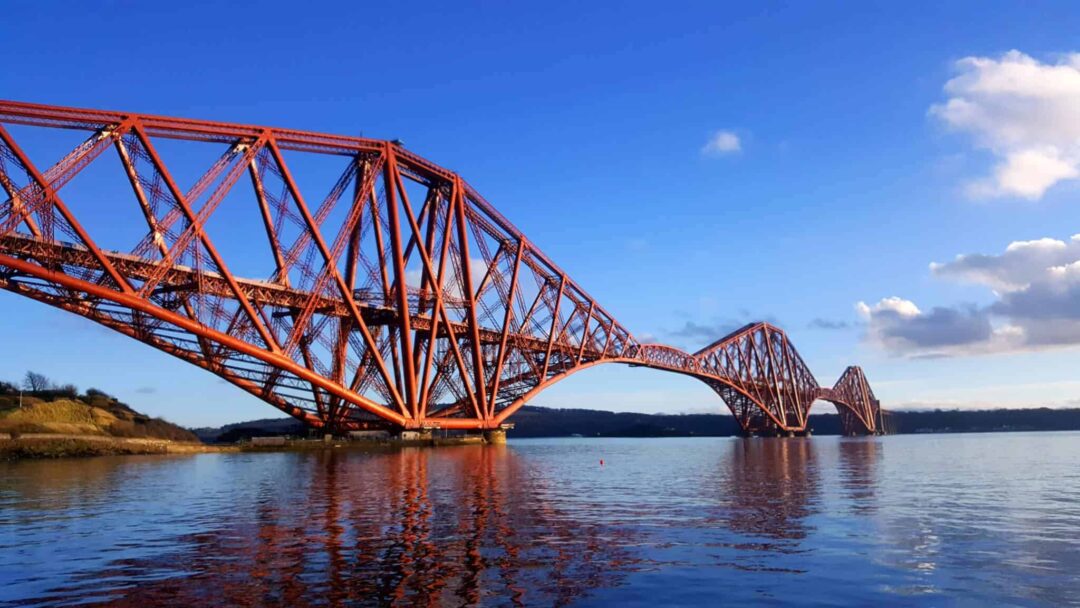
North Queensferry sits directly beneath the Forth Bridge. The 1890 Victorian cantilever railway bridge is a UNESCO World Heritage Site and still one of the most striking engineering structures in Britain. The view looking up from the pier is fantastic. Nothing really prepares you for the scale of it.
The foreshore walk east to Carlingnose Point has views back across the full width of the Firth. For lunch or dinner, The Wee Restaurant is the village favourite.
Aberdour and Burntisland
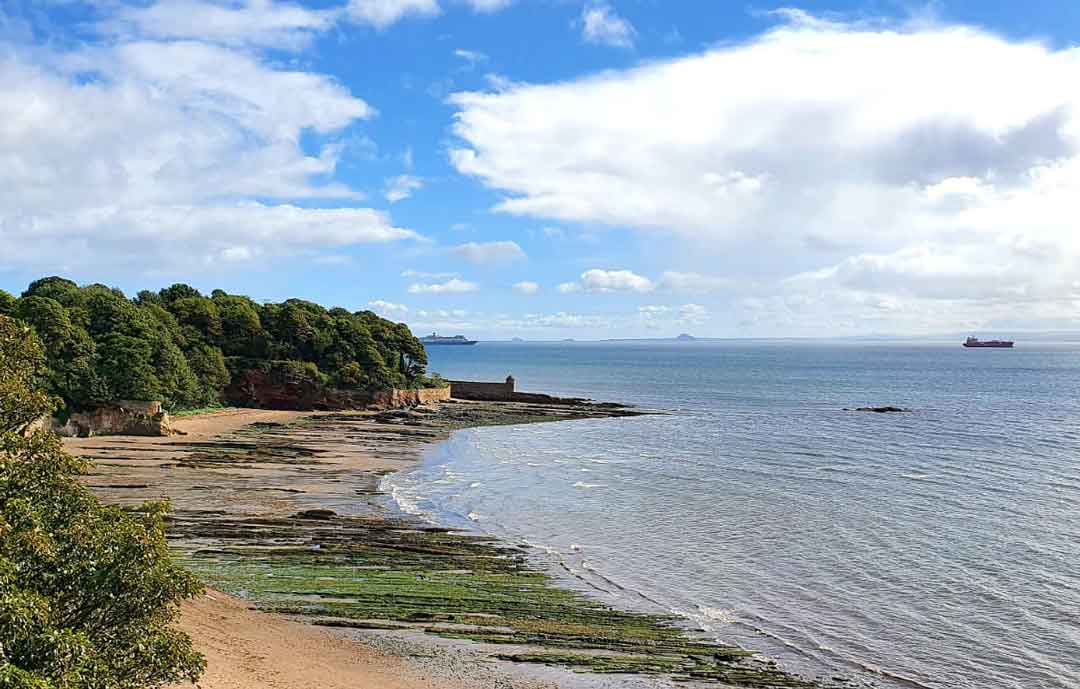
Aberdour is 30 minutes from Edinburgh by train. Its twelfth-century castle is one of the oldest standing castles in Scotland, well-maintained by Historic Environment Scotland. Silver Sands Beach below the town is a Blue Flag site, sheltered and unusually sandy for the Firth.
Burntisland further along the coast is an old port town. Its medieval church has a reasonable claim to being where the King James Bible was first proposed, at a general assembly held here in 1601.
The coastal path walk between them is an easy 2.5 miles, and both towns are on the Edinburgh to Dundee rail line. A straightforward one-way walk if you want a day out without the drive.
Kirkcaldy and Dysart
Kirkcaldy (the Lang Toun) is the largest town on the Fife coast and the birthplace of Adam Smith, whose Wealth of Nations helped shape modern economics. The town museum has a good collection of Scottish art and local history.
Just east of Kirkcaldy is Dysart. It has one of the loveliest small harbours in the Kingdom, and was used as a filming location for Le Havre in Outlander. The Harbourmaster’s House is the Fife Coastal Path information centre and does good coffee.
Further on is Ravenscraig Castle, built in 1460. It’s one of the earliest castles in Britain designed to withstand cannon fire. The coastal walk from Dysart to Ravenscraig is short, scenic and easy.
Lower Largo
Lower Largo is small, but it was the birthplace of Alexander Selkirk, the Scottish sailor whose real-life castaway experience on a Pacific island inspired Daniel Defoe’s Robinson Crusoe. There’s a statue of him on the cottage where he was born.
The village is a row of old cottages along a tidal burn running to a sandy beach, with views across the Forth. The Crusoe Hotel on the harbour is a good lunch or dinner stop. The Railway Inn is the proper local pub.
Falkland and the Lomond Hills
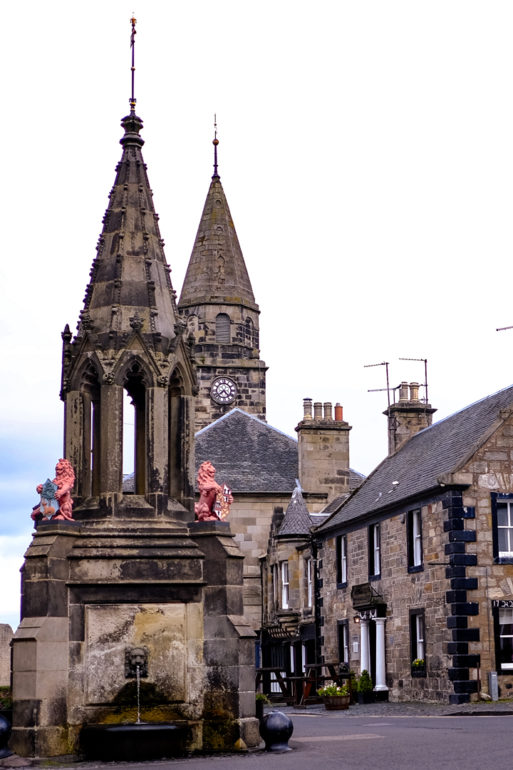
Falkland sits inland in central Fife, and is a pretty conservation village in the shadow of the Lomond Hills. The village grew up around Falkland Palace, a Renaissance royal residence built by James IV and James V as a hunting lodge. The palace is managed by the National Trust for Scotland and worth a visit. The real tennis court, still in use, is the oldest in Britain.
Outlander fans visit Falkland to photograph the Covenanters Inn and the fountain in the square, both of which doubled for 1940s Inverness.
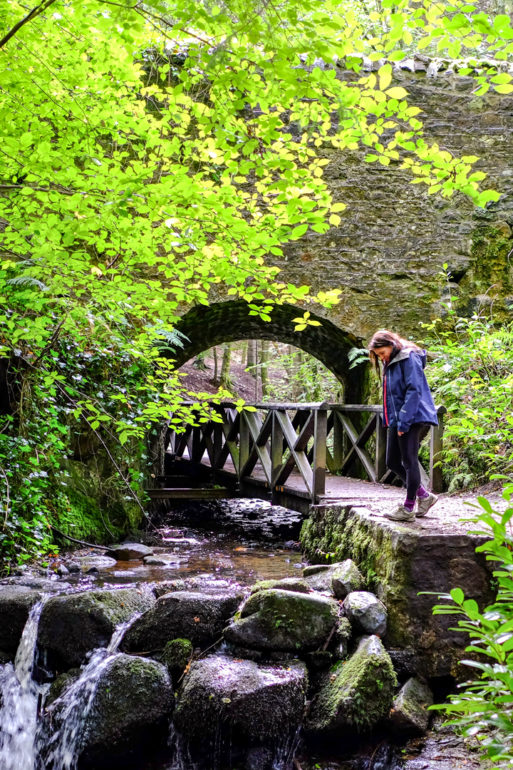
Behind the village, the Falkland Estate opens onto miles of paths. My favourite walk is up through Maspie Den, a wooded glen that emerges at a waterfall pouring over a cliff. You can walk behind the waterfall if the path isn’t too muddy. The Centre for Stewardship on the estate runs guided walks and has a dog-friendly cafe.
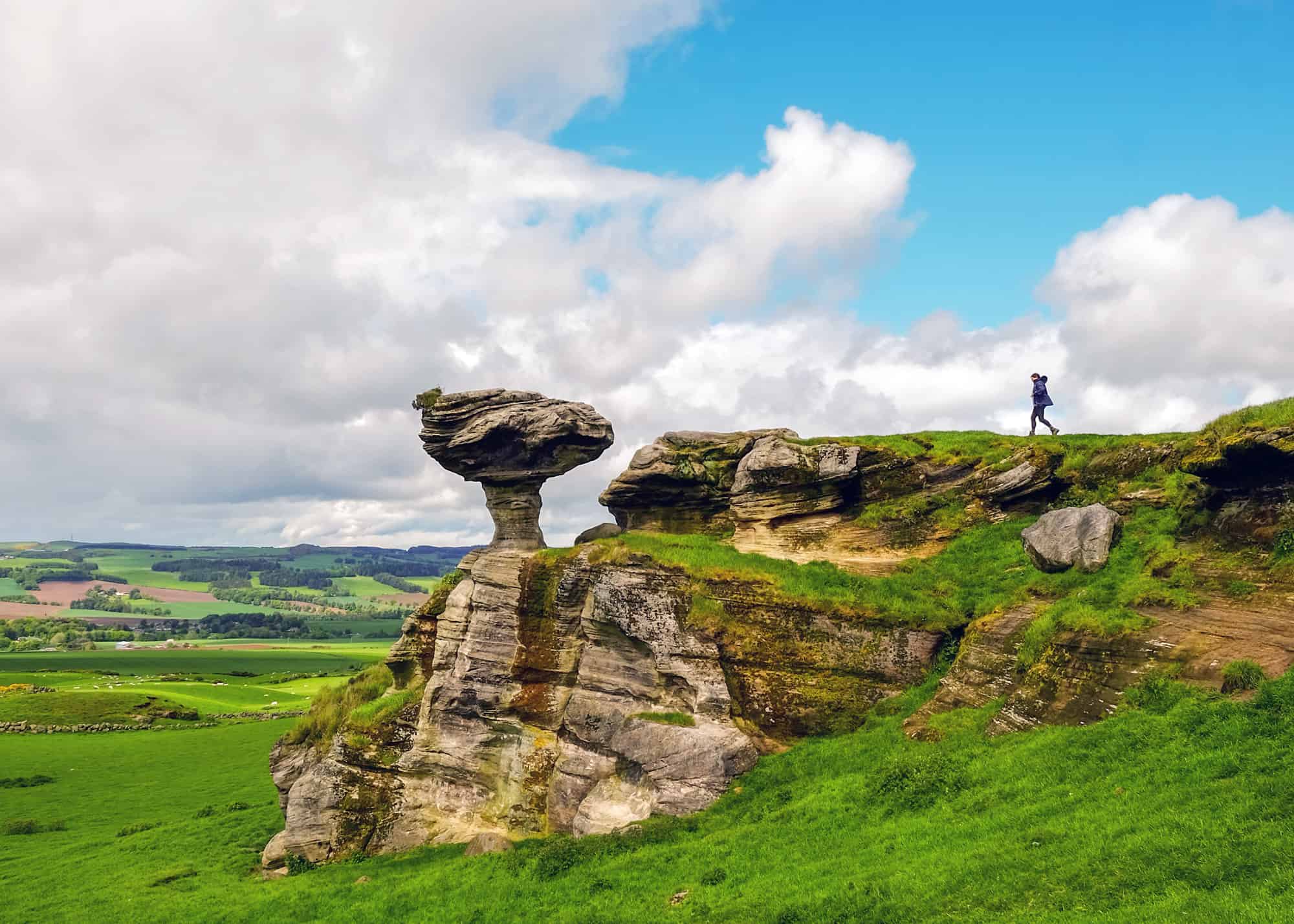
The Lomond Hills Regional Park was Scotland’s first Regional Park, designated in 1986. It covers 25 square miles of hills and farmland. West Lomond is the highest point in Fife at 1,713 feet. East Lomond can be walked on a great circuit from Falkland village. The Bunnet Stane, an unusual mushroom-shaped sandstone formation on the edge of West Lomond, is the best short walk in the park.
Walks, beaches and outdoor activities
Fife was voted Scotland’s number one outdoor destination by Scottish Natural Heritage for eight years in a row. It has 117 miles of coastline, the Lomond Hills, the Pilgrim Way, dozens of woodland walks, and a good range of activity providers.
The Fife Coastal Path
The Fife Coastal Path runs 123 miles from Kincardine in the west to Newport-on-Tay in the north, following the edge of the Fife peninsula. It’s one of Scotland’s Great Trails and can be walked in a week by anyone reasonably fit, or broken into day sections.
The East Neuk section (Elie to Crail, around 13 miles) is my favourite section. It’s best done over two days with an overnight in Pittenweem or Anstruther. For a shorter walk, Elie to St Monans is four miles of coast, lighthouse and lady’s bathing tower. Kirkcaldy to Dysart works as a train-out-walk-back day trip from Edinburgh.
The Fife Pilgrim Way
The Fife Pilgrim Way is a 70-mile inland route from Culross in West Fife to St Andrews. It opened in 2019 and follows paths used by medieval pilgrims. The route passes through Dunfermline, Lochore Meadows, Markinch and Ceres. It’s more rural and quieter than the coastal path, and easy to walk in sections.
Beaches
Fife has 25 Blue Flag beaches. My favourites are Tentsmuir (wild, huge, dog-friendly), Kingsbarns (wide and quiet), West Sands St Andrews (the Chariots of Fire beach), Elie and Earlsferry (sandy, with the Ship Inn at one end), Ruby Bay at Elie (small and good for beachcombing), Silver Sands Aberdour (sheltered, family-friendly) and Burntisland (Blue Flag, good facilities).
Woodland and hill walks
Beyond the coast, Tentsmuir Forest adjoins the beach, Blairadam Forest near Kelty has three waymarked trails, Devilla Forest near Kincardine is home to red squirrels and some of the oldest pines in Fife, and Pitmedden Forest near Auchtermuchty is good for a longer day out. The Lomond Hills have proper hill walks (East Lomond and West Lomond) plus the Bunnet Stane. Benarty Hill near Ballingry is a shorter, steeper climb with good views over Loch Leven.
Outdoor activities
Beyond walking, Fife has a good range of activity providers:
- Stand-up paddleboarding and mountain biking at Lochore Meadows. 1,200 acres of parkland with a loch for SUP and extensive mountain bike trails from family loops to technical red and black routes.
- Coasteering at Elie with Fife Outdoors. Scrambling and jumping along the cliffs, instructor-led.
- Horse riding near Cupar at Barbarafield Riding School. Hacks through the Hill of Tarvit grounds.
- Target sports at Cluny Activities. Clay shooting, archery, air rifles and Segways.
- Land yachting on West Sands with Blown Away. Two-hour sessions on the beach at St Andrews.
- Waterskiing and wakeboarding at Scotland’s National Waterski Centre, Townhill Loch near Dunfermline.
More walking and outdoor reading: the best walks in Fife, the West Fife Woodlands Way, the Elie Chain Walk, and my dog-friendly Fife guide.
Where to stay in Fife
The best accommodation in Fife isn’t the biggest hotels. The Kingdom shines in its converted cottages, farm stays, safari lodges and characterful small inns. Book ahead for summer. The East Neuk especially fills up from May onwards.
East Neuk and St Andrews
Dreel Cottage in Anstruther is a two-bedroom self-catering cottage right next to the Dreel Tavern and one of my favourite East Neuk stays. Catchpenny Safari Lodges near Elie are glamping perfection. Three-bedroom safari tents with decks, fire pits and views across to Elie Lighthouse. For a classic hotel stay, the Rusacks or Hotel du Vin in St Andrews are both good.
North Fife
Craigduckie Shepherds Huts are on a working farm near Dunfermline. Boutique shepherd’s huts with farm tours available. Newhill Farm Cottages near Auchtermuchty offer three self-catering cottages with a pool and hot tubs, good for family gatherings.
West Fife and the Forth
West Fife is less touristed and has fewer dedicated hotels, but The Dundonald in Culross is a stylish B&B on one of the village’s prettiest streets. The Inn at Charlestown has comfortable rooms with a restaurant.
Read more: my dog-friendly Fife guide covers more accommodation options by region.
How to get to Fife and when to visit
How to get to Fife
Fife is less than an hour’s drive from Edinburgh across the Queensferry Crossing. From Glasgow it’s the M80 to Stirling then the Kincardine Bridge, around an hour and twenty minutes. From the north, the Tay Bridge at Dundee connects into north-east Fife.
By train, the Fife Circular line from Edinburgh Waverley stops at North Queensferry, Inverkeithing, Dalgety Bay, Aberdour, Burntisland, Kinghorn and Kirkcaldy. Cupar and Dunfermline are on separate lines. Edinburgh to Kirkcaldy is 30 minutes. Edinburgh to Cupar is around an hour.
By bus, Stagecoach East Scotland runs local services across the region and express links to Edinburgh and Glasgow.
When to visit
Spring and autumn are the best times in Fife. Summer is busiest, particularly July and August when Edinburgh day-trippers and school-holiday families arrive. Winter is quiet and the coast is dramatic, but shorter days limit what you can do.
Specific dates to know: the Pittenweem Arts Festival in early August, the Crail Food Festival in June, and St Andrews Day on 30 November.
How long to stay
A weekend covers one region (the East Neuk or St Andrews or Culross and West Fife) without rushing. Three or four days lets you combine two regions. A week is enough to see most of the Kingdom at a sensible pace with time for a couple of proper walks.
Getting around once you’re here
A car is easiest for getting around Fife. The public transport is fine for main towns and the Edinburgh commute, but gets thin for villages and rural stops. If you’re not driving, the Stagecoach 95 connects East Neuk villages and you can walk sections of the Fife Coastal Path between train stations on the Edinburgh to Dundee line.
Frequently asked questions
What is Fife famous for?
Fife is famous for St Andrews — home of golf and Scotland’s oldest university — and for the stunning East Neuk fishing villages including Anstruther, Crail and Elie. It has 117 miles of coastal path, 25 Blue Flag beaches, Michelin-starred restaurants, Culross (a perfectly preserved 17th-century village famous as an Outlander filming location), and Dunfermline, Scotland’s ancient capital where Robert the Bruce is buried.
Where is Fife in Scotland?
Fife is in the Lowlands of Scotland, bordered by the River Forth to the south, the River Tay to the north, and Perthshire and Clackmannanshire to the west. It sits between Edinburgh and Dundee and is easily reached via the Forth Bridge from Edinburgh or the Tay Bridge from Dundee.
What are the best villages to visit in Fife?
The East Neuk villages are the highlight — Crail has the prettiest harbour and the famous Lobster Hut seafood shack, Anstruther is the best place for fish and chips, Pittenweem has working fishing boats and a brilliant arts festival in August, and Elie has the best beach. Further west, Culross is the best-preserved historic village and Falkland has a beautiful palace and estate.
What is the best beach in Fife?
Tentsmuir Beach on the Tay estuary is one of Scotland’s finest — wild, spacious and backed by forest with great walks. Kingsbarns Beach on the Cambo Estate is beautiful and remote. Ruby Bay at Elie is lovely for swimming and rock-pooling. West Sands at St Andrews is the big sweeping beach made famous by the film Chariots of Fire.
Is Fife worth visiting?
Absolutely — Fife is one of Scotland’s most underrated regions and a firm favourite with locals. It combines outstanding coastline, historic towns, excellent food, and a gentler pace than the more tourist-heavy Highlands. It’s also very accessible from Edinburgh (under an hour) making it ideal for a day trip or weekend break.
How long do you need to visit Fife?
Two to three days gives you enough time to cover the East Neuk villages, St Andrews and a couple of west Fife highlights like Culross and Dunfermline. A week lets you walk sections of the Fife Coastal Path, explore more thoroughly, and eat your way around the region properly. Fife rewards a slower pace.
More Fife reading
- A guide to Anstruther and the East Neuk
- The best walks in Fife
- Dog-friendly Fife
- Where to eat in Fife
- How to visit Culross
- Things to do in St Andrews
- Things to do in Dunfermline
- How to visit Tentsmuir
- Maspie Den and Falkland
- The complete guide to the Firth of Forth
Kate – Love, from Scotland x