

You already know some Scottish words. You might not realise it yet, but you do.
If you’ve ever watched Outlander, seen a Scottish film, or had a Scottish colleague tell you the weather was absolutely baltic, you’ve been picking up Scottish words without knowing it. Dreich. Wee. Braw. Loch. Bonnie. Whisky.
But there are plenty more Scottish words to try and translate once you actually arrive. Here is your essential briefing on Scottish words, so you can spend less time looking confused.
Practical Scottish words to know before you go
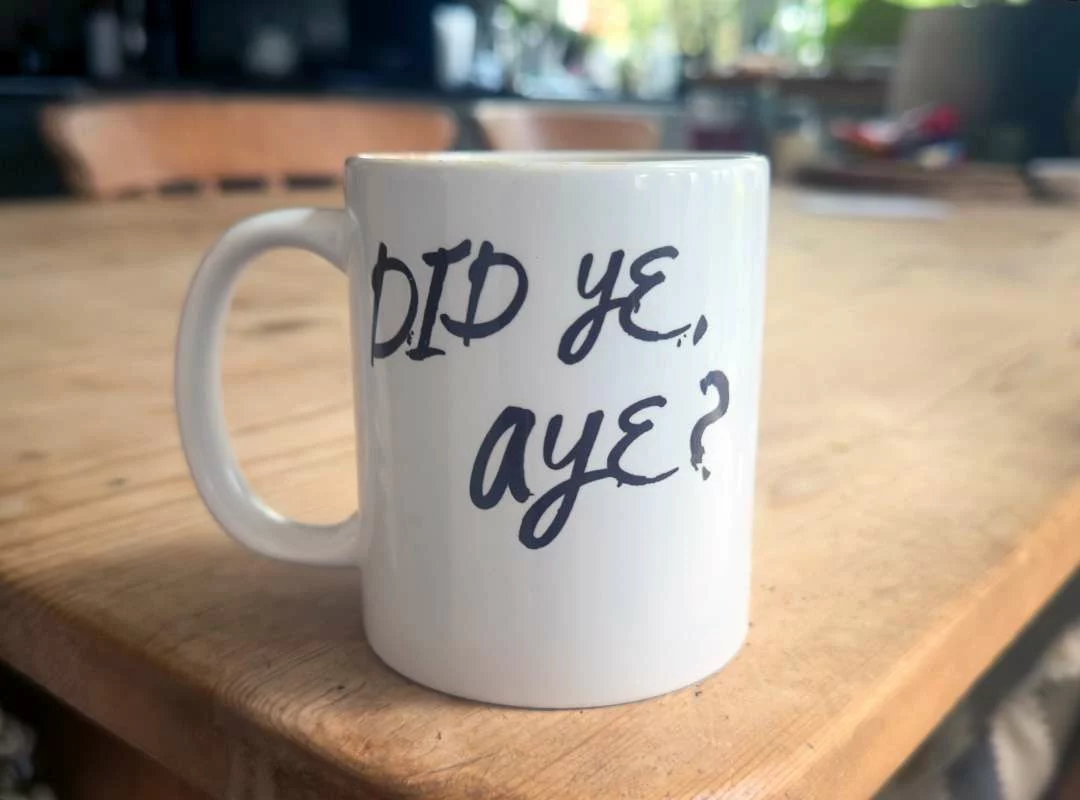
Aye means yes. You’ll pick this one up quite quickly. Aye, right, though is a confusing one as on its own, “aye” means yes. But “aye, right” means the opposite. It is usually said with an incredulous look after someone tells a story in the pub. Did ye aye? is one of the best Scottish shut downs if someone is bragging.
Nae means no. Nae bother means no problem, you’re welcome.
Dinnae means don’t. “I dinnae ken” means I don’t know, especially used in Edinburgh. The running joke is that no one knows who Ken is.
Wee means small, but it’s used with everything. A wee walk can be anything from a short stroll to a Munro and a wee dram is a measure of whisky. Wee beasties are midges, clegs (horseflies) and spiders. You may also hear Peerie, the Orcadian equivalent of wee.
Bonnie means pretty.
Och you probably think you’ll hear this. You probably won’t. You certainly won’t hear Och Aye The Noo, don’t stereotype us please.
How is often used where standard English would use “why.” You’ll hear “how no?” and it means “why not?”.
Gonnae means can you. “Gonnae no dae that?” means please don’t do that. “Gonnae just leave it?” means would you please leave that alone.
Wheesht means be quiet, shush, hush. “Haud yer wheesht” means hold your wheesht, i.e., stop talking.
Outwith means outside of, beyond. It is one of my favourite words and there is no direct English equivalent. “Outwith office hours.” “Outwith this area.”
Hoachin means absolutely packed, teeming, crawling with people or things. “The pub was hoachin” means it was very busy.
Bairn means child. If you’re in Glasgow, you might hear wean instead (rhymes with “rain”).
Hen is an affectionate term used by Scottish mums, similar to pet or love.
Messages means shopping. “I’m away to get the messages” means I’m going to the shops.
Howl is used in Glasgow to mean laugh, “we were absolutely howling”.
Skoosh is a wee bit of fizzy juice. Don’t ask for a skoosh of lemonade in your whisky.
Piece means a sandwich. Specifically it means the packed lunch you take to school or work, but it’s used for any sandwich. A “piece and jam” is a jam sandwich. The word piece comes from the old tradition of deep frying porridge and cutting it into pieces to take to work in the ship yards. Yes, deep fried porridge used to be a thing.
Neep means turnip. You’ll find them served with Haggis which also comes with tatties.
Tatties are potatoes. If you are invited to someone’s grans for Scottish mince and tatties, say yes please. Mince also means rubbish as in “that’s mince”.
Loch is a lake. It is pronounced with a soft gutteral CH at the end. It is not pronouced “lock.” It’s worth practising before you arrive, because people will be rude about it if you get it wrong.
Burn is a stream. Ben is a mountain. Glen is a valley.
Jaggy means prickly, sharp-edged. Jaggy nettles are stinging nettles.
Being very happy or very drunk (or both)
We’ve lots of words to describe how we are feeling.
Blootered means extremely drunk. So does steamin, jaked, wellied and you can also use stoatin.
Braw, belter, barry – meaning great. A belter is something particularly impressive: “she’s a belter.” is a particularly popular Scottish pop song. Barry is used in Edinburgh to mean excellent.
Gallus is a Glasgow word that means bold, daring, cheeky, take it as a compliment. It means you’ve done something and got away with it.
Radge means wild, mad, out of control, mostly used in Edinburgh. “He’s an absolute radge” means he’s unpredictable.
Glaikit means stupid, daft, or vacant-looking. “Standing there looking glaikit” means mouth slightly open, gaze unfocused, nobody home.
Crabbit means grumpy or irritable.
Greeting means crying. A ‘greeting face” means a miserable expression. Nothing to do with saying hello.
How to join in with talking about the weather
The number of words Scotland has for weather reflects exactly how much time we spend talking about it
Dreich (pronounced dreeKH) is my favourite Scottish word and my least favourite weather. It means grey, damp, bleak, miserable – and for most of the year, this is Scotland’s weather. Best to have a good word for it.
Smirr is the fine, misty drizzle that isn’t quite rain. You won’t feel it falling on your face so much as you’ll suddenly notice your hair is soaked. Glasgow in October is largely made of smirr.
Drookit means thoroughly, completely soaked through, as in “I nipped out for five minutes and I’m absolutely drookit.” It is not possible to be slightly drookit.
Stoating means rain that’s falling so hard it’s bouncing off the ground. “It’s absolutely stoating out there.” Stoating also means very drunk.
Haar is the thick, cold sea mist that rolls in off the North Sea without warning, usually on days when it seemed like it was going to be nice. Edinburgh is particularly prone to haar, which has a mildly supernatural talent of making the castle disappear.
Nippy means cold, “it’s a wee bit nippy out.” Nippy can also mean sharp-tongued, snappy. “She can be a wee bit nippy”.
Baltic means very, very cold, bitterly, bonecrackingly cold, you’ll hear “It’s absolutely baltic out there”.
Braw is the opposite to all of the above. It means fine, good, excellent. A braw day is a good one. You might also hear glorious used when the weather is better than about 15 degrees and not raining.
Let’s hope for good weather on your trip, shall we?
FAQs about Scottish words
Do I need to learn any Scottish words before I visit?
You don’t need to, but knowing a handful of words makes a real difference to whether you are having to ask people to repeat themselves.
Is Scottish the same as Scottish Gaelic?
No — they’re completely different. Scottish Gaelic is a Celtic language spoken mainly in the Highlands and Islands, entirely separate from English. You’ll also see Gaelic on road signs. The words in this guide are Scottish English and Scots, which are spoken across the whole country.
Why do Scottish people have so many words for rain?
Because rain happens often and there are lots of types of rain. Smirr, drookit, stoating, dreich — each one describes a different type of wet.
If you want to go a wee bit deeper before you travel, why not pick up a book of Scottish slang – there are some brilliant ones and they make great reading on the plane over.
Love, from Scotland x

Leave a Reply