

Islay (pronounced EYE-la) is the small Hebridean island that punches well above its weight in whisky world fame. Ten working distilleries on an island only 25 miles long, most of them producing the smoky, peated whisky the island is famous for. Three more in the pipeline. A festival (Fèis Ìle) that brings whisky lovers from every continent to a single week in late May. A flavour profile so distinctive that “Islay” has become its own shorthand for big, peaty single malts the world over.
This is my locally-written guide to Islay whisky. The 10 working distilleries, what each one tastes like, which to choose first if you’re new to peated whisky, how to plan a distillery trip, and where to stay on this beautiful island.
This post contains affiliate links from which I may make a small commission, at no extra cost to you.
At a glance
- First Islay whisky to try: Lagavulin 16. The classic peated Islay everyone should taste once
- Best peated Islay for beginners: Bowmore 12. Moderately peated, easy to drink
- Best unpeated Islay: Bunnahabhain 12. Soft, salty, sherry-finished
- Most extreme Islay: Bruichladdich’s Octomore range. The peatiest whisky in the world
- Best Islay distillery for a first visit: Bowmore. In the island capital, walking distance from everywhere
- Best Islay distillery for a deep dive: Bunnahabhain. Warehouse 9 cask-strength tour
- Best festival: Fèis Ìle (late May). Book accommodation a year in advance
Jump to section
Why is Islay so famous for whisky?
Three things made Islay the whisky island.
Peat. Islay has thick peat bogs across most of its interior, formed over thousands of years from decomposed Sphagnum moss and heather. Burned in a kiln to dry malted barley, this peat releases phenolic compounds that the damp barley absorbs. The result is smoky, medicinal, “Islay-style” whisky that doesn’t taste like anything from anywhere else in Scotland.
Water. Islay has soft, peaty water running through every glen. Exactly what makes good whisky.
History. Islanders had a fearsome reputation for distilling long before whisky was legal, and the official excisemen were effectively kept off the island for over 150 years. By the time the law caught up, Islay had a long tradition of distilling.
The other big factor today is geography. The eight working “traditional” Islay distilleries plus two newer arrivals/re-openings all sit within a 20-mile circle. You can do an Islay whisky trip without ever driving more than 25 minutes between visits.
Which is the best Islay whisky to try?
Everyone will have a favourite, but if you have never tried Islay whisky before here are 10 Islay whisky distillery picks which you can buy online* or try in your nearest bar:
- My favourite Islay whisky is the unpeated Bunnahabhain 18 – the perfect treat.
- From Bruichladdich, I like the easy-drinking Classic Laddie,
- The Bowmore 15 is matured first in bourbon barrels then Oloroso casks for a tasty sherry finish,
- My husband loves the 23-year-old Bowmore Port Cask,
- The Kilchoman 100% Islay is the world’s only Single Farm Single Malt scotch whisky,
- Look out for Caol Ila Cask Strength which is delicious,
- Looking for a true Islay whisky style? Ardbeg 10 is complex and smokey,
- Try the classic Lagavulin 16-Year-Old – always a crowd-pleaser,
- Like or loathe Laphroaig? Try the sweeter Laphroaig Quarter Cask, and finally,
- I love the smoothy sherry taste of Jura 10 – there is always a bottle on my kitchen whisky shelf!
The 10 working Islay distilleries
There are currently 10 working distilleries on Islay, with three more in development. Here they all are, working clockwise from the island’s south coast.
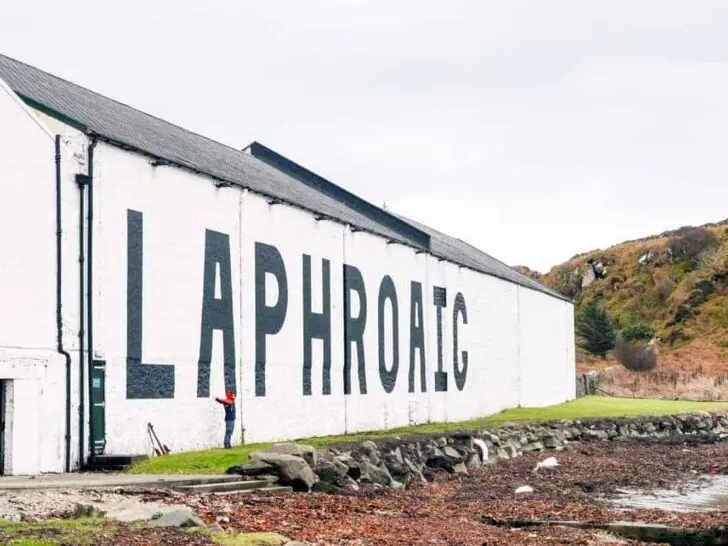
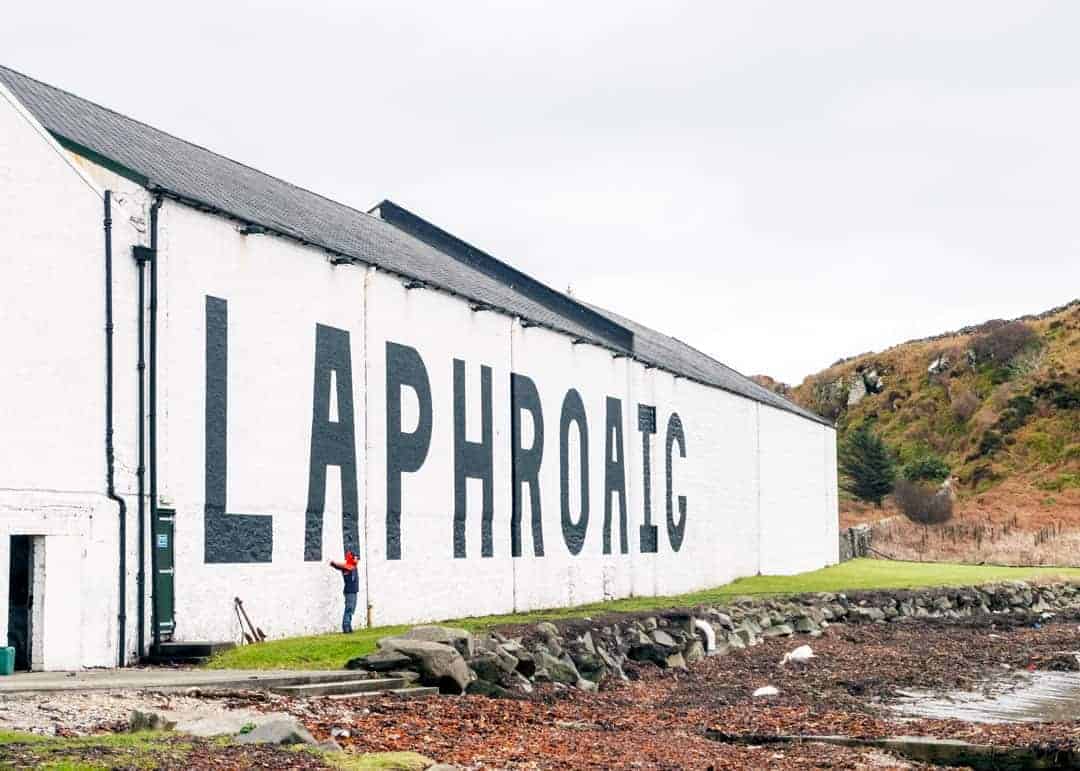
Laphroaig
The most famous peated whisky in the world, on the south coast near Port Ellen. Laphroaig (pronounced “la-FROYG”, roughly) is heavily peated at 40 PPM and has a distinctive medicinal, seaweed-and-iodine character that you either love or hate. It was famously the only spirit not banned in America during Prohibition, classified as medicinal.
The visitor centre is excellent, with one of the most active “Friends of Laphroaig” schemes in whisky. You get a free dram on every visit. Tours range from the standard hour-long experience (£14) up to the Water to Whisky experience where you walk out onto the peat bog they cut. The bar overlooks the bay where casks were first shipped to America.
Try: Laphroaig 10 for the classic peat punch. Laphroaig Quarter Cask for a sweeter, fruitier introduction. Laphroaig 16 and Laphroaig 25 for the deeper experiences.
Visit: laphroaig.com
Lagavulin
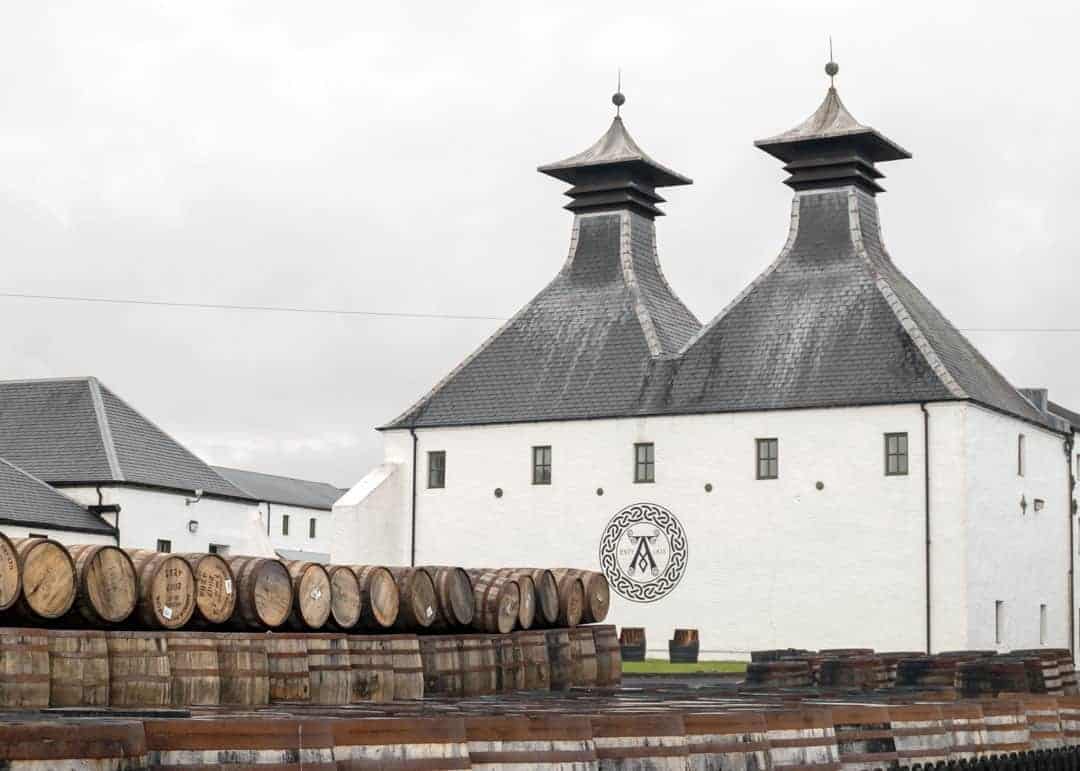
A short walk along the coast from Laphroaig is Lagavulin, sitting on its own perfect curved bay with the distillery name painted across its whitewashed walls. The classic peated Islay whisky. Intensely smoky, rich, sherry-influenced, with a complexity that has earned it a cult following. Lagavulin 16 is widely regarded as one of the great single malts of the world.
Tours start at around £15. The Warehouse Demonstration tour is worth booking. You get to taste straight from the cask in their famous dunnage warehouses.
Try: Lagavulin 16 is the classic, complex, sherry-and-peat. The Distillers Edition (PX-finished) is exceptional. The 12-year-old cask strength annual release is for committed peat lovers.
Visit: malts.com/lagavulin
Ardbeg
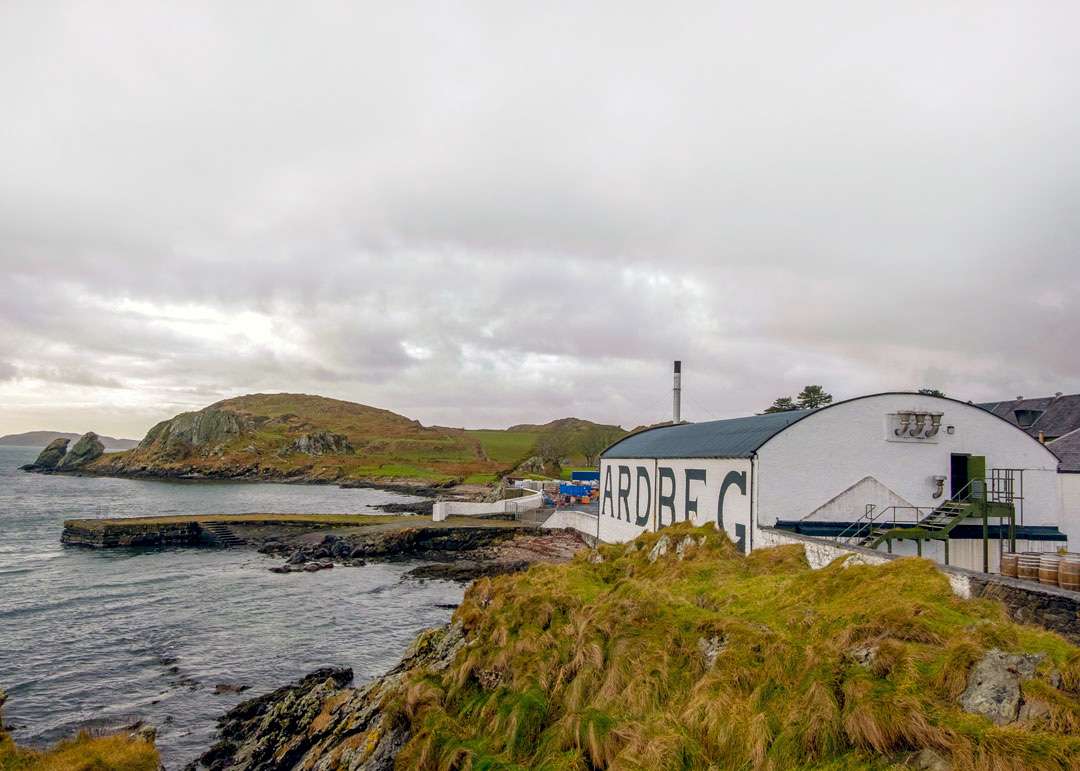
The third of the Kildalton trio, ten minutes further round the coast. Ardbeg is intensely peated (55 PPM, even higher than Laphroaig) but with a sweet, smoky, complex profile that has built a near-fanatical fanbase. The distillery was rescued from closure by Glenmorangie in 1997 and now produces some of the most coveted modern peated whiskies on the market.
There’s a brilliant cafe on site (the Old Kiln Cafe). Book a lunch around your tour. The standard tour is £15. The Ardbeg Bog Off Walk includes a hike over the hills with a picnic and drams (£65, summer only).
Try: Ardbeg 10 is the entry point, complex and smoky. Ardbeg Uigeadail is sherry-influenced and stunning. Ardbeg Corryvreckan is for serious peat lovers. Ardbeg An Oa is the more accessible blend.
Visit: ardbeg.com
Port Ellen
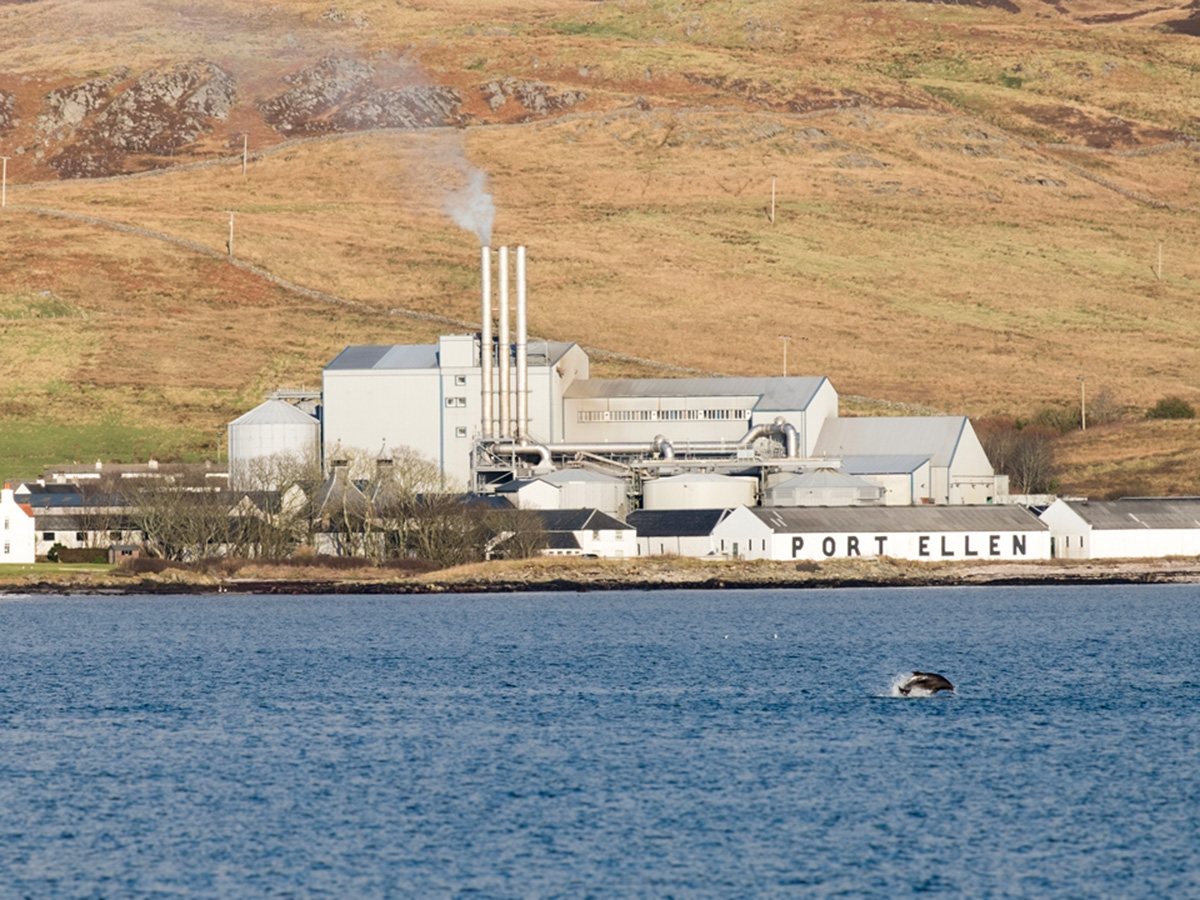
After 41 years of silence, Port Ellen restarted production in 2024 under Diageo. The original distillery, opened in 1825, closed in 1983 and its bottlings became legendary among whisky collectors. Old Port Ellen bottles routinely sell for thousands of pounds. The new distillery is on the same site and has been built to honour the original methods, with the famous warehouses and Port Ellen Maltings continuing to supply many of the island’s other distilleries.
A visitor centre is in development. For now, the only way to taste the new Port Ellen is by very rare release.
Visit: malts.com/port-ellen
Bowmore
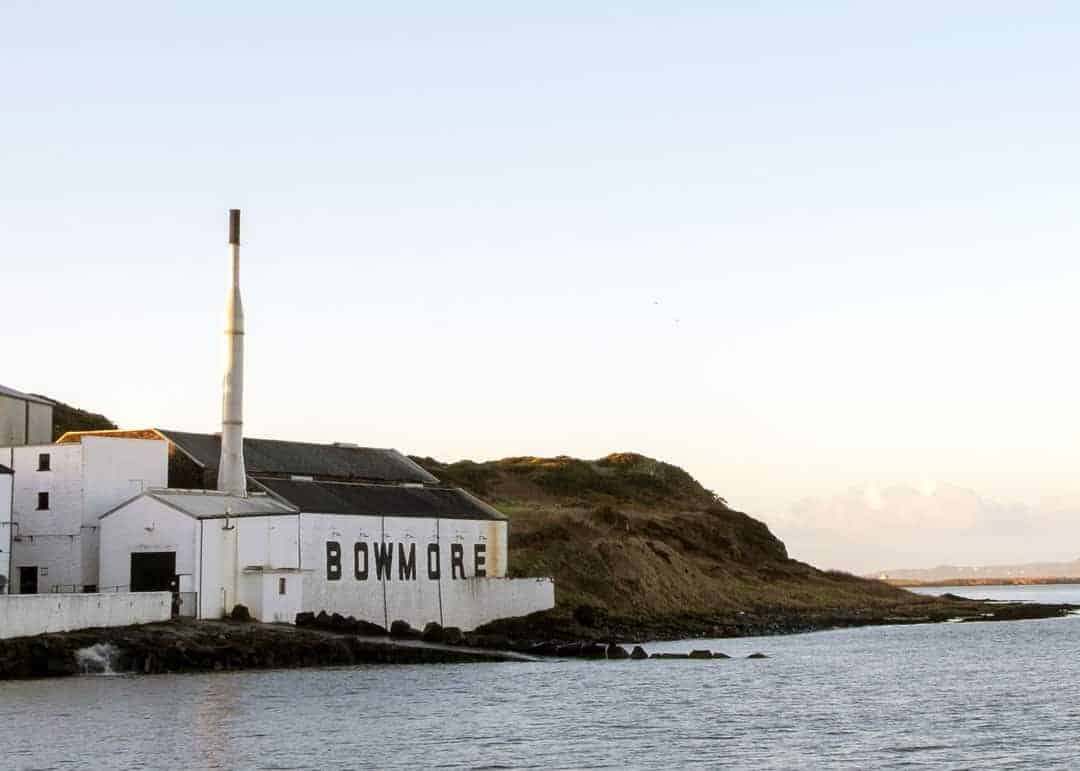
Heading west to the island capital, Bowmore is Islay’s oldest licensed distillery (founded 1779) and sits right on Loch Indaal in the centre of town. Walking distance from everywhere, including the Round Church, the harbour and several excellent places to eat. The lightest peated of the south-coast giants (around 25 PPM), Bowmore produces a more balanced, sweet-and-smoky style.
Tours include access to the No. 1 Vaults, Bowmore’s old stone warehouse below sea level, where some of the oldest stocks on the island are maturing. Bowmore also has one of Islay’s three remaining floor maltings.
Try: Bowmore 12 is sweet, smoky and accessible. A brilliant first peated Islay. Bowmore 15 is finished in Oloroso sherry casks. Bowmore 18 is the deeper, more sherried expression. The 23-year-old Port Cask from 1989 is exceptional if you can find it.
Visit: bowmore.com
Bruichladdich
Across Loch Indaal at Port Charlotte, Bruichladdich (pronounced “brook-LADDIE”) reopened in 2001 after 7 years of silence. Now one of Scotland’s most innovative distilleries, with three brands under one roof: the unpeated Bruichladdich (the Classic Laddie), the heavily-peated Port Charlotte, and the world’s most heavily peated whisky, Octomore. Bruichladdich is also a B Corp and one of Scotland’s most progressive distilleries on sustainability, they also make the brilliant Botanist Gin.
Despite the modern attitude, the distillery itself is a working museum. Victorian machinery, not a single computer in the production process, and the cooperage and bottling all on-site. Tours start at £15.
Try: Bruichladdich Classic Laddie is the easy-drinking unpeated entry. Port Charlotte 10 is the more accessible peated brand. The Octomore series, peated at 200-300+ PPM, is the most extreme whisky in the world.
Visit: bruichladdich.com
Kilchoman
Islay’s smallest distillery and the only one not on the coast, tucked away on a farm at Rockside near Machir Bay. Kilchoman is also the only Islay distillery making 100% Single Farm Single Malt. They grow the barley themselves, malt it on their own floor, distil it, mature it and bottle it all on-site. Founded in 2005, it’s the youngest of the traditional Islay distilleries (though Ardnahoe is newer still).
The Whisky and Wilderness tour takes you out into the fields around the distillery. The Distillery Tour is £15 with a tasting at the end.
Try: Kilchoman Machir Bay is the flagship. Peated, sherry-finished, brilliantly balanced. Kilchoman 100% Islay is the field-to-bottle expression and the world’s only 100% Single Farm Single Malt.
Visit: kilchomandistillery.com
Caol Ila
Heading back across the island to the north coast at Port Askaig, Caol Ila (pronounced “cull-EE-la”, meaning “Sound of Islay” in Gaelic) is the largest distillery on the island, producing up to 3 million litres a year. Most of which goes into blends like Johnnie Walker. The setting is exceptional, looking out across the Sound of Islay to the Paps of Jura.
The Caol Ila house style is lighter, medium-peated (30-35 PPM), with a citrussy edge. Their Cask Strength bottlings are particularly excellent.
Try: Caol Ila 12 is the classic. Sweet, lemony, lightly peated. Caol Ila Cask Strength is one of the best-value cask strength Islay whiskies around. The 18-year-old is more sherry-influenced.
Visit: malts.com/caol-ila
Bunnahabhain
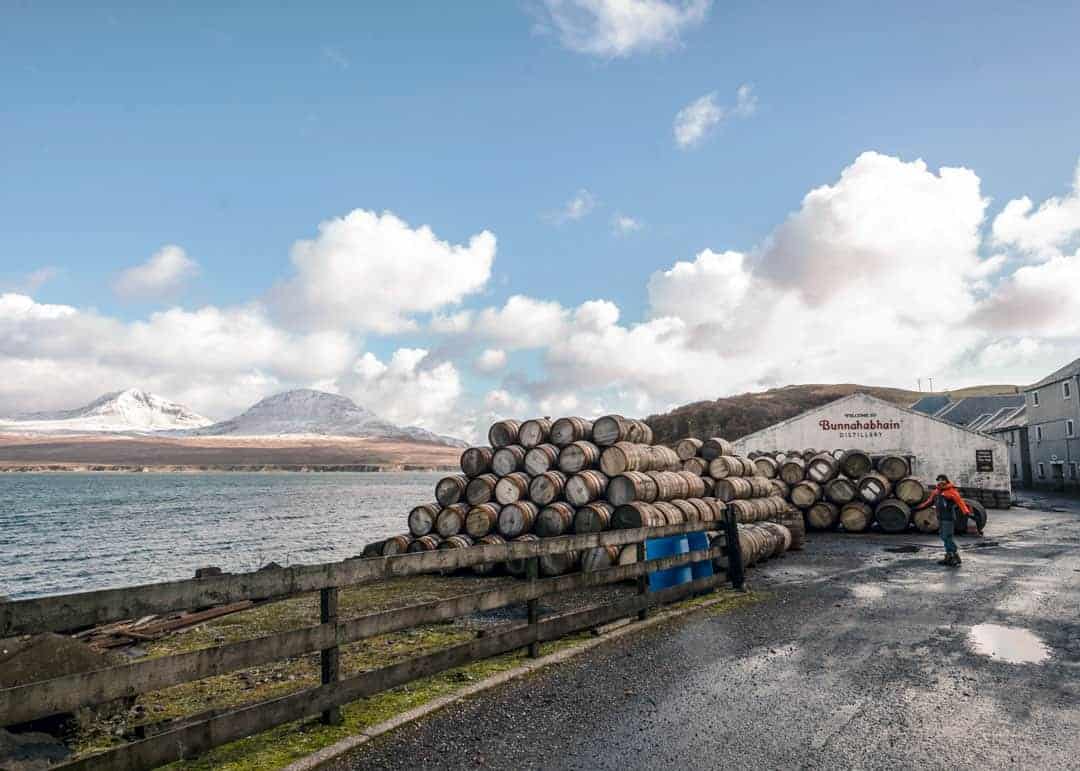
Next door to Caol Ila but tucked even further round the coast, Bunnahabhain (pronounced “BOON-a-haven”) is the most remote Islay distillery, accessed via a long single-track road from Port Askaig. The reward is one of Scotland’s most beautiful distillery settings, looking across the Sound of Islay to the Paps of Jura.
Bunnahabhain is unusual on Islay because it makes mostly unpeated whisky. Soft, salty, sherry-influenced. They do make a peated expression (Toiteach), but their reputation is built on the unpeated single malts. The new visitor centre opened in 2024 and is the best on the island. The Warehouse 9 tour is the standout: cask-strength tastings straight from the barrel.
Try: Bunnahabhain 12 is the entry point. Honey, sea salt, soft sherry. Bunnahabhain 18 is my favourite Islay whisky, full stop. Toiteach A Dhà is the peated expression.
Visit: bunnahabhain.com
Ardnahoe
The newest working distillery on Islay, just along the coast from Bunnahabhain. Ardnahoe opened in 2018 and released its first whisky in 2024: a peated single malt that has had an excellent reception from the whisky press. Owned by independent bottler Hunter Laing, the distillery is small, friendly, and has the best view of any Islay distillery (looking straight across the Sound of Islay to Jura).
Tours include cask tastings with the distillery manager. There’s a brilliant cafe on site.
Try: Ardnahoe’s first releases (Inaugural Release and Hill Trekker editions) are highly sought-after and disappear fast. Buy direct from the distillery if you visit.
Visit: ardnahoedistillery.com
Jura Distillery
I can’t not mention one of my favourite whiskies! From Islay catch the ferry from Port Askaig to Feolin on Jura and explore this lovely remote island home to 180 people, 5000 deer and one whisky distillery – and the impressive Paps of Jura.
The Jura Distillery opened in 1963 and is a lovely small distillery. The Jura 10 is always on my whisky shelf!
The peat story
If you take only one thing away from this guide, it should be how Islay peat works.
When barley is malted (sprouted, then dried), it can be dried over a peat fire instead of clean hot air. The smoke from the burning peat releases phenolic compounds, the same family of compounds you find in Lapsang Souchong tea or smoked salmon. The damp barley absorbs these phenols, and they survive the entire distillation and ageing process to reach you in the glass.
The intensity is measured in PPM (parts per million of phenols in the malted barley before distillation):
- Unpeated: 0-5 PPM (Bunnahabhain)
- Lightly peated: 15-25 PPM (Bowmore)
- Medium peated: 30-40 PPM (Caol Ila, Kilchoman, Laphroaig)
- Heavily peated: 50-60 PPM (Ardbeg)
- Extremely peated: 100+ PPM (Bruichladdich’s Port Charlotte)
- Most peated whisky in the world: Bruichladdich’s Octomore range, 200-300+ PPM
PPM measures the malt, not the final whisky. The actual smokiness you taste is influenced by how much of the spirit run is collected, the cask, the age and the bottling strength.
Where the peat comes from: Most Islay barley is malted at the central Port Ellen Maltings, which supplies most of the island’s distilleries with their peated malt. Three distilleries (Laphroaig, Bowmore and Kilchoman) have their own working floor maltings (small in scale but you can visit and see the process).
How to plan an Islay distillery tour
The good news is that everything’s close together. The bad news is that Scottish drink-drive laws are effectively zero-alcohol, and these are working distilleries serving full-strength drams. Three options:
1. Hire a driver
Most Islay taxi firms offer dedicated distillery tour packages. Islay Taxis (+44 (0)1496 850170) runs popular north-coast and south-coast tours from around £180 per person including transport, tours, tastings and lunch. Bowmore Taxis does bespoke routes (+44 (0)1496 810449).
2. Walk the Three Distilleries Path
The Kildalton trio (Laphroaig, Lagavulin, Ardbeg) are connected by the Three Distilleries Path. 3 miles on a dedicated walking and cycling track. You can walk it in a morning, do all three tours, and bus back to Port Ellen.
3. Designated driver + take-home drams
If you’re driving, every distillery offers the driver a “driver’s pack” with small sample bottles of all the drams from the tour, taken home for later. This works well if one of your party is happy to be on water for the day.
Multi-day organised tours
If you’d rather have everything organised, Rabbie’s runs a 4-day Islay tour from Edinburgh. Coach, accommodation and distillery tours all included.
Fèis Ìle: the Islay whisky festival
The Islay Festival of Malt and Music (Fèis Ìle) takes place in the last week of May every year. Each distillery has its own open day with special bottlings, food, music and tastings. It’s loud, busy, brilliantly Scottish, and you must book accommodation a year in advance. Bottlings at the festival are often released the same day and can be reselling for many multiples of their retail price within a week.
If you can’t get to the actual island, the Spirit of Islay events run in Edinburgh, Glasgow and London throughout the year. Smaller, focused tastings with distillery representatives.
Where to eat on Islay
The food scene has quietly improved over the last decade:
Where to eat on Islay
The Islay food scene has shifted notably in 2026, with major new openings adding genuine ambition to a previously homely scene.
- Signature Restaurant at Ardbeg House, Port Ellen. Ardbeg House opened in September 2025 after a multi-million pound refurbishment by designer Russell Sage. The restaurant showcases Islay meat, seafood and vegetables (hand-dived scallops, beef and lamb, peat-smoked fish from the in-house smoker) with whisky-paired dishes. Open Wednesday to Sunday from 6pm. Named Times Hotel of the Year 2026. ardbeghouse.com.
- The Machrie Restaurant, Port Ellen: Another Place, The Machrie is the boutique hotel and golf links on the south coast, with a serious restaurant on a terrace overlooking the dunes. Freshly landed seafood, local game, carefully considered cooking. Open to non-residents.
- Peatzeria, Bowmore: Italian food on Loch Indaal that could grace the top ten of any major city. Excellent pizza. peatzeria.com.
- The Harbour Inn at Bowmore Distillery: owned by Bowmore, a beautifully appointed restaurant overlooking the harbour with seven bedrooms above. The Harbour Inn is one of Islay’s classier dining experiences, with strong seafood and local lamb.
- The Bowmore Hotel: family-run pub food, huge whisky selection, warm welcome from staff and locals alike. bowmorehotel.co.uk.
- The Lochside Hotel, Bowmore: stylish bar, classic Scottish dishes, conservatory perfect for watching dolphins in the bay. lochsidehotel.co.uk.
- The Port Charlotte Hotel: chowder, real ales, live traditional music on Wednesday and Sunday evenings through the summer. 4-star, 10 rooms. portcharlottehotel.co.uk.
- The Lochindaal Hotel, Port Charlotte: Port Charlotte’s traditional family-run hotel and bar, The Lochindaal Hotel has a public bar, lounge bar and excellent island welcome.
- The Port Askaig Hotel: seafood from scallop, crab and lobster boats that dock in Port Askaig’s bay. Look out for the owner’s wee white dugs which greet each ferry with great enthusiasm. portaskaig.co.uk.
- An Tigh Seinnse, Portnahaven: seafood platters (order ahead), real fire, full of character. Possibly Islay’s most atmospheric pub.
- No. 1 Charlotte Street, Port Ellen: a small B&B with a public bar, pool table and an extensive whisky lounge with an open fire. Good for a casual whisky-and-pub-grub evening. no1charlottestreet.com
- Islay House, Bridgend: the Georgian mansion at the head of Loch Indaal is reopening as a full-service luxury hotel and restaurant in spring 2026, including a new whisky bar, all-day dining and a restored Victorian kitchen. Worth watching for opening updates.
Where to stay on Islay
Islay has just over 3,000 residents and the main settlements have a village feel. Booking ahead is essential, especially for Fèis Ìle (a year ahead) and summer in general.
The standout new openings
- Ardbeg House, Port Ellen: 12 luxury bedrooms above the new Ardbeg-owned restaurant and Islay Bar, opened September 2025. Named Times Hotel of the Year 2026. Daily guest-only Ardbeg distillery tours included, plus exclusive whiskies only available at the hotel. From £230/night.
- Another Place, The Machrie, Port Ellen: a 43-room contemporary hotel with championship golf links, terrace restaurant, screening room, hot tub garden and outdoor sauna.
- Islay House, Bridgend: the 1677 Georgian mansion at the head of Loch Indaal is reopening as a full-service luxury hotel in spring 2026 after major refurbishment. Operating on a restricted B&B basis until full reopening.
Best by town
- Bowmore: best base for first-timers, central, walkable. Bowmore accommodation.
- Port Ellen: closest to the south-coast Kildalton distilleries plus Ardbeg House and The Machrie. Port Ellen accommodation.
- Port Charlotte: quietest, prettiest, best for Bruichladdich. Port Charlotte accommodation.
- All Islay accommodation: Booking.com Islay.
How to get to Islay
Ferry: Caledonian MacBrayne (CalMac) sails from Kennacraig on the Kintyre peninsula to either Port Ellen or Port Askaig. The crossing takes about 2 hours and costs around £80-100 for a car with two passengers return. Book early. Islay ferries get busy in summer.
Flight: Loganair flies from Glasgow to Islay daily in around 40 minutes. Brilliant if you don’t want to drive.
From Jura: If you’re already on Islay the small CalMac ferry from Feolin to Port Askaig runs frequently, 5 minutes across the Sound of Islay.
For more on visiting the island itself, see my full guide to the Isle of Islay.
Islay whisky: frequently asked questions
What is Islay whisky?
Islay whisky is single malt Scotch whisky made on the Isle of Islay, off Scotland’s west coast. It’s famous for its smoky, peated character. When the barley is malted, it’s dried over a peat fire, and the smoke is absorbed by the grain. Some Islay distilleries make heavily peated whisky (Laphroaig, Ardbeg, Lagavulin), some make lightly peated (Bowmore), and one makes mostly unpeated whisky (Bunnahabhain).
How many distilleries are on Islay?
There are currently 10 working distilleries on Islay: Laphroaig, Lagavulin, Ardbeg, Port Ellen (restarted 2024), Bowmore, Bruichladdich, Kilchoman, Caol Ila, Bunnahabhain and Ardnahoe. Three more are in development.
What's the best Islay whisky for a beginner?
Bowmore 12 is the best peated Islay for beginners, moderately peated with a sweet, balanced character. If you’d rather start unpeated, Bunnahabhain 12 is soft and salty. If you want to taste the classic Islay peat punch but at an approachable price, Laphroaig Quarter Cask is a friendlier introduction than the more medicinal Laphroaig 10.
What's the most peated whisky in the world?
Bruichladdich’s Octomore range is the most heavily peated whisky in the world, with releases regularly hitting 200-300+ PPM. The peatiest Octomore ever released (Octomore 08.3) was 309 PPM. For context, Laphroaig is 40 PPM and Ardbeg is 55 PPM.
How do you pronounce Islay?
EYE-la. Not EYE-lay. The Gaelic name is Banrìgh nan Eilean (Queen of the Hebrides).
When is the best time to visit Islay for whisky?
Late May for Fèis Ìle, the island’s whisky festival, but book accommodation a year ahead. Otherwise May or September give you good weather, long days and accessible distilleries. Winter visits are atmospheric but ferry disruption is more likely.
Can you visit all 10 Islay distilleries in one trip?
Yes, but not in a weekend. Three days minimum if you want to tour each distillery. The geography splits naturally: a south coast day (Laphroaig, Lagavulin, Ardbeg, Port Ellen), a central day (Bowmore, Bruichladdich, Kilchoman) and a north day (Caol Ila, Bunnahabhain, Ardnahoe). Don’t try to tour more than 2-3 distilleries in a single day, your palate will give up.
What's the best Islay distillery to visit?
For first-time visitors, Bowmore: central, walkable from the village, good tour structure. For peat lovers, Laphroaig or Ardbeg. For a deeper experience, Bunnahabhain (the Warehouse 9 tour) or Bruichladdich (their Adventure Tour). For something different, Kilchoman (the only farm distillery) or Ardnahoe (the newest).
Slàinte mhath!
Love from Scotland x

Leave a Reply