

Whisky may be Scotland’s most famous export, but how it’s made sustainable is fast becoming one of its most important stories.
How your whisky is produced matters as much as how it tastes. From ensuring barley is locally grown to reducing the environmental impact distilling has on Scotland’s landscapes and communities, the industry has shifted significantly in the last few years. Some distilleries are now setting the global standard for sustainable spirits production.
So if you’re planning a Scottish whisky trip or want to drink your drams responsibly, here’s where to go and what to look for.
What makes a whisky distillery sustainable?
Before you pour a dram, it helps to know what “sustainable distilling” actually means in practice. There are a few ways to tell who’s actually doing the work:
- No greenwashing. Vague, flashy claims without evidence are a red flag. Real sustainability is specific, targeted and measurable. Look for distilleries that publish their carbon emissions and reduction targets, not just adjectives.
- Local, regenerative ingredients. Whisky made with local or organic barley has a smaller footprint and supports local farmers. The shortest supply chains (field-to-bottle) are the best indicator.
- Community benefit. The best distilleries invest locally through jobs, conservation, and biodiversity projects, not just marketing campaigns.
- Use of sustainable resources. Renewable energy, circular waste systems (where draff and pot ale become something useful), and low-impact bottling.
- Trusted third-party certifications. Labels like B Corp, Soil Association organic status, and Green Tourism awards require external proof, not marketing gloss.
Read on for Scotland’s most sustainable and B Corp certified distilleries.
Scotland’s most sustainable whisky distilleries
Nc’nean Distillery, Morvern
Nc’nean is the UK’s first verified organic and net-zero whisky distillery, and one of Scotland’s most exciting drinks producers. B Corp certified, fully powered by renewables, and committed to circular waste from the start.
Take a tour of Nc’nean Distillery to find out more about their B Corp certification, organic ethos and low-impact distilling, and to taste this brilliant whisky.
Getting to Nc’nean is half the fun. The distillery is hidden away on the remote Morvern peninsula, accessible only by a long stretch of single-track road and the tiny Corran Ferry.
→ Find out more about visiting Ardnamurchan and the West Highland Peninsulas. → Stay at Ardtornish Estate, which offers self-catering cottages on a working estate that emphasises restoration, sustainable energy and biodiversity.
Lochlea Distillery, Ayrshire
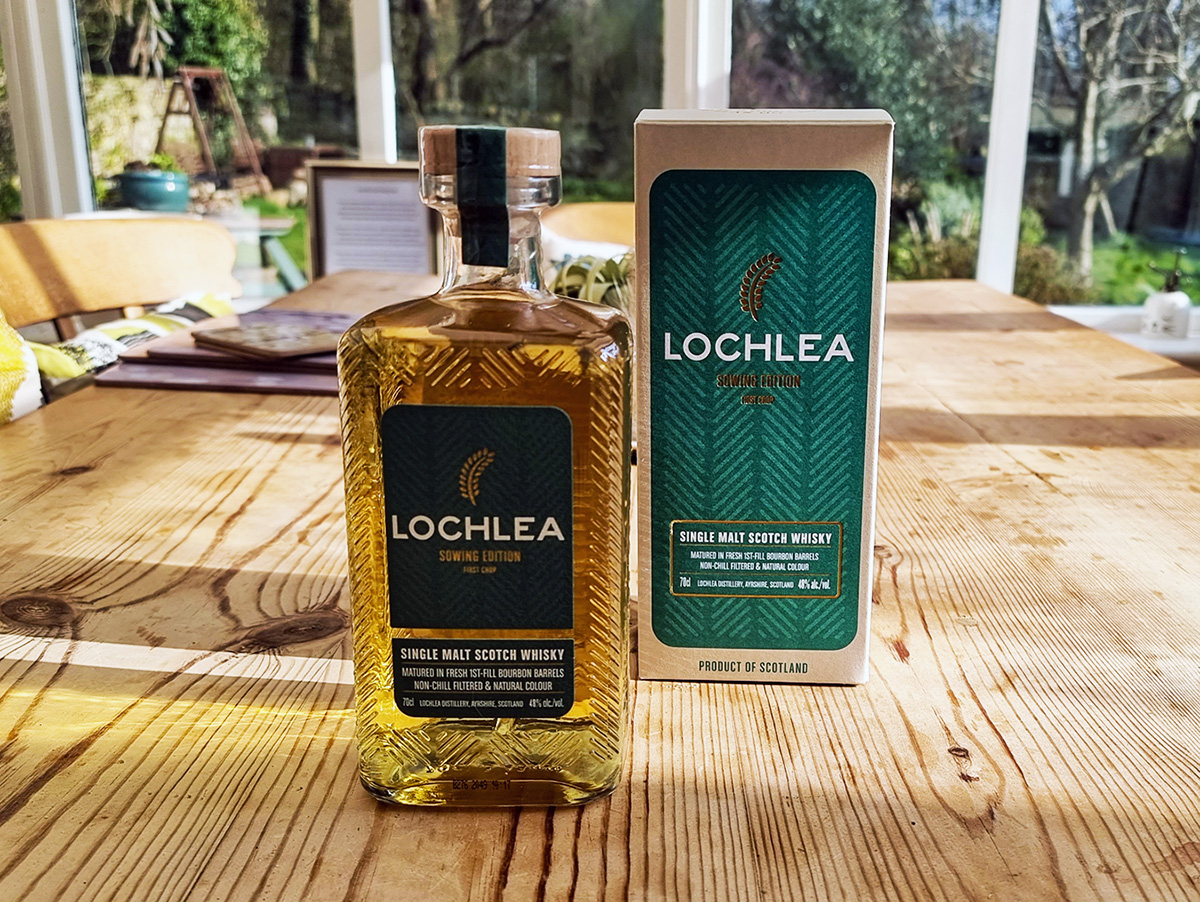
Making its home in the rolling farmland of Ayrshire, Lochlea is a small, independent producer with sustainability built into every stage of its whisky-making.
Lochlea grows all its own barley on-site, but what sets it apart is how fully it embraces a closed-loop, regenerative approach. Straw from the barley fields is reused as bedding for cattle, draff (waste from the distilling process) is provided to local farmers for cattle feed, and carefully planted cover crops protect and enrich the soil of the barley fields through winter. The Lochlea farm sits on the site of Robert Burns’ family farm, adding a brilliant cultural layer.
→ Lochlea doesn’t offer tours, so buy yourself a bottle from one of their stockists. It’s great.
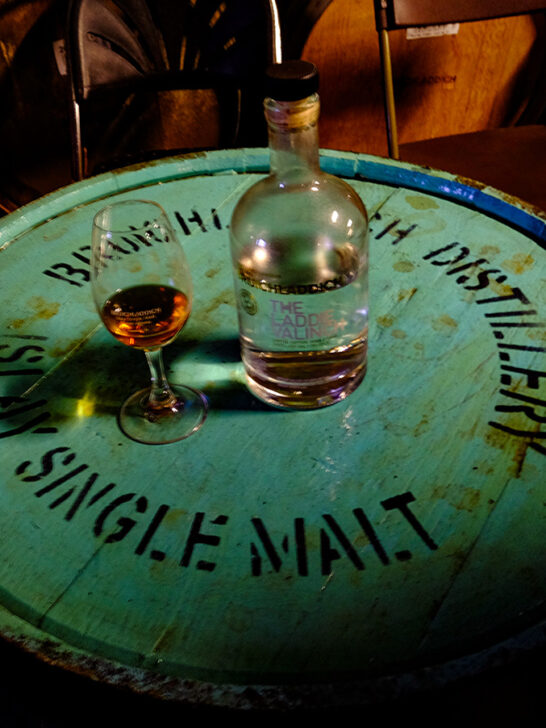
Bruichladdich Distillery, Islay
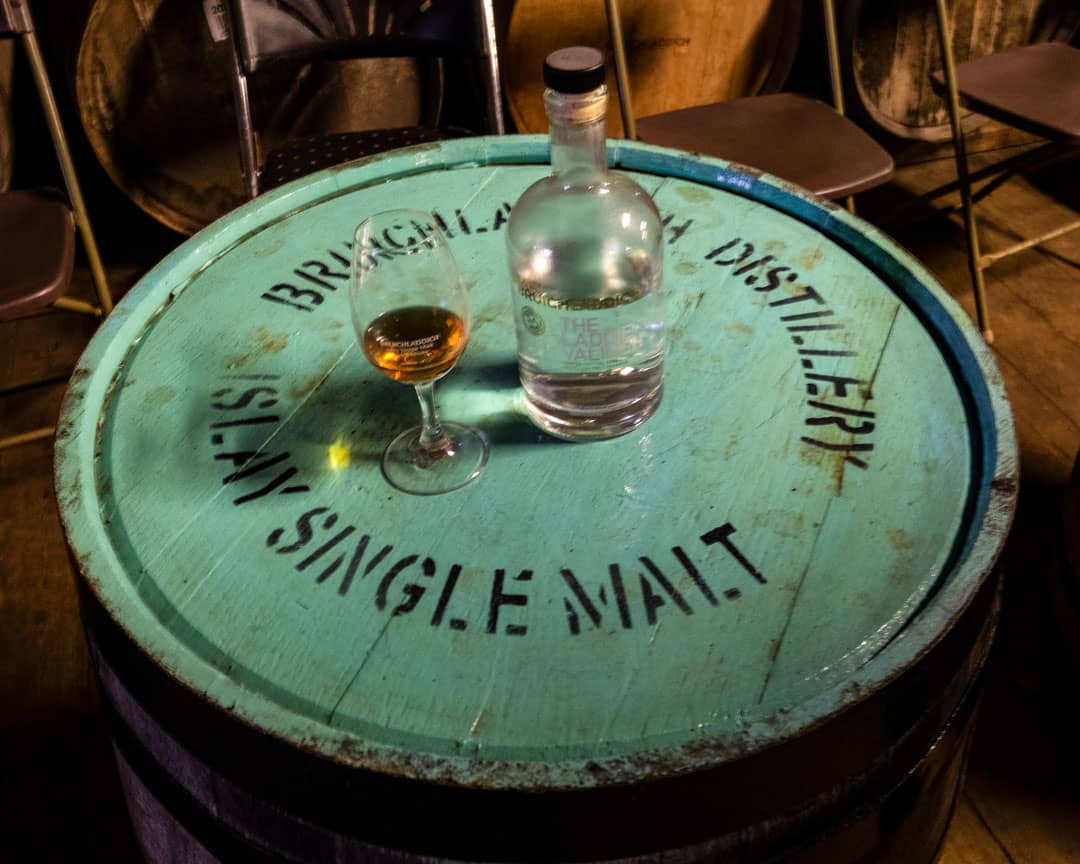
The first whisky distillery in the world to become a B Corp, Bruichladdich has long been blazing a trail with biodiversity-driven barley trials, local supply chains and strong community investment on Islay.
Bruichladdich might be one of Islay’s most modern and innovative distillers, but the distillery itself is a working museum. The machinery is Victorian and not a single computer is used in the production process. The distillery tour is warm, geek-friendly and very Islay.
→ Find out more about visiting the Isle of Islay and my complete guide to Islay whisky. → Stay at Coillabus Eco Lodges on the Oa peninsula. Turf-roofed, architect-designed luxury self-catering lodges, eco-friendly and set within dramatic Islay scenery.
Glengoyne Distillery, Stirlingshire
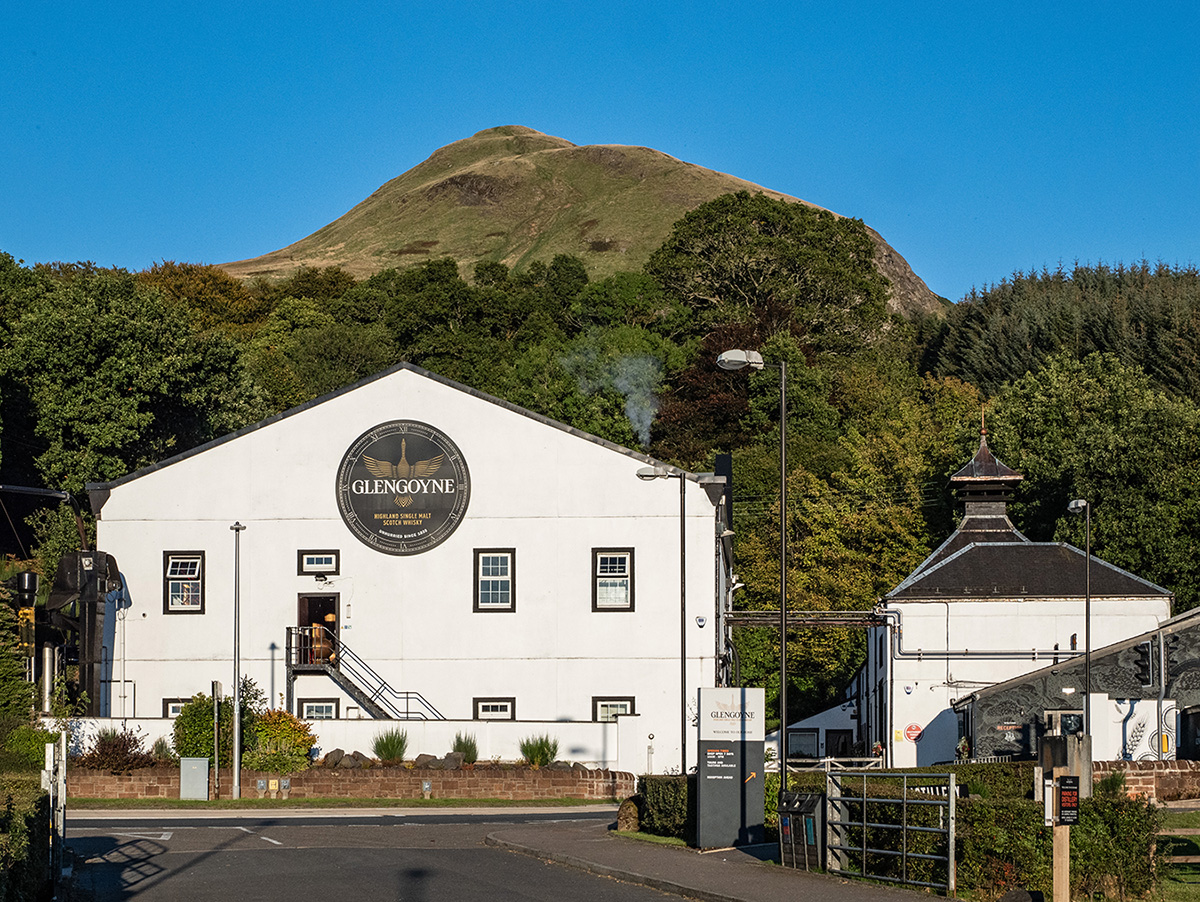
Often described as Scotland’s “slowest distillers,” Glengoyne is also one of its greenest. A Highland distillery with a deep commitment to low-impact production, Glengoyne has invested heavily in sustainability: a zero-waste-to-landfill policy and an innovative wetlands system which naturally treats distillery wastewater before it returns to the local environment.
Glengoyne proves that sustainability doesn’t need to be loud. It can be thoughtful, steady and deeply rooted in what makes Scotland’s distilleries special. The distillery tour is one of the most enjoyable in central Scotland, friendly and informative, with plenty for both whisky newcomers and enthusiasts.
→ Find out more about visiting Loch Lomond and the Trossachs.
Glenmorangie, Easter Ross
A giant in the world of Scottish whisky, Glenmorangie is also a surprising sustainability leader, using its global influence to drive environmental projects that reach far beyond the distillery gates.
Their most ambitious initiative is the DEEP Programme, an award-winning partnership with scientists and conservation groups to restore native oysters to the Dornoch Firth. Once abundant, oysters were wiped out centuries ago. Glenmorangie’s work is helping rebuild this vital ecosystem, improving water quality and helping feed the oysters through distillery by-products. The project has now reintroduced over 800 breeding oysters to the Firth.
→ Visiting Glenmorangie is a classic Highland experience: polished, welcoming and set among the rolling fields of Easter Ross. → Find out more about exploring Easter Ross and planning a North Coast 500 adventure.
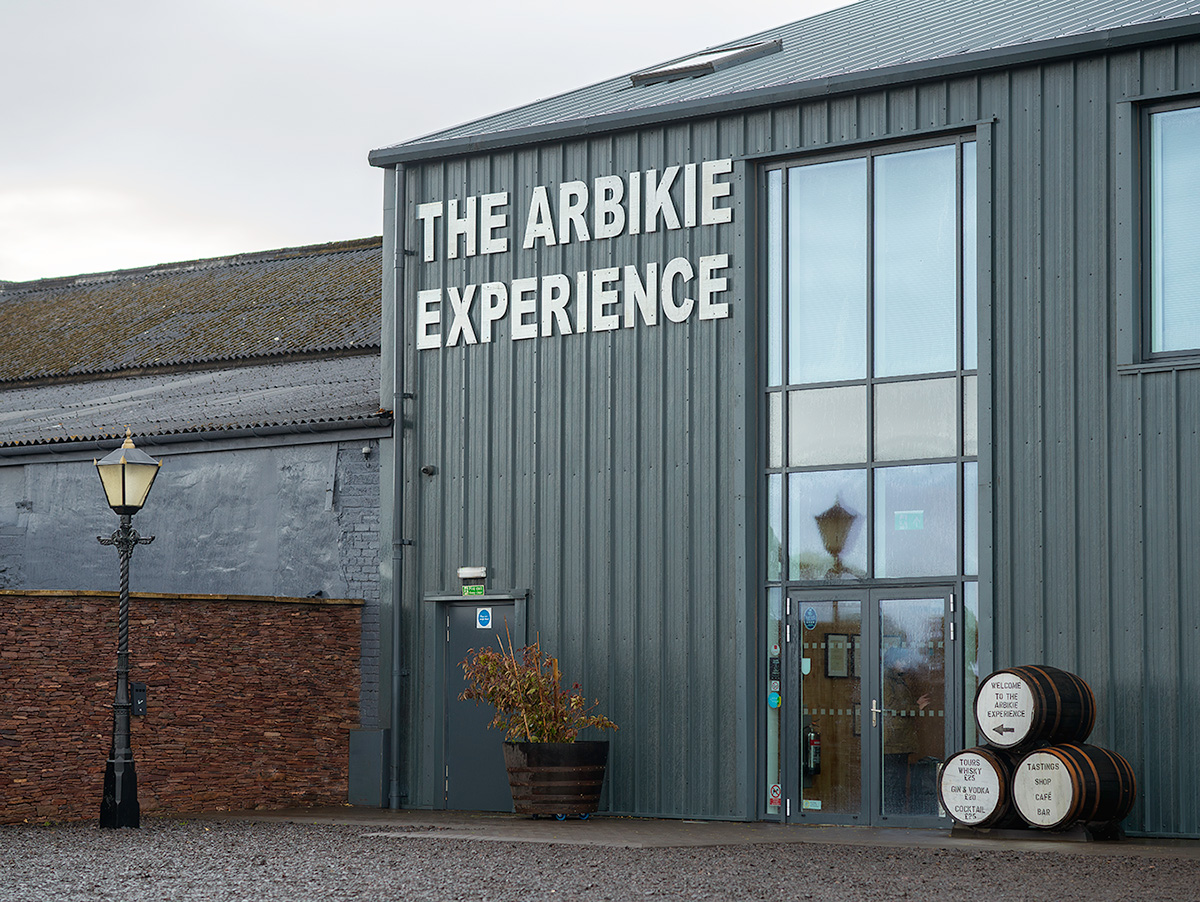
Arbikie Highland Estate, Angus
Set on a windswept stretch of the Angus coast, Arbikie is one of Scotland’s most ground-up sustainable spirits producers: a true field-to-bottle distillery. Arbikie grows its own barley, rye and potatoes on the family farm, allowing complete traceability and one of the lowest-mileage supply chains in the industry.
Arbikie’s commitment to regenerative farming, soil health and biodiversity means the land isn’t just used, it’s actively improved year after year. It’s sustainability rooted in real agricultural practice, not packaging tweaks or marketing language.
A visit to Arbikie feels more like stepping onto a working farm than a typical distillery tour. The setting is beautiful, with views over Lunan Bay and the rolling Angus fields.
→ Find out more about visiting Angus. → Stay at ÖÖD by Arbikie. On-site at the distillery are the luxurious ÖÖD glass-walled houses with hot tubs or saunas, plus scenic farm-and-sea views.
Kilchoman, Islay
Out on the rugged western edge of Islay, Kilchoman stands apart as one of Scotland’s few true farm distilleries: a place where whisky-making still begins in the fields surrounding the stillhouse. Founded in 2005, it has quickly become a modern champion of traditional, land-first whisky production.
Kilchoman grows, harvests and malts a significant portion of its own barley onsite, creating an exceptionally short supply chain and a whisky that reflects its island origins. The distillery’s connection to the land extends beyond farming. By working closely with neighbouring crofts and maintaining careful stewardship of the surrounding machair and coastline, Kilchoman helps protect one of Scotland’s most fragile environments.
→ Visiting Kilchoman offers a glimpse of whisky as it once was: intimate, hands-on and full of character. A perfect addition to any Islay whisky tour. → Find out more about visiting the Isle of Islay and my Islay whisky guide.
Ardgowan Distillery, Inverclyde (newest)
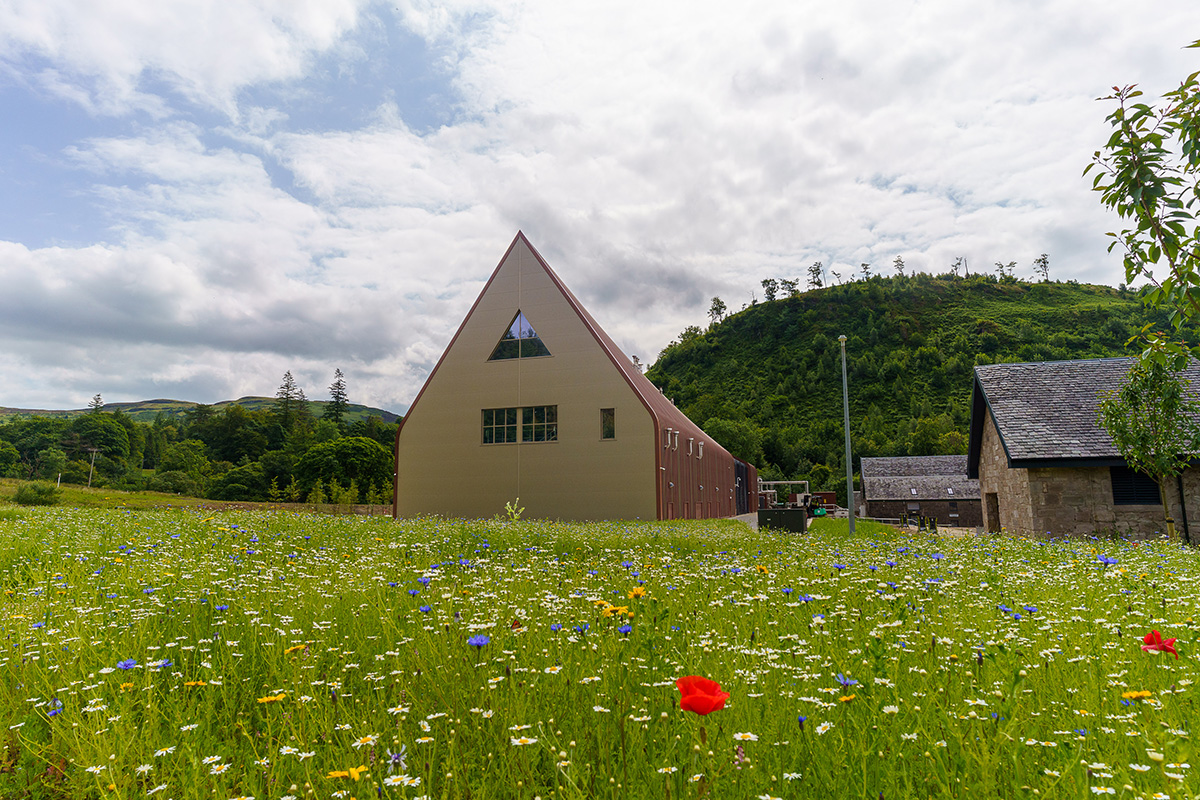
The newest entry on this list, Ardgowan Distillery opened in June 2025 with sustainability designed in from the ground up. The striking Nordic-inspired long-hall building has been built with low embodied carbon principles, and the operation has committed to renewable energy from the start.
Ardgowan has also developed a new custom cask design (the first in a century) called the Infinity Cask. Made from European oak and built for long maturation (18 years minimum), it represents a serious investment in wood reuse and cask longevity.
→ Book a tour at Ardgowan Distillery. → Read more about Ardgowan in my guide to the new Scottish distilleries to visit in 2026.
Are any Scottish distilleries carbon-neutral?
Yes. Nc’nean was the first UK whisky distillery to achieve verified net-zero carbon emissions, with carbon offsets and renewable energy from the start of production. Several major distilleries are working toward net-zero through renewables, peatland restoration and circular systems. The Macallan has committed to net-zero across all operations by 2045.
Which distilleries are B Corp certified in Scotland?
Two Scottish whisky distilleries hold B Corp certification: Bruichladdich (the first whisky distillery in the world to certify) and Nc’nean. Both have demonstrated independently verified standards on social and environmental performance, transparency and accountability.
When is the best time for a sustainable Scottish whisky trip?
Spring and autumn are ideal. Quieter, with less strain on remote island and Highland infrastructure. Winter can be atmospheric but requires careful travel planning. Summer offers long days and open visitor centres, but it’s the busiest season for fragile communities like Islay, where visitor numbers can stretch local resources thin.
Which Scottish distilleries grow their own barley?
Three Scottish whisky distilleries grow significant or all of their own barley on site, making them excellent choices for low-mileage, field-to-bottle whisky: Kilchoman (on Islay), Lochlea (Ayrshire) and Arbikie (Angus).
Do sustainable whiskies taste different?
Some field-to-bottle whiskies offer subtle variations linked to specific local barley varieties or growing conditions. You may not notice these differences in a single dram, but knowing the whisky was produced with care for the land, water and people behind it adds a different layer of appreciation. The terroir conversation in whisky is still relatively new, but distilleries like Bruichladdich and Lochlea are doing real work on it.
How can I tell if a whisky distillery is truly sustainable or just greenwashing?
Look for specific, measurable commitments rather than vague language. Third-party certifications (B Corp, Soil Association Organic, Green Tourism Gold) require external verification. Published carbon emissions data and reduction targets are also a good sign. Vague phrases like “eco-friendly” or “sustainable” without evidence are a red flag.
Plan your sustainable Scottish whisky adventure
Scotland has a dram for every kind of whisky drinker. Slow down, explore responsibly and choose distilleries that protect the landscapes we all love.
Love from Scotland x

Leave a Reply