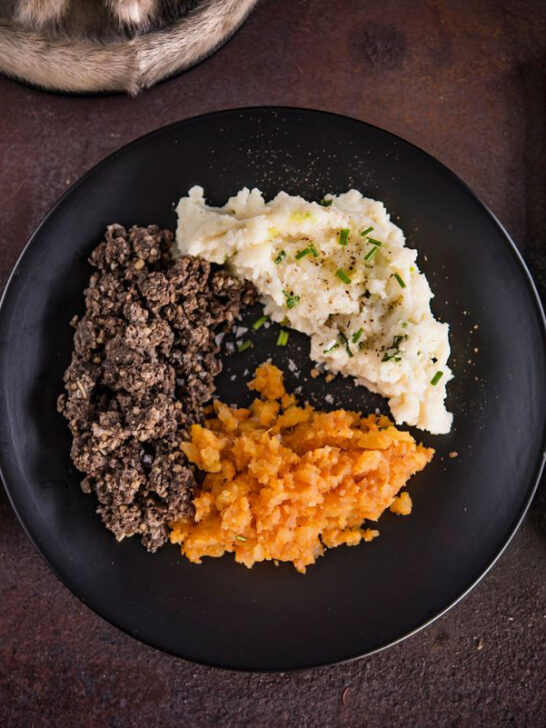


Held in honour of Scotland’s national poet Robert Burns, Burns Night is one of our most fun traditions, and more widely celebrated than St Andrew’s Day. Every year on or around the 25th of January, Scots and Scotland-lovers around the world gather for a Burns Supper, a celebration of haggis, whisky, poetry and bagpipes.
This is my complete guide to Burns Night, from who Robert Burns was to what happens at a Burns Supper, what to eat, what to wear, and where to celebrate in Scotland.
How to use this guide
- What is Burns Night?
- When is Burns Night?
- Who was Robert Burns?
- How did Burns Night start?
- Burns Night traditions
- What happens at a Burns Supper: the running order
- The Burns Supper menu
- What is haggis?
- What to wear to a Burns Night
- Famous Burns poems to recite
- Where to celebrate Burns Night in Scotland
- How to host your own Burns Supper
- Burns Night FAQs
What is Burns Night?
Burns Night is a Scottish tradition celebrating the birthday of the poet Robert Burns. It takes the form of a Burns Supper: a dinner with a specific Scottish menu, recitals of Burns’s poems, a series of toasts, and usually a fair amount of whisky.
Burns Night is celebrated in Scotland and around the world wherever there are Scots or Scottish-heritage communities. Suppers range from intimate family dinners to formal black-tie events with bagpipers, ceilidhs and hundreds of guests. The running order is broadly the same everywhere, which is part of what makes it feel like a genuine national tradition rather than a themed event.
When is Burns Night?
Burns Night is held on or around the 25th of January each year, Burns’s birthday. Because it usually falls on a weekday, most suppers are held on the nearest weekend rather than the exact date. In 2027, Burns Night falls on a Monday, so most suppers will be held on the weekend of 23-24 January.
Some organisations also hold summer Burns Suppers on 21 July, the anniversary of Burns’s death, which is when the very first supper was held in 1801.
Who was Robert Burns?
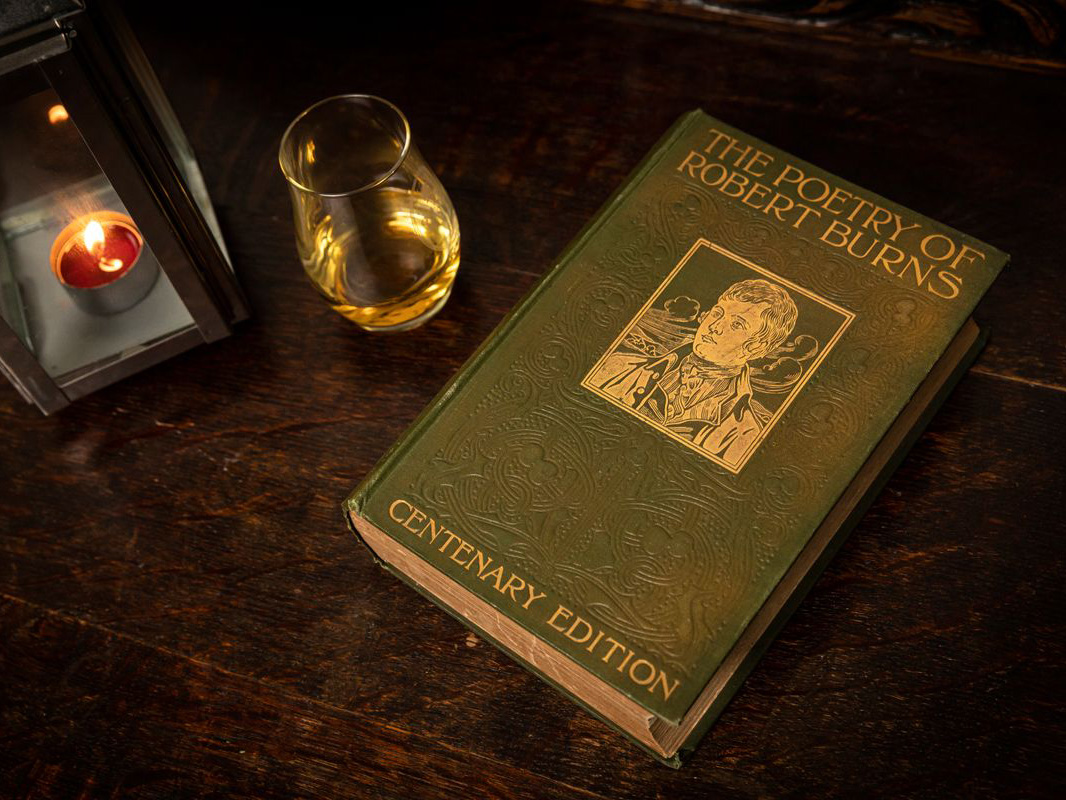
Robert Burns was born in the village of Alloway in Ayrshire on the 25th of January 1759, the eldest of seven children of a tenant farmer. He had little formal schooling but his father made sure his children could read and write, and Burns was largely self-educated from the books he could get his hands on.
He started life as a farm labourer on his father’s farm and spent most of his working life in farming, but poetry was his passion from a young age. His first poem, “O, Once I Lov’d A Bonnie Lass”, was written at 15, inspired by Nelly Kilpatrick, a girl he worked alongside.
At the age of 27, with the farm struggling and Burns in difficulties with a woman he had made pregnant and was refusing to marry, he planned to emigrate to Jamaica to take a job on a sugar plantation. To pay for the crossing, he was persuaded to publish a collection of his poems. ‘Poems, Chiefly in the Scottish dialect‘ (affiliate link) otherwise known as the Kilmarnock volume was published in July 1786.
The collection was published on the 31 July 1786 and contained one of my favourite poems “To a Mouse” – wee, sleeket, cowran, tim’rous beastie, o, what a panic’s in thy breastie!”
The book was a sensation. Burns never made the crossing to Jamaica. He moved to Edinburgh, became a literary celebrity, and over the next decade wrote hundreds of poems, songs and folk songs, including “Tam o’ Shanter”, “Ae Fond Kiss”, “A Red, Red Rose” and the words to “Auld Lang Syne”.
His later years were spent in Dumfries, where he worked as an excise man (essentially a tax collector) while continuing to write. His health had been damaged by years of heavy farm labour, and he died in Dumfries on the 21st of July 1796, aged just 37.
Burns’s poetry is still central to Scottish culture. His songs are sung worldwide, his words are quoted in Scottish politics and literature, and he has become an enduring symbol of Scottish identity.
How did Burns Night start?
The first Burns Supper was held on the 21st of July 1801, the fifth anniversary of Burns’s death, by nine of his close friends at Burns Cottage in Alloway. It was meant as a one-off memorial meal, but the friends enjoyed it so much they decided to make it annual.
The first formal Burns Society was founded in Greenock and held its first supper on the 29th of January 1802. The following year, after research revealed Burns had actually been born on the 25th of January rather than the 29th, the date shifted to the correct birthday, and it has been fixed ever since.
The tradition spread rapidly through the 19th century, first across Scotland, then to Scottish diaspora communities in Canada, America, Australia and New Zealand. Today, Burns Suppers are held in over 150 countries.
Burns Night traditions
A proper Burns Supper follows a specific running order that has barely changed in 200 years. The core traditions are:
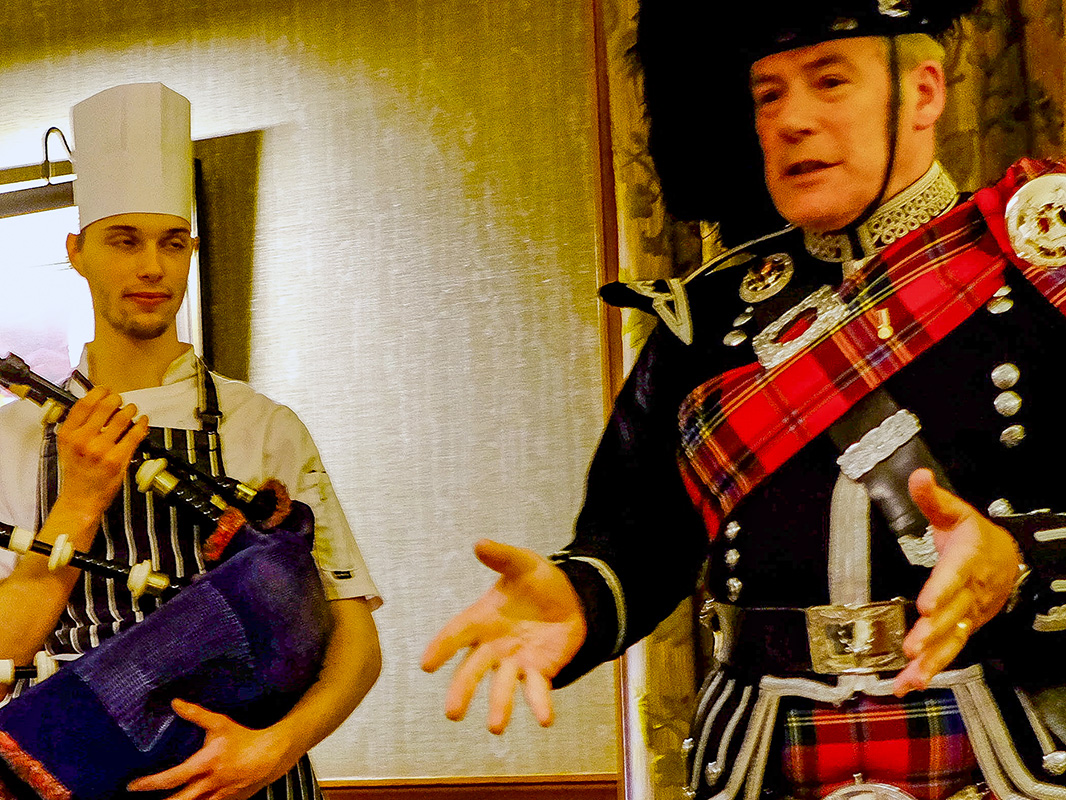
- Piping in the guests on arrival, with bagpipes if available
- The Selkirk Grace, a short grace said before eating
- Piping in the haggis, the theatrical arrival of the main course
- Address to a Haggis, Burns’s poem recited over the haggis, with dramatic cutting at the right line
- Toast to the Haggis, everyone raises a glass
- The meal, haggis with neeps and tatties
- The Immortal Memory, a formal speech about Burns
- Address to the Lassies, a humorous speech given by a man
- Reply from the Lassies, a retort given by a woman
- Recitals of Burns’s poems and songs
- Auld Lang Syne, sung to close the evening
Depending on the event, some or all of these elements will feature. A formal supper at a Burns Club or Scottish society will run through every stage with full ceremony. A family supper at home might skip the speeches but still include the Selkirk Grace, the Address to a Haggis, and Auld Lang Syne at the end.
What happens at a Burns Supper: the running order
Here is what to expect at a traditional Burns Supper in more detail.
1. Arrival and the Selkirk Grace
Guests arrive, usually piped in by bagpipes. Once seated, the host says a few words of welcome and then the Selkirk Grace:
Some hae meat an canna eat,
And some wad eat that want it;
But we hae meat, and we can eat,
And sae the Lord be thankit.
(Some have meat but cannot eat, some have none that want it; but we have meat and we can eat, so let the Lord be thanked.)
Despite its name, the Selkirk Grace was not written by Burns. It’s an older Scottish grace, also called the Covenanters’ Grace or Galloway Grace. It became associated with Burns after he recited it at a dinner hosted by the Earl of Selkirk in 1794.
Another popular Burns Night welcome toast is address:
Call – Here’s ta us, wha’s like us?
Response – Damn few and they’re deid!
Or here’s to us, who is like us, damn few and they’re dead!
Or the classic “Slàinte Mhath” which is pronounced “slan-cha va” and means to you good health. If you want to reply you can say “Slainte Mhor” which means more health to you.
2. The starter
A traditional Scottish soup, usually Scotch broth, cock-a-leekie or cullen skink. Lentil soup is another common choice.
3. Piping in the haggis
This is the centrepiece of the evening. The haggis is carried in on a large platter, led by a piper playing “A Man’s a Man for A’ That” or another Burns tune. Everyone stands. The haggis is placed on a side table or the head table for the address.
4. Address to a Haggis
The host or a designated speaker recites Burns’s poem “Address to a Haggis”, written in 1786. The opening lines are among the best-known in Scottish literature:
Fair fa’ your honest, sonsie face,
Great chieftain o’ the puddin’-race!
Aboon them a’ ye tak your place,
Painch, tripe, or thairm:
Weel are ye wordy of a grace
As lang’s my arm.
At the line “His knife see rustic Labour dicht”, the speaker draws and sharpens a knife with a flourish. At “An’ cut you up wi’ ready slicht”, the haggis is stabbed and sliced open end to end, usually to cheers and applause.
At the end of the poem, everyone will then toast the haggis and the meal is then served.
5. Dessert
Usually cranachan (cream, oats, raspberries and whisky), clootie dumpling, or Typsy Laird (a Scottish trifle). Scottish cheese and oatcakes often follow, or replace the sweet course.
6. The Immortal Memory
The most formal part of the evening. A designated speaker gives a speech about Burns’s life, his work, or what his poetry means to them. It’s usually 15-20 minutes and ends with a toast: “To the Immortal Memory of Robert Burns.” Everyone stands for the toast.
7. Address to the Lassies
Originally a toast of thanks to the women who had prepared the meal, the Address to the Lassies is now a humorous speech given by a man about the women present, or women in general. The best ones are affectionate and witty rather than awkward. It ends with a toast to the women.
8. Reply from the Lassies
A retort given by a woman, answering the Address to the Lassies with equal humour. Often the two speakers write their speeches together to make sure the back-and-forth lands. This part of the evening is usually the funniest.
9. Poems, songs and entertainment
Recitals of Burns’s poems (Tam o’ Shanter is a common choice) and songs (A Red, Red Rose, Ae Fond Kiss, John Anderson My Jo). At formal events there may be a fiddler or harpist.
10. Vote of Thanks and Auld Lang Syne
The host gives a short vote of thanks, then everyone stands, crosses arms, joins hands, and sings Auld Lang Syne to close the evening. If it’s a formal event, a ceilidh (traditional Scottish dancing) often follows.
The Burns Supper menu
A classic Burns Supper menu follows this structure:
Starter: A Scottish soup. Cock-a-leekie (chicken and leek), cullen skink (smoked haddock), Scotch broth (lamb and barley), or lentil soup.
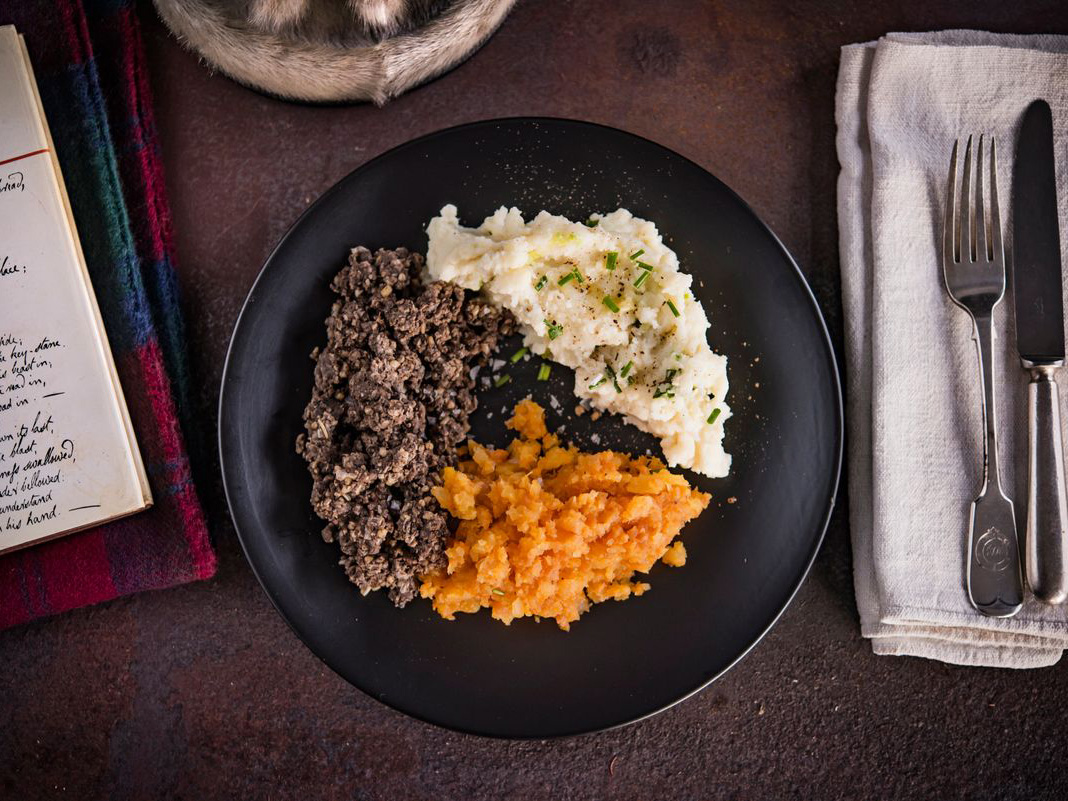
Main: Haggis, neeps and tatties. Haggis is served with mashed neeps (swede, not turnip) and mashed potatoes. A whisky sauce made with cream, whisky and mustard is optional but traditional.
Dessert: Cranachan, clootie dumpling, or Typsy Laird. Cranachan is the most common: whipped cream folded with toasted oats, Scottish raspberries and a generous slug of whisky.
Cheese: Scottish cheese with oatcakes. Caboc, Mull of Kintyre cheddar, Isle of Mull cheddar or Crowdie are all good choices.
To drink: Whisky for the toasts. Wine or beer with the meal. Irn-Bru for the designated drivers.
For a vegetarian supper, swap the haggis for vegetarian haggis (widely available in Scottish supermarkets) and the starter for lentil soup or Scotch broth made with vegetable stock.
What is haggis?
Haggis is a traditional Scottish dish made from minced lamb offal (heart, liver and lungs) mixed with oatmeal, suet, onion and spices, traditionally encased in a sheep’s stomach. Modern haggis is usually encased in synthetic casing or plastic and looks like a large sausage.
It tastes much better than it sounds. The texture is somewhere between mince and stuffing, with a spiced, peppery flavour. The oatmeal gives it a proper bite and the offal makes it rich without being overwhelming.
Vegetarian haggis is genuinely good. It uses pulses, oats, suet and the same spice mix as traditional haggis. Macsween make the best-known versions of both.
Haggis cannot currently be exported to the United States due to an FDA ban on food containing sheep’s lung, which has been in place since 1971. American Burns Suppers use a US-made approximation.
What to wear to a Burns Night
Tartan, of course.
For a formal Burns Supper, men wear full kilt regalia: kilt, sporran, Prince Charlie or Argyll jacket, kilt hose, ghillie brogues. If you don’t own a kilt, tartan trews (trousers) are a perfectly acceptable alternative, and a tartan tie or bow tie with black-tie dress works for informal events.
For women, a long dress in tartan or plain is traditional, often with a tartan sash pinned at the shoulder with a brooch. A white blouse with a tartan skirt and sash also works. For informal events, any smart outfit with a tartan accessory (scarf, sash, brooch) is fine.
If you want to wear your clan tartan, the Scottish surname search tool on the Council of Scottish Clans and Associations will tell you if you’re connected to a clan. Even non-Scottish surnames can have clan connections. For example, the surname Begg is a sept of Clan Drummond.
If you don’t have a clan, you can wear any tartan. The Black Watch, Royal Stewart and various district tartans (Flower of Scotland, Scottish National, Caledonia) are all open to anyone.
Famous Burns poems to recite
If you’re attending or hosting a Burns Supper and want to recite something, these are the classics:
- Address to a Haggis — the essential Burns Supper poem
- To a Mouse — “Wee, sleekit, cow’rin, tim’rous beastie”
- A Red, Red Rose — the love poem
- Tam o’ Shanter — the long narrative poem about a farmer chased by witches. About 20 minutes to recite in full.
- Ae Fond Kiss — the farewell song
- My Love Is Like a Red, Red Rose
- A Man’s a Man for A’ That — the radical democratic poem, often sung
- John Anderson My Jo — the gentle love song to an ageing husband
- Scots Wha Hae — the patriotic poem about Bannockburn
- Auld Lang Syne — the closing song, essential
The Scottish Poetry Library has full texts of all of Burns’s work, with glossaries for the Scots vocabulary. The BBC Robert Burns site has audio recordings of many of the major poems.
Where to celebrate Burns Night in Scotland
Burns Suppers are held across Scotland, from large city events to pub suppers in every community. If you’re visiting Scotland in late January and want to experience Burns Night, these are the best regions to base yourself.
Ayrshire
Ayrshire is the home of Robert Burns. The village of Alloway, just outside Ayr, has the Robert Burns Birthplace Museum (National Trust for Scotland) which includes Burns Cottage where he was born, the Auld Kirk of Alloway, and the Brig o’ Doon from Tam o’ Shanter. The museum holds special events on Burns Night weekend, and there are plenty of hotels and restaurants in Ayr and Ayrshire holding suppers.
Read more: my guide to Ayrshire.
Dumfries
Dumfries is where Burns spent the last years of his life and is buried. The Robert Burns House on Burns Street is open to visitors, and the Robert Burns Centre in the town has exhibitions about his life. Burns’s tomb is in the St Michael’s Churchyard.
Edinburgh
Edinburgh hosts dozens of Burns Suppers each year, from formal events at hotels like The Balmoral and The Caledonian to pub suppers across the city. The Scottish Storytelling Centre on the Royal Mile usually hosts a programme of Burns events. Check VisitScotland or the venue’s own website for current listings.
Glasgow
Glasgow has a strong Burns Supper tradition. The Glasgow Burns Club, founded in 1885, is one of the oldest and holds a formal annual supper. Many Glasgow hotels and restaurants offer Burns Night menus in the week surrounding the 25th.
Elsewhere in Scotland
You’ll find Burns Suppers in pubs, hotels and community halls in every part of Scotland in late January. VisitScotland publishes a list of public events each year.
How to host your own Burns Supper
You don’t need a formal setting to host a Burns Supper. Here’s the minimum you need for a proper evening at home:
1. Buy a good haggis. Macsween is the most widely available and one of the best. You can order from a Scottish butcher or supermarket. Allow around 150g per person.
2. Plan the menu. Starter, haggis with neeps and tatties, dessert, cheese. The full menu above. You can prep everything in advance and just reheat the haggis.
3. Print the poems. At minimum, the Selkirk Grace and the Address to a Haggis. Print them large enough to read easily. Auld Lang Syne lyrics for the end of the evening.
4. Set up a haggis procession. It doesn’t need a bagpiper. A Burns playlist on Spotify does the job, or one of the guests can carry the haggis in to a fanfare.
5. Assign roles in advance. Someone to say the Selkirk Grace, someone to recite the Address to a Haggis (with a real knife to cut it open at the right moment), someone to give the Immortal Memory toast (doesn’t need to be long, but should include why you love Burns). If you want the Address to the Lassies and Reply, brief two guests in advance.
6. Have plenty of whisky. One bottle of Scotch for 6-8 guests for toasts. Let people who don’t drink whisky toast with what they like.
7. End with Auld Lang Syne. Everyone stands in a circle, crosses arms, joins hands. Sing what you can remember.
Burns Night FAQs
When is Burns Night 2027?
Burns Night 2027 falls on Monday the 25th of January. Most Burns Suppers will be held on the weekend of 23–24 January.
Why is Burns Night celebrated?
Burns Night celebrates the birthday of Robert Burns, Scotland’s national poet, born on the 25th of January 1759. It’s a celebration of his life and work, and by extension of Scottish culture, language and heritage. It’s been held annually since 1802.
What do you eat at a Burns Supper?
The traditional menu is a Scottish soup starter (cock-a-leekie, cullen skink or Scotch broth), haggis with neeps (swede) and tatties (potatoes) as the main course, and cranachan or clootie dumpling for dessert, followed by Scottish cheese with oatcakes.
What's the difference between Burns Night and a Burns Supper?
Burns Night is the date — 25th January, Burns’s birthday. A Burns Supper is the event held on Burns Night to celebrate him. In practice the terms are used almost interchangeably.
Who recites the Address to a Haggis?
Usually the host or a designated speaker. At formal events it’s often the most senior member of the Burns Club. At home, choose someone who enjoys reading aloud. It’s a short poem (eight verses) and a printed version is fine — the drama is in the knife action at the right moment, not the memorisation.
Do you have to wear a kilt to a Burns Supper?
No. For informal suppers, any smart outfit with a tartan accessory (scarf, tie, sash) works. At a formal Burns Supper, most men wear kilts and most women wear tartan or formal evening dress. If you don’t own a kilt, tartan trews or a suit with a tartan bow tie are perfectly acceptable.
Can you celebrate Burns Night if you're not Scottish?
Absolutely. Burns Suppers are held in over 150 countries. Burns’s themes of friendship, love, nature and the dignity of ordinary people are universal, which is why his work has travelled so well. You don’t need Scottish heritage to host or attend one.
What does Slàinte Mhath mean?
Slàinte Mhath is Scottish Gaelic for “good health” and is used as a toast. It’s pronounced “slan-cha va”. The reply is Slàinte Mhòr (“slan-cha vor”), meaning “greater health”. You’ll hear these said throughout the evening, especially during toasts.
More Scottish traditions
- Dreich, wee, haar and hen: a guide to Scottish words
- The complete guide to Scottish whisky
- Events and festivals in Scotland calendar
Slàinte Mhath!
Kate — Love from Scotland x

Leave a Reply