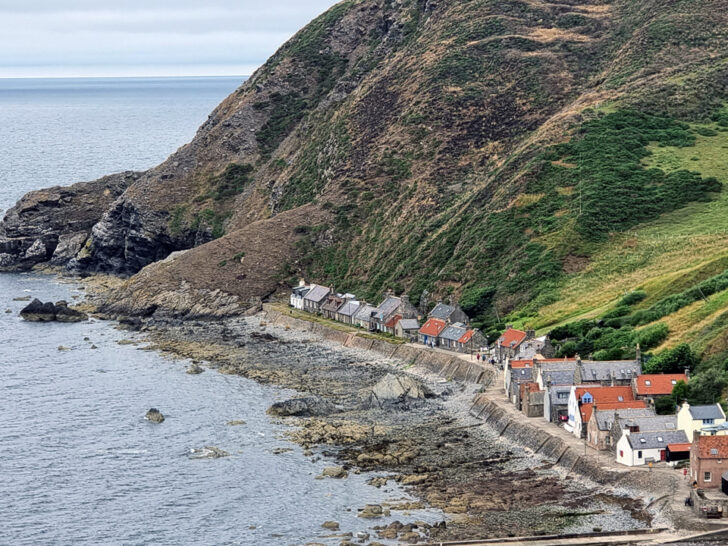


The Moray Firth coast runs from Inverness east through Moray and Banffshire towards Peterhead, and most visitors drive straight past it on the way to the Highlands. That’s a mistake.
This stretch of Scotland’s northeast coast has some of the best harbour villages in the country, one of the most famous soups, a resident population of bottlenose dolphins and a rock arch that makes everyone stop the car.
The Moray Firth is still one of my favourite stretches of coastline. Here’s what to see and do.
Where is the Moray Firth?
The Moray Firth is Scotland’s largest firth (sea inlet, in Scots), wrapping around the northeast of the country, from Inverness and the Black Isle across the Moray coast and onwards towards Aberdeenshire.
Now it’s part of a new initiative, the North East 250, and whether you want to go dolphin spotting, sailing, or walking the Coastal Trail, exploring with this Moray Firth itinerary is about to become top of your Scotland list.
From Banffshire to Moray and beyond, here’s how to explore the Moray coast road trip route.
Where to stay on the Moray Firth
If you’re planning a trip, here are a few lovely bases along (or close to) the coast:
- Culbin Edge – a dog-friendly cabin near Forres with a fabulous wood-fired hot tub
- Lochanshelloch Cottage on the Cawdor Estate – 30 minutes from Findhorn, perfect for exploring the western Moray coast
- Saplinbrae Hotel and Lodges – located in the heart of Aberdeenshire, around 30 minutes south of Gardenstown and Crovie
- Meldrum House Hotel – 40 minutes south of the Moray coast and full of country house hotel charm
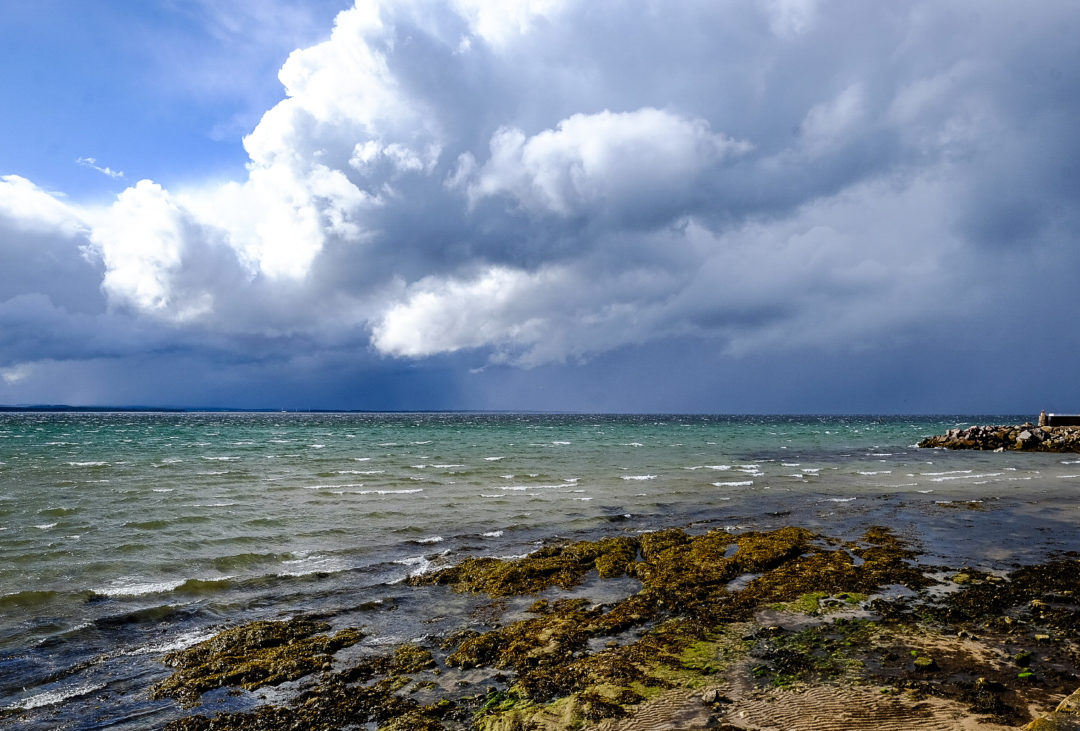
Things to do on the Moray Firth
Whether you have a few days or a week to spend exploring the Moray coastal villages, here is what to get up to. I’ve listed these roughly east to west – so it’s easy to plan.
Visting the Moray Firth – at a glance
- Best time to visit: May–September for calmer weather / Winter for dramatic skies
- Best for: coastal walks, villages, wildlife spotting, food
- Don’t miss: Portsoy, Bow Fiddle Rock, dolphin spotting, Cullen Skink
- How long you need: 2–5 days
- Good to know: windproof jacket essential year-round
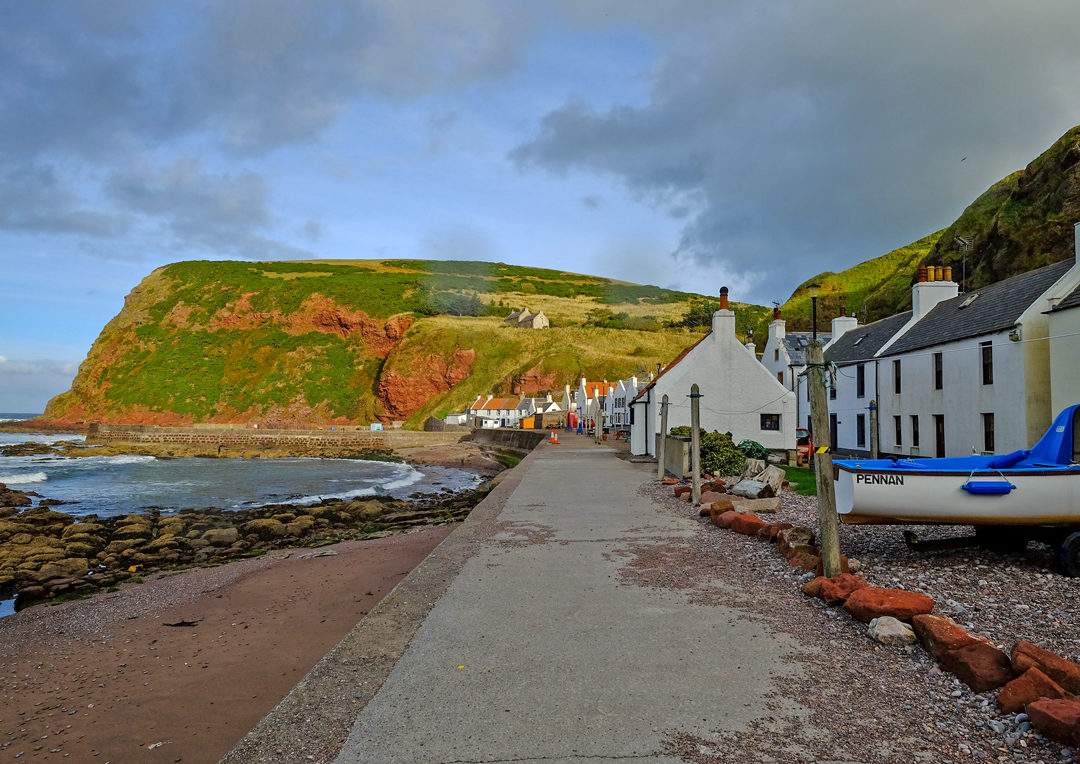
Visit the most famous red telephone box in the world: Pennan
With a row of cottages built end-on to face the wind, Pennan is a classic Scottish fishing village.
But visitors come here for one thing: a cult Scottish film about an oil company trying to buy an Aberdeenshire village.
Pennan was used as the filming location for Local Hero, and it’s easy to see why.
The famous red phone box was actually a prop for the movie and was removed after filming. An outcry led to it being returned, although it now sits in a slightly different location.
If you’re looking for places to visit on the Moray Firth, Pennan is definitely one of the most memorable.
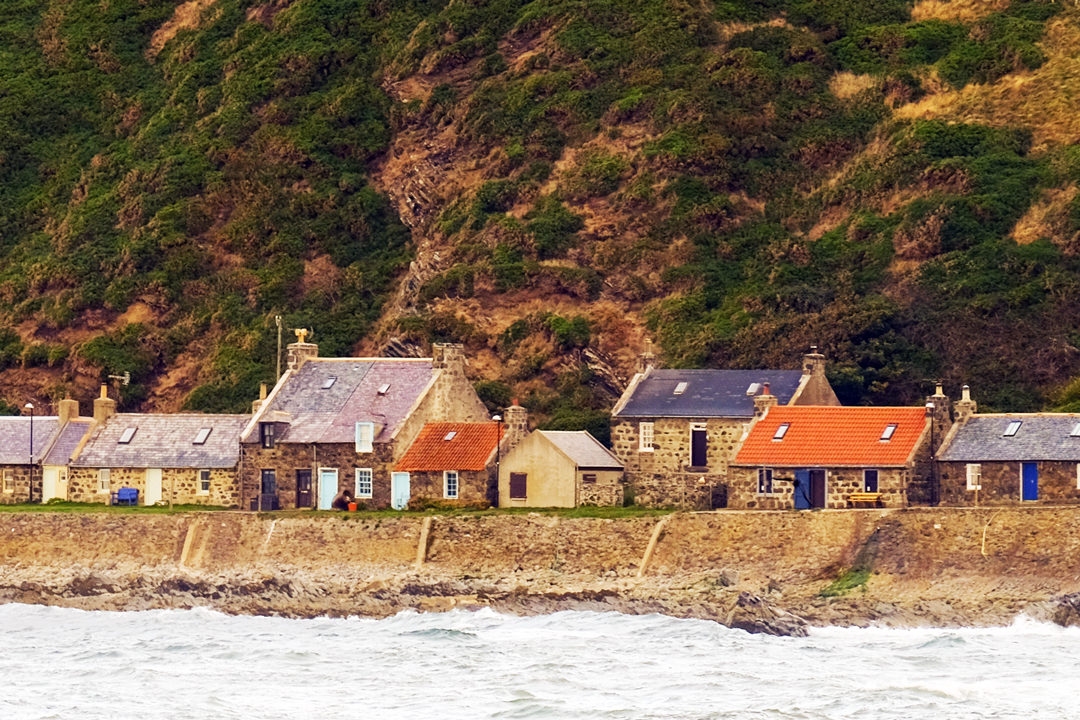
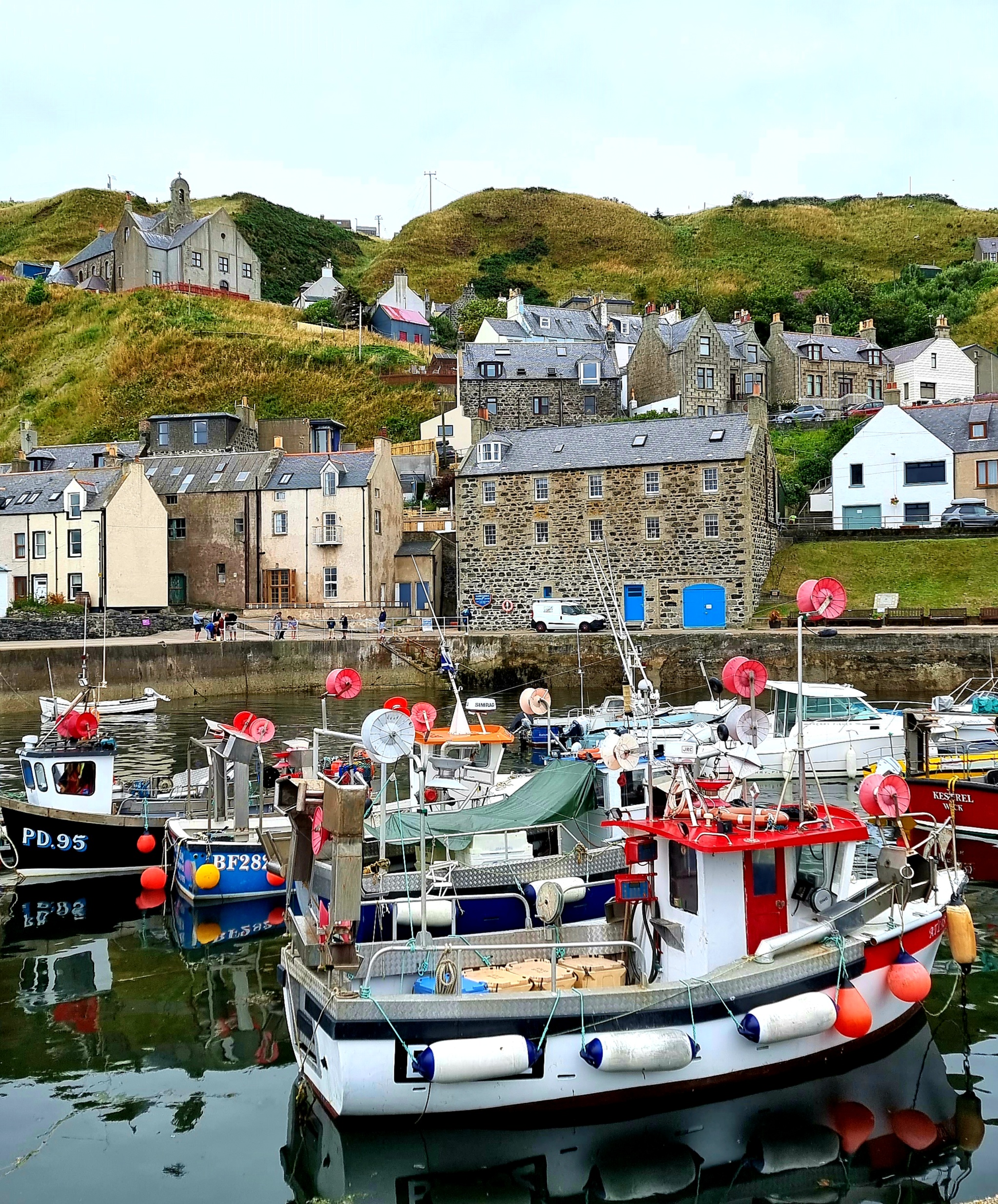
Explore Gamrie: Gardenstown and Crovie
The Banffshire villages of Gardenstown and Crovie, which together make up Gamrie, are probably the most picturesque of all the Moray Firth villages and they’re an absolute favourite for photos.
Gardenstown has a lovely 19th-century harbour, while Crovie has no road at all: the cottages can only be accessed on foot.
If you want the classic photo of Crovie, there’s a car park at the top of the village with a great viewpoint down over the little string of cottages hugging the sea.
Tip: don’t drive out along the sea wall at Gardenstown – it’s a rather precarious proposition. There’s a car park to your right at the bottom of the hill.
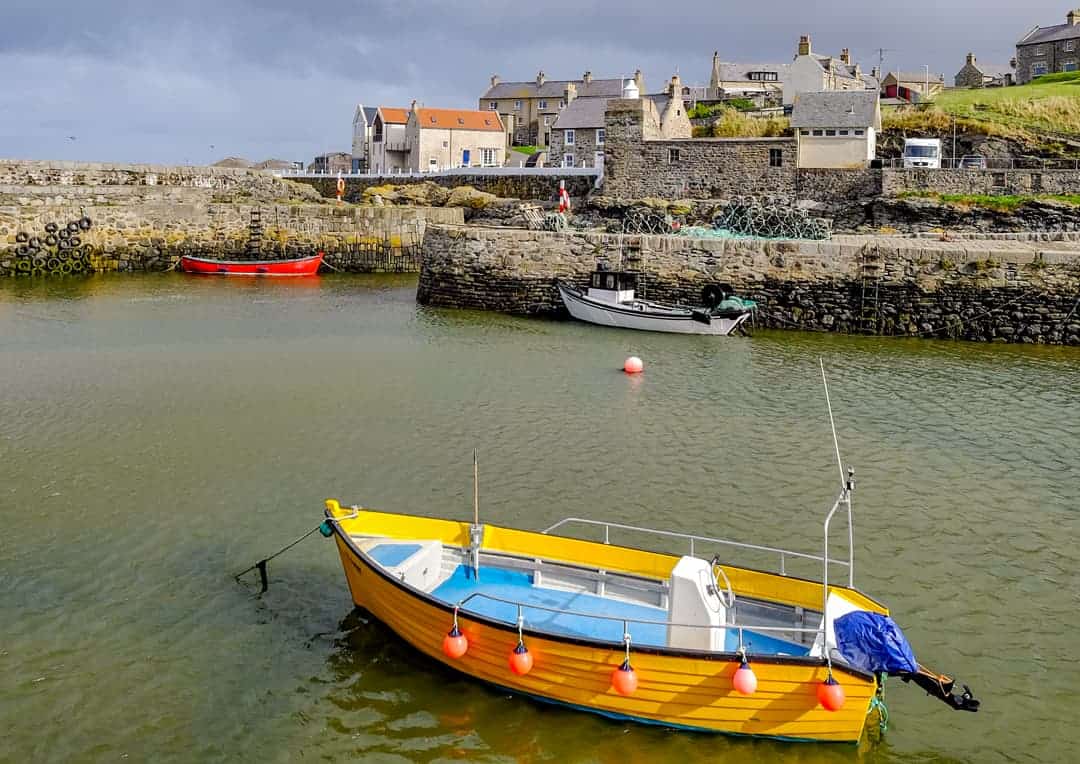
Small boats and pirates at Portsoy
Boasting the oldest harbour on the Moray coast (much of what was built in 1692 remains), Portsoy harbour is possibly my favourite of all the Moray coastal villages.
Portsoy is thought to mean Saithe (fish) Harbour, and even though we visited on a windswept autumn day, you could easily imagine the harbour in its heyday, bustling with people and boats.
While the salmon and herring industry moved on to Aberdeen and Peterhead, Portsoy’s fishing heritage is still celebrated every June at the Scottish Traditional Boat Festival.
And the festival isn’t Portsoy’s only claim to fame, the harbour represented the main village of Todday in the 2006 remake of Whisky Galore!
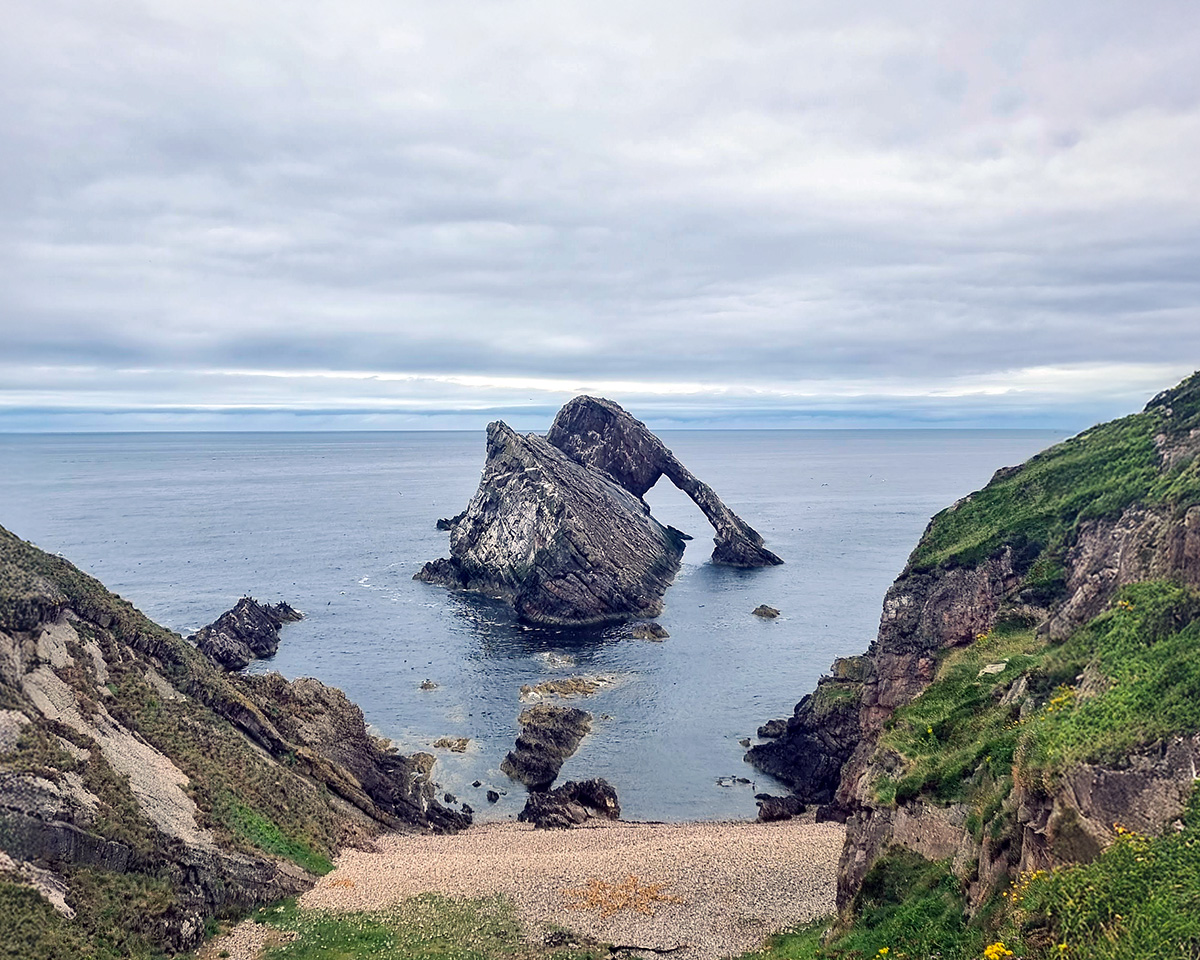
Stroll from Portknockie to Bow Fiddle Rock
The star of many an Instagram shot, Bow Fiddle Rock is a humongous arch rock formation just north of the seaside town of Portknockie.
Does it look like an elephant or a whale to you?
One of my favourite walks is the coastal route from Cullen to Bow Fiddle Rock, it’s one of the best Scotland coastal walks, and the views are spectacular no matter the season – and the rock itself is even more impressive in real life.
Try Cullen Skink, in Cullen
What must be Scotland’s most famous soup, Cullen Skink, comes from the tiny village of Cullen.
The recipe might be simple – potato, onion, smoked haddock, bay leaves, chicken stock, cream and black pepper – but the title of Queen of Cullen Skink is still hotly contested every year in Cullen.
Did you know that “skink” originally meant a soup made from beef knuckle? The story goes that back at the turn of the century, times were hard in northern Scotland and beef scrapings were difficult to come by along the Moray coast.
What Cullen did have was loads of fish, smoked haddock to be precise – and Cullen’s own version of skink was born.
Spot dolphins at Spey Bay
The Moray Firth is famous for its dolphin population, it’s estimated that around 130 Bottlenose Dolphins live in the waters off Inverness and Moray.
The best place to see them is Chanonry Point on the Black Isle north of Inverness, but they can be spotted all along the coast — including at Spey Bay, which is also home to the Scottish Dolphin Centre.
The best time to see dolphins is on an incoming/rising tide, when the water brings in food and the dolphins follow.
You can either try and spot them from land (don’t forget your binoculars!) or head out on the water with North 58, who run dolphin watching trips on the Moray Firth.
And if you’re really lucky, you might even spot Orcas too!
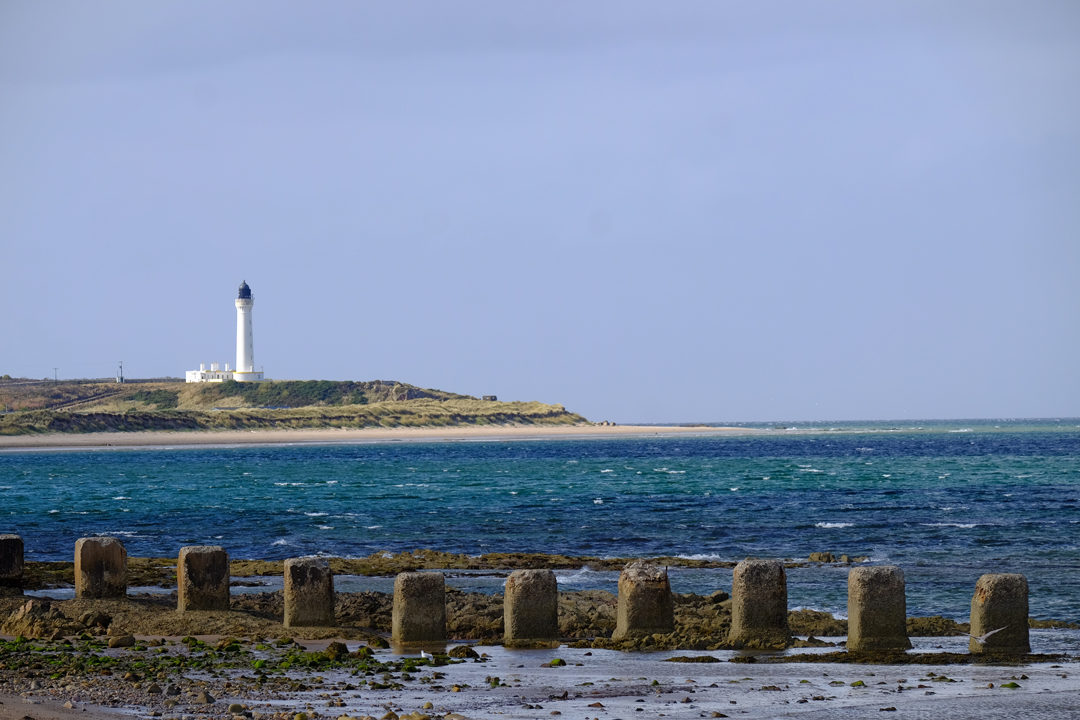
Visit: the seaside resort of Lossiemouth
Lossiemouth is one of the best-known places on the Moray coast — and for good reason.
What was once three villages, Branderburgh at the harbour, Seatown, and Stotfield, now forms the settlement of Lossiemouth at the mouth of the River Lossie.
It’s home to a yachting marina, a large harbour, and plenty of local services, and there are fantastic views over to the spit of East Beach, reached by a wee bridge across the river.
To the west of town you’ll find West Beach, with Covesea Skerries Lighthouse standing at the far end.
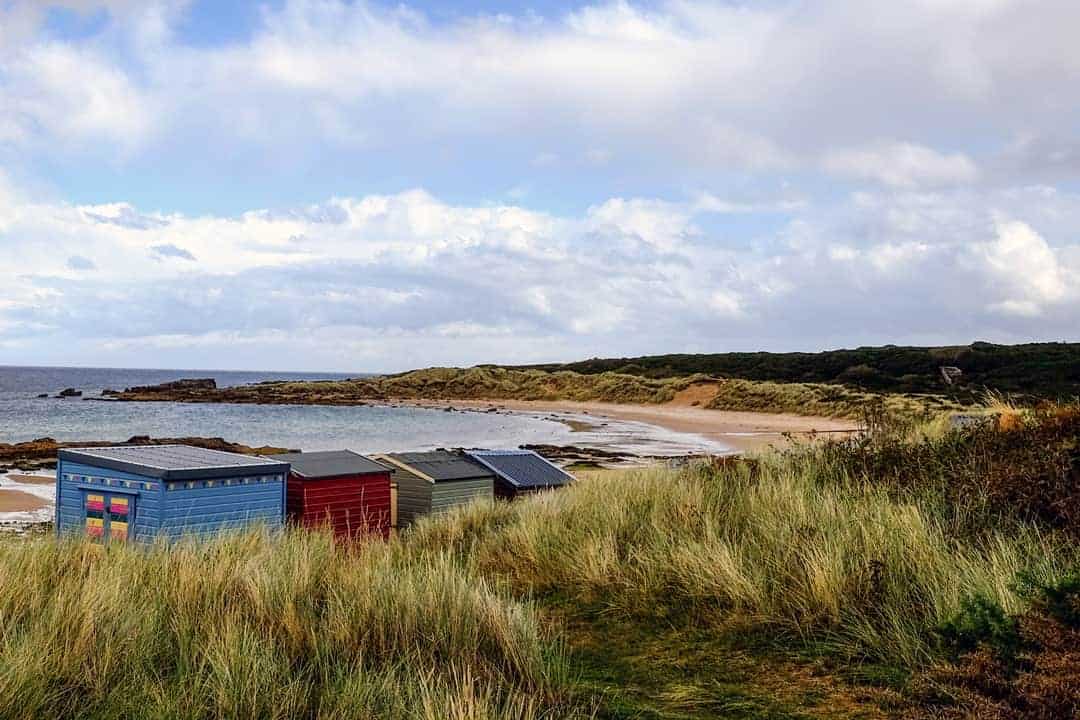
Walk the Moray Coastal Path: Findhorn to Hopeman beaches
Most famous for its off-grid eco-community (the Findhorn Foundation) and nearby RAF Kinloss, Findhorn also has a spectacular, if slightly windswept, 7-mile beach.
The village sits at the mouth of the River Findhorn, which has formed a beautiful bay ringed by mudflats and sand dunes. We even spotted a colony of grey seals basking out on the sand!
From Findhorn you can follow the coastal path to Burghead at the other end of the bay (stop for lunch!) and then continue on towards Hopeman, with its row of pretty beach huts.
This section of the Moray Coastal Path walk is one of my favourites.
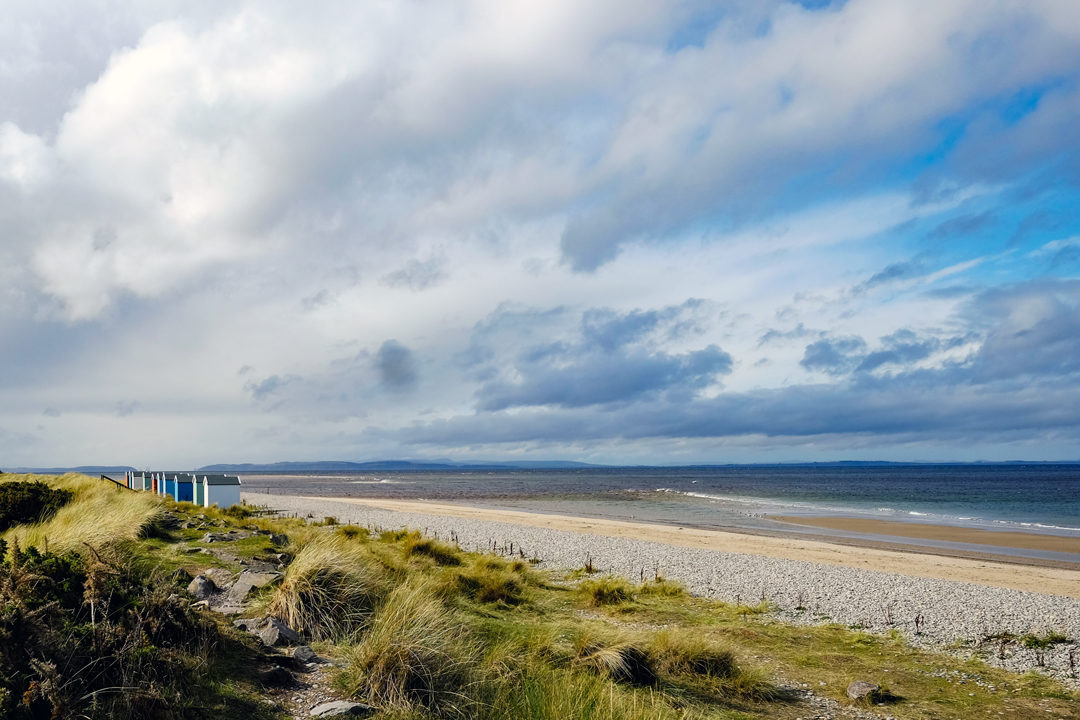
Get a view at Culbin Forest and Hill 99
Culbin Forest stretches 8 miles between Nairn and Forres, and it’s one of those places that somehow feels like a proper hidden gem. It’s one of the best best viewpoints on the Moray coast if you love big skies and wide landscapes.
Explore the sandy forest trails and head for the spectacular Hill 99 viewpoint tower for a full 360° view over the forest and out across the Moray Firth.
If you’re feeling more energetic, you can walk through the forest to the coast and visit the Gut, a muddy bay home to wading birds
Visit Culbin Forest.
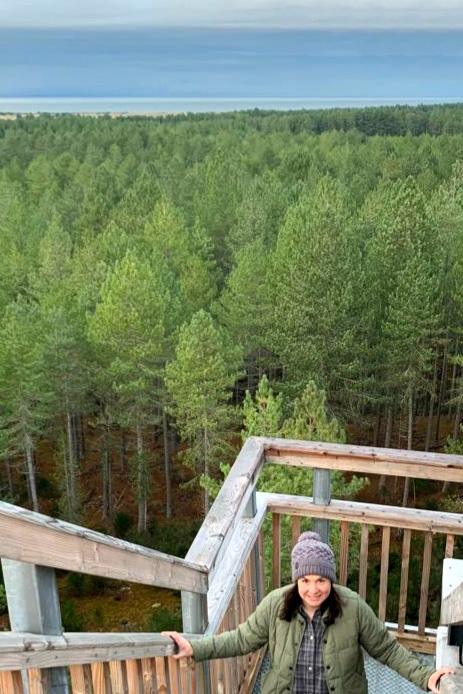
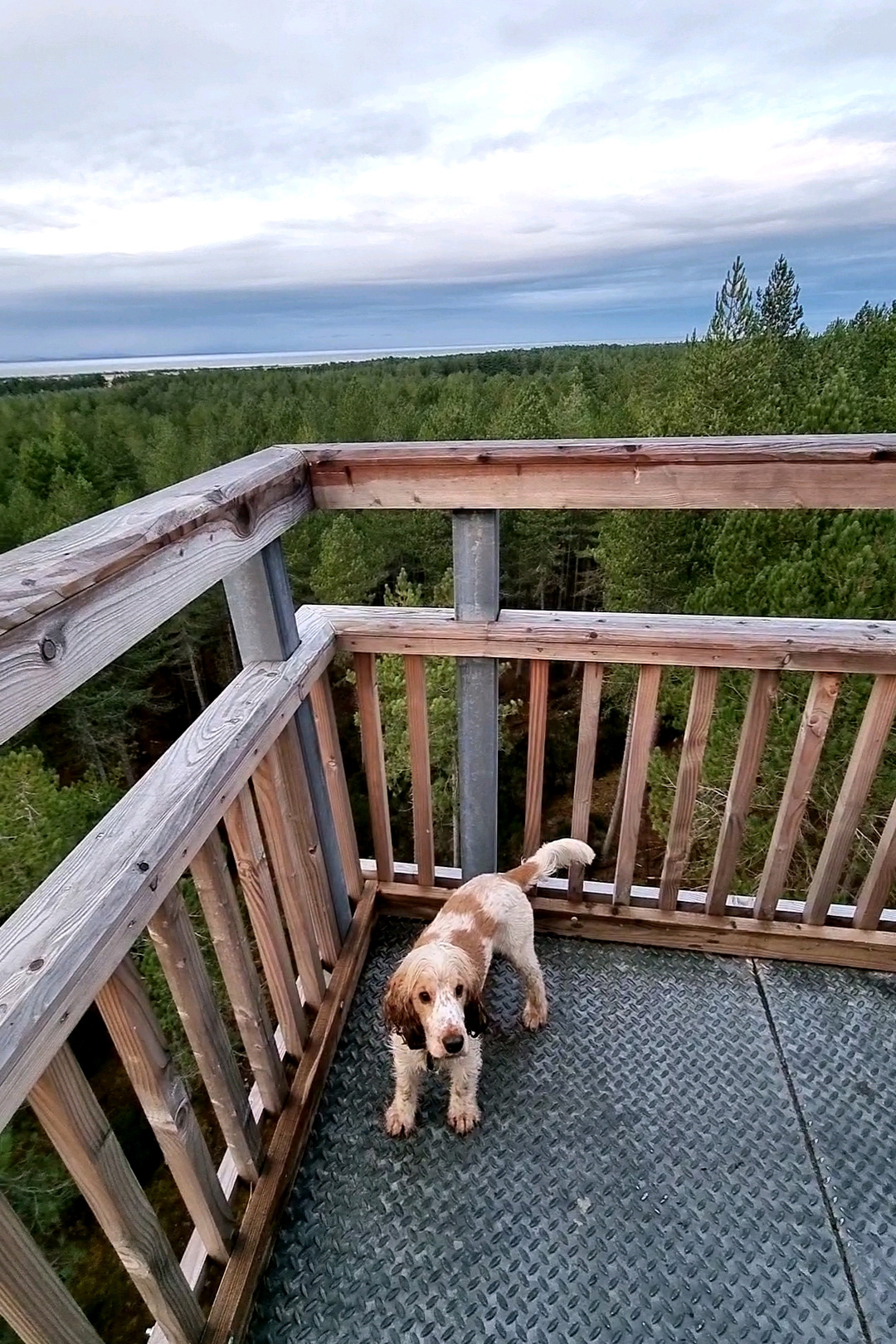
Hill 99 at Culbin Forest, Moray
How to get to the Moray Firth
The Moray Firth coast starts around Inverness and runs through Moray and Banffshire, continuing on towards Peterhead. It’s definitely best explored by car, but there are also train stations at Elgin and Forres. By road, the western Moray coast is accessed via the A96 (Inverness to Aberdeen), and the eastern stretch via the A98 towards Peterhead
Book rail tickets with trainline.com. Stagecoach run local buses, look out for a Dayrider Ticket for the Moray Coast or Banffshire area
Where is the Moray Firth?
The Moray Firth is Scotland’s largest sea inlet, running from Inverness and the Black Isle east through Moray and Banffshire towards Peterhead in Aberdeenshire. The southern shore takes in the Moray coast road through villages like Findhorn, Lossiemouth, Cullen, Portsoy, Gardenstown and Pennan.
Where is the best place to see dolphins on the Moray Firth?
Chanonry Point on the Black Isle, just north of Inverness, is the most reliable dolphin-spotting spot on the Moray Firth. The best time is on a rising tide. Spey Bay is another good option further east, and the Scottish Dolphin Centre there is worth visiting.
What is Cullen Skink?
Cullen Skink is a Scottish smoked haddock soup, made with potato, onion, cream and black pepper. It originates from the village of Cullen on the Moray coast, where it is still made to the original recipe. It is one of Scotland’s most famous dishes and worth going out of your way to eat at source.
What is Bow Fiddle Rock?
Bow Fiddle Rock is a natural sea arch near the village of Portknockie on the Moray coast. It takes its name from its shape, which resembles the tip of a violin bow. It is one of the most photographed coastal features in northeast Scotland and is best seen on the coastal walk from Cullen.
How do you get to the Moray Firth coast?
The Moray coast is best explored by car, accessed via the A96 from Inverness or Aberdeen. There are train stations at Elgin and Forres on the Inverness to Aberdeen line. The North East 250 scenic driving route covers much of the coast and is a good framework for a multi-day trip.
I’d make the Moray Firth home in a heartbeat. Wouldn’t you?
Love, from Scotland x


Leave a Reply