

Scotland is one of the best places in Europe to see wildlife in its natural habitat.
Red squirrels, red deer, ospreys, orcas, mountain hares, bottlenose dolphins, golden eagles, white-tailed sea eagles, otters, basking sharks, reindeer. The list of species you can realistically spot here on a well-planned trip is remarkable.
Spring and summer bring the seabird colonies and returning migrants. Autumn draws the red deer rut across the Highlands. Winter opens up the Cairngorms plateau to the only free-ranging reindeer herd in Britain, and brings huge flocks of wading birds to the estuaries of the east coast.
Whether you want to watch dolphins from Chanonry Point or spot a sea eagle over the Sound of Mull, this is the guide for you. Grab your binoculars, let’s go.
The Best Places to See Wildlife in Scotland
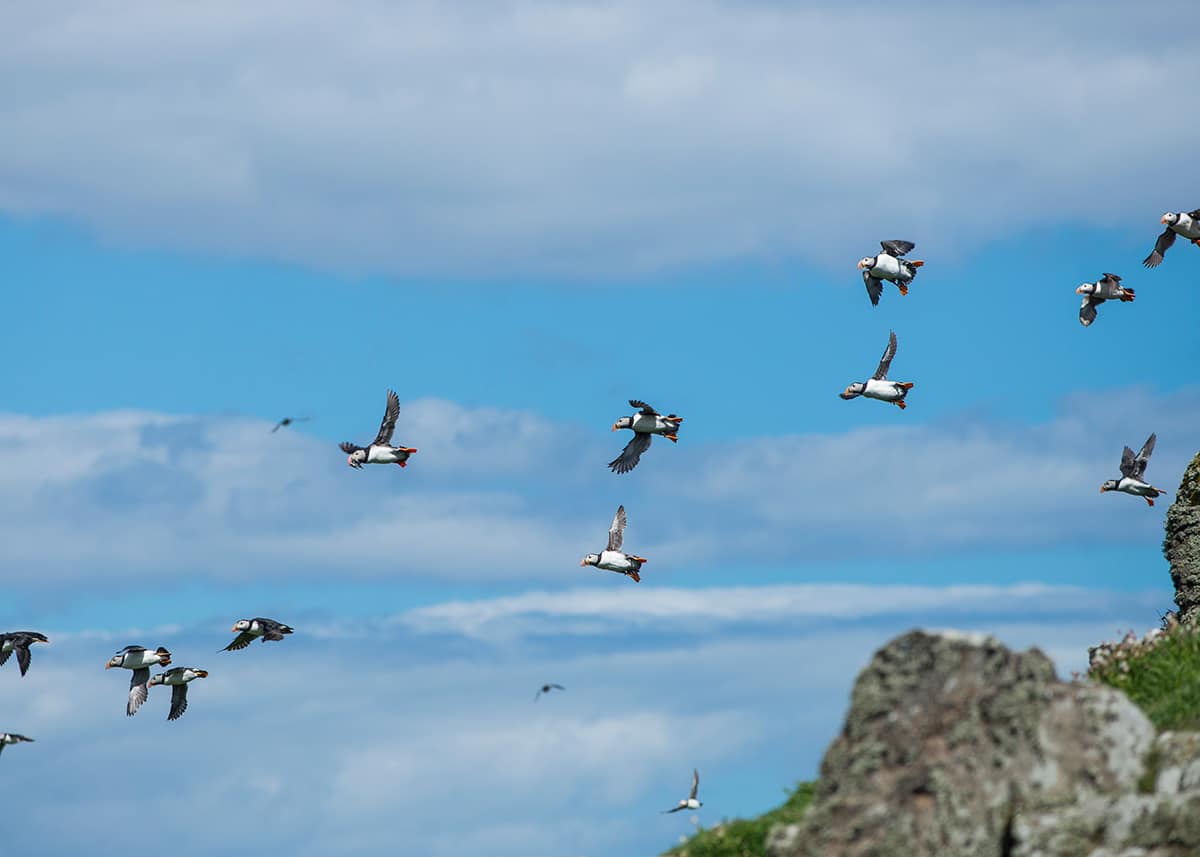
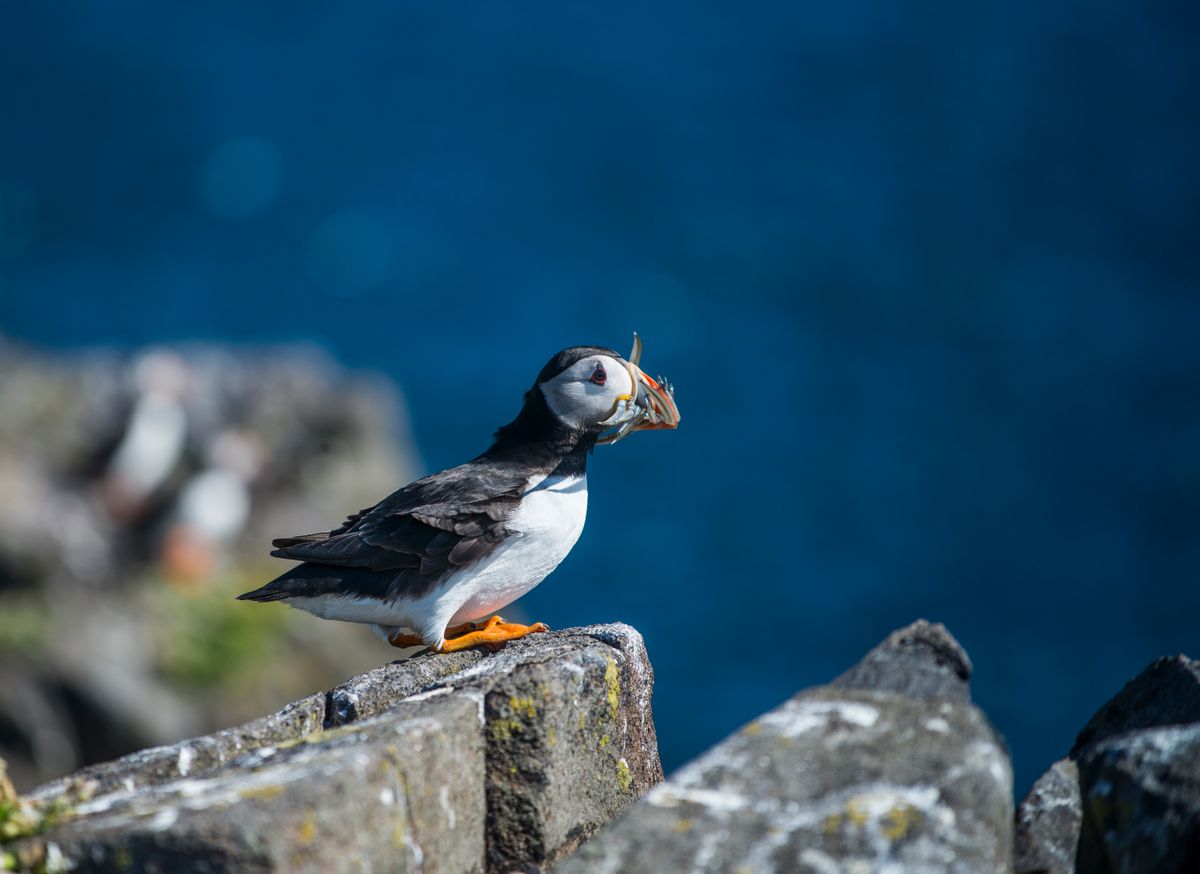
If puffins are on your list, we have a full guide to the best places to see puffins in Scotland, including when they arrive and exactly how to get there.
Scottish wildlife by month
Wildlife watching in Scotland is highly seasonal. Here’s what to look out for and when.
January to March Sea eagles on Mull (winter is the best time as the trees are bare), mountain hares in their white winter coats in the Cairngorms, red squirrels active around bird feeders, huge flocks of pink-footed and barnacle geese on the east coast estuaries, otters at low tide on Skye.
April to May Ospreys arrive at Loch Garten from late March, puffins return to the Isle of May and other east coast colonies, dolphins active on the Moray Firth, the first basking sharks appear off the Hebrides, reindeer calves born in the Cairngorms.
June to early July Peak puffin season, basking sharks at their most numerous off Coll, Tiree and the Treshnish Isles, otters with cubs on Skye, gannets feeding chicks on Bass Rock.
July to August Bonxies (great skuas) on Handa, dolphins at peak activity, salmon beginning to run upriver, late puffins still on the cliffs, machair wildflowers at their best on the west coast.
September to October The red deer rut in the Highlands (one of the best wildlife spectacles in Britain), Atlantic salmon leaping at Rogie Falls, hen harriers on the Flow Country, the last of the basking sharks before they head south.
November to December Reindeer in full winter coats in the Cairngorms, wintering geese in the Solway and on the east coast, sea eagles on Mull and Skye, mountain hares turning white.
The Highlands
RSPB Loch Garten, Cairngorms (Ospreys)
Loch Garten in Abernethy Forest is the most famous osprey site in Britain. The first pair returned to nest here in 1954 after the species had been hunted to extinction in Scotland, and the RSPB has been monitoring them ever since. The visitor centre has live cameras streaming straight from the nest, telescopes on the platform, and rangers on hand to point out what’s happening.
Beyond ospreys, the surrounding Caledonian pine forest holds capercaillie, crested tits and red squirrels. It is also one of the few places in the UK where you might still spot a Scottish wildcat (don’t count on it, but it’s possible).
Where: RSPB Loch Garten, Abernethy, near Boat of Garten When: April to August for ospreys, year round for the forest
Find out more about RSPB Loch Garten.
Cairngorm Reindeer Centre, Glenmore (Reindeer)
The Cairngorm Reindeer Herd is the only free-ranging reindeer herd in the British Isles, reintroduced from Sweden in 1952. Around 150 reindeer roam the Cairngorm mountains and you can join a guided hill trip to find them. They are completely tame and you can hand-feed them.
In winter the reindeer grow thick coats and look magnificent against the snow. Calves are born in spring. Trips run year round but book ahead in summer.
Where: Cairngorm Reindeer Centre, Glenmore, near Aviemore When: Year round, calves April to May
Visit The Cairngorm Reindeer Centre.
Loch Fleet, Golspie (Ospreys, Crossbills, Pine Martens)
You won’t find Loch Fleet or Balblair Woods on any list of things to do on the North Coast 500, but this National Nature Reserve near Golspie is home to some of Scotland’s rarest residents.
You might spot an osprey diving into the loch, and in the woods listen out for super rare crossbills. Stay overnight and you might see greedy pine martens, red squirrels and even the potential to spot a Scottish wildcat. Out on the sands of this tidal loch you will spot Scottish harbour seals.
Where: Loch Fleet National Nature Reserve, near Golspie, Sutherland When: Year round, ospreys April to August
Book into the Birdwatcher’s Cabin on Loch Fleet.
Beinn Eighe National Nature Reserve, Torridon (Golden Eagles, Red Deer)
Better known as a mecca for those wishing to climb the famous Munros of Liathach, Beinn Alligin and Beinn Eighe, the pinewoods of Beinn Eighe and the Loch Maree Islands NNR are some of the most ancient and least disturbed fragments of native pinewood in Britain.
Managed by NatureScot, the slopes of the mighty Beinn Eighe are home to 48 square kilometres of woodland and upland habitats including 350-year-old Scots pines, remnants of the ancient Caledonian forest. Multiple trails offer great chances to spot golden eagles circling overhead and red deer grazing at dawn or dusk.
Where: Beinn Eighe NNR, near Kinlochewe, Wester Ross When: Year round, deer rut September to October
Stay nearby at the spectacular Torridon Hotel, one of Scotland’s most stylish.
The Moray Firth and East Coast
Chanonry Point, Black Isle (Bottlenose Dolphins)
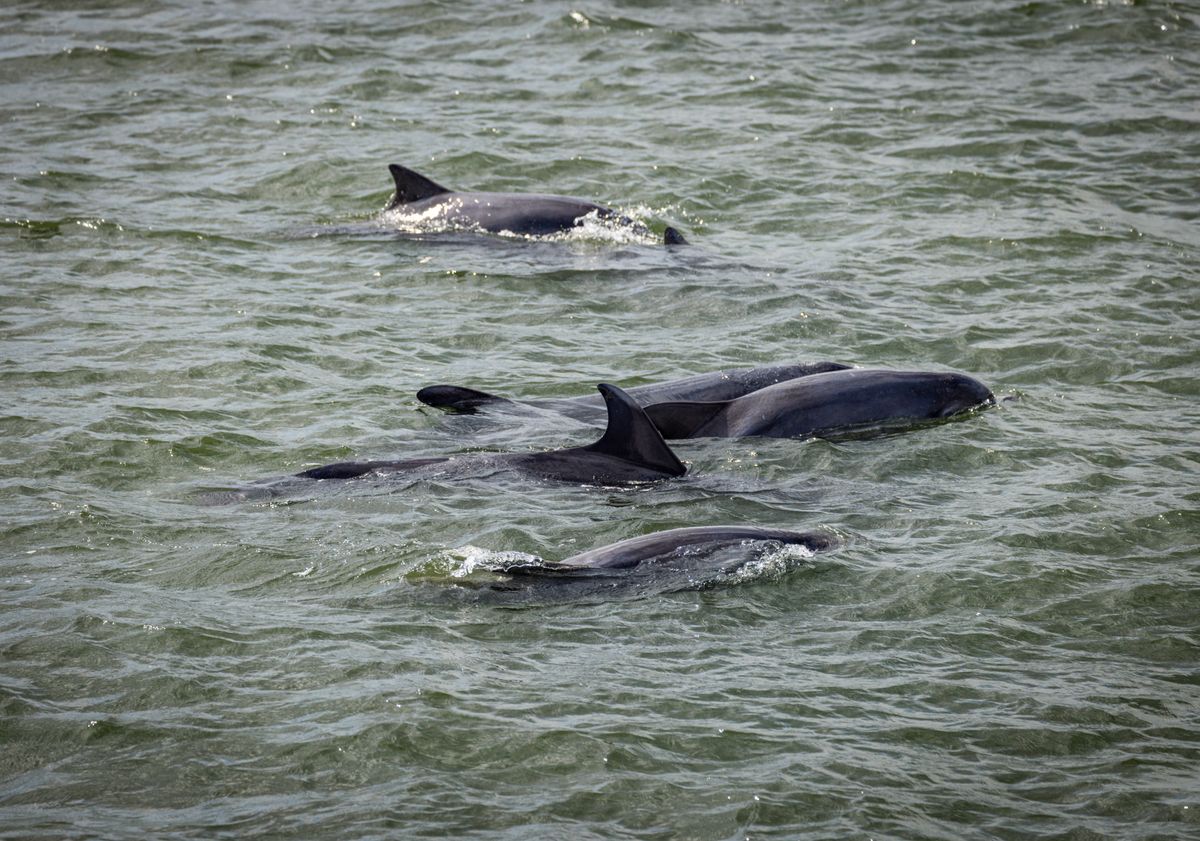
The Moray Firth is famous for its dolphin population. It is estimated that around 130 bottlenose dolphins live in the waters off Inverness and Morayshire, which makes the Moray Firth one of the best spots to see wildlife in Scotland.
The best place to go Moray Firth dolphin watching is Chanonry Point on the Black Isle north of Inverness, but they can be seen all along the coast including at Spey Bay where you can visit the Scottish Dolphin Centre.
The best time to see dolphins in Scotland is on an incoming or rising tide which brings in the food. The best time to arrive is around 45 minutes before high tide.
Either try and spot them from the land (don’t forget your binoculars) or take a boat trip out onto the Moray Firth with North 58 who do dolphin watching trips. You might also be lucky enough to spot orcas.
Where: Chanonry Point, Black Isle (20 minutes from Inverness) When: Year round, peak May to September on a rising tide
Read more: How to visit the Moray Firth.
Bass Rock, North Berwick (Northern Gannets)
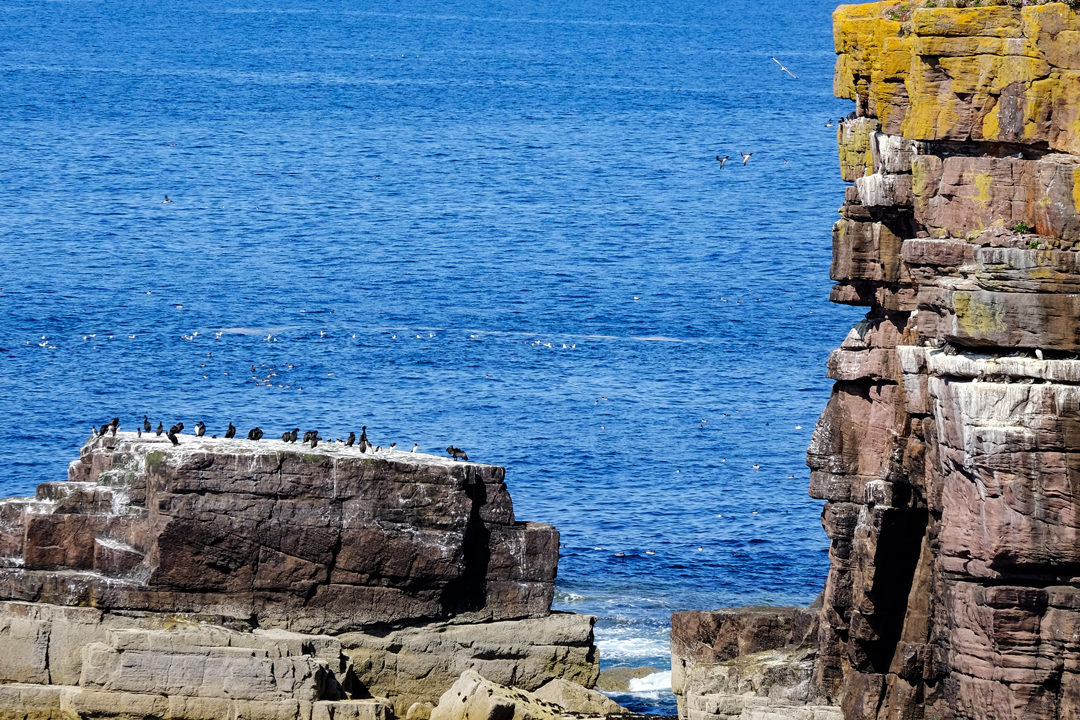
Bass Rock in the Firth of Forth is the largest northern gannet colony in the world, with around 150,000 birds nesting on a single 100-metre-tall volcanic plug. From late January to October the rock turns white with gannets visible from miles away on the East Lothian coast.
Boat trips run from North Berwick harbour with The Scottish Seabird Centre and Sula Boat Trips. The Seabird Centre itself has live cameras streaming from the rock, so you can watch the gannets up close even on a stormy day. North Berwick is 35 minutes from Edinburgh by train.
Where: Bass Rock, Firth of Forth (boat from North Berwick) When: February to October
RSPB Tollie, near Dingwall (Red Kites)
The Black Isle north of Inverness is the best place in the Scottish Highlands to see red kites, reintroduced to the area in 1989. The RSPB Tollie Red Kite Centre near Dingwall has feeding stations where you can watch dozens of birds at once at feeding time, around 2pm daily (check ahead).
The Black Isle is also good for buzzards, harbour seals at Chanonry, and wintering geese on the Cromarty Firth.
Where: RSPB Tollie Red Kite Centre, near Dingwall When: Year round, feeding daily at 2pm
Isle of May, Fife (Puffins)
The Isle of May sits in the Firth of Forth, about 5 miles off the coast of Anstruther in Fife. It’s the most visited puffin colony in Scotland for good reason. It’s genuinely spectacular, and relatively easy to reach from Edinburgh (about 90 minutes by car to Anstruther, then a ferry).
The island is a National Nature Reserve. Day trips run from Anstruther Harbour and once you land, you’re free to roam the clifftops. Puffins nest in burrows just inches from the footpath, you’ll be closer to them than you ever expected.
Where: Isle of May, Firth of Forth (boat from Anstruther) When: April to early August
Read more: The best places to see puffins in Scotland.
The North Coast 500
Handa Island (Great Skuas, Bonxies, Puffins)
Owned by the Scourie Estate and managed in partnership with the Scottish Wildlife Trust, Handa is a breeding ground for over 10,000 seabirds.
Take the short ferry crossing to the island from Tarbet and walk around the island’s 4-mile circular boardwalk path.
In summer, the island’s machair (meadow) is filled with wildflowers. Hidden amongst the grass nest rare skuas, the giant pirates of the sea, who can be seen battling golden eagles for any available airborne prey. Watch out for the famously bossy bonxies (step off the path and be prepared to be aerially pestered, just hold up your hands or a walking pole and move on quickly) and puffins at Puffin Cove.
Where: Handa Island (ferry from Tarbet, near Scourie) When: April to August
Find out more about Handa Island.
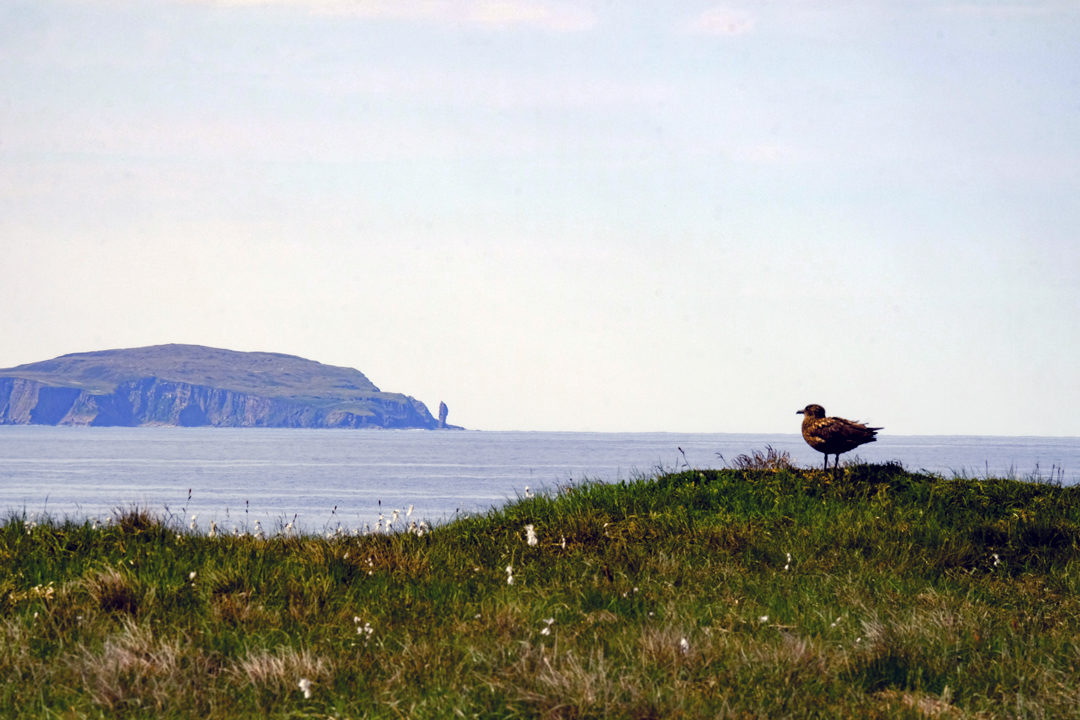
Stoer Head and the Old Man of Stoer (Whales, Porpoises, Dolphins)
Stoer Head Lighthouse, perched on cliffs above The Minch, is a great spot to see minke whales breaching off the rocks.
Walk out to the Old Man of Stoer, a clifftop walk to a 60m sea stack, where you might spot dolphins and porpoises. Take binoculars and a bit of patience.
Where: Stoer Head, Sutherland When: May to September
Walk out to the Old Man of Stoer on this 4.25 mile route.
Dunnet Head and Duncansby Head (Puffins, Seabirds)
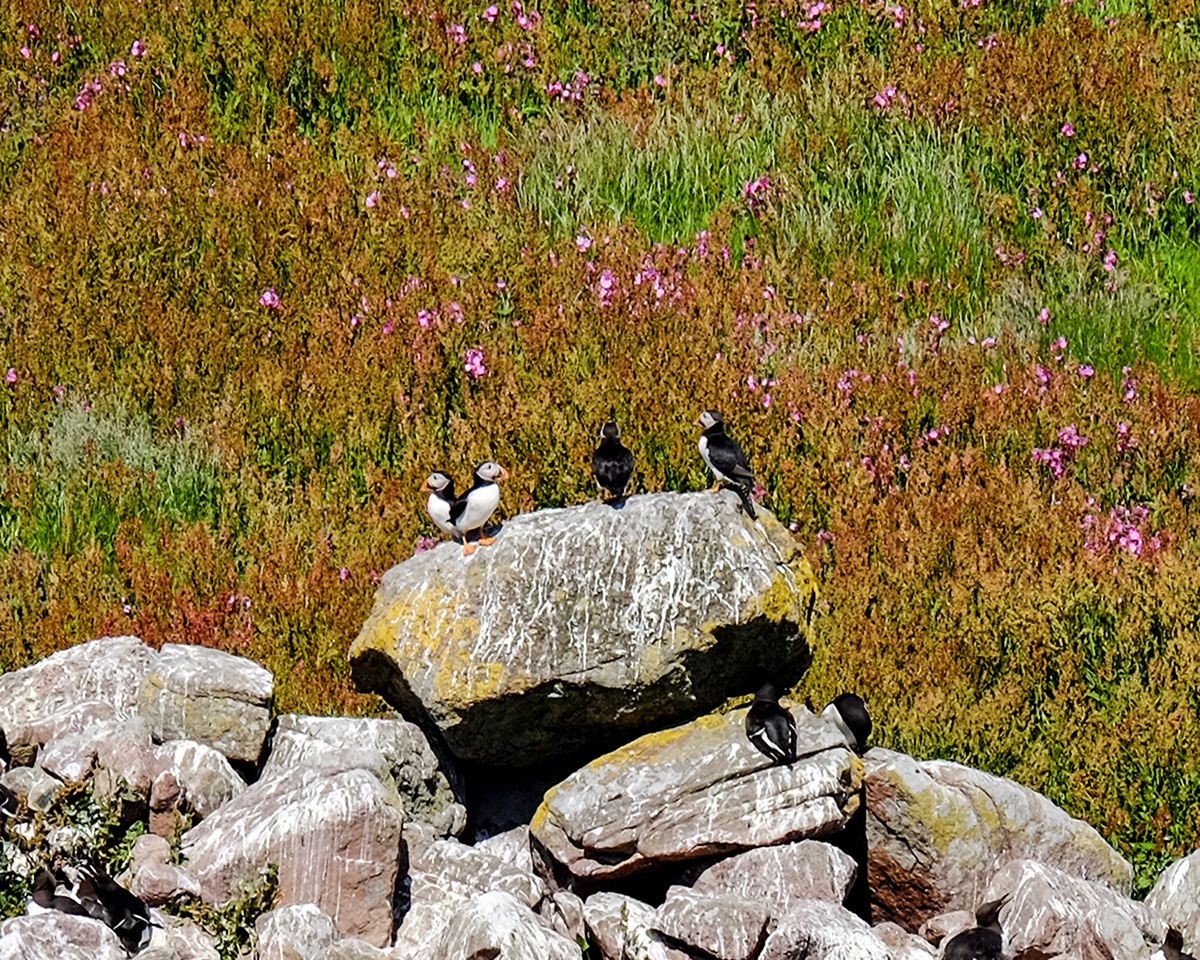
At Dunnet Head, home to the RSPB’s largest reserve on mainland Britain, puffins nest on dramatic sea cliffs. An all-abilities path leads to a clifftop viewing platform, giving accessible and reliable puffin watching, especially during the May to July breeding season.
Duncansby Head, at Scotland’s northeastern tip, offers clifftop walks and seastack views. You might also spot puffins at nesting time on the cliff edges or in the rock cavities.
Note: Puffin Cove near Thurso has been closed off to visitors due to potential damage to the puffin colony from too many people.
Where: Dunnet Head and Duncansby Head, Caithness When: May to July for puffins
RSPB Forsinard Flows (Hen Harriers, Peat Bogs)
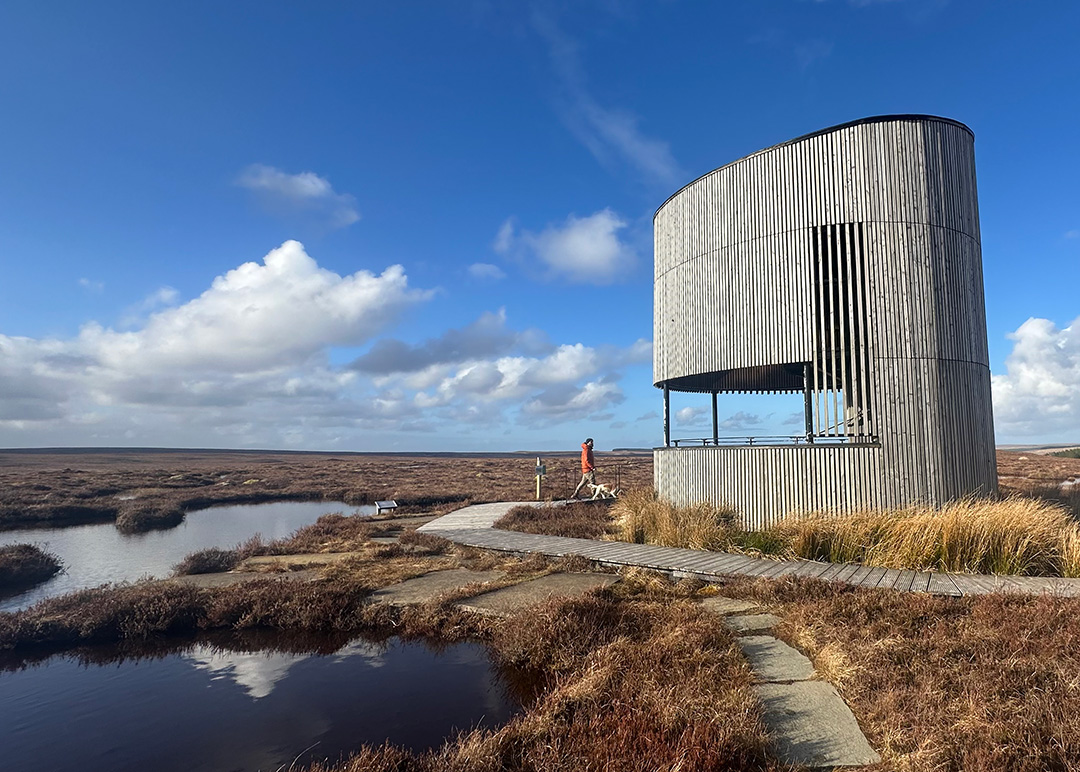
A very rare type of peatland, the Flow Country is the most extensive blanket bog system in the world. Made up of a series of 190,000 hectares of peat bogs and pools, the bog has been growing for nearly 10,000 years.
The Flow Country is a stunningly beautiful place to visit, home to plants and wildlife such as merlin, golden plover, buzzards and hen harriers. One of the most prevalent plant species of the Flow Country is sphagnum moss, which helps the peat bog store all its water.
The best spot to visit is at the RSPB Forsinard Flows Visitor Centre on the A897 at Forsinard (KW13 6YT), halfway between Helmsdale on the east coast and Melvich on the far north coast.
Explore the boardwalks of the Dubh-Lochain trail (1.6km) which take you to the Flows Lookout Tower where you get a 360 degree view of the bog.
Where: RSPB Forsinard Flows, Caithness When: April to September
Find out more about visiting RSPB Forsinard Flows.
Rogie Falls, Ross-shire (Red Squirrels, Salmon)
At Rogie Falls in Ross-shire, you can witness Atlantic salmon leaping upstream over the falls, one of Scotland’s most famous salmon runs. Salmon are often visible from the suspension bridge and riverside path in August and September.
The surrounding pine and birch woodland is also home to native red squirrels.
Where: Rogie Falls, near Contin, Ross-shire When: August to October for salmon, year round for red squirrels
Explore on this 1 mile walk around the woods of Rogie Falls.
The Islands
Isle of Mull (Sea Eagles, Otters, Basking Sharks)
The Isle of Mull is the best place in Britain to see white-tailed sea eagles, also known as the “flying barn door” for their two-and-a-half-metre wingspan. Mull Eagle Watch runs guided trips into a hide near a nesting pair throughout the breeding season, with all proceeds going to conservation.
The island is also one of the best places to see otters on the British coast, particularly along the rocky shoreline of Loch na Keal and around the Ulva ferry slip. Add hen harriers, golden eagles, red deer, and basking sharks in summer (off the south coast).
Where: Isle of Mull (ferry from Oban) When: April to September for eagles and basking sharks, year round for otters and red deer
Kylerhea, Isle of Skye (Otters)
The Kylerhea Otter Hide on the south coast of Skye is one of the most reliable places in Scotland to see wild otters. The hide overlooks a narrow tidal channel between Skye and the mainland where otters fish at low tide. Allow a couple of hours, take binoculars, and stay quiet.
The drive in from the Skye Bridge takes you down a single-track road through a beautiful glen. Otters aside, the views across to Knoydart on a clear day are reason enough to come.
Where: Kylerhea Otter Hide, Isle of Skye When: Year round, low tide best
Hermaness and Noss, Shetland (Gannets, Puffins, Bonxies)
For those willing to travel, the Shetland reserves of Hermaness (on Unst) and Noss (an island off Lerwick) are home to some of the most spectacular seabird colonies in Britain. Hermaness has gannets, puffins, great skuas and fulmars on dramatic clifftop walks. Noss has 25,000 pairs of gannets visible from a small boat trip out of Lerwick.
Worth a trip if you’re already on Shetland and want a wildlife day out unlike anything on the mainland.
Where: Hermaness National Nature Reserve (Unst); Noss National Nature Reserve (Bressay) When: May to August
FAQs
Where is the best place to see wildlife in Scotland?
The Cairngorms National Park is the best all-round wildlife destination in Scotland, with red squirrels, mountain hares, ospreys, capercaillie and the only free-ranging reindeer herd in the UK. For coastal wildlife, the Moray Firth (dolphins) and Mull (sea eagles, otters, basking sharks) are unmatched.
When is the best time to see wildlife in Scotland?
May and June are the best months overall, with long daylight hours, returning migrant birds, breeding seabird colonies and active marine wildlife. September and October bring the red deer rut. Winter is excellent for sea eagles, mountain hares (in white winter coats) and reindeer in the Cairngorms.
Where can you see dolphins in Scotland?
Chanonry Point on the Black Isle, 20 minutes from Inverness, is the most reliable dolphin spotting site in Britain. The Moray Firth has a resident population of around 130 bottlenose dolphins. The best time is on a rising tide, particularly the two hours either side of high water.
Where can you see eagles in Scotland?
Golden eagles can be seen above the Torridon mountains, in Glen Affric, on Skye and across the western Highlands. White-tailed sea eagles are best seen on the Isle of Mull, where Mull Eagle Watch runs guided trips throughout the breeding season. Both species are also resident on Skye.
Are there bears, wolves or wildcats in Scotland?
Scotland has no bears or wolves, both went extinct hundreds of years ago. The Scottish wildcat is critically endangered with fewer than 100 pure-bred individuals left in the wild, mostly in the Cairngorms. Pine martens, red squirrels and otters are the closest you’ll come to seeing genuinely wild predators in Scotland today.
Love, from Scotland x

Leave a Reply