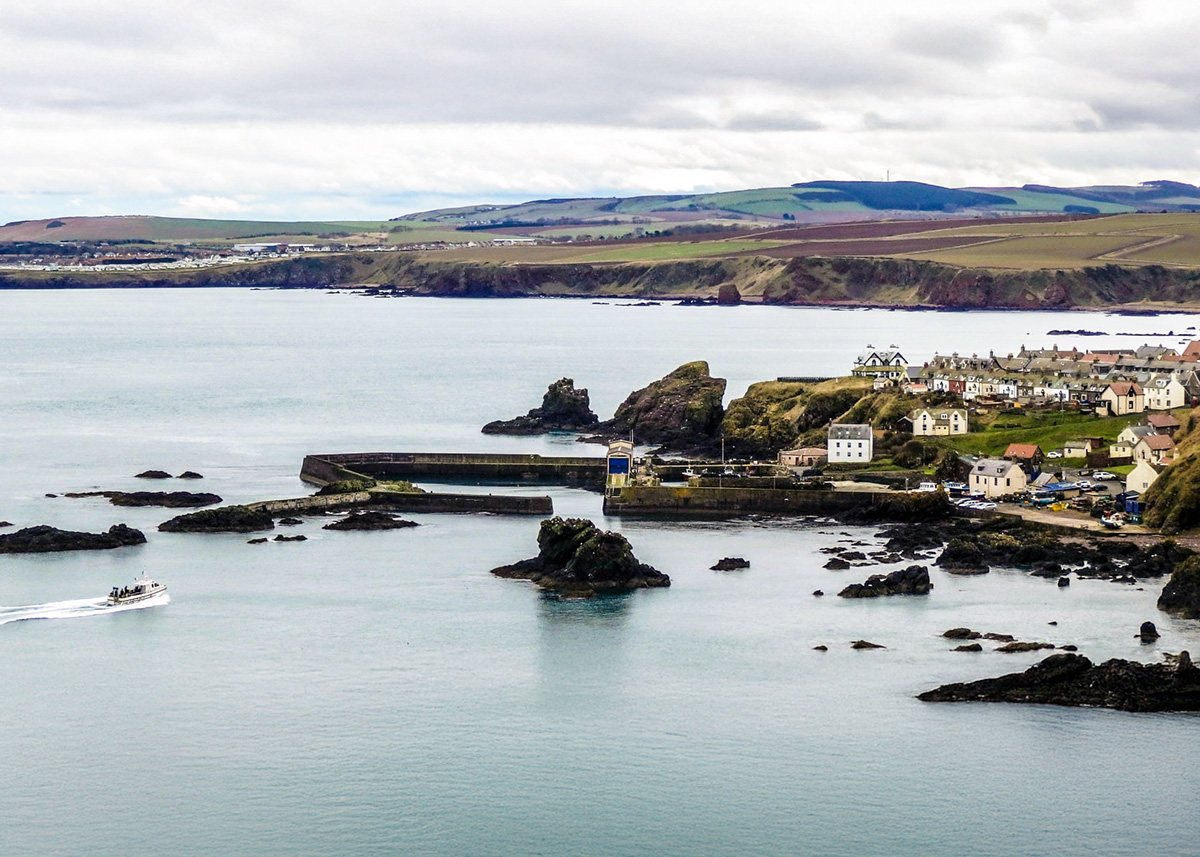
Tucked away on the dramatic Berwickshire coastline, St Abbs is one of the most beautiful coastal villages in Scotland. A working fishing harbour with painted cottages, cliffs alive with seabirds, grey seals pupping on the beaches, and a clifftop nature reserve walk that’s one of the best short hikes in the country. And an hour and three-quarters from Edinburgh, it’s an easy day trip too.
This is my guide to visiting St Abbs, from the harbour and the nature reserve to Coldingham Bay, where to eat, and how to get here.
How to use this guide
- Where is St Abbs?
- St Abbs harbour
- St Abbs Head National Nature Reserve
- Seal watching at St Abbs
- Seabirds at St Abbs
- St Abbs beach and Coldingham Bay
- Where to eat at St Abbs
- Walking from St Abbs
- St Abbs parking
- How to get to St Abbs
- Day trip to St Abbs from Edinburgh
- Best time to visit
- Nearby places to visit
- St Abbs FAQs
Where is St Abbs?
St Abbs is a small fishing village on the Berwickshire coast in the Scottish Borders, about 50 miles south-east of Edinburgh and 15 miles north of Berwick-upon-Tweed. Despite the name occasionally causing confusion, St Abbs is in Scotland, not Northumberland. The English border is just south of Berwick, well below the village.
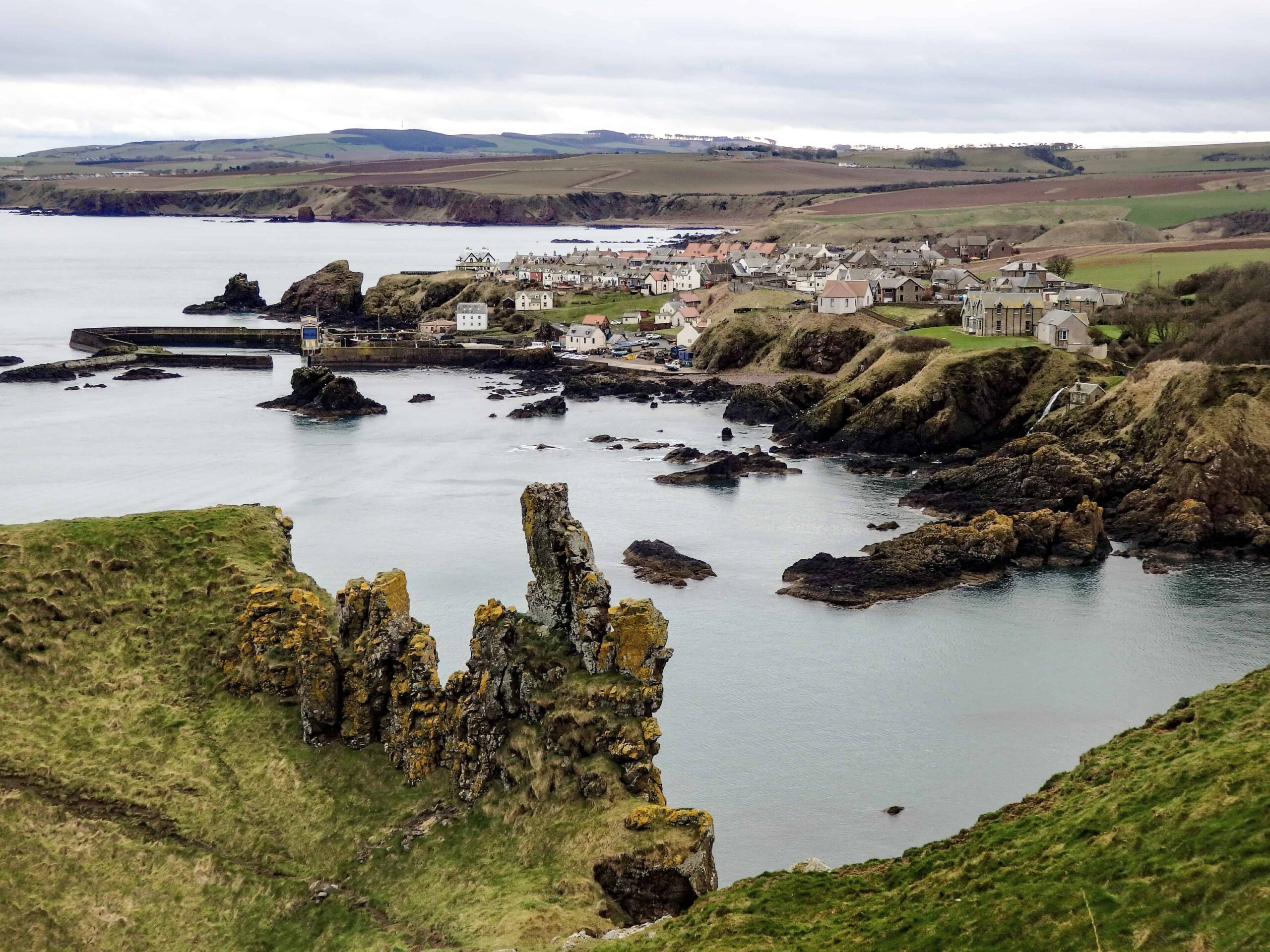
The village sits on a dramatic headland with the North Sea on three sides. Next to the village is St Abbs Head, a National Nature Reserve managed by the National Trust for Scotland, famous for its seabird colonies and some of the best coastal walking on the east coast.
St Abbs is named after Saint Æbbe, a 7th-century abbess who founded a monastery on the cliffs above what is now the village. The settlement itself is relatively modern. Until the 1890s, the harbour was called Coldingham Shore, and the fishermen lived in the larger village of Coldingham a mile inland. They moved down to the coast and renamed the place after the saint.
St Abbs harbour
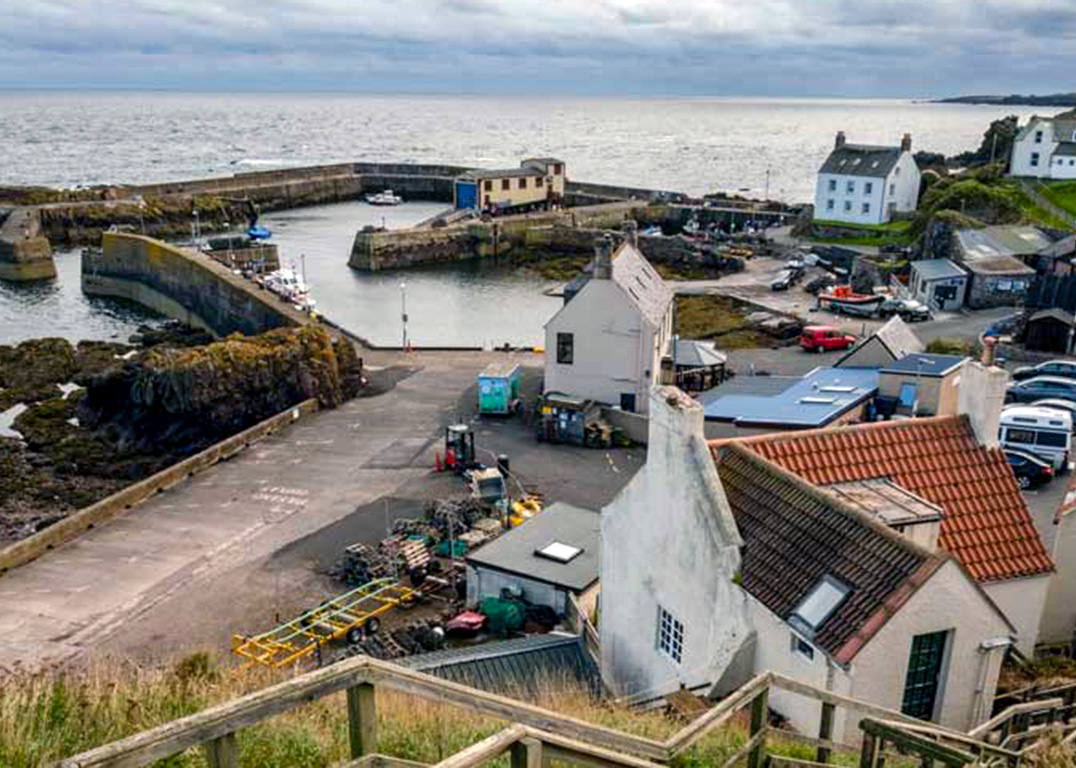
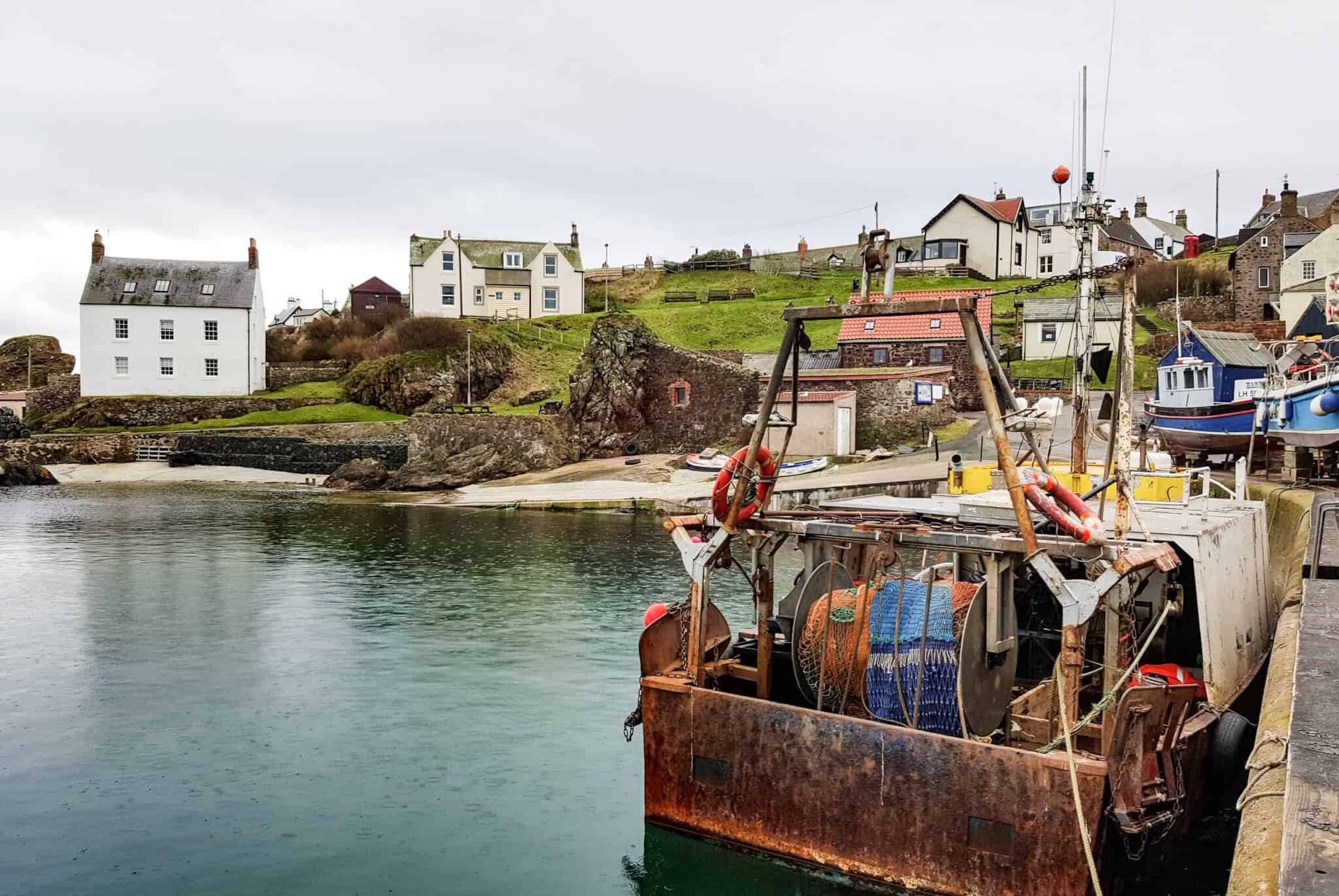
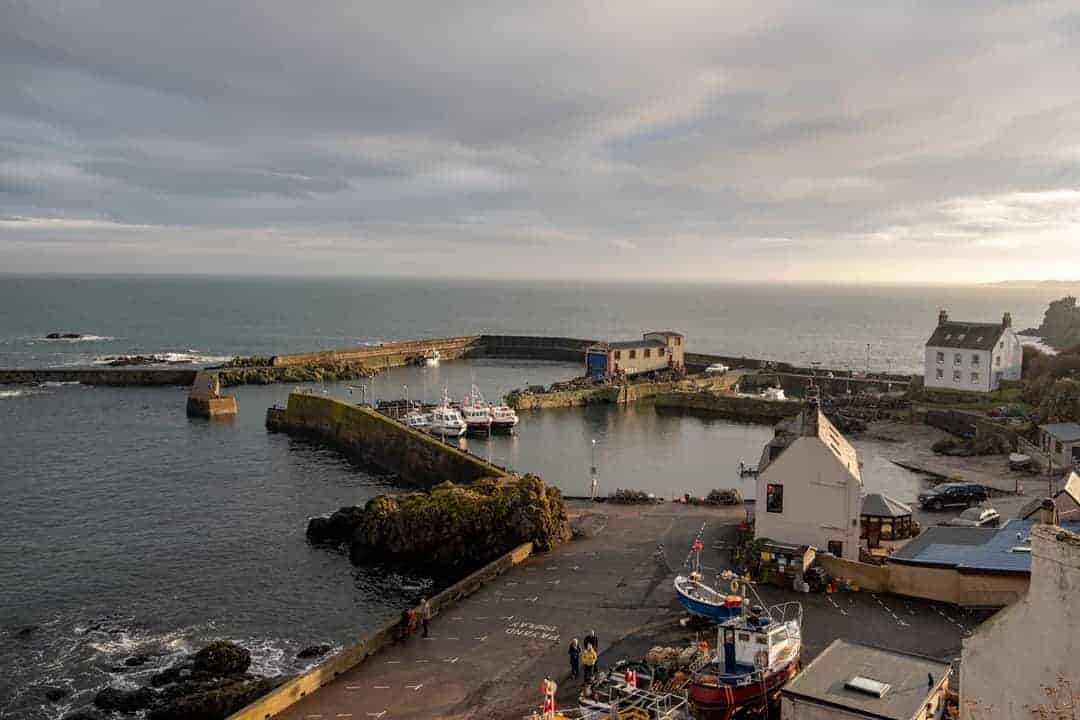
The harbour is the heart of St Abbs and one of the prettiest spots on the east coast of Scotland. Painted fishing cottages wrapped around a sheltered bay, bobbing boats, wide sea views, and a lifeboat station. Six working lobster boats still fish from here, bringing in daily catches of lobster and local edible crabs (known locally as poos).
The harbour walls are a good spot to watch the boats come and go. The RNLI lifeboat station is at the north end of the harbour and the Voluntary Marine Reserve has an information point near the visitor centre.
St Abbs had its Marvel moment in 2019 when the village was used as Thor’s Asgardian refugee settlement of New Asgard in Avengers: Endgame. The fictional “Cormorant and Tun” pub was actually the Ebb Carrs Café. The village has stayed impressively low-key about its film fame, but you’ll still see occasional Marvel fans photographing the harbour for that reason. The harbour also appeared in Harry Styles’s “Adore You” video and more recently St Abbs Head appeared in the Buccaneers.
St Abbs Head National Nature Reserve
St Abbs Head is the clifftop nature reserve just north of the village, managed by the National Trust for Scotland. It’s the main reason many people visit St Abbs and one of the best short coastal walks in Scotland.
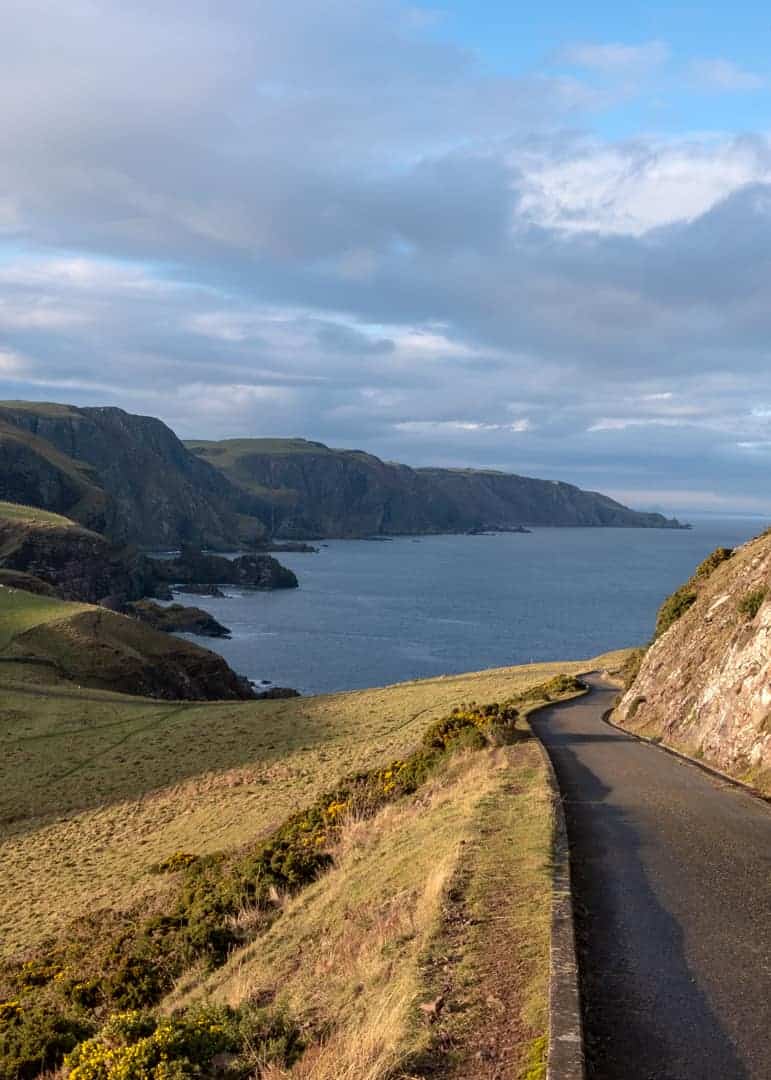
The cliffs here are volcanic in origin, formed around 400 million years ago, and rise dramatically out of the North Sea. In spring and summer the cliffs are alive with seabirds. Paths run along the clifftop edge with panoramic views out to sea. On clear days you can see as far north as the Bass Rock off North Berwick.
The St Abbs Head walk
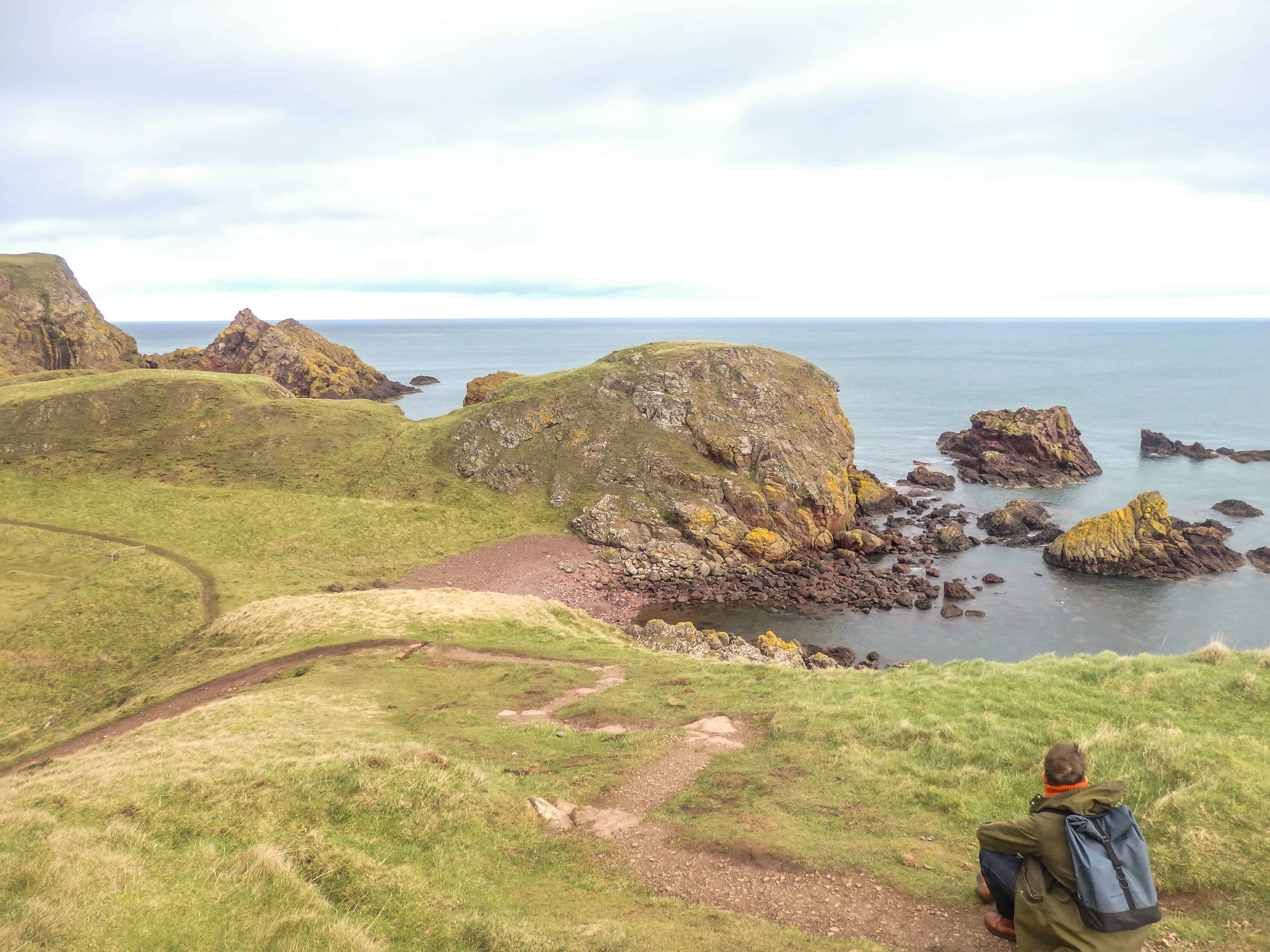
The circular walk from St Abbs village around St Abbs Head is about 4 miles / 6.5 km and takes 2 to 3 hours depending on how long you spend looking at birds and seals.
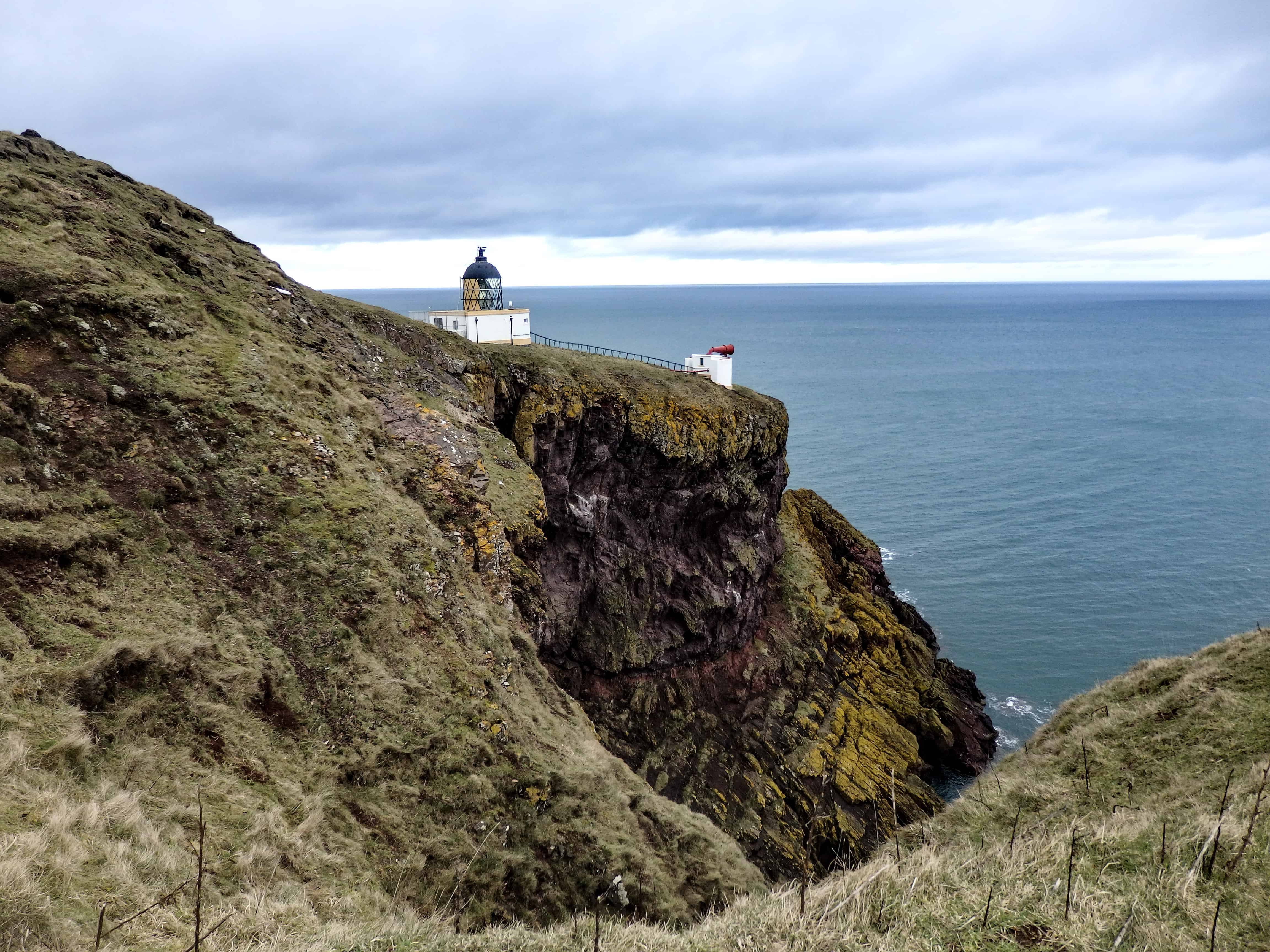
From the village, follow the coastal path north. The path climbs steadily onto the clifftop with the first of the seabird colonies appearing after about 20 minutes. The St Abbs Lighthouse, built by the Stevenson family in 1862, sits about halfway round at the highest point. The return is via Mire Loch, a narrow freshwater loch in a glacial valley, back to the village.
There are shorter options. The National Trust visitor centre sits at the start of the reserve and you can walk from there rather than from the village. Paths are mostly well-maintained but there are steep sections and one or two exposed bits where the path runs close to the cliff edge. Not one to do with very young children without holding hands.
Pettico Wick Bay
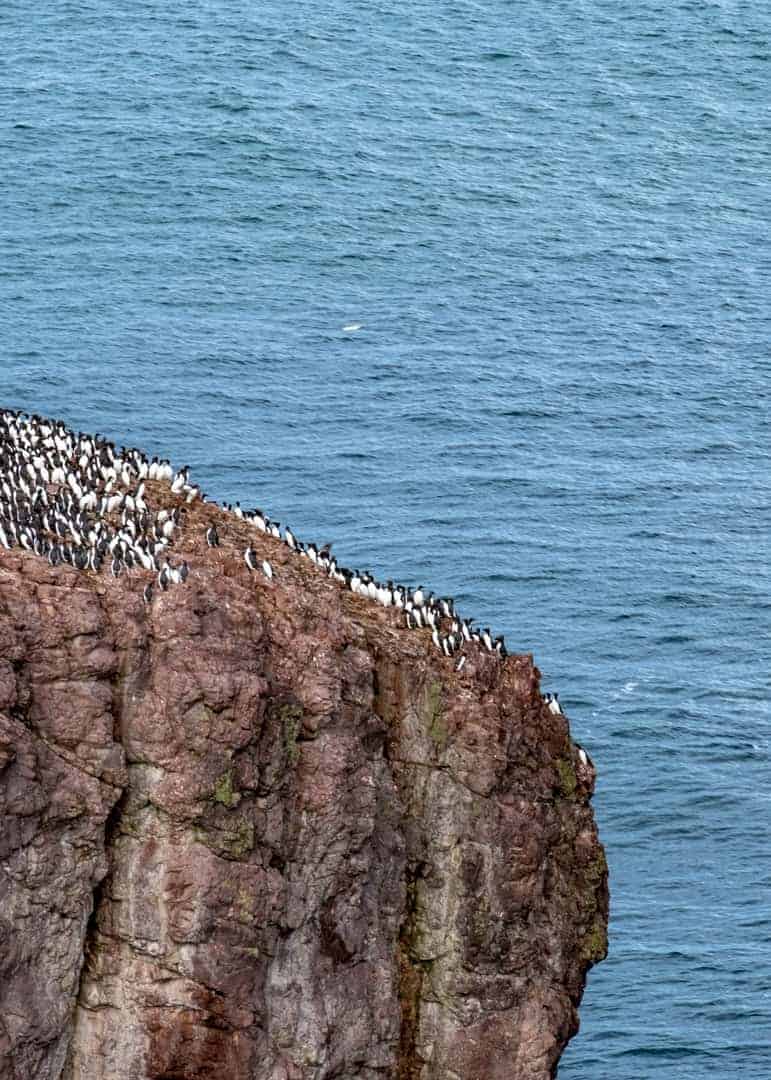
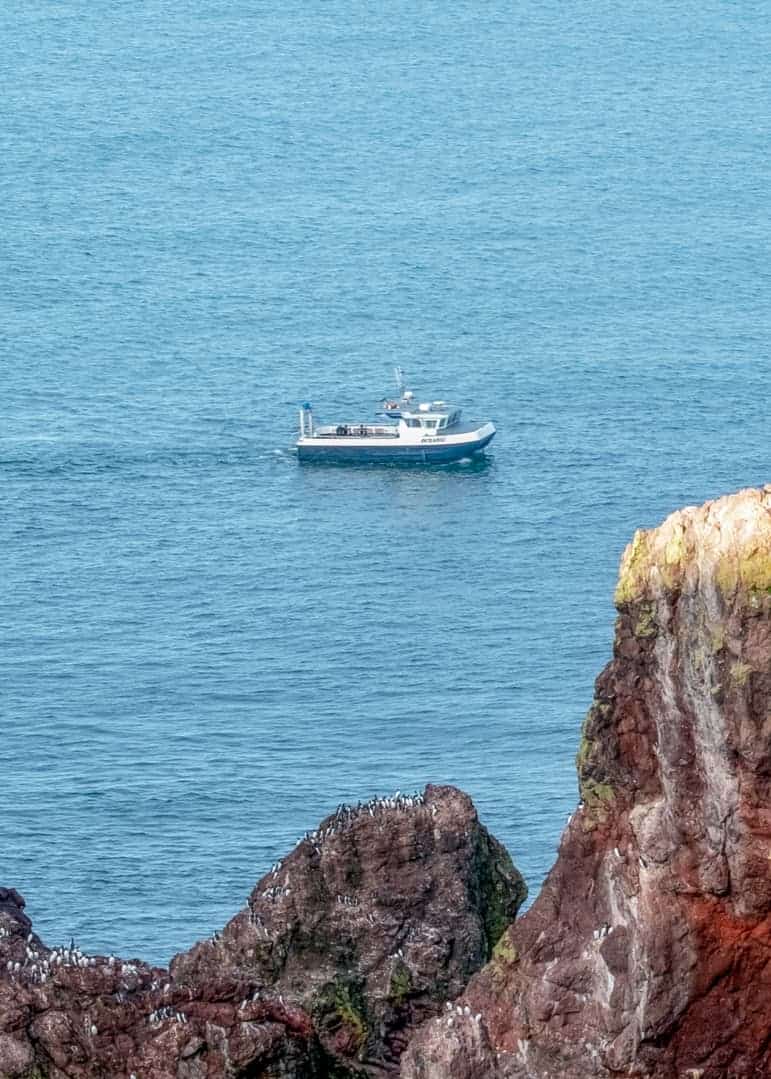
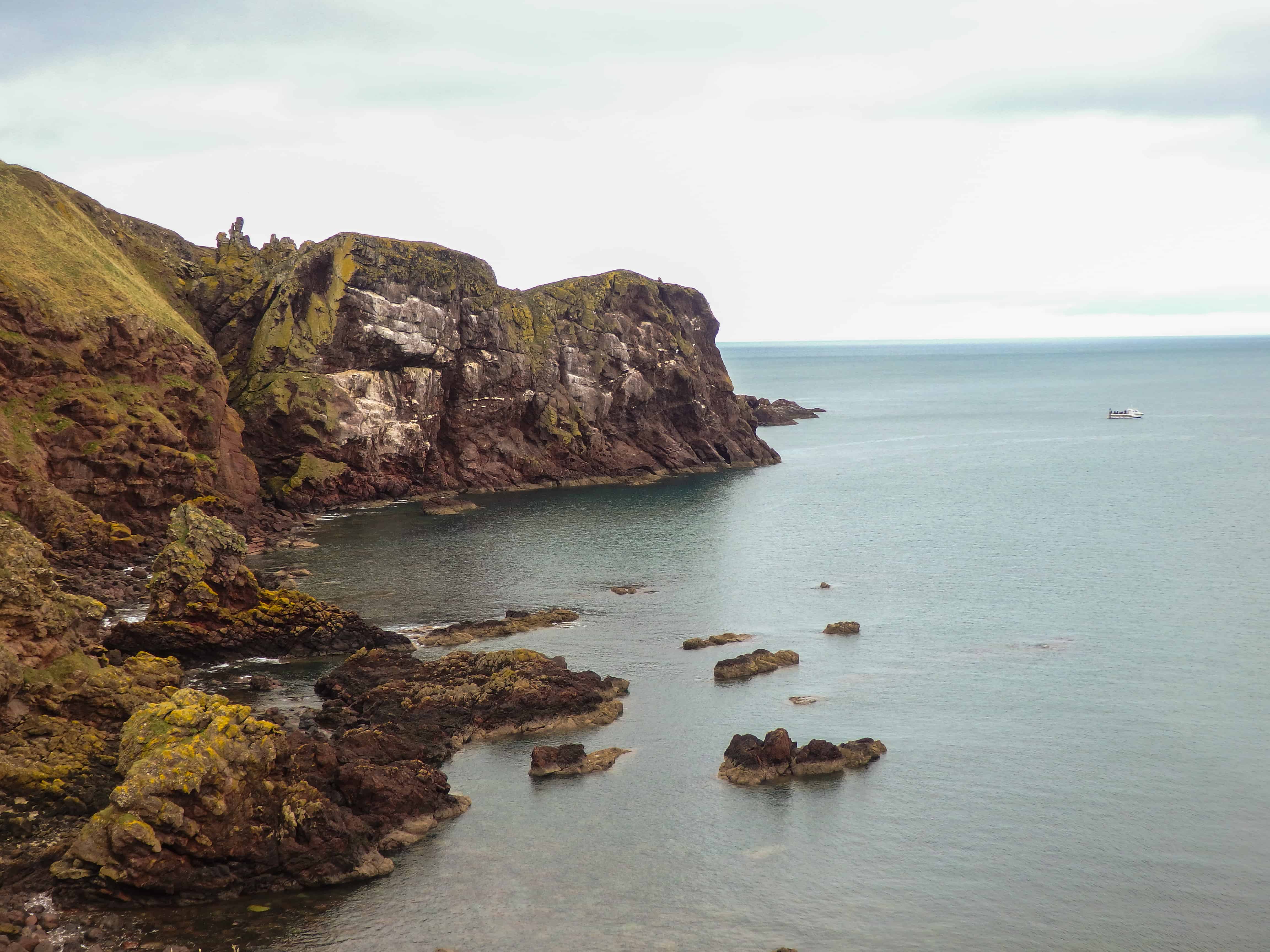
If you take the cliff path north past the lighthouse, you reach Pettico Wick Bay, a small cove with spectacular folded pink and purple volcanic rock. The rocks are 400 million years old and mark the Pettico Wick Fault. This is one of the best bits of coastal geology on the east coast, and in summer the ledges are crammed with nesting kittiwakes and guillemots.
From here, on a very clear day, you can see Arthur’s Seat in Edinburgh in the distance.
Seal watching at St Abbs
St Abbs is one of the best places in Scotland to see grey seals. A resident colony breeds here, and the beaches below the cliffs are used as pupping grounds in late autumn and winter.
When to see seals at St Abbs:
- October to December: pupping season. Grey seal mothers haul out on the beaches to give birth and nurse their pups. This is the most dramatic time to visit.
- Year-round: adult seals are visible in the water and on the rocks below the cliffs at most times.
- Best viewing spots: the clifftop paths at St Abbs Head, especially around the lighthouse. Bring binoculars.
During pupping season, please don’t approach the seals or cross any safety barriers. Seal pups are easily startled and their mothers can abandon them if disturbed. Photograph from the clifftops, not from the beaches.
Seabirds at St Abbs
St Abbs Head is home to around 50,000 seabirds during the breeding season, making it one of the most important seabird sites in the UK.
What you’ll see:
- Puffins (April to July) — in smaller numbers than the big Forth colonies, but visible on the cliffs
- Guillemots (April to August) — the most numerous, packed onto the cliff ledges
- Razorbills (April to July)
- Kittiwakes (April to August) — noisy colonies on the cliff faces
- Fulmars (year-round) — gliding along the clifftops on stiff wings
- Shags and cormorants
- Gannets occasionally — commuting from the Bass Rock colony to the south
Peak activity is late May and June, when chicks are hatching and the cliffs are at their loudest. Bring binoculars and keep dogs on leads.
St Abbs beach and Coldingham Bay
St Abbs itself doesn’t have a proper beach, the village is set around a small working harbour. The nearest beach, and one of the best on the Berwickshire coast, is Coldingham Bay, just a mile south.
Coldingham Bay
Coldingham Bay is a wide, sandy, south-facing beach backed by dunes and a dramatic rocky headland. It’s sheltered enough to be popular with families, and the water is clear and usually clean enough for swimming in summer (it holds a regular Seaside Award).
It’s also one of the best beginner surf beaches in the east of Scotland, with modest but consistent waves in the right conditions. St Vedas, just above the beach, hires surfboards and wetsuits and runs surf lessons. Good summer café for post-surf food.
The Creel Path walk from St Abbs harbour to Coldingham Bay is a lovely 30-minute cliff walk along the coast. You can park at either end and walk one way, or do it as a short there-and-back from St Abbs.
Parking at Coldingham Bay is in a paid council car park above the beach, accessed via the B6438 from Coldingham village. Toilets and beach huts are on the promenade.
Where to eat at St Abbs
St Abbs is small — you won’t get lost finding somewhere to eat. These are the places that actually matter.
Ebb Carrs Café — the harbour-front café, famous for its crab sandwiches made with local St Abbs crab. This is the one to queue for. Also the “Cormorant and Tun” from Avengers: Endgame (it’s not really a pub).
The Old School Café — a sit-down café in the old village school, good for breakfasts, lunches and cakes. More space than Ebb Carrs on a busy day.
St Abbs Visitor Centre — sells drinks, snacks and information, with a small exhibition on the marine life and history of the village.
If Ebb Carrs is full (and it often is on a sunny Sunday), the Old School Café is the easier alternative. For anything more substantial, head to Eyemouth 15 minutes up the coast, where Oblò Bar and The Churches Restaurant do proper evening meals.
Walks from St Abbs
St Abbs is an excellent base for coastal walking. The three best options:
1. St Abbs Head circular (4 miles, 2-3 hours). The classic walk covered above the clifftops, with views of the seabirds, lighthouse, returning by Mire Loch.
2. St Abbs to Coldingham Bay via the Creel Path (1 mile, 30 minutes). A lovely short cliff walk south along the coast to the beach. Good lunch option: walk to Coldingham, eat at St Vedas, walk back.
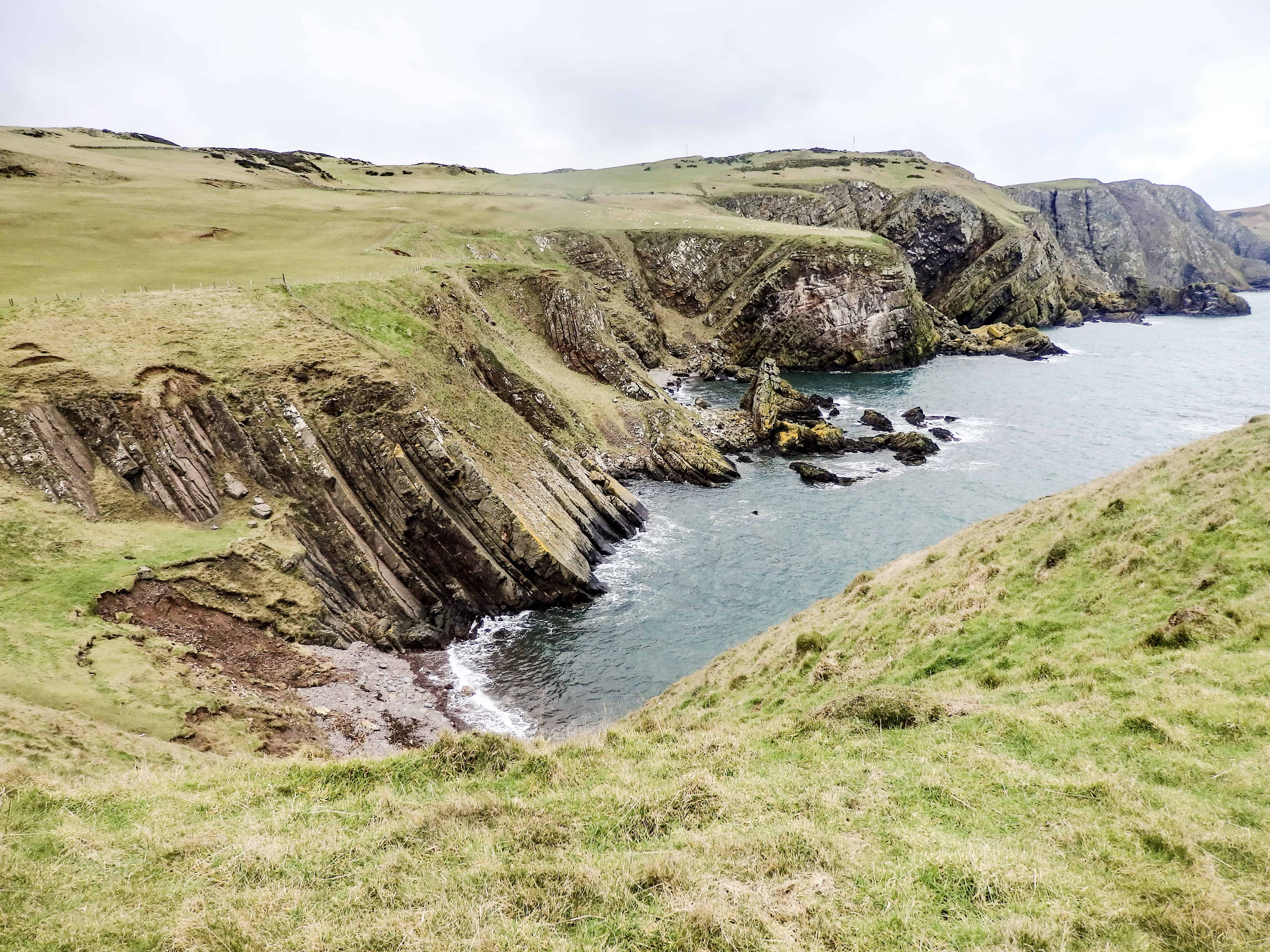
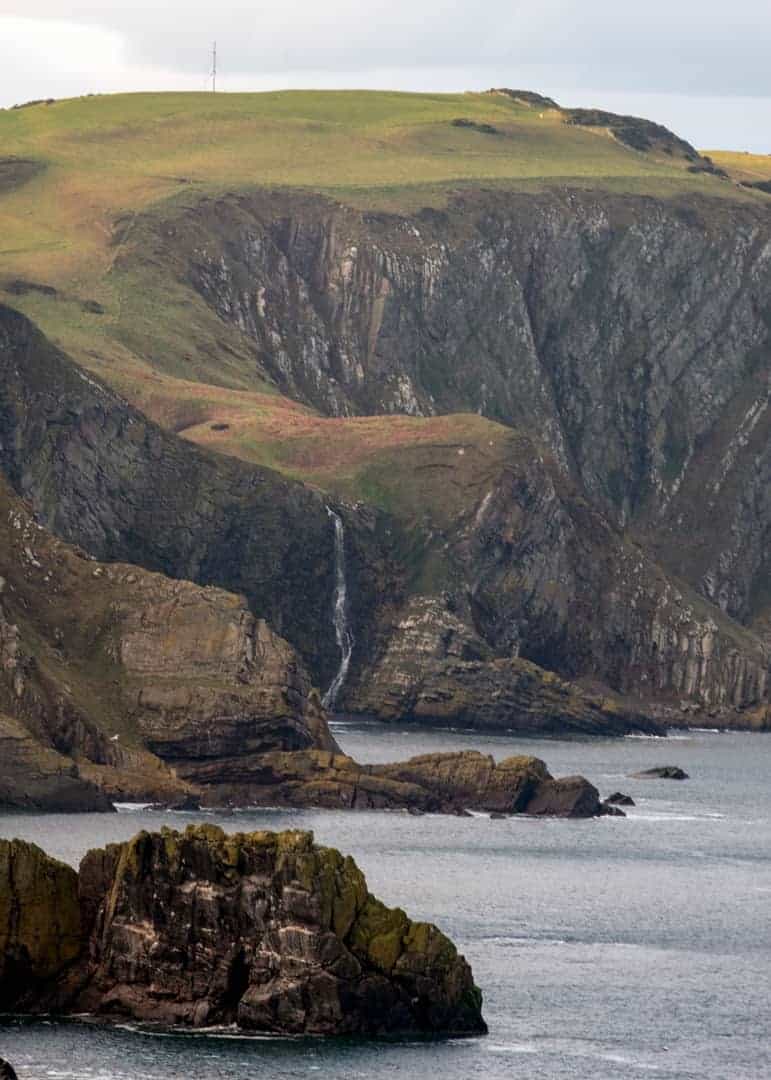
3. The Berwickshire Coastal Path. The 30-mile long-distance path runs from Cockburnspath in the north to Berwick-upon-Tweed, passing through St Abbs. You can do sections as day walks – the Coldingham to Eyemouth section via St Abbs is a favourite.
St Abbs parking
There are two main car parks at St Abbs.
St Abbs harbour car park is the small paid car park next to the harbour in the middle of the village. It’s the most convenient for the village and harbour, but small, and fills up by mid-morning on summer weekends. Paid parking by the hour.
National Trust for Scotland car park at the top of the hill above the village is larger and free for NTS members, with a small fee for non-members. There’s a visitor centre, toilets, and it’s the easier starting point for the St Abbs Head nature reserve walk. On a busy summer weekend, this is where to aim for.
Overflow: there’s additional parking in Coldingham village a mile south, and roadside parking on the approach to St Abbs. Don’t park in passing places or block driveways — the village roads are narrow and enforcement has increased.
Summer warning: on a sunny summer weekend, both St Abbs car parks are often full by 10am. Either arrive very early (before 9am) or come in the afternoon when day visitors start leaving.
How to get to St Abbs
By car
Driving is the easiest way to reach St Abbs.
- From Edinburgh: 1 hour 45 minutes via the A1 south and the B6438
- From Berwick-upon-Tweed: 25 minutes north on the A1
- From Newcastle: 1 hour 15 minutes
- From Edinburgh Airport: 2 hours
The approach from the A1 is via Coldingham village on the B6438, a narrow country road. Be prepared for single-track sections and passing places near St Abbs itself.
By train and bus
The nearest train station is Berwick-upon-Tweed, on the East Coast Main Line from Edinburgh, Newcastle and London. From Berwick, Perryman’s Buses runs the 253 service between Berwick and St Abbs via Coldingham.
From Edinburgh, there’s a direct bus – Perryman’s 253 runs from Edinburgh to St Abbs on some services. Check the current timetable as frequencies are limited, especially on Sundays.
By bike or on foot
St Abbs is on the Berwickshire Coastal Path, so it’s accessible as a day walk or overnight stop from either Cockburnspath or Berwick. It’s also a popular cycling destination, the country roads in this part of the Borders are quiet, and the East Coast bike route runs nearby.
Day trip to St Abbs from Edinburgh
St Abbs makes an excellent day trip from Edinburgh, particularly in spring and summer. The drive is 1 hour 45 minutes each way, leaving a full day for exploring.
A suggested day plan:
- Leave Edinburgh by 9am to beat the car parks filling
- Arrive St Abbs around 11am, park at the NTS car park
- Walk the St Abbs Head circular (allow 2.5 hours with seabird stops)
- Lunch at Ebb Carrs Café (crab sandwich) or the Old School Café
- Walk to Coldingham Bay via the Creel Path for an afternoon on the beach
- Drive back via Eyemouth for ice cream on the harbour
- Back in Edinburgh by 6pm
If you want to extend it to a weekend, stay overnight in St Abbs, Eyemouth or Coldingham, and add the Berwickshire Coastal Path walks on day two.
Best time to visit St Abbs
Spring (April to May): Seabirds returning to nest, wildflowers on the clifftops, fewer visitors. One of the best times to come.
Summer (June to August): Peak season. Seabird colonies at their busiest, warmer sea for swimming at Coldingham, and the longest daylight. Also the busiest. Weekends fill the car parks by mid-morning.
Autumn (September to October): Quieter, dramatic light, migrating birds. Good for photographers.
Late autumn to winter (November to February): Seal pupping season on the beaches below the cliffs. Dramatic winter coast, fewer walkers, often raw and windy. Dress for it.
Nearby places to visit
Coldingham Bay (1 mile south) — the sandy beach covered above.
Eyemouth (4 miles north) — a proper working fishing town with a good harbour, a small museum dedicated to the 1881 Eyemouth fishing disaster, and better evening food options than St Abbs. Eyemouth RIB Trips run wildlife tours up the coast.
Coldingham Priory (1 mile south) — a ruined medieval priory in Coldingham village, founded in the 7th century by St Æbbe’s nephew.
Pease Bay (10 miles north) — a surf beach backed by dramatic cliffs and a holiday park.
Berwick-upon-Tweed (15 miles south) — the walled border town with medieval walls, the Tweed estuary and seabird colonies of its own at the mouth of the river.
Read more: my guide to the Scottish Borders.
The 1881 Eyemouth Disaster memorial
On the 14th of October 1881, a severe storm off the Berwickshire coast claimed the lives of 189 fishermen, most from Eyemouth. It remains one of the worst fishing disasters in British history. Sculptor Jill Watson’s memorial, Widows and Bairns, stands on the harbour at St Abbs (and at Eyemouth, Burnmouth and Cove), showing the women and children who watched from the shore as the boats went down.
It’s a small memorial but moving, and worth a pause.
St Abbs FAQs
Where is St Abbs?
St Abbs is a small fishing village on the Berwickshire coast in the Scottish Borders, about 50 miles south-east of Edinburgh. It’s in Scotland, not Northumberland — despite the proximity of the English border.
Is St Abbs worth visiting?
Yes. St Abbs is one of the most scenic coastal villages in Scotland, with a working fishing harbour, dramatic cliffs, one of the UK’s best seabird colonies, and good food. It makes an excellent day trip from Edinburgh or a weekend base for exploring the Berwickshire coast.
How long do you need in St Abbs?
You can see the village and harbour in an hour. Half a day covers the village plus the St Abbs Head walk. A full day lets you add Coldingham Bay and a proper lunch. A weekend lets you combine St Abbs with Eyemouth, Berwick-upon-Tweed and the wider Berwickshire coast.
What is St Abbs famous for?
St Abbs is famous for three things: its working fishing harbour with pastel-coloured cottages, the St Abbs Head National Nature Reserve with one of the UK’s most important seabird colonies, and its starring role as New Asgard in Avengers: Endgame (2019), where the harbour was used as Thor’s post-Avengers refugee settlement.
Does St Abbs have a beach?
St Abbs itself doesn’t have a sandy beach — the village is built around a working harbour. The nearest beach is Coldingham Bay, just a mile south, which is a wide sandy beach popular with families and surfers. A 30-minute cliff walk connects the two.
Can you see seals at St Abbs?
Yes. St Abbs has a resident grey seal colony visible year-round in the water below the cliffs. Pupping season runs October to December when seal mothers haul out to give birth. The best viewing is from the clifftop paths in the St Abbs Head Nature Reserve — bring binoculars and don’t approach the pups.
When can you see puffins at St Abbs?
Puffins are at St Abbs Head from around mid-April to late July. Numbers are smaller than the big Forth colonies at the Isle of May or Bass Rock, but puffins are definitely present and visible from the clifftop paths, especially near the lighthouse.
Can you visit St Abbs without a car?
Yes, but services are limited. Take the train to Berwick-upon-Tweed, then Perryman’s 253 bus to St Abbs. From Edinburgh there are occasional direct bus services. Check timetables carefully, especially on Sundays.
Is St Abbs good for families?
Yes, though with supervision. The harbour is safe for children to explore. The St Abbs Head clifftop walk is largely well-fenced but has unfenced sections where young children need to hold hands. Coldingham Bay is the family-friendly option with a sandy beach, rockpools and a sheltered bay.
Is St Abbs the filming location for New Asgard in Avengers?
Yes. St Abbs harbour was used as Thor’s Asgardian refugee village in Avengers: Endgame (2019). The Ebb Carrs Café was transformed into the fictional “Cormorant and Tun” pub. Marvel fans still visit to photograph the harbour and the café.
More Scottish Borders reading
- The Scottish Borders and Midlothian guide
- Scottish Borders itineraries
- Where to see puffins in Scotland
- A Southern Scotland road trip
Kate — Love from Scotland x