

If you watched any of the 2026 World Cup coverage from Boston – where Scotland played their opening matches – you’ll have seen that all of a sudden the city’s statues started sprouting traffic cones.
Bill Russell got one. So did Paul Revere and Bobby Orr, a mounted George Washington, the mother duck from the Make Way for Ducklings display, and even a seven-tonne bronze octopus. Everywhere the Tartan Army went, bright orange cones appeared on statues’ heads overnight.
So, why do Scottish fans put cones on statues at the World Cup?
If you’re wondering why Scottish fans put cones on statues, the answer sits 3,000 miles away.
What Boston experienced was a forty-year-old tradition on tour, carried across the Atlantic by Scots who simply can’t see a statue without wanting to put a traffic cone on it.
But to understand the Scottish tradition of traffic cones on statues, you have to go to Glasgow.
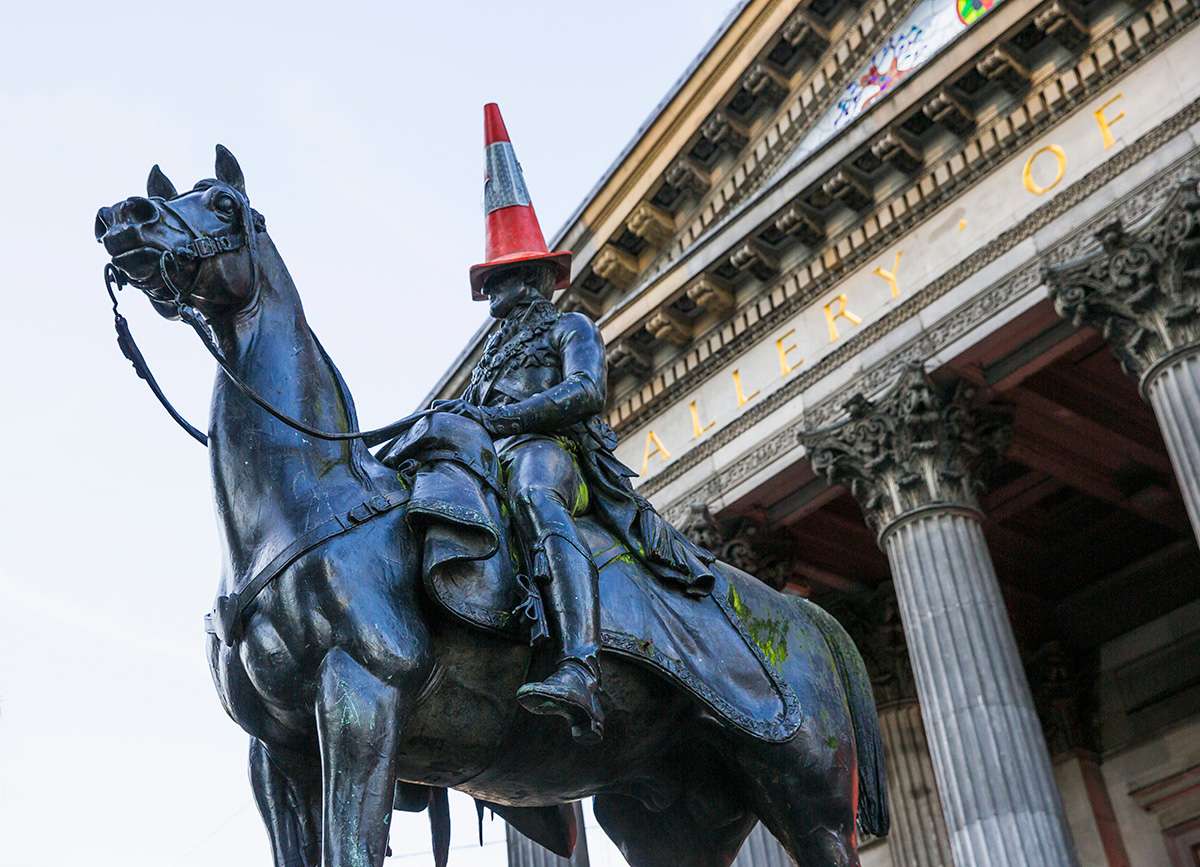
Glasgow’s Duke of Wellington statue and its famous traffic cone
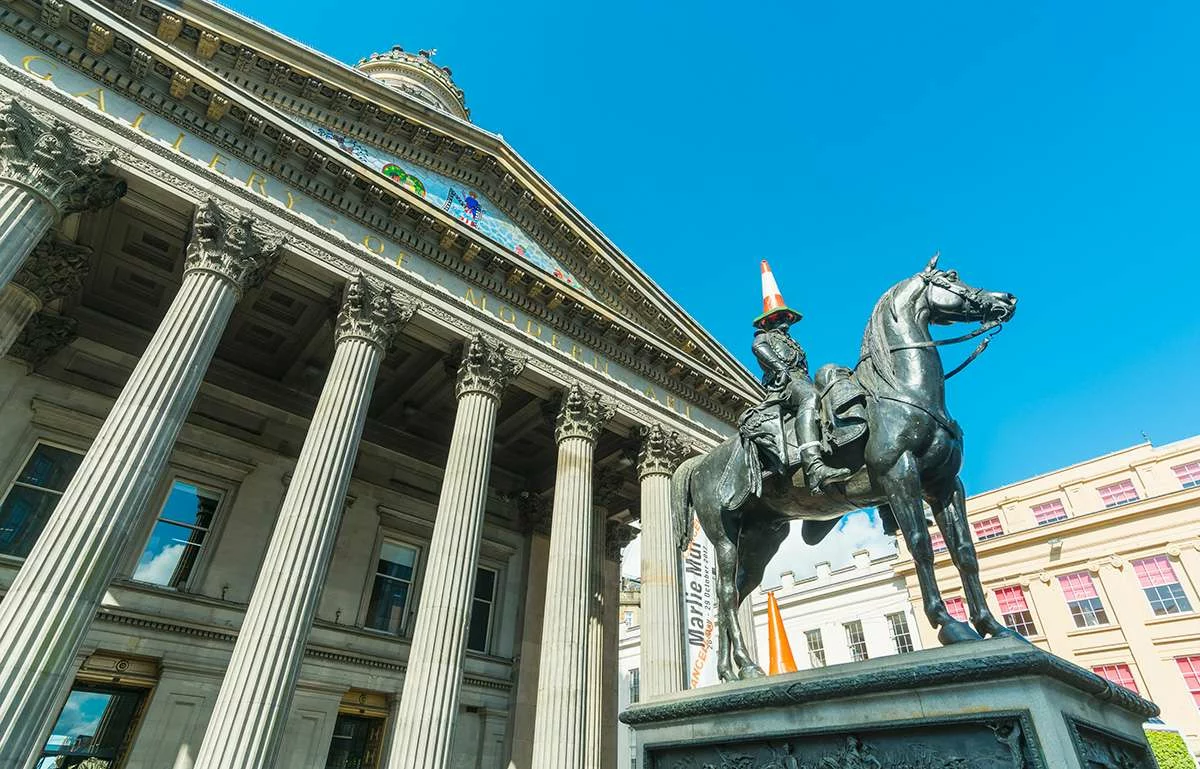
There is a statue of Field Marshal Arthur Wellesley, the 1st Duke of Wellington outside the Gallery of Modern Art in Glasgow. He sits proud on horseback – and on his head is a traffic cone.
The council has tried removing it. The city puts it straight back.
The statue itself is the work of the Italian sculptor Carlo Marochetti, raised in 1844 and paid for by public subscription to celebrate the defeat of Napoleon. Wellington on his horse, all imperial pride, was exactly the sort of monument the city’s great and good hoped would inspire a bit of pride in the cities residents.
Instead, sometime in the 1980s, someone climbed up in the dark and gave him a traffic cone. Nobody knows who did it first, and that’s part of the joy. This one-off prank became a habit, and now it is tradition – and one of the defining images of the city.
When Glasgow City Council tried to remove the cone
For years Glasgow City Council treated the cone as a problem to be solved. There were requests to stop. There was, at one point, CCTV to try and catch the culprits. In 2013 a £65,000 restoration plan even proposed to double the height of the plinth to put the Duke’s head out of reach – the estimate being that removing cones was costing something like £10,000 a year.
Glasgow’s response was immeadiate – a petition to save the cone gathered more than 10,000 signatures and a public rally was held in the cone’s defence. Faced with that, the council quietly folded. The Duke kept his cone.
How the traffic cone became a symbol of Glasgow
The moral of the story – tell Glasgow it isn’t allowed to find something funny and Glasgow will find it even funnier.
Beyond being a long running joke, part of it is the target, of course. The Duke of Wellington Statue is a monument put up by the wealthy and the powerful. Sticking a traffic cone on it is very Glaswegian – a reminder that nobody is above being taken down a peg.
Over the years the Duke has worn a gold cone for the Olympics, a “Yes” cone during the independence referendum, an EU-flag cone on Brexit day, a surgical mask through the pandemic, and a Ukrainian-flag cone in solidarity.
This summer, Glasgow is making the cone official.
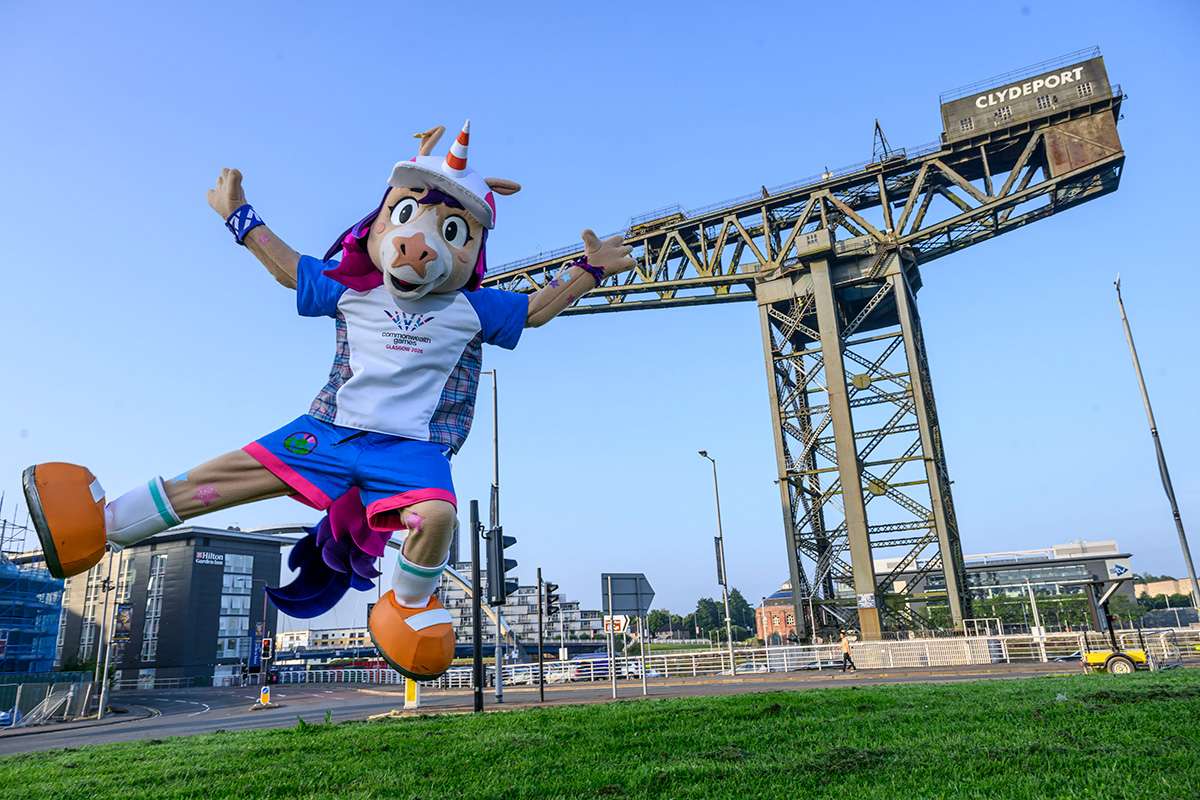
The mascot for the Glasgow 2026 Commonwealth Games, which open on 23 July, is Finnie – a unicorn (Scotland’s national animal, naturally) with a traffic cone for its horn.
So when you saw those cones popping up on statues in Boston, you weren’t watching a random bit of Scottish silliness. Instead you were watching the Scots take a forty-year-old Glasgow tradition on tour.
Long may the tradition continue – no Scotland, no party, as the saying goes.
Frequently asked questions about traffic cones
Why do Scottish fans put cones on statues?
It all comes back to Glasgow. Since the 1980s, the Duke of Wellington statue in the city centre has worn a traffic cone as a hat — a daft prank that grew into a beloved symbol of the city’s humour.
Why does the Duke of Wellington statue have a traffic cone on its head?
Nobody knows exactly who started it, but sometime in the 1980s someone climbed up and gave the Duke a cone. Each time it was removed, another appeared — until the cone became as much a part of the statue as the Duke himself. Today it’s an unofficial symbol of Glasgow.
Where is the Duke of Wellington statue in Glasgow?
It stands in Royal Exchange Square in the city centre, right outside the Gallery of Modern Art (GoMA). It’s a couple of minutes’ walk from Buchanan Street and easy to reach on foot from either Queen Street or Central station.
Who made the Duke of Wellington statue in Glasgow, and when?
It was sculpted by the Italian-born artist Carlo Marochetti and unveiled in 1844, paid for by public subscription to mark the defeat of Napoleon. The cone came along about 140 years later.
Did Glasgow City Council really try to remove the cone?
Yes. In 2013 the council proposed a £65,000 restoration that would have doubled the height of the plinth to keep the Duke’s head out of reach, citing cone-removal costs of around £10,000 a year. A petition to save the cone gathered more than 10,000 signatures and the plan was scrapped. The cone stayed.
Is putting a cone on the Duke of Wellington statue legal?
Not strictly — the statue is a Category-A listed monument, and climbing it isn’t encouraged. It carries a real risk of injury and of damaging the statue, so the tradition is best enjoyed with a camera rather than a cone.
What's the connection between the cone and the Commonwealth Games?
The mascot for the Glasgow 2026 Commonwealth Games is Finnie, a unicorn with a traffic cone for a horn — a deliberate nod to the Duke of Wellington and Glasgow’s sense of humour. The Games open on 23 July 2026.
Why did cones appear on statues in Boston during the World Cup?
Scotland’s travelling fans, the Tartan Army, brought the Glasgow tradition with them for the 2026 World Cup. Statues of Bill Russell, Paul Revere, Bobby Orr and more were crowned with cones — a cheeky tribute to home while the team played nearby.
Kate – Love from Scotland x
You might also like
- 10+ things to do in Glasgow – my local’s guide to the city, from Buchanan Street to the Riverside Museum (and the Duke gets a mention there too).
- My favourite free things to do in Glasgow – museums, galleries, parks, the mural trail and hidden gems, all with zero entry fee.
- My guide to life in Scotland – explore Scotland beyond the lochs, glens and coos.

Leave a Reply