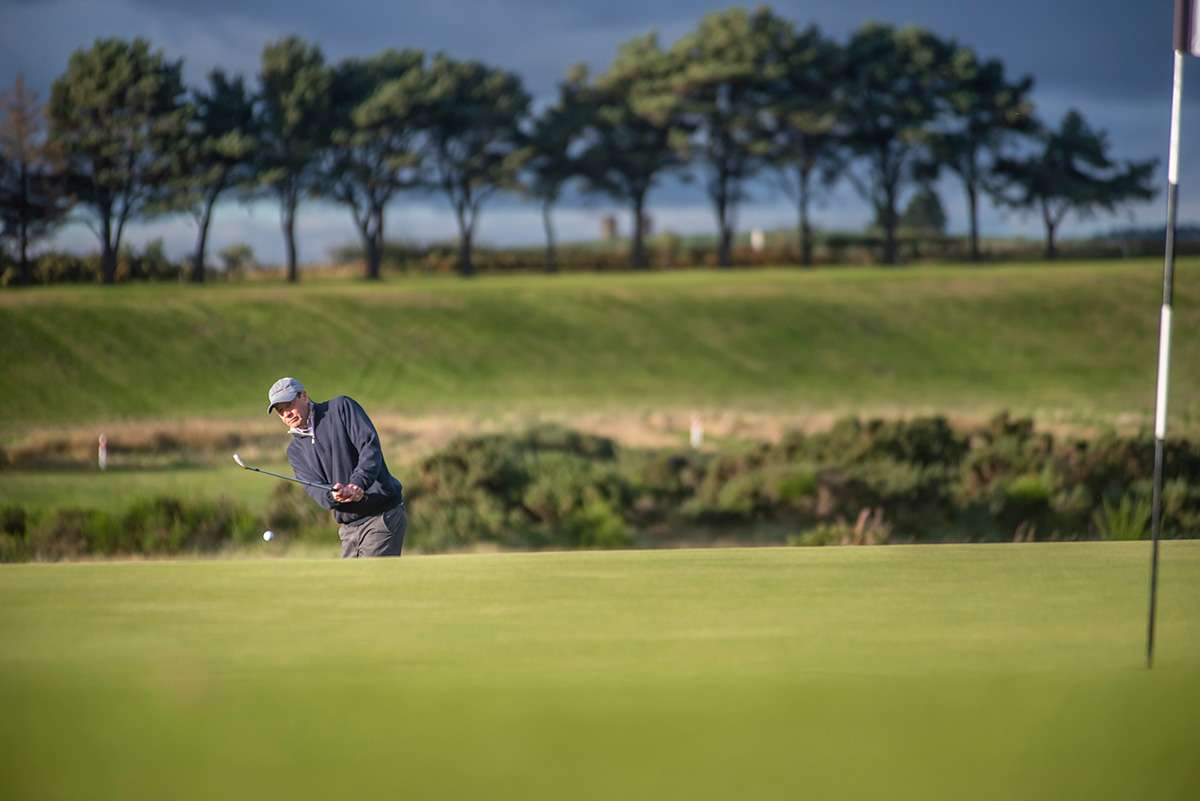
Scotland is the home of golf – the game has been played here since the 15th century – and nowhere else packs in so many great courses in such a small country. From the hallowed turf of St Andrews to wild Highland links and quiet island nine-holers, there’s a round for every level and budget.
Things to know about golfing in Scotland
Most Scottish clubs warmly welcome visitors, but many are members’ clubs that only take visitors on certain days, and the famous names get booked up months (sometimes a year) ahead, so plan early.
Green fees vary hugely, from around £20 for historic municipal links to several hundred pounds for championship courses in peak season, and almost everything is cheaper and quieter in the shoulder months.
A few of the top courses ask to see a handicap certificate.
Here are the best golf courses to play, grouped by region.
Want your course or golf experience added to the directory? Get in touch.
There’s nowhere quite like the Kingdom of Fife, where St Andrews has been the spiritual home of golf for six centuries. The St Andrews Links Trust runs seven public courses around the town alone, and the wider coast is strung with classic links.
The most famous golf course in the world, and a genuine pilgrimage — the Swilcan Bridge, the Road Hole, the vast double greens. It’s a public course, so anyone can play, but tee times go via advance reservation or the daily ballot, a handicap certificate is required, and it’s closed on Sundays. Book as far ahead as you possibly can.
Opened in 1895 and “new” only by St Andrews standards, this is a wonderful old links many regulars rate as highly as the Old — and far easier to get onto. The best-value great round in town.
Can’t get a tee-time at St Andrews (or a golf widow?) then try these walkign tours instead
Bookable tour (GetYourGuide)
St Andrews: Golf Origins & Old Course History Tour
St Andrews, Fife
A 75-minute walking tour around the Old Course with a local guide — several of them former Old Course caddies — covering the origins of the game and the course’s evolution, with a walk across the 1st/18th fairway and photos at the Swilcan Bridge. The best thing to do if you can’t get a tee time, and a treat even if you can.
A private 1.5-hour walking tour for golf lovers, led by a local expert, covering the R&A, the 1st, 17th and 18th fairways and the famous Swilcan Bridge — along with the insider history and the quirks and politics of golf in the town. A lovely splurge for a special golf trip, and you’ll see where some of golf’s most famous shots took place.
A modern masterpiece built on the Fife coast, with sea views from every hole and six holes hard against the shore. Premium green fees, but few rounds anywhere are this memorable.
The seventh-oldest golf club in the world, on a beautiful clifftop site at the tip of the East Neuk. Quirky, friendly and excellent value, with the sea in play on nearly every hole.
A charming, old-fashioned links in the pretty East Neuk village of Elie, with a famous submarine periscope the starter uses to check the blind opening hole. Pure seaside golf with bags of character.
A clever James Braid links along the Largo Bay shoreline, part links, part heathland. Less famous than its neighbours, very good value, and a lovely round.
One of Scotland’s newest links, opened in 2020 near Leven, and already widely acclaimed. A big, modern, generous layout with wide fairways and sweeping views over Largo Bay.
Just east of Edinburgh, “Scotland’s Golf Coast” has more championship links per square mile than anywhere on earth — with the capital’s restaurants, castles and beaches all on the doorstep.
One of the greatest courses in the world and a regular Open venue, with its distinctive looping layout. It’s a private members’ club that admits visitors on limited days (usually Tuesdays and Thursdays), requires a handicap certificate, and books up far ahead — but it’s a bucket-list round.
One of the oldest and most characterful courses anywhere, running right along the shore with walls, burns and the original Redan — the most copied hole in golf. The seaside town is a joy, with great seafood and family beaches.
Classic links climbing Gullane Hill, with huge views over the Firth of Forth from the top. Gullane has three courses in all; No. 1 is the championship test, but Nos. 2 and 3 are excellent and easier to book.
A handsome, traditional links hugging a narrow strip of shoreline east of the town — a proper test in the wind and one of the area’s best-value championship-standard rounds.
A modern course among the dunes and woodland that hosts the Genesis Scottish Open. It’s a private club with limited visitor access, so it’s harder to play than its neighbours — worth asking about if you want something newer.
Two modern links, the Fidra and the Dirleton, winding through coastal woodland and dunes near Gullane. Polished, scenic and a little more sheltered than the open seaside courses.
One of the oldest playing surfaces in the world, where The Open was held six times in the 1800s. Just nine holes, hickory-club hire available, and astonishing value — a must for golf-history lovers.
The wind-blown links of the west coast look out to the Isle of Arran and the granite dome of Ailsa Craig, and include some of the Open Championship’s most storied venues.
A spectacular clifftop links around the famous lighthouse, with several holes right on the rocky shore — one of the most photographed courses in the world. Booked through the resort; very much a premium, special-occasion round.
A regular Open venue, home of the tiny, terrifying “Postage Stamp” eighth. A members’ club that welcomes visitors on set days — book well ahead and check the dress code.
Where it all began — the very first Open was played here in 1860. Gloriously old-school, with blind shots and cavernous bunkers, and a freshly redeveloped clubhouse. A history lover’s dream.
A pure, classic links squeezed between the railway and the shore — narrow, natural and much admired by those in the know. A members’ club that warmly welcomes visiting golfers.
A modern Kyle Phillips links that has hosted professional tournaments, with a smart clubhouse and lodge. Easy to book and a great pairing with the historic Ayrshire names nearby.
Often called the toughest of all the Open venues — “Car-nasty” — with a closing stretch around the Barry Burn that has broken many a card. A publicly accessible links you book through Carnoustie Golf Links.
A glorious James Braid moorland course at Scotland’s grandest golf resort. Gleneagles also has the Queen’s Course and the PGA Centenary, which hosted the 2014 Ryder Cup — book through the hotel.
A beautiful heathland course threading through pine, birch and heather — a lovely, more sheltered change of scene from the coastal links, and very welcoming to visitors.
An under-the-radar links near Carnoustie where Ben Hogan famously prepared for his 1953 Open win. Quiet, characterful and a favourite of links connoisseurs.
One of the oldest courses in the world — golf has been played here since 1562 — on a fine stretch of dune-backed coast. Genuinely historic, and far cheaper than the marquee names.
Wild, remote and often astonishing value, Highland golf rewards the journey north with quiet fairways, dramatic coastlines and some genuinely world-class links.
Regularly ranked among the very best courses in the world, and worth every mile of the drive north — natural, beautiful and beautifully turfed. Peak green fees are around £360, but the round is unforgettable. Book well ahead.
A modern links on the Moray Firth just outside Inverness (formerly Castle Stuart), with broad fairways, art-deco styling and water views throughout. A multiple Scottish Open host and an easy add-on to a Highland trip.
A classic, immaculate Moray Firth links that has hosted the Walker Cup and Curtis Cup, with the sea in play down the front nine. One of the Highlands’ great championship tests.
A wonderfully old-fashioned James Braid links where sheep and cattle still graze the fairways behind electric fences round the greens. Remote, characterful and superb value at around £180.
A lovely links on a narrow spit of the Black Isle reaching towards Chanonry Point — one of the best places in Britain to see bottlenose dolphins, sometimes from the course itself.
Nicknamed the “Gleneagles of the North”, a charming James Braid heathland course in the Cairngorms with mountain and forest views — and a steam railway running alongside. Great value at around £115.
A classic Old Tom Morris links north of Inverness, with the River Tain and the Dornoch Firth in play. Brilliant golf at a brilliant price — peak fees around £40.
The sixth-oldest golf club in the world, with a classic out-and-back routing through towering dunes. The outward nine is among the finest stretches of links golf in the country.
A gloriously quirky Tom Simpson links of blind shots, huge dunes and a vast beach, beneath the gothic ruins of Slains Castle. Endlessly fun and a cult favourite — book ahead.
A big, dramatic modern links built into enormous dunes on the coast north of Aberdeen. Long, exposed and visually striking, with a smart clubhouse and a second course.
Right next door to Royal Aberdeen and unfairly overshadowed by it — a thrilling, undulating links through the dunes that’s well worth a round in its own right.
Home to perhaps the greatest opening tee shot in golf, played boldly across a curving beach. A remote, romantic Old Tom Morris links at the tip of the Kintyre peninsula, worth the long, beautiful drive.
A modern, minimal-intervention links laid lightly over wild dune land beside its famous neighbour — raw, natural golf with a resort and hotel attached. Pair it with the original Machrihanish.
A “lost” Old Tom Morris links, rediscovered and restored on the flower-strewn machair of South Uist. Utterly remote, utterly magical, and as close to golf’s origins as you can get.
A much-loved 12-hole links on Arran’s west coast, with blind shots, sea views to Kintyre and a famously warm welcome. Wonderfully different and great fun for all the family.
A revamped dunes links with a hotel right by Islay’s airport — the perfect excuse to combine a round with a tour of the island’s famous whisky distilleries.
The finest links in the south of Scotland, on the Solway Firth with views to the Lake District hills. A serious Mackenzie Ross test, often overlooked, and great value at around £95.
There are a few ways. You can apply for an advance tee time through the St Andrews Links Trust up to a year ahead (a year’s notice and a minimum of two golfers), or enter the daily ballot, a lottery you join by 2pm two days before play (results that evening). Single golfers can queue at the starter’s hut to be paired into a group. The course is closed on Sundays, a handicap certificate is required, and from April to October you must also book one of the other Links Trust courses. Tour operators and some St Andrews hotels can also secure guaranteed times.
Do I need to be a member to play Scotland's top courses?
No. Almost all of Scotland’s great courses welcome visiting golfers, including private members’ clubs — though those often limit visitors to certain days and times, so always book ahead and check the club’s policy.
How much are green fees in Scotland?
They range enormously. Historic municipal links like Musselburgh can be around £22, classic Highland clubs like Tain around £40, and championship courses several hundred pounds in peak season — Royal Dornoch around £360, Muirfield around £395, and the marquee resort courses higher still. Fees are noticeably lower in the shoulder months (roughly April and October) and over winter.
Do I need a handicap certificate?
For most courses, no — but a number of the very top courses, including the Old Course at St Andrews and Muirfield, do ask to see a valid handicap certificate before you play. Check each course’s requirements when you book.
When is the best time to play golf in Scotland?
May to September gives the best weather and the longest days — in midsummer you can play until 10pm. The shoulder months of April and October are cheaper and quieter, and links courses drain well and stay playable through much of the winter, though daylight is short.
Can I play golf in Scotland without a car?
In some areas, yes. St Andrews and the East Lothian courses are reachable by train and bus from Edinburgh, and many town links are walkable from the station. For the Highlands, west coast and islands, a car — or an organised golf tour with transport — makes life far easier.
What should I expect from links golf?
Firm, fast, undulating turf, plenty of wind, deep pot bunkers and run-up approaches rather than high target golf — keeping the ball low and using the ground is the key. Bring waterproofs and warm layers whatever the forecast, as the weather off the sea changes fast.
Which courses offer the best value?
Some of Scotland’s most enjoyable rounds are also its cheapest. Musselburgh Old Links, Tain, Brora, Crail, Montrose, Shiskine and Southerness all offer first-class golf for a fraction of the marquee green fees — and the Highlands and the south are the best-value regions overall.
I’m Kate Hopper, the Scotland-based travel writer behind Love from Scotland. With 30 years experience travelling around Scotland, let me help you plan your best ever trip.