
In summer in Scotland, the North Coast 500 hums with campervans. Skye on a July weekend can feel like a car park with mountains. Edinburgh fills with festival crowds in August.
But Scotland is vast and its population small, and the places I love most don’t feature on the obvious itineraries.
Here are my favourite quiet corners to help you enjoy Scotland in summer without the crowds.
10 of the best places to visit in Scotland in summer
Scotland in summer offers nearly 18 hours of daylight, white-sand beaches, wildflower-filled islands, and wildlife-rich coastlines – and you might have them to yourself if you know where to go.
1. Ardnamurchan and the West Highland Peninsulas
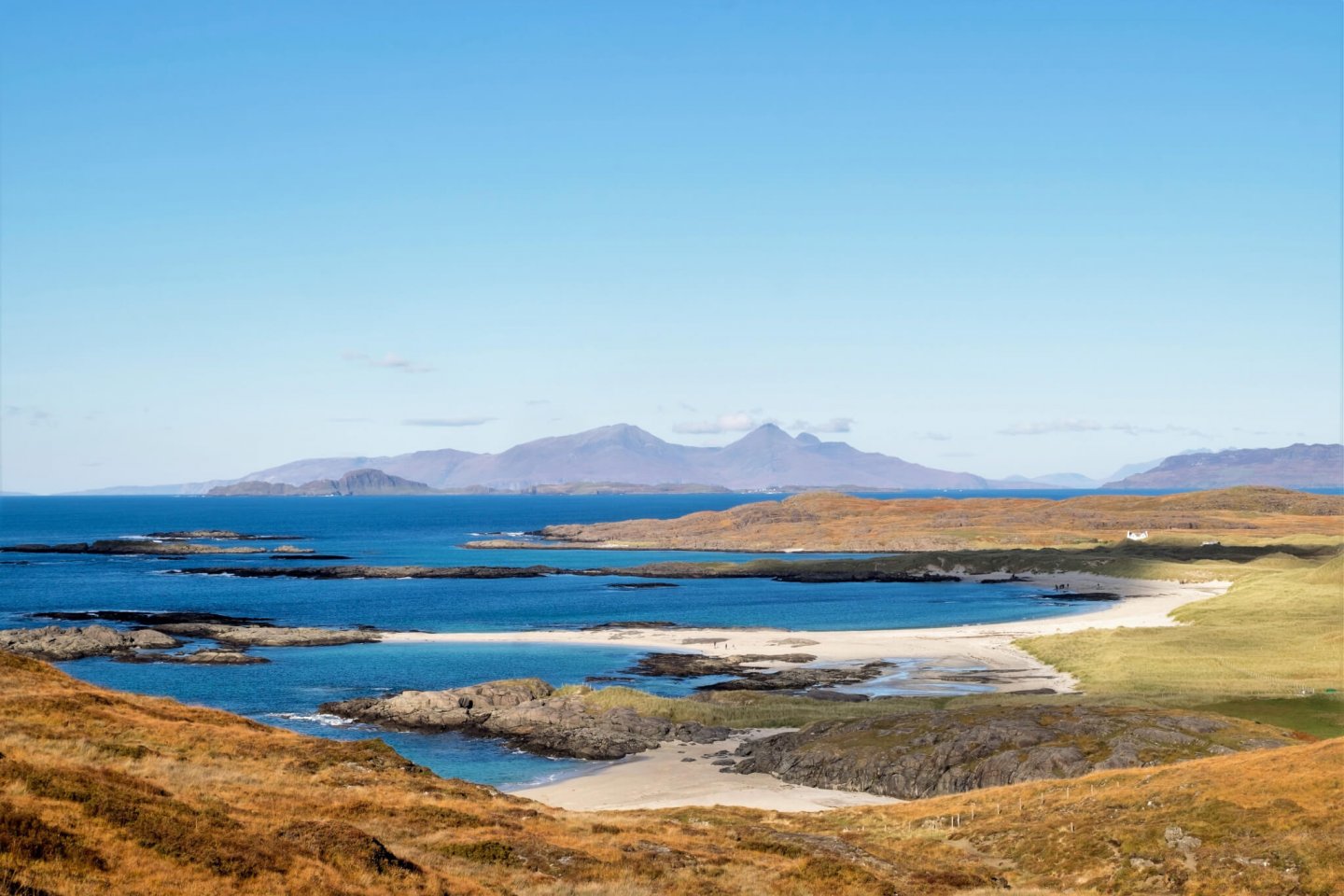
The Ardnamurchan Peninsula is the westernmost point of the British mainland. It takes effort to get here: a ferry across Loch Linnhe at Corran, then an hour or more of slow, winding driving through oakwoods and past stunning sea lochs.
At the end of the road is Sanna Bay with its white shell sand curving around a bay of improbable turquoise – one of the most beautiful beaches in Scotland, and on most summer days you’ll share it with almost no one.
Ardnamurchan is one of the best places in Scotland in summer to see wildlife – white-tailed eagles nest on the peninsula and you might spot otters fishing the shoreline at dawn.
Stay near Kilchoan or Acharacle where there are self-catering cottages and a campsite and give it at least three nights to explore.
> Plan your visit to Ardnamurchan and the West Highland Peninsulas
2. The East Neuk of Fife
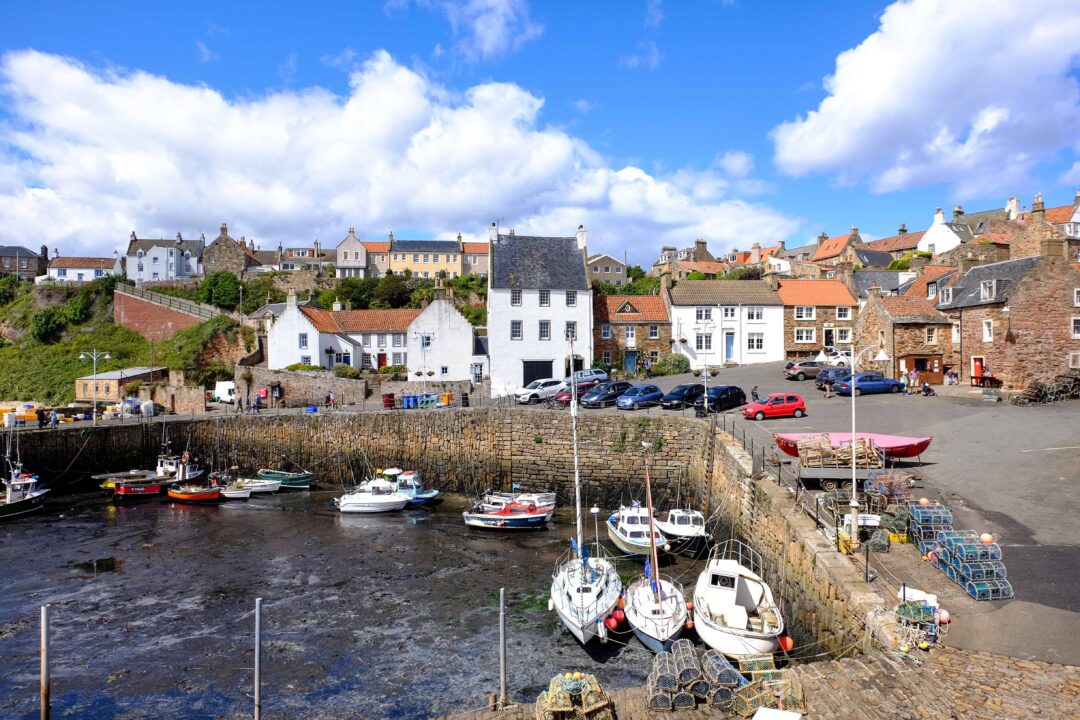
I sometimes think the East Neuk of Fife is Scotland’s most overlooked coastline, which is crazy given it’s an hour from Edinburgh.
The East Neuk is a string of old fishing villages along the south Fife coast: Crail, Anstruther, Pittenweem, St Monans, Elie. Each has its own harbour, its own character, its own particular shade of East Neuk pantile orange.
Walk the Fife Coastal Path between them, the stretch from Crail to Elie takes a gentle half-day, stopping for a crab roll from the hut in Crail harbour or a fish supper in Anstruther, which has one of the best chippies in Scotland.
From Anstruther, boat trips run out to the Isle of May, a small island reserve that hosts one of Scotland’s largest puffin colonies, along with grey seals, guillemots, and razorbills. The crossing takes around 45 minutes.
> Plan your visit to The East Neuk of Fife
3. Eigg and the Small Isles
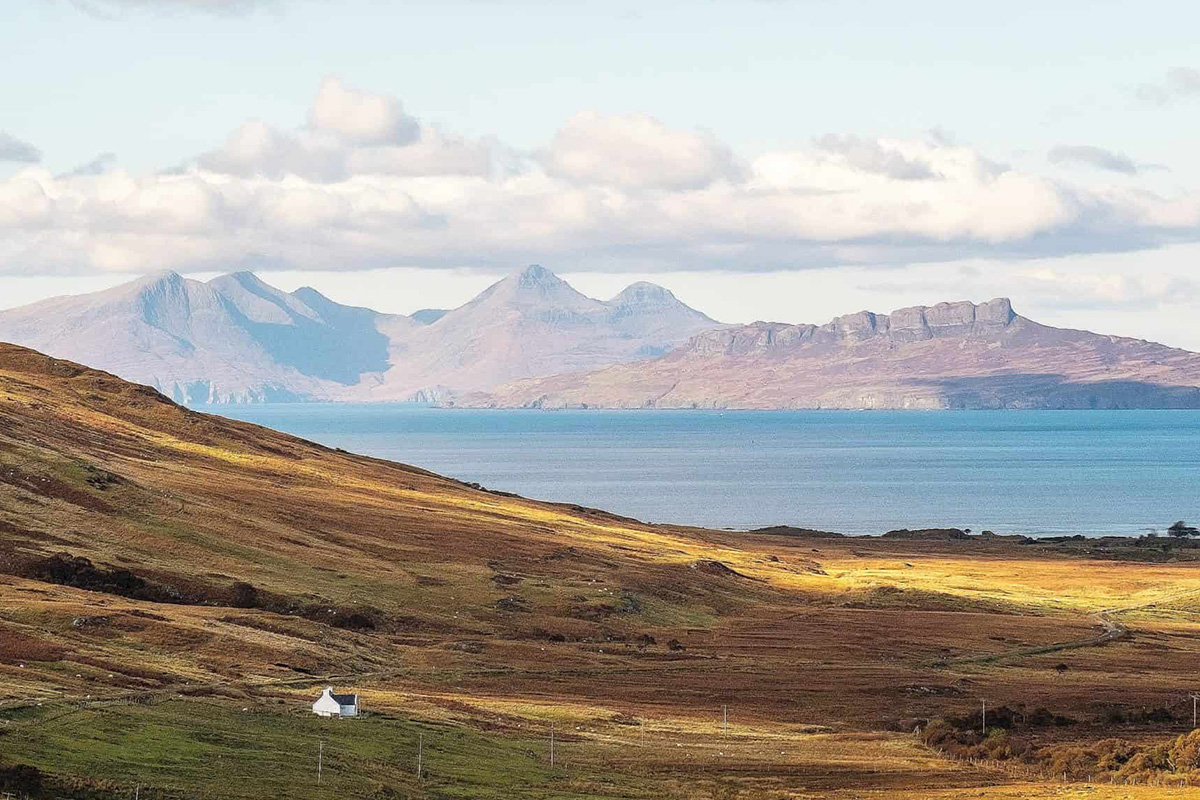
The Small Isles, Eigg, Rum, Muck, and Canna, sit in a loose group south of Skye, reachable by CalMac ferry from Mallaig.
Eigg is the most visited, and the most unusual. The community bought the island from its private landlord in 1997 and now runs it collectively, powered entirely by renewable energy. Walk up An Sgurr, a great black ridge of pitchstone that dominates the island’s skyline.
Rum is bigger, wilder, and almost entirely given over to nature: red deer roam the Cuillin-like peaks of Askival and Hallival, and Manx shearwaters nest in their hundreds of thousands in the high corries.
Muck is the smallest of the four, barely two miles long, and is gentle and green, with wildflower meadows running down to the sea. Canna, the westernmost, is quiet with ancient chapel ruins and sea cliffs packed with seabirds.
You can island-hop between them on the ferry, or pick one and stay.
> Plan a ferry hopping trip around Scotland
4. The Cowal Peninsula and Argyll’s Secret Coast
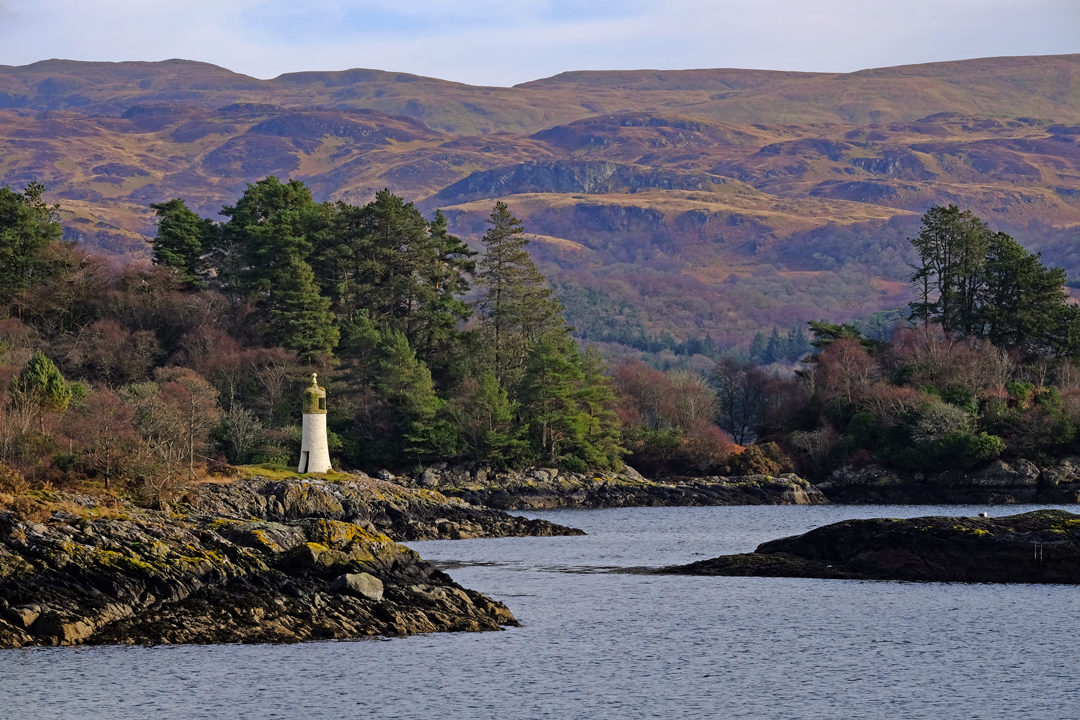
Here’s a thing that surprises people: you can be on the Cowal Peninsula, one of the most beautiful stretches of the Scottish coast, less than an hour from Glasgow city centre, including a 20-minute CalMac ferry from Gourock.
Cowal is the long finger of Argyll that juts south between Loch Fyne and the Firth of Clyde. Most visitors who make it here are heading for Dunoon.
The real reward is the road south from Tighnabruaich along the Kyles of Bute, a narrow channel of water between Cowal and the island of Bute, with views that are among the finest in Scotland on a clear day.
> Plan your visit to the Cowal Peninsula
5. Assynt and the Far North
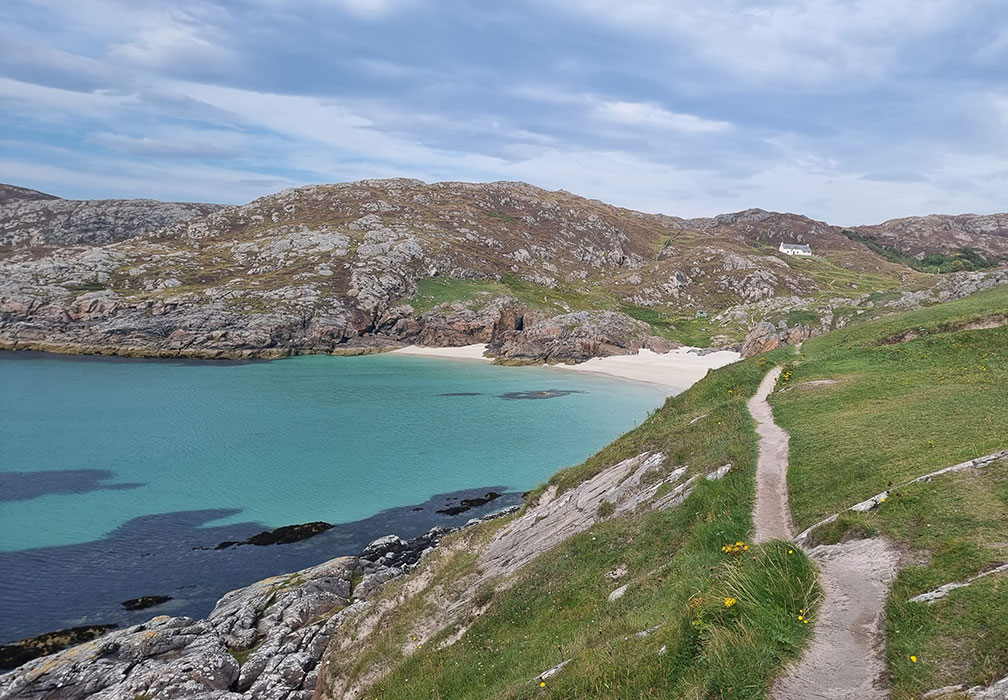
Assynt is not quite like anywhere else in Britain. The landscape here is Torridonian sandstone and Lewisian gneiss (some of the oldest rock on earth) worn flat by millennia of glaciation and then punctuated by extraordinary isolated mountains that rise from the moorland.
Suilven. Stac Pollaidh. Canisp. Quinag. They don’t look like a mountain range because they’re not, each peak stands alone, which makes them stranger and more stunning mountains than any in the Scottish Highlands.
Achmelvich, a few miles north of Lochinver, has a beach of white shell sand backed by low dunes where you can camp in a field and wake up to the sound of the Atlantic.
Practical note: Climbing Suilven is a long day, around 16 miles from Glencanisp Lodge. Start early, bring plenty of water, and check the midge forecast.
> Plan your visit to Assynt and Lochinver
6. The Scottish Borders
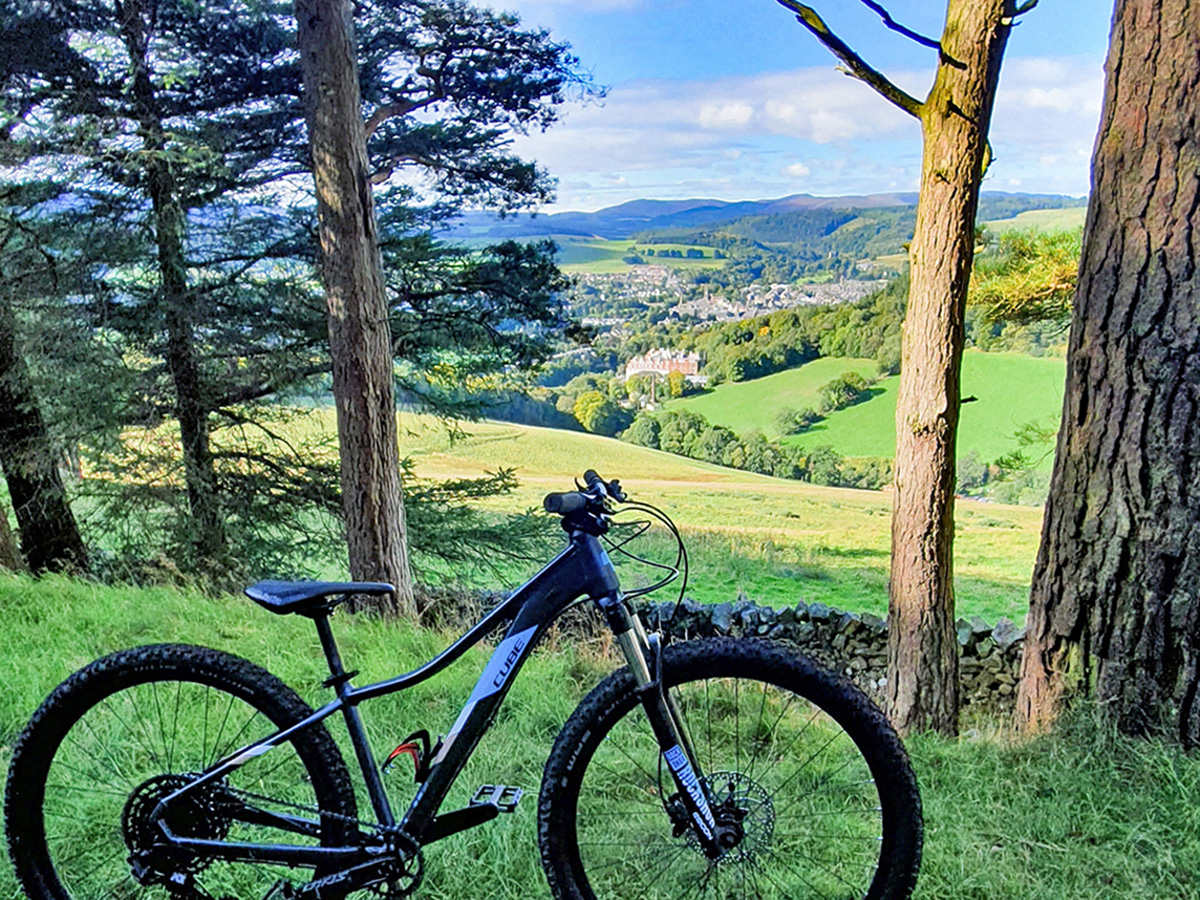
Travel to the Scottish Borders in summer and you’ll find yourself in rolling green hills, along wide rivers, and in small towns with good bakeries and a fierce pride in their rugby teams.
The Tweed valley is beautiful in June and July, walk the riverside path from Peebles to Innerleithen, or follow St Cuthbert’s Way across open moorland between Melrose and the coast.
The Borders are one of the best places for summer cycling. The 7stanes trail network has mountain bike centres across the Borders. For road cyclists, the lanes between Peebles, Innerleithen, and Melrose are some of the finest in Scotland: smooth tarmac, almost no traffic, and views across the Tweed valley.
> Plan your visit to The Scottish Borders
7. The Isle of Harris
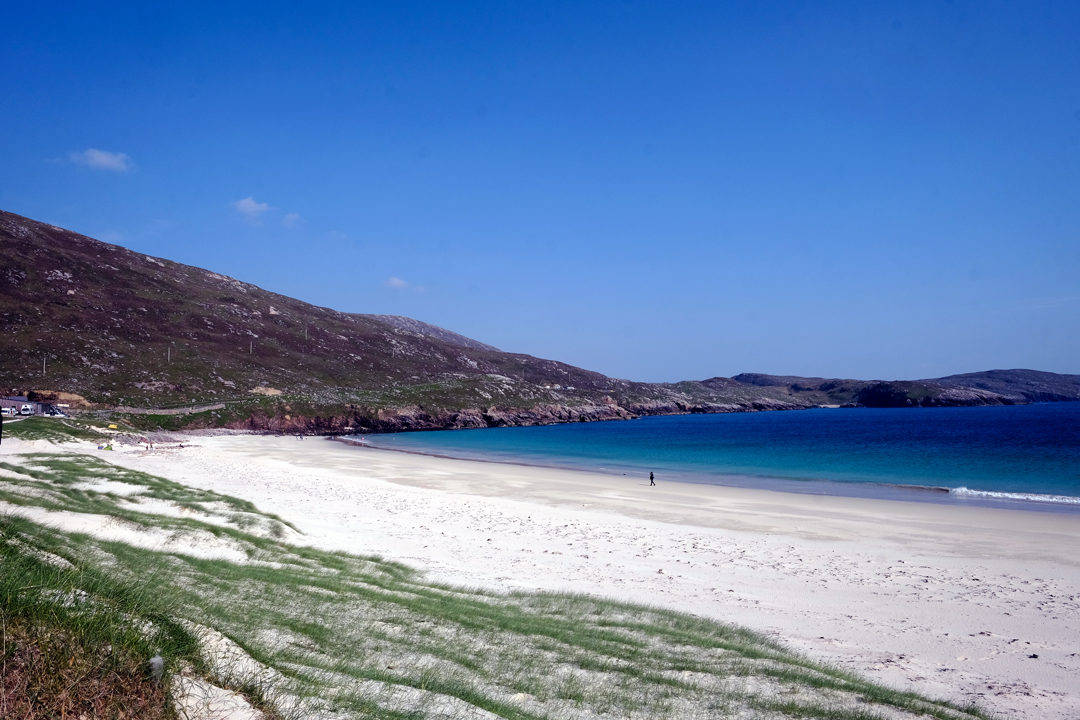
Everyone knows about Luskentyre Beach. It deserves its reputation, on a blue-sky day it’s one of the most beautiful places in Europe, full stop. But if you go to Harris and only go to Luskentyre, you’ve missed most of it.
The west coast of Harris has a string of beaches, Scarista, Sgarasta Mhor, Borve, Horgabost, each slightly different, each usually quieter than Luskentyre.
Behind the beaches, in Scotland in summer the machair comes into flower in June: a low grassland of wild orchids, yellow rattle, and clover that hums with bees and is unlike anything else in Britain.
The east coast is the other Harris: an almost lunar landscape of tiny crofts clinging to the rock, and narrow roads that wind around sea inlets.
> Plan your visit to The Outer Hebrides
8. Glen Affric
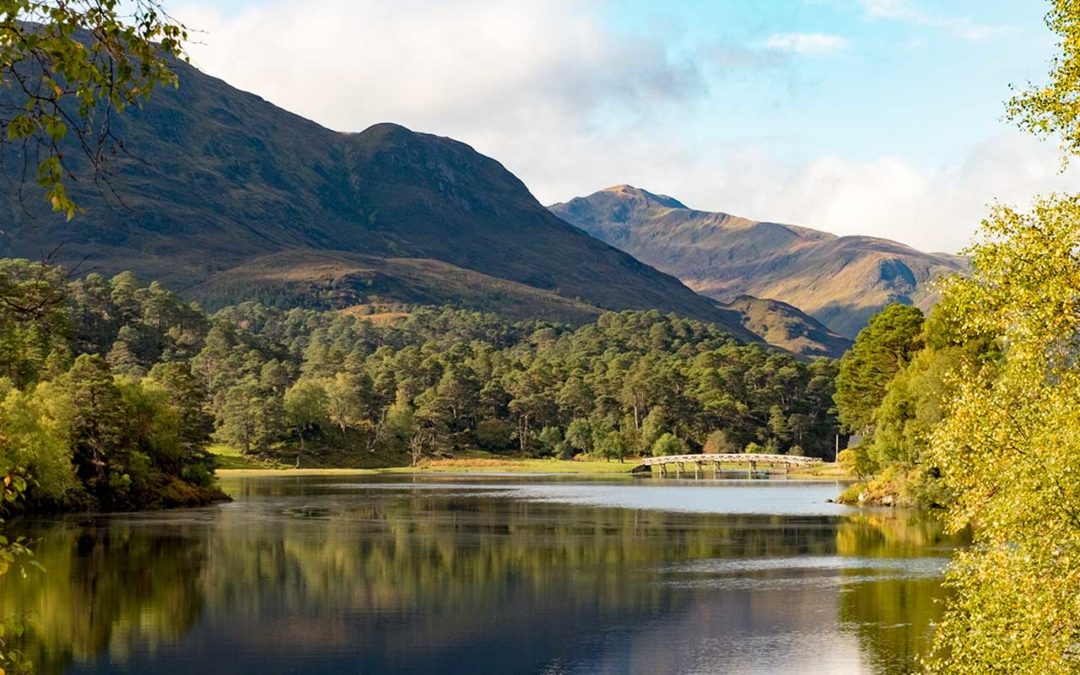
Glen Affric is frequently described as Scotland’s most beautiful glen, which is both accurate and slightly unhelpful, it doesn’t quite prepare you for what it actually looks like.
What makes it different from other Highland glens is the trees. Glen Affric contains some of the largest surviving fragments of the ancient Caledonian pine forest – old Scots pines with reddish bark and wide, irregular crowns that look nothing like a plantation.
Walk the main loch-side path on a weekday and it’s quiet. Go further past the end of the road, into the upper glen toward the remote bothy at Alltbeithe and you’ll have it almost entirely to yourself. The through-route to Kintail and the Five Sisters of Kintail is one of Scotland’s great multi-day walks.
Listen for crossbills and crested tits in the old pines.
> Plan your visit to Glen Affric
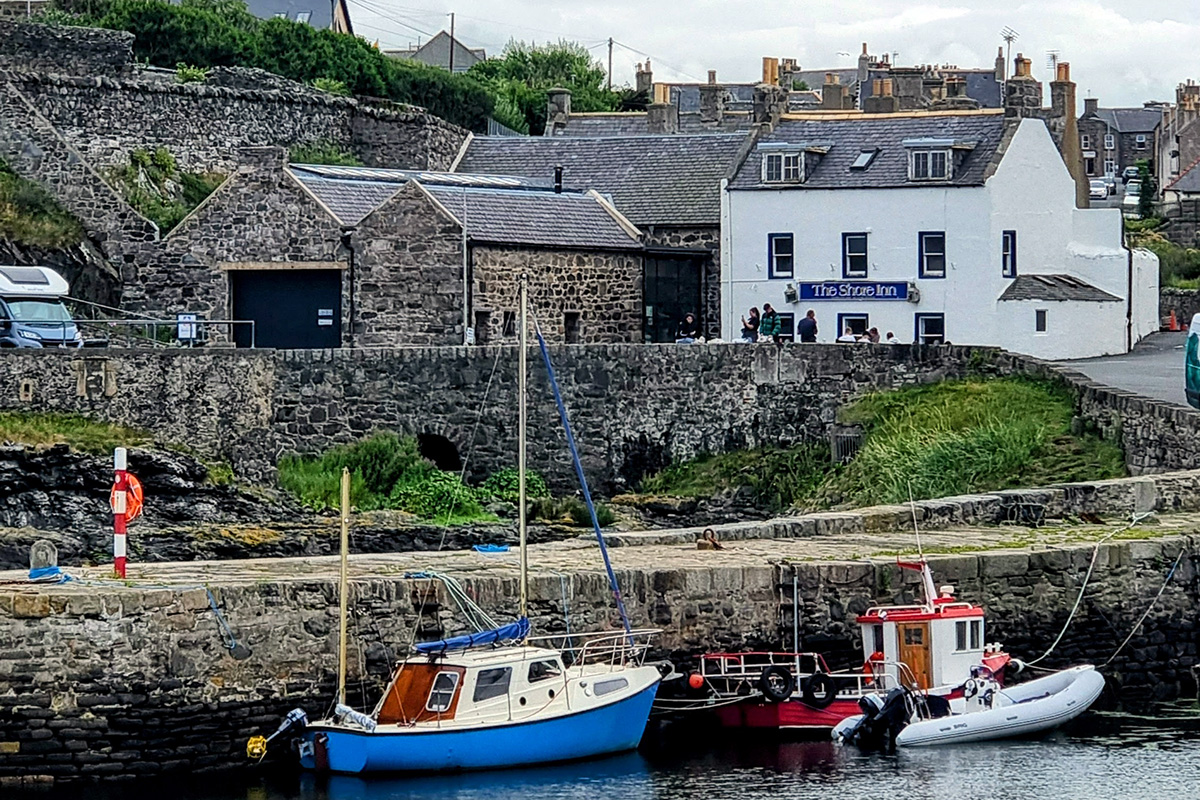
9. The quiet villages of the Moray Coast
The Moray Coast gets more sunshine than almost anywhere else in Scotland in summer. Sheltered from the prevailing Atlantic weather by the hills to the west and south, the stretch of coast from Inverness to Fraserburgh sits in a relative weather shadow – not reliably warm, but reliably better than average.
Cullen, built on the cliff above its beach, home to Scotland’s best soup. Pennan, squeezed into a cleft in the cliffs, one street, one hotel, one phone box that became famous because of a film. Portknockie, famous for the Bow Fiddle Rock.
The bottlenose dolphins of the Moray Firth are resident year-round, but summer is when they’re most active. The clifftop above Chanonry Point (near Fortrose) is one of the best places in Europe to see dolphins from land, they come in close at the tidal race, sometimes just metres away, and occasionally bring calves.
> Plan your visit to The Moray Coast
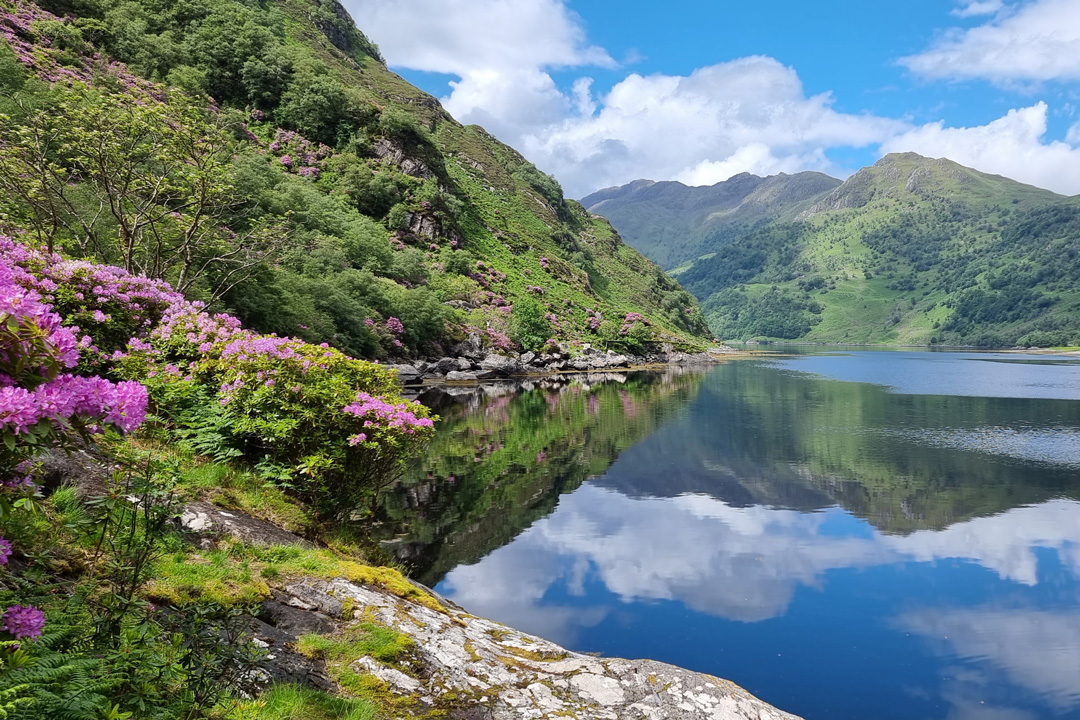
10. The Knoydart Peninsula — Britain’s Last Wilderness
There are no roads into Knoydart. I want to say that again because people sometimes don’t quite believe it: there are no roads.
To get there, you take the passenger ferry from Mallaig (around 45 minutes) or you walk in over the hills – a serious day in the hills from Kinloch Hourn or Glenfinnan. There is no other way.
What this means in practice is that Knoydart feels genuinely remote in a way that’s increasingly hard to find in Britain. The only settlement is Inverie, which has a scattering of houses, a small shop, and the Old Forge: the most remote pub on the British mainland.
Need more persuasion to visit Scotland in summer?
Why Summer is one of the best times to visit Scotland
The simmer dim
In June and July, Scotland gets close to 18 hours of daylight. But the thing that surprises most visitors isn’t the length of the days – it’s the quality of the evenings. We call it the simmer dim: that long, golden-grey dusk when the sky never fully darkens. It stretches for hours.
Wildlife at its best
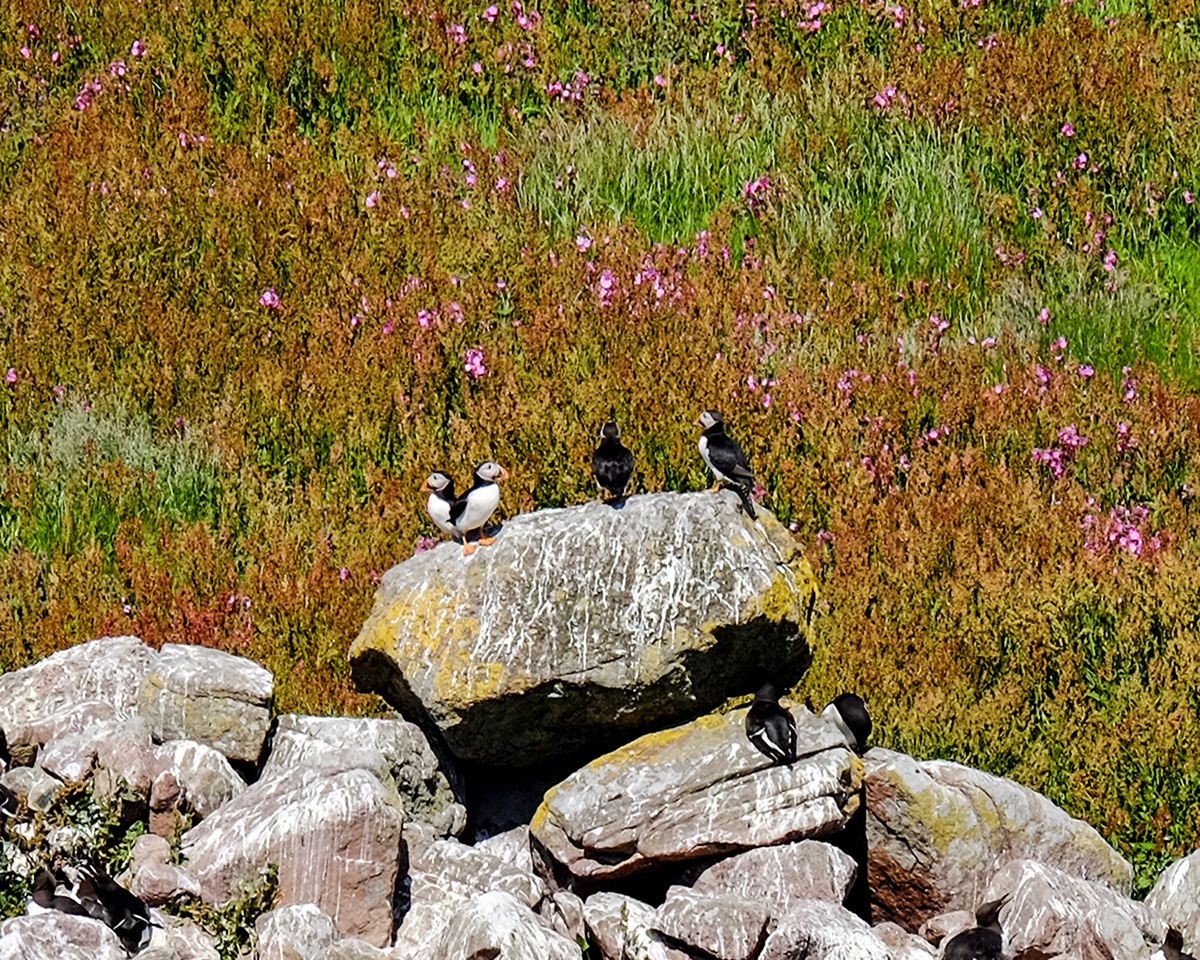
Scotland in summer is when our wildlife peaks. Puffins arrive at their colonies from late April and are usually present until August. The Isle of May off Fife, Handa Island in Sutherland, and the Treshnish Isles off Mull are among the best spots.
Bottlenose dolphins are reliably seen from the clifftops of the Moray Coast. White-tailed eagles quarter the west coast skies. Basking sharks cruise the Hebridean waters from May.
The machair meadows of the Outer Hebrides, wildflower grassland behind the beaches, peak in June and July with wild orchids, cornflowers, and yellow rattle.
Beaches that earn the word ‘beautiful’
Scotland has beaches that genuinely stop you in your tracks. On a clear summer’s day, the white shell sand and turquoise water at Luskentyre, Sanna Bay, or Achmelvich is as striking as anything in the Mediterranean.
The water is cold, but Scottish cold, not impossibly cold.. Bring a wetsuit if you want to stay in longer than four minutes.
Festivals, Highland Games, and village ceilidhs
The Edinburgh Festivals run through August and are the world’s largest arts festival, sprawling across the Old Town for a month.
Across the country you will find Highland Games in village fields from Cowal to Braemar and agricultural shows where the main event is the best-in-show Clydesdale horse.
Better access to everywhere
Ferry routes run most frequently in Scotland in summer, making the islands and peninsulas properly reachable.
Small cafes are open and the weather, while never guaranteed, is at least reliably mild with average highs of 16–20°C (60–68°F), with the warmth building through July.
Scotland doesn’t bake in summer the way much of Europe does, but it’s the perfect temperature for spending all day outside.
A word about midges
I’m not going to pretend they don’t exist. Scotland’s midges – tiny biting insects that appear in clouds at dawn and dusk in still, humid conditions – are one of the country’s less charming features, and they peak between June and August. But they’re manageable, and they shouldn’t stop you from going anywhere.
A few things that actually work:
- DEET-based repellent (or Picaridin if you prefer something lighter) applied to exposed skin.
- A midge head net, which costs £5 and is worth its weight in gold on a still evening in Torridon.
- Choosing coastal and elevated spots, where a sea or summit breeze keeps them grounded.
- Timing your outdoor sitting – midges are worst in the two hours after dawn and before dusk on overcast, windless days. A sunny afternoon on an open hillside is almost always midge-free.
- The Midge Forecast (smidgeup.com) gives daily regional predictions. Check it the night before a big walk.
Visiting Scotland in summer — frequently asked questions
When is summer in Scotland?
June, July, and August. June has the longest days, around the solstice on 21 June, northern Scotland barely gets dark at all.
What is the weather actually like in Scotland in summer?
Changeable. That’s the honest answer. A Scottish summer day might give you brilliant sunshine, a sudden shower, a sea haar rolling in off the coast, and a clear golden evening, sometimes in that order, sometimes all at once.
The average temperatures range from 16–20°C (60–68°F), with the east coast tending warmer and drier, and the west coast more dramatic in both sunshine and rain. T
he west coast can be spectacular in summer; it can also be grey and wet for days at a time. Pack layers and a decent waterproof.
Is Scotland crowded in summer?
Parts of it, yes. Edinburgh in August is genuinely busy, the Festivals bring over a million visitors. Skye, the Fairy Pools, the Glenfinnan Viaduct viewpoint, and the main North Coast 500 stops can feel overrun in July and August.
However, Scotland is a large country with a small population, and most of the places in this guide remain quiet even in peak season. The more effort a place takes to reach, the fewer people you’ll find there.
Where is quietest in Scotland in summer?
Knoydart (no roads), the Small Isles (small ferries, limited accommodation), Assynt north of Lochinver, the Cowal Peninsula, and the east coast of Harris. The Scottish Borders are also remarkably quiet for a region so close to Edinburgh.
What are the best beaches in Scotland in summer?
Sanna Bay (Ardnamurchan), Luskentyre and Scarista (Harris), Achmelvich and Clachtoll (Assynt), Camusdarach (near Arisaig), and Kingsbarns (Fife) are all genuinely world-class.
On a clear day, the combination of white shell sand and turquoise water at any of these is as striking as anything in southern Europe.
The difference is temperature, bring a wetsuit if you plan to swim for more than a few minutes, or embrace the cold the way Scots do: quickly, loudly, and followed immediately by a flask of something warm.
What should I pack?
- Layers – temperatures can swing 10°C through a single day.
- A lightweight waterproof jacket that actually works (not a fashion anorak).
- Good walking boots if you’re venturing onto hills.
- Sun cream – the UV index at high northern latitudes can be surprisingly strong on clear days, even when it doesn’t feel hot.
- Insect repellent for midge territory.
- A reusable water bottle.
- If you’re going anywhere remote in Scotland in summer, a physical map as a backup – mobile signal is patchy across much of rural Scotland.
Kate – love from Scotland x
You might also like:
- How to visit Scotland in Spring | Autumn | Winter
- The best time to visit Scotland: where to go month by month
- Whatever the weather – the ultimate Scotland packing guide
I’m Kate, the Scotland-based travel writer behind Love from Scotland. I share first-hand destination guides and accommodation recommendations across Scotland. Let me help you plan your best ever trip!