
Puffins are, without question, one of the cutest birds on the planet.
They are also surprisingly unbothered by humans – you can sit a metre away and watch them go about their business, ferrying sand eels, squabbling over burrows, and launching themselves off clifftops with what can only be described as cautious optimism.
Scotland is home to some of the largest Atlantic puffin colonies in the world, and spring and summer are the only time to see them. Puffins spend the rest of the year far out at sea, returning to their clifftop burrows each April to breed.
If you want to see puffins in Scotland, here is everything you need to know, from when puffins arrive, where the best colonies are, and how to get to visit them.
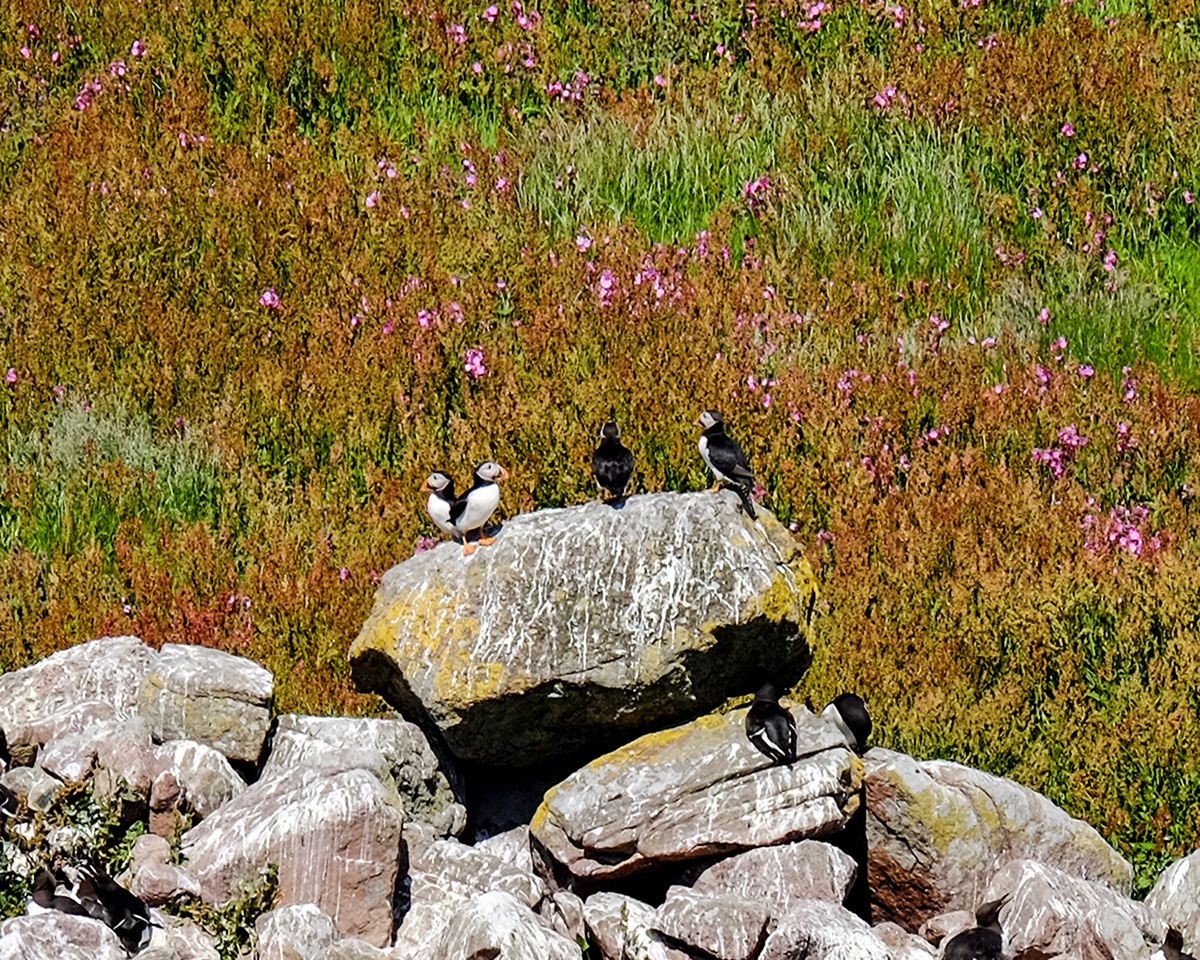
When do Puffins arrive in Scotland?
Puffins are migratory seabirds, spending winter in the open Atlantic before returning to Scottish coasts each spring to breed.
Late March, early April – first arrivals
The earliest puffins begin appearing at established colonies is in late March. Numbers are low at this stage, but if you happen to be visiting the islands early in the season, you might catch a few scouts. Don’t book a dedicated puffin trip this early, you could be lucky or you could see none at all.
Mid April to May – peak season begins
By mid-April, puffin colonies are filling up fast. This is when puffins are at their most active, establishing burrows, displaying to mates, and bustling about with that endearing urgency that makes them so entertaining to watch.
June to early July – chick rearing
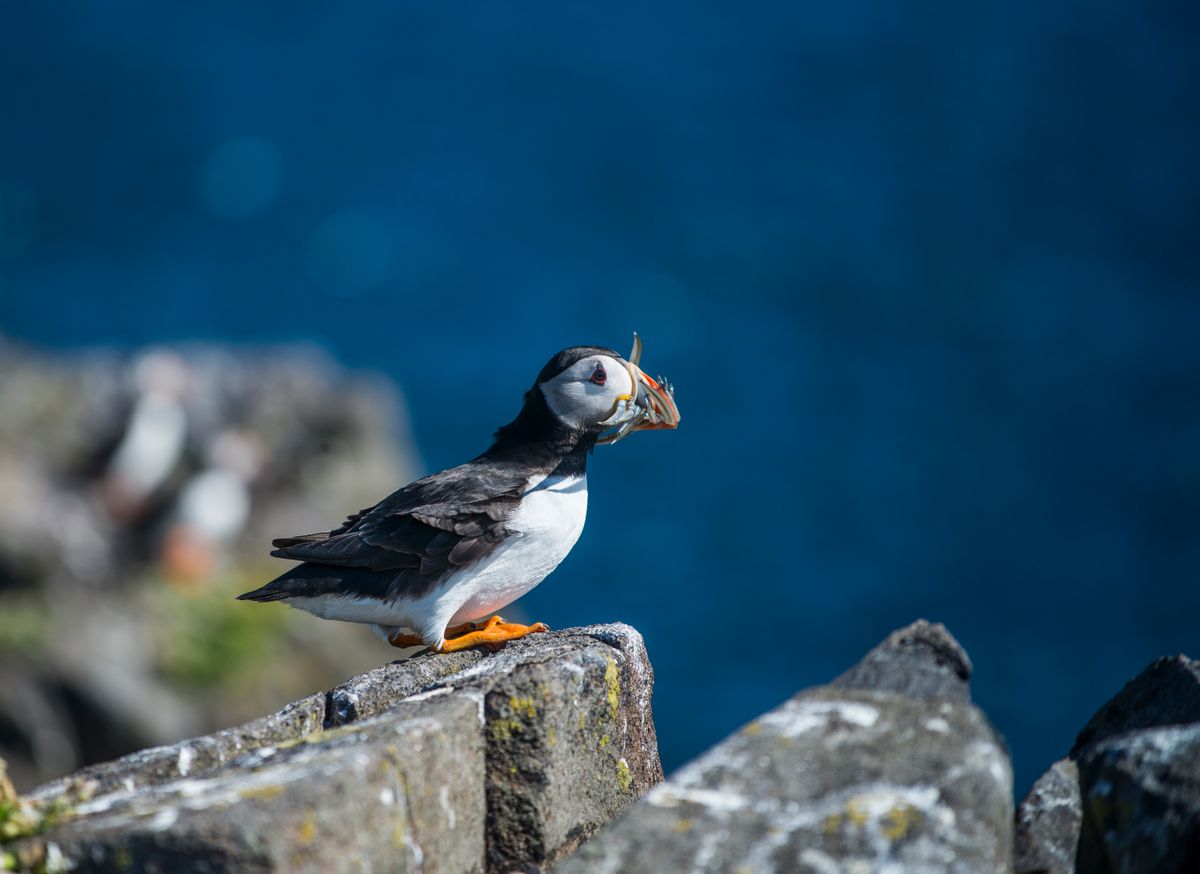
Puffins are still present but behaviour changes as eggs hatch and parents settle into feeding routines. You’ll see them flying in and out carrying sand eels. Still brilliant, but slightly less dramatic than the frantic energy of April and May.
Late July to August – the puffins leave
By late July, puffins begin leaving Scotland. Most colonies will be empty by August. If you’re visiting Scotland in late summer hoping to see them, you’ll be disappointed, plan for spring, early summer instead.
When is the best time to see puffins in Scotland?
The last two weeks of April and the first two weeks of May.
The best places to see puffins in Scotland
Scotland has several world-class places to see puffin. Here are the ones genuinely worth planning a trip around, from the most accessible to the more adventurous.
1. The Isle of May, Fife
The Isle of May sits in the Firth of Forth, about 5 miles off the coast of Anstruther in Fife. It’s the most visited puffin colony in Scotland for good reason – it’s genuinely spectacular, and relatively easy to reach from Edinburgh (about 90 minutes by car to Anstruther, then a ferry).
The island is a National Nature Reserve. Day trips run from Anstruther Harbour and once you land, you’re free to roam the clifftops and spot the puffins nesting in burrows just inches from the footpath.
- Boat operator: Anstruther Pleasure Trips (book ahead in spring)
- Crossing time: approximately 45 minutes each way
- Time on island: usually 2–3 hours
- Best months: April to early July
- Getting there by car: Drive to Anstruther (90 min from Edinburgh, 75 min from Dundee)
- Getting there by public transport: Train to Leuchars or Kirkcaldy, then bus to Anstruther
Go on a weekday if you can. Weekend ferries fill up fast in May, and the island feels much more peaceful with fewer visitors.
2. Handa Island, Sutherland
Handa Island, off the northwest coast of Sutherland, is one of the best places to see seabirds in Scotland. While razorbills and guillemots, bonxies and skuas outnumber puffins here, the island is gorgoeus, white sand beaches, towering sandstone sea stacks, dramatic clifftops, and almost no other tourists if you go on a quiet day.
A small RIB / passenger ferry operates from Tarbet, a tiny hamlet near Scourie. The island has a circular walking route of about 4 miles.
Read more – how to visit Handa Island
- Ferry: from Tarbet (seasonal, April–August)
- Walk: 4-mile circular route, around 3 hours
- Nearest town: Scourie (limited accommodation, book well ahead)
- Note: No facilities on the island; bring food, water, and waterproofs
- Getting there: By car is the most practical option, Tarbet is very remote with no public transport
Combine a visit to Handa with a trip around the NC500 in spring, when the roads are quieter. Handa makes a perfect detour between Ullapool and Durness.
3. Troup Head, Aberdeenshire
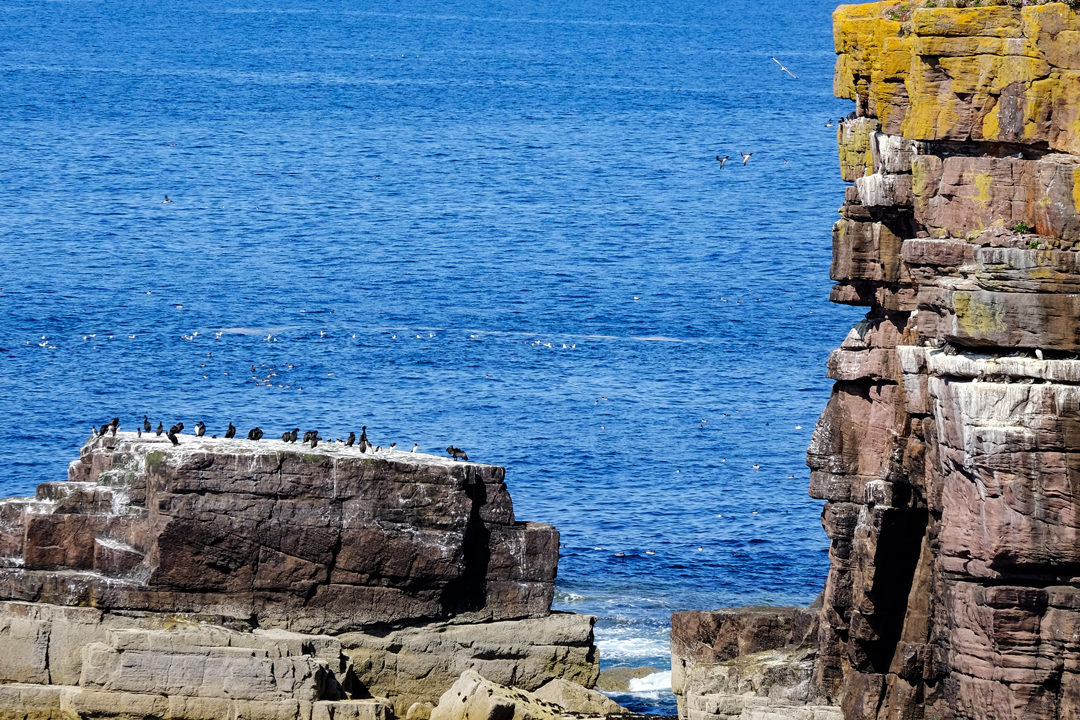
Troup Head is the only mainland gannet colony in Britain, but it’s also home to a healthy puffin population that most visitors to Scotland never hear about. The clifftop walk from the RSPB car park takes about 20 minutes and rewards you with views of puffins, gannets, kittiwakes and fulmars all nesting together.
It’s a great option if you’re touring the northeast of Scotland, Aberdeenshire and the Moray Firth.
- Location: Near Gardenstown, Aberdeenshire
- Troup Head is RSPB managed – free entry, parking available. Plan your visit.
- Getting there by car: 1 hour from Aberdeen, 30 min from Banff – nearest town is Gardenstown or Macduff
4. Fowlsheugh, Aberdeenshire
Fowlsheugh is one of the largest mainland seabird colonies in the UK and yet somehow flies under the radar compared to the island destinations.
The RSPB reserve sits on dramatic red sandstone cliffs near Stonehaven in Aberdeenshire, and from April through June the noise and sheer density of nesting birds is breathtaking.
Puffins nest in the cliff-face crevices here rather than burrows, which makes spotting them slightly trickier. Binoculars are useful. A well-maintained clifftop path runs along the colony.
- Getting there by car: 45 min south of Aberdeen via the A92 coastal road; park at Crawton
- Getting there by public transport: Train to Stonehaven, then 3-mile walk or taxi to Crawton
- On site: RSPB car park (free); no cafe or visitor centre, bring supplies. Plan your visit.
- Best combined with: Dunnottar Castle (just north of Stonehaven) for a brilliant day outut
5. Duncansby Head, Caithness
Duncansby Head sits at the very northeastern tip of mainland Scotland, just east of John o’ Groats, and is one of the most underrated wildlife spots on the entire north coast.
The sea stacks at Duncansby are dramatic enough on their own, but in spring, puffins also nest on the grassy clifftops above the stacks.
The walk from the lighthouse car park to the stacks takes about 20 minutes on a well-maintained path. You’ll likely spot puffins on the clifftops en route, and the views of Orkney visible across the Pentland Firth are superb.
- Getting there by car: 2 miles east of John o’ Groats on the A99, follow signs to the lighthouse; free car park on arrival
- From Inverness: Approximately 2.5 hours drive via the A9 and A99
- Getting there by public transport: Train to Wick, then bus or taxi to John o’ Groats (limited service)
- Walk: 20–30 minutes from the lighthouse car park to the sea stacks
- Best combined with: A visit to Dunnet Head (Britain’s most northerly mainland point) nearby
This is a perfect stop if you’re driving the north coast towards or from Orkney. John o’ Groats itself is pretty uninspiring, but Duncansby Head two miles east is genuinely special, don’t skip it for the tourist trap down the road.
6. Sumburgh Head, Shetland
Sumburgh Head is unique – it’s the only place in Britain where you can walk up to a lighthouse, lean over a fence, and look almost directly down into active puffin burrows. The birds nest in the grassy slopes around the lighthouse, and the viewing platforms bring you within a metre of them.
Sumburgh Head sits at the southern tip of Shetland Mainland, just 25 miles from Lerwick, and is accessible by bus. Shetland itself is reached by ferry from Aberdeen or by flight.
- Location: 25 miles south of Lerwick, Shetland
- Facilities: Visitor centre and cafe on site. Visit Sumburgh Head.
- Season: Late April through July
- Getting there by air: Flights to Sumburgh Airport from Edinburgh, Aberdeen, Inverness
- Getting there by ferry: Overnight NorthLink ferry from Aberdeen to Lerwick (12 hours)
- Local transport: Bus 6 from Lerwick runs directly to Sumburgh
Shetland is genuinely unlike anywhere else in Scotland. The light, the wildflowers, the Norse heritage, if you’re going to make the journey north, spend at least three nights.
7. Noss, Shetland
While Sumburgh Head gets most of the attention in Shetland, the Isle of Noss, a National Nature Reserve just east of Bressay, is one of Scotland’s most dramatic seabird cliffs and well worth the extra effort to reach. Puffins nest on the grassy upper slopes, while the Noup cliffs below are carpeted with gannets and guillemots.
Getting there involves a ferry from Lerwick to Bressay, then a short walk across Bressay to a small inflatable dinghy crossing to Noss itself. It only operates in good weather.
- Getting there: Ferry Lerwick–Bressay, then walk + inflatable dinghy to Noss
- Dinghy crossing: Operates May–August, weather permitting. Plan your visit to Noss.
- Managed by: NatureScot – check conditions before travelling
- Best combined with: A multi-day Shetland itinerary including Sumburgh Head
Call ahead or check NatureScot’s website the morning of your visit. The dinghy crossing is cancelled in anything more than moderate wind, and Shetland weather moves fast.
8. Staffa & the Treshnish Isles, Inner Hebrides
Staffa is famous for Fingal’s Cave – the extraordinary basalt sea cave that inspired Mendelssohn – but the uninhabited Treshnish Isles nearby (especially Lunga) host one of Scotland’s most visited puffin colonies. You can sit among the puffins for an hour or two while they go about their business seemingly oblivious to you.
Boat trips run from Fionnphort or Ulva Ferry on the Isle of Mull, typically combining both Staffa and Lunga in a day trip. Booking ahead is essential in May.
- Departure points: Fionnphort, Ulva Ferry (Mull)
- Operators: Staffa Tours, Turus Mara
- Season: April–September (puffins best in May–June)
- Day trip length: approximately 7–8 hours
- Getting to Mull: CalMac ferry from Oban to Craignure (45 min)
- To Fionnphort: 35-mile drive across Mull (allow 1 hour — single track roads)
Insider tip: This works brilliantly as part of an Isle of Mull trip. Spend two or three nights on Mull and combine the boat trip with visits to Tobermory, Glengorm Castle, and some excellent local seafood.
9. Lunga, Treshnish Isles
Lunga deserves its own entry separate from the wider Staffa & Treshnish trip. The experience of landing on Lunga in spring is unlike any other puffin encounter in Scotland.
The birds nest in such dense concentrations on Rubha Mòr – the headland at the north of the island – that you can sit quietly in the grass and watch dozens of them within arm’s reach.
Trips typically allow two hours on the island.
- Getting to Mull: CalMac ferry from Oban to Craignure (45 min)
- To departure point: Drive across Mull to Fionnphort or Ulva Ferry (allow 1 hour on single track roads)
- Boat trips: Book with Staffa Tours or Turus Mara – well in advance for May
- Best months: Late April through June — puffins present until late July
- Trip length: Full day (7–8 hours including Staffa)
If you can choose between a Staffa-only trip and a combined Staffa & Lunga trip, always choose the combined. Fingal’s Cave is magnificent, but don’t miss a trip to Lunga with the puffins.
10. Fair Isle
Fair Isle sits halfway between Orkney and Shetland and is one of the most remote inhabited islands in Britain. It’s world-famous among birdwatchers – the Fair Isle Bird Observatory has been monitoring migratory and breeding species here for decades.
Getting here is the challenge. A small ferry runs from Grutness in Shetland (roughly 2.5 hours each way, weather dependent), or there are twice-weekly flights from Tingwall Airport near Lerwick. Most visitors who make the effort stay for at least two or three nights at the Bird Observatory, which offers accommodation and guided wildlife walks.
- Getting there by air: Twice-weekly flights from Tingwall Airport, Lerwick (20 min)
- Getting there by ferry: From Grutness, South Mainland Shetland – Tuesday and Saturday (summer schedule, ~2.5 hours)
- Accommodation: Fair Isle Bird Observatory – book months in advance
- Note: No day trips possible – plan for a minimum of 2 nights
- Best for: Serious birdwatchers or travellers seeking true remoteness
Spring migration combined with breeding season makes Fair Isle one of the finest birdwatching destinations in Europe. If you have any interest in birds beyond puffins, this is the trip of a lifetime.
Tips for photographing puffins
Puffins are famously approachable – more so than almost any other wild bird. A few tips to make the most of it:
- Get low: Lie on the ground to shoot at eye level. It makes an enormous difference to the quality of your shots.
- Use a medium telephoto: A 200mm lens is usually plenty – you won’t need the 500mm you’d use for other wildlife.
- Shoot in the early morning or evening: The light is softer, and puffins are often more active outside of midday.
- Watch the sand eel runs: In late spring, puffins return to burrows carrying beaks full of sand eels. These are the best shots – but you need to be patient and positioned near an active burrow.
- Don’t use flash: It startles them and is unnecessary in the long daylight hours of a Scottish spring day.
- Respect the birds: Never block burrow entrances or approach nesting sites off the marked paths.
If you’re planning a trip to Scotland this spring, building even one puffin colony into your itinerary is absolutely worth it.
The Isle of May is the natural starting point for most visitors, especially those based in Edinburgh. But if you’re feeling more adventurous, Shetland and Handa Island will reward you with experiences that feel genuinely wild and unhurried.
Wherever you go, book early, dress warm, and enjoy every ridiculous moment of it.
Kate – Love from Scotland x
You might also like:
I’m Kate, the Scotland-based travel writer behind Love from Scotland. I share first-hand destination guides and accommodation recommendations across Scotland. Let me help you plan your best ever trip!