

Caithness sits at the far northern edge of mainland Scotland. From ancient burial cairns and ruined castles to windswept headlands and some of the wildest coastal scenery in the country, here’s my guide to visiting Caithness, Scotland.
This post uses affiliate links. Thank you for supporting my site!
Top 10 things to do in Caithness Scotland
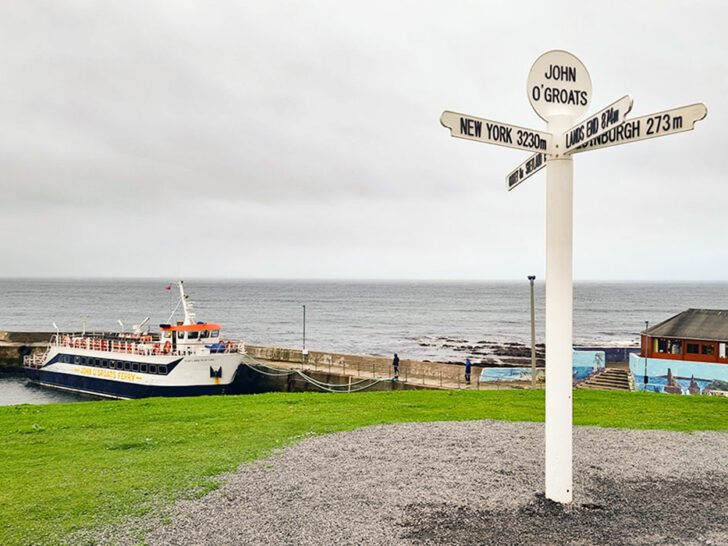
- Visit John O’Groats – Famous for its iconic signpost, John O’Groats has long marked the symbolic end (or beginning) of a journey. Installed in 1964, the sign celebrates this ‘Journey’s End’, with views across to Orkney on clear days.
- Dunnet Head and Lighthouse – Often thought to be the most northerly point of mainland Britain, Dunnet Head sits on the Dunnet Bay peninsula and is managed as a nature reserve. Home to thousands of seabirds, including puffins in season, the clifftop views across the Pentland Firth are expansive and unforgettable.
- Walk to Duncansby Head Lighthouse and Stacks – A short but dramatic walk leads to the towering Duncansby Sea Stacks, rising sharply from the North Sea. The area was once nicknamed ‘Hell’s Mouth’ by sailors, and it’s easy to see why in wild weather.
- Climb down the Whaligoe Steps to Whaligoe Haven Harbour – climb down 250 metres of sea cliffs to reach the tiny Whaligoe Haven which once supported 14 herring boats.
- Discover the Caithness Brochs – These Iron Age stone towers remain one of Scotland’s great archaeological mysteries. No one knows exactly what brochs were used for, only that Caithness has more than most. Dunbeath Broch is a favourite, explored via the beautiful Dunbeath Strath Heritage Trail.
- Explore the Flow Country – One of the rarest landscapes in the world, the Flow Country is the largest blanket bog system on Earth. Visit the RSPB Forsinard Flows Visitor Centre, walk the Dubh-lochain Trail (1 mile) to the Flows Lookout Tower.
- Cross over to Bucholie Castle – Accessed via a narrow walkway with sheer 100-metre drops on either side (avoid in bad weather), Bucholie Castle was built around 1140 by Sweyn Asliefson, a notorious pirate and raider, and later remodelled by the Mowat family.
- Go inside 5000 years of history at the Grey Cairns of Camster – These Neolithic burial cairns, Camster Long and Camster Round, are among the oldest surviving structures in Scotland and offer a fascinating glimpse into prehistoric life.
- Climb Morven – The highest point in Caithness, Morven is a striking conical hill with sweeping views across the Flow Country. Nearby Maiden Pap is smaller but steeper, and both can be climbed on the same walk.
- Visit the Castle of Mey – more a palace than a castle, the Castle of Mey was purchased by the Queen Mother in 1952. The castle has lovely gardens and homely rooms – the castle was used by the Queen Mum as her holiday home!
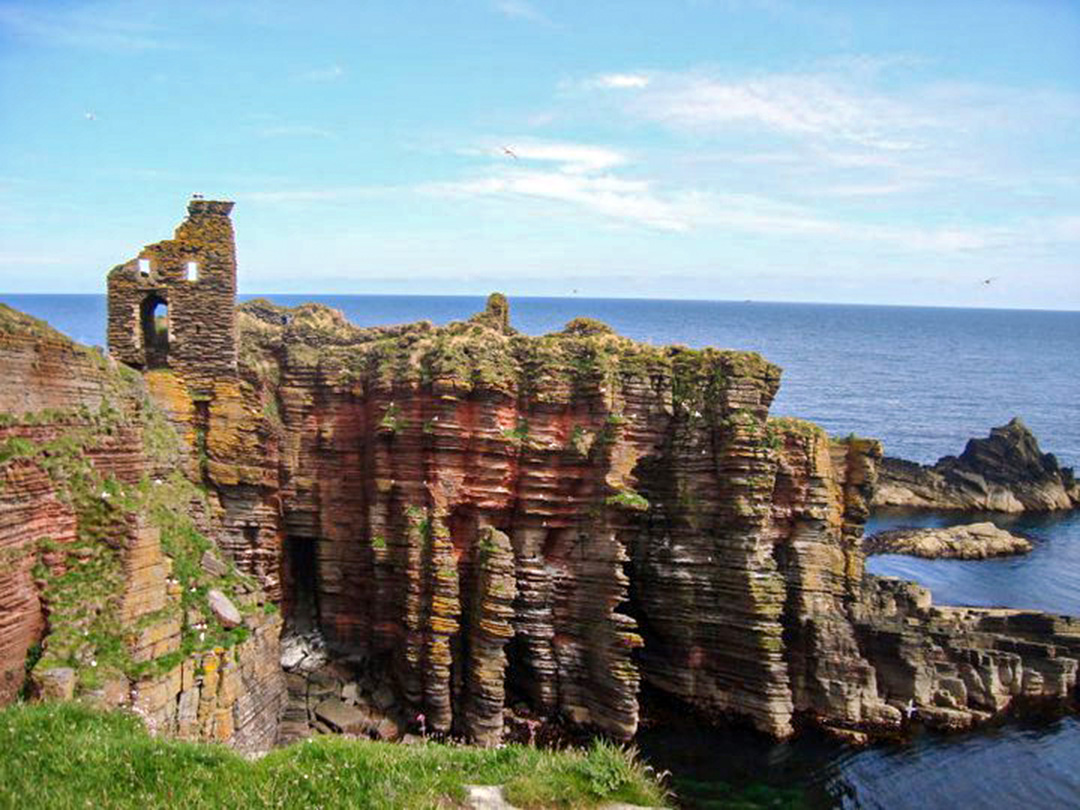
- Find a huge sea stack – From the famous stacks at Duncansby to the dramatic Brig O’Stack sea cave near Wick and Clett Rock near Thurso, Caithness is full of impressive coastal formations.
Got longer? Here is how to plan a visit to Caithness
With thousands of years of history to uncover, from Neolithic cairns and Iron Age brochs to medieval castles — alongside vast peatlands and beautiful beaches, it is a fantastic destination in its own right.
Where Is Caithness?
Caithness lies in the far north of mainland Scotland, bordered by Sutherland to the west and the North Sea and Pentland Firth to the north and east.
Caithness lies in the far north of mainland Scotland, bordered by Sutherland to the west and the North Sea and Pentland Firth to the north and east.
It’s frequently included in North Coast 500 itineraries and is ideally placed for combining a visit with Orkney or northern Sutherland.
Caithness Map
Looking for a Caithness map? Check out my dedicated guide to things to do in Caithness Map. (map).
The need to know before you visit
The history of Caithness stretches back thousands of years, from the 5,000-year-old Grey Cairns of Camster to Iron Age brochs and the Highland Clearances of the 18th century.
The name Caithness is thought to come from ‘Cat-ness’ — the headland of the Catt people, a Pictish tribe — later adapted by the Vikings as ‘Katanes’.
Today, Caithness is sparsely populated, with just over 38,000 residents and a population density far lower than the Scottish average.
Much of the land is blanket bog, part of the Flow Country, with crofting communities farming the fertile straths cut through the peatland.
How to get to Caithness
By car – Most visitors arrive via the North Coast 500, but it’s worth venturing off the main route to explore quieter inland areas. Inverness to Thurso takes around 2.5–3 hours.
By train – The Far North Line runs to Thurso and Wick and is one of Scotland’s most scenic rail journeys, passing through remote peatlands and coastal landscapes, with a stop at Forsinard.
Towns and villages – where to stay in Caithness
The main towns in Caithness are Thurso and Wick, but there are many smaller villages, harbours and settlements worth exploring.
Thurso – The most northerly town on mainland Scotland, Thurso has a long Norse history and appears in the Orkneyinga Saga. Nearby Castletown has a lovely harbour.
Read more: Things to do in Thurso
Where to stay in Thurso: Ulbster Arms Hotel in Hawick, Forss House, Thurso, The Herdsman’s House, The Marine. Braeside Retreats, or Castletown Hotel.
Wick – Once a Viking stronghold – Vik (or Wick) means bay in Norse, Wick sits either side of the River Wick as it flows into the sea. The town of Wick is actually made up of two towns – Wick and Pultneytown (
Wick – Once a major Viking stronghold and herring port, Wick sits at the mouth of the River Wick and includes the historic area of Pulteneytown. Stay at: Mackays Hotel.
Scrabster – A busy working harbour and ferry port to Orkney. Excellent seafood can be found at the Captain’s Galley or Bydand, and the coastal walk to Holburn Head is a favourite.
Other villages worth visiting include Helmsdale, Dunnet, Reay, Lybster, Latheronwheel, Staxigoe, Keiss and Ham.
- At John O’Groats try the Natural Retreats, in Keiss the Sinclair Bay Apartments, in Mey stay at The Mey Hotel.
- in Dunnet book into the Dunnet B&B Escapes modern cabin style B&B near Dunnet Head and John O’Groats, or Northern Sands Hotel.
- In Strathy – try the Strathy Inn or the Strathy Bay Pods. In Dunbeath I love Granny’s Cottage or the Dunbeath Coastal Retreat.
- In Lybster – North Star Glamping or Acarsaid B&B
- In a camper van? Stop for the night at Dunnet Bay Campsite with its amazing beach. Camping is also available at Windhaven Cafe. Thurso is nearby for supplies and bars and restaurants.
Caithness history and heritage
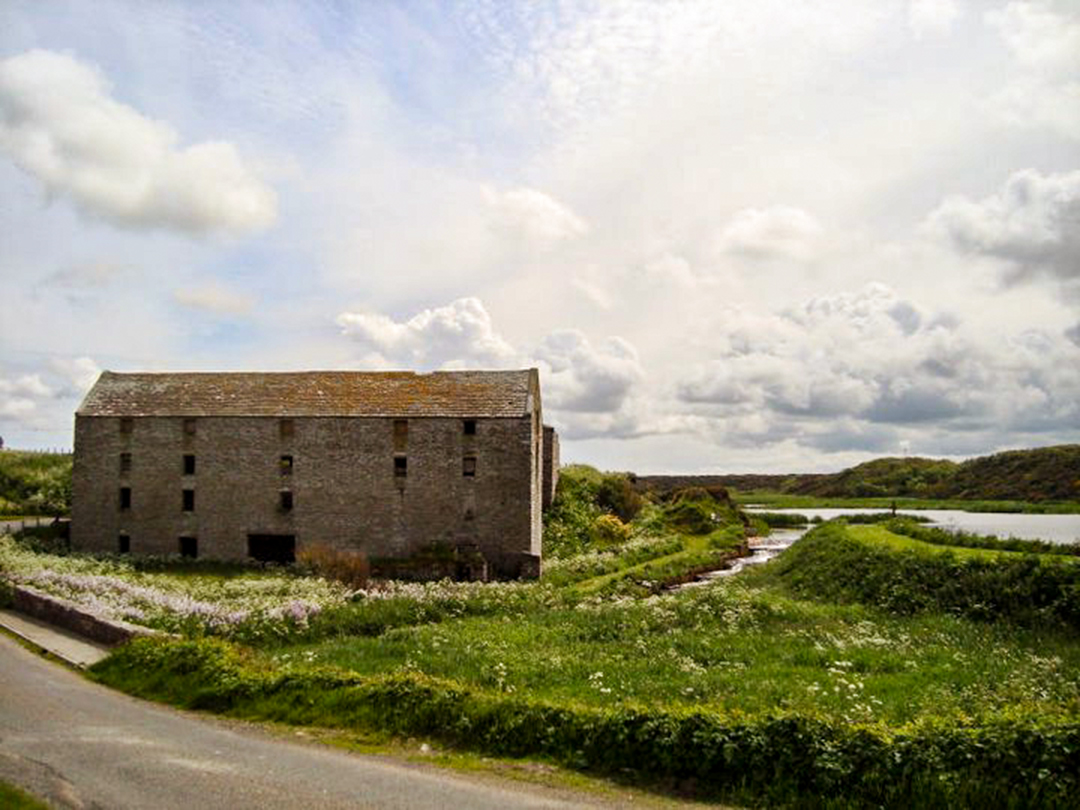
If you love history, Caithness is hard to beat. From Pictish remains and Neolithic cairns to medieval castles and the legacy of the Highland Clearances, the region offers deep layers of heritage.
Notable heritage centres include:
- The North Coast Visitor Centre – discover Caithness’s history and culture, along with a cafe at the North Coast Visitor Centre (Caithness Horizons)
- The Timespan Museum, Helmsdale – learn all about the Highland Clearances which happened in Caithness.
- The Wick Heritage Centre offers an introduction to life in Wick.
- The Dunbeath Heritage Museum – find out more about the archaeological remains around Dunbeath.
- The Waterlines Heritage Centre – celebrates the 19th and early 20th-century fishing industry in Lybster and has a cafe.
- Nucleus: The Nuclear and Caithness Archive – home to the archives of the UK civil nuclear industry.
- Laidhay Croft Museum – visit a Croft house to see how the people of Caithness lived 250 years ago alongside a tea room.
- You can also visit Mary-Ann’s Cottage, near Dunnet, a croft house built in 1850.
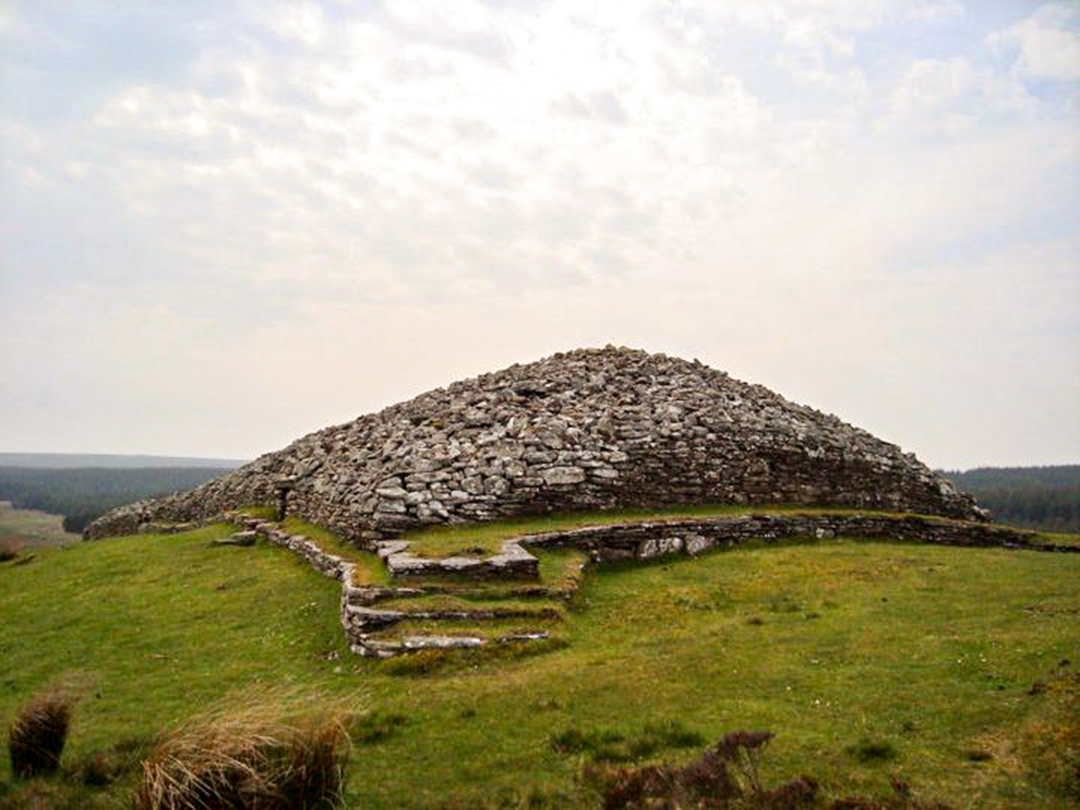
Caithness brochs, cairns and standing stones
Brochs are tall, circular Iron Age towers with thick stone walls. Over 200 brochs are scattered across Caithness, making it one of the best places in Scotland to explore these enigmatic structures.
The best brochs to visit in Caithness are:
Achvarasdal Broch – between Thurso and Reay and one of the largest brochs in Scotland with a diameter of 9.8 metres with 4m thick and 1.6m high walls and a narrow entrance passage. The broch has been opened up and restored by the Broch Project.
Dunbeath Broch – one of the best examples in Caithness, Dunbeath Broch is over three metres high and still contains remnants of cells (small rooms). There are nine brochs in the Dunbeath area and you can explore via the beautiful Dunbeath Strath Heritage Trail.
Nybster Broch – half-way between Wick and John O’Groats is Nybster where there is a lovely cliffside walk out to the Nybster Broch which sits out on a dramatic promontory. With 4m thick walls and an internal diameter of 7m, Nybster Broch also has lots of outbuildings. Nearby you can visit the Caithness Broch Centre.
Things Va – with a Viking name, Things Va is thought to have been a Viking meeting point – Thing-vollr’ is Norse for a local court or assembly. It is also one of the biggest brochs in Caithness at 30 metres and is a short drive from Thurso.
Yarrows Broch – follow the Yarrows Archaeological Trail to find the Broch of South Yarrows on the banks of the Loch of Yarrows. Along the trail, you can also spot Neolithic chambered cairns, several bronze-age houses, and standing stones.
Ousdale Broch – one of the best examples of an Iron Age Broch in Caithness, Ousdale is located on the southern boundary of Caithness with Sutherland.
Wag of Forse – more than just a broch, Wag of Forse is an Iron Age settlement. There is a lovely cafe on site at Forse of Nature.
Caithness is not just famous for brochs, there are lots of examples of burial cairns and standing stones to discover:
The Grey Cairns of Camster – a pair of Neolithic tombs (Caster Long and Camster Round) built more than 5,000 years ago located near Lybster. Amongst the oldest structural remains in Scotland, the Grey Cairns of Camster were constructed in the third or fourth millennium BC.
Hill O Many Stanes – just why 200 wee stones were placed in rows in a fan-shaped pattern up to 4000 years ago? You can visit the Hill O Many Stanes near Wick.
At Strathnaver follow the Strathnaver Trail which links and interprets 29 archaeological sites.
Other standing stones in Caithness include the Buldoo Standing Stone which is 12ft high and located close to Dounray. Near Castletown is the Stone Lud Standing Stone which is claimed to be the gravestone of Ljot Thorfinnsson (10th century earl of Orkney) and stands at 10ft high.
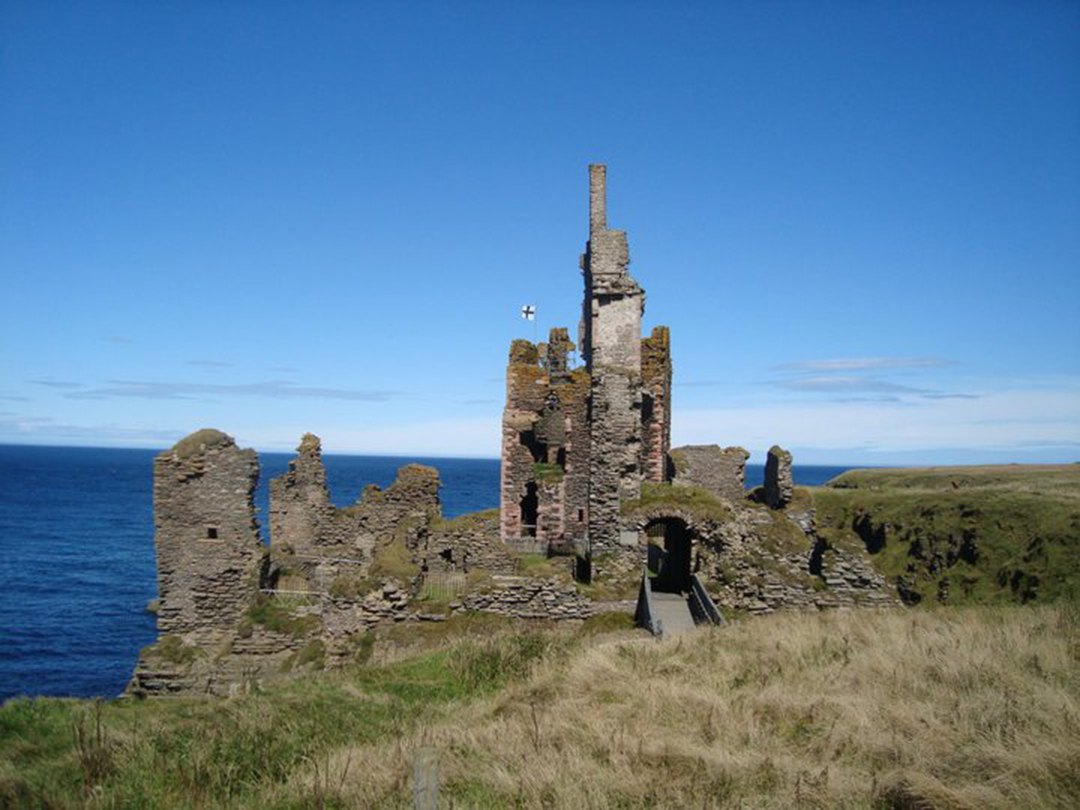
Caithness castles
Once home to around 50 castles, Caithness still has around 30 surviving examples — many now dramatic ruins. Highlights include the Castle of Old Wick, Bucholie Castle, Castle Sinclair Girnigoe, the Castle of Mey, Thurso Castle and Old Keiss Castle.
Here are my favourites:
The Castle of Old Wick – perched on dramatic cliffs, the Castle of Old Wick is one of Scotland’s oldest castles.
Bucholie Castle – accessed across a walkway with sheer 100m drops on each side – don’t try and visit in bad weather! Bucholie Castle was built by Sweyn Asliefson the notorious pirate and robber in about 1140 and later remodelled by the Mowat Family until 1661.
Castle Sinclair Girnigoe – near Wick is a spectacular ruin.
The Castle of Mey – previously the home of the Queen Mother in Scotland, you can now tour this royal palace and garden.
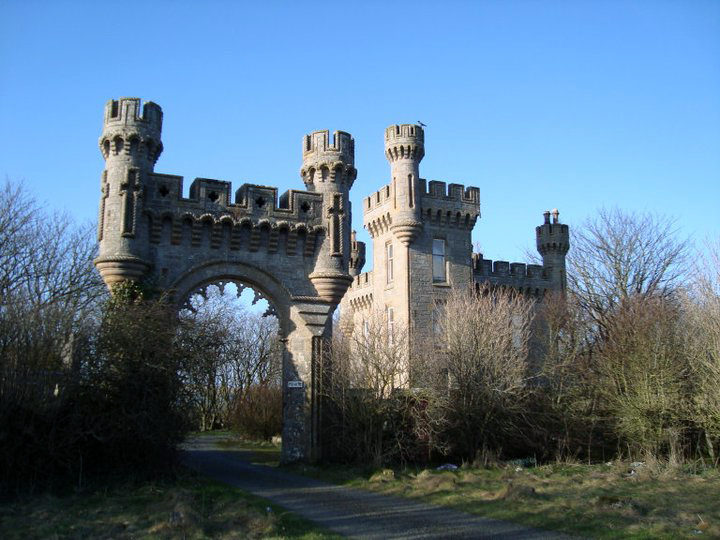
Thurso Castle – visit the ancestral home of the Earls of Caithness with an impressive gatehouse.
Old Keiss Castle – one of the most dramatically located castles in Scotland, Old Keiss Castle is popular with Instagrammers – and you can see why!
Caithness Beaches
Caithness has some of the most beautiful and unspoilt beaches in Scotland — often wide, quiet and backed by dunes rather than crowds.
From Melvich Beach and Dunnet Bay to the sweeping sands of Sinclair’s Bay, these beaches are perfect for long walks, wildlife watching and big northern skies.
- Melvich Beach – one of the north coast’s most stunning beaches, it is just a short walk from the road to Melvich Beach. You can also walk to the lovely harbour at Portskerra.
- Strathy Point Beach/Strathy Point Lighthouse – a great spot to see dolphins and whales in the summer months.
- Farr Beach – a beautiful narrow bay near Bettyhill
- Sandside Bay Beach – a lovely beach beside Reay Golf Course and Sandside Harbour at Fresgoe.
- Peedie Sands – walk here from Dwarwick pier, near Dunnet along the coastal path – a north coast hidden gem.
- Thurso Bay – the Thurso town beach, popular with surfers.
- Dunnet Beach – a lovely sweep of sand, often deserted.
- Bay of Sannick – between John O’Groats and the Lighthouse at Duncansby Head is the sandy sweep of the Bay of Sannick.
- Sinclair’s Bay – a huge sweep of sand with a castle at each end – Old Keiss Castle to the North and Ackergill Tower to the south.
Wild, windswept and beautiful, a visit to Caithness will always leave you wanting more.
Love, from Scotland x

Leave a Reply